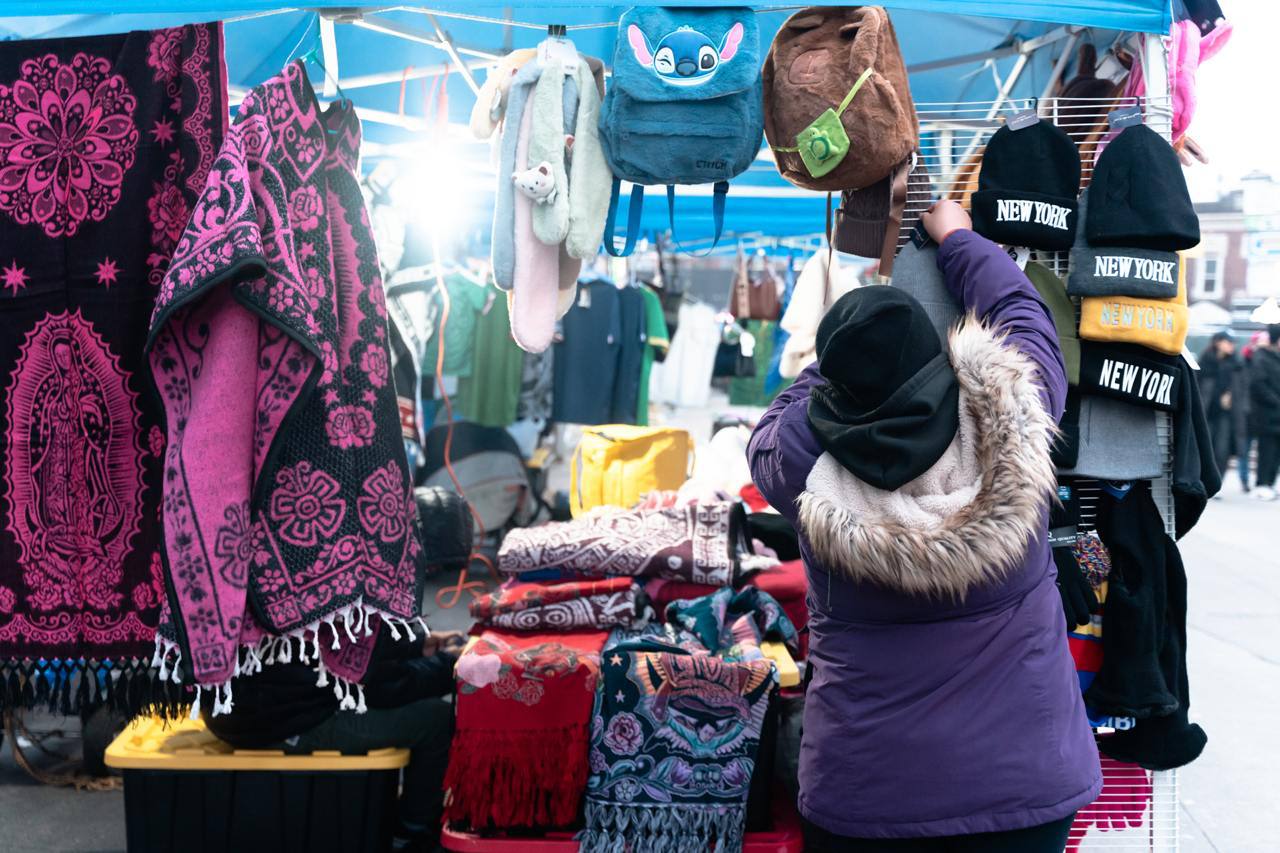


Before 9 a.m. on a typical workday, María, a 42-year-old woman from Mexico, has already made two trips by foot from her home to Corona Plaza. She has had to haul six boxes with her for the two-block walk, each overflowing with stuffed animals, brightly-colored backpacks, winter accessories and chales — traditional handwoven shawls — she plans to sell.
On her third trip, she will carry her most precious piece of cargo, the one she will watch over for the next 12 hours: her 1-year-old son, Luis.
As María — who asked to use a pseudonym for fear of being arrested by ICE — waits for her first customer of the day, she will use her time to feed her son, entertain him with toys, and try to get him to nap so she could turn her attention back to organizing the new merchandise on her table at the open-air market. By noon, Luis might finally fall asleep in his carrier — something that would give most parents a brief, but well-earned sigh of relief — but María, a single mother, will still have more than six hours of work ahead of her and may not have even made one sale.

In a city where child care can cost between $18,200 and $26,000 a year for an infant or toddler, María is part of the nearly 50% of households in the city that do not earn enough to meet their basic needs, including child care. She earns $400 per week, or $1,600 per month, meaning she would have to dedicate nearly all of her income to care for Luis.
The issue is acute among street vendors. A 2024 study by the community social workers group Algún Día and the New York Immigrant Coalition found that eight out of 10 immigrant street vendors face challenges accessing child care, and 93% of those surveyed said they had not received any organizational assistance to obtain child care services.
María, who does not have legal status in the U.S., relies on help from neighbors when possible because bringing him along is becoming untenable: the weather has grown colder, she risks being caught by city authorities for not having a vending license, and fears about immigration enforcement have heightened.
“When I don’t have someone to watch him, the situation gets even worse because I can’t take a 1-year-old out on the street in those conditions,” María said in Spanish.

Child care takes center stage at City Hall
While María’s situation may seem extreme, child care in New York City has become unaffordable even for families with conventional jobs, a crisis that played a central role in Zohran Mamdani’s mayoral campaign and has taken center stage during the first 100 days of his tenure as mayor.
Under Mamdani, the city’s subsidized early childhood system – which served nearly 160,000 babies and children last year and relies on a broad ecosystem of programs in public schools, community centers, and private homes – will this fall add 2,000 new free spots for 2-year-olds and 10,000 for 3-year-olds — regardless of immigration status. This marks the first step toward what is arguably Mamdani’s most ambitious campaign promise of providing universal subsidized child care for children under age 5.
The program, known as 2-Care, will be funded by New York State during its first two years, and the city will work with existing child care providers to provide the seats in Canarsie, Brownsville, and Ocean Hill in Brooklyn; Washington Heights and Inwood in Manhattan; Fordham and Kingsbridge in the Bronx; and Ozone Park, Richmond Hill, Woodhaven, and the Rockaways in Queens.
Officials hope to expand to 12,000 spots the following year, with the goal of eventually serving all of the city’s 2-year-olds by the end of Mamdani’s first term.
“For too long, essential city services were treated like insider knowledge. We are changing that,” a spokesperson for Mamdani’s office wrote to Documented in a statement. “On the eighth day of this administration, we took the first step toward universal child care—making clear that New York City belongs to every family, in every borough, regardless of ZIP code or immigration status”.
The highest rates for families struggling to afford child care are in Queens and Brooklyn with 45% and 33%, respectively, according to Columbia University’s Community Speak survey data from between 2021 and 2025. This lack of affordable and accessible child care has had negative impacts on families, deepening their economic and food insecurity and limiting children’s early learning and development. For immigrant families like Maria’s who are already struggling to make ends meet, those impacts can be magnified.
The situation is made even more difficult by the shortage of licensed child care slots. According to the State’s Office of Child and Family Services, 52% of the City’s census tracts may be considered child care deserts — areas with no child care slots or one in which there are more than three children under five years old for each available child care slot.
However, some experts say the city’s universal child care expansion cannot be fully realized without higher wages for child care providers, a significant portion of whom are foreign-born women. According to a 2025 analysis by the City Comptroller’s Office, child care workers have a salary of just $25,000, the lowest median of any caregiving occupation in New York City.
“We need greater investment from all levels of government. In particular, we need direct investment in the working class of child care centers,” said Tara Gardner, executive director of Day Care Council of New York, an organization representing child care providers and a member of Mamdani’s Youth and Education advisory committee.
In a statement to Documented, a spokesperson for Mayor Mamdani wrote that “For too long, child care providers have carried this city on their backs while facing deep, structural inequities in how they are compensated and supported.”
The spokesperson added that in the coming weeks, the mayor will meet directly with providers to discuss how to address the longstanding disparities that have plagued the child care system.
“We also know that families can’t wait for relief,” the spokesperson wrote. “As we work to ensure providers have the operational support and stability they need, we will move in parallel to deliver what New Yorkers deserve: a truly universal, affordable child care system.”
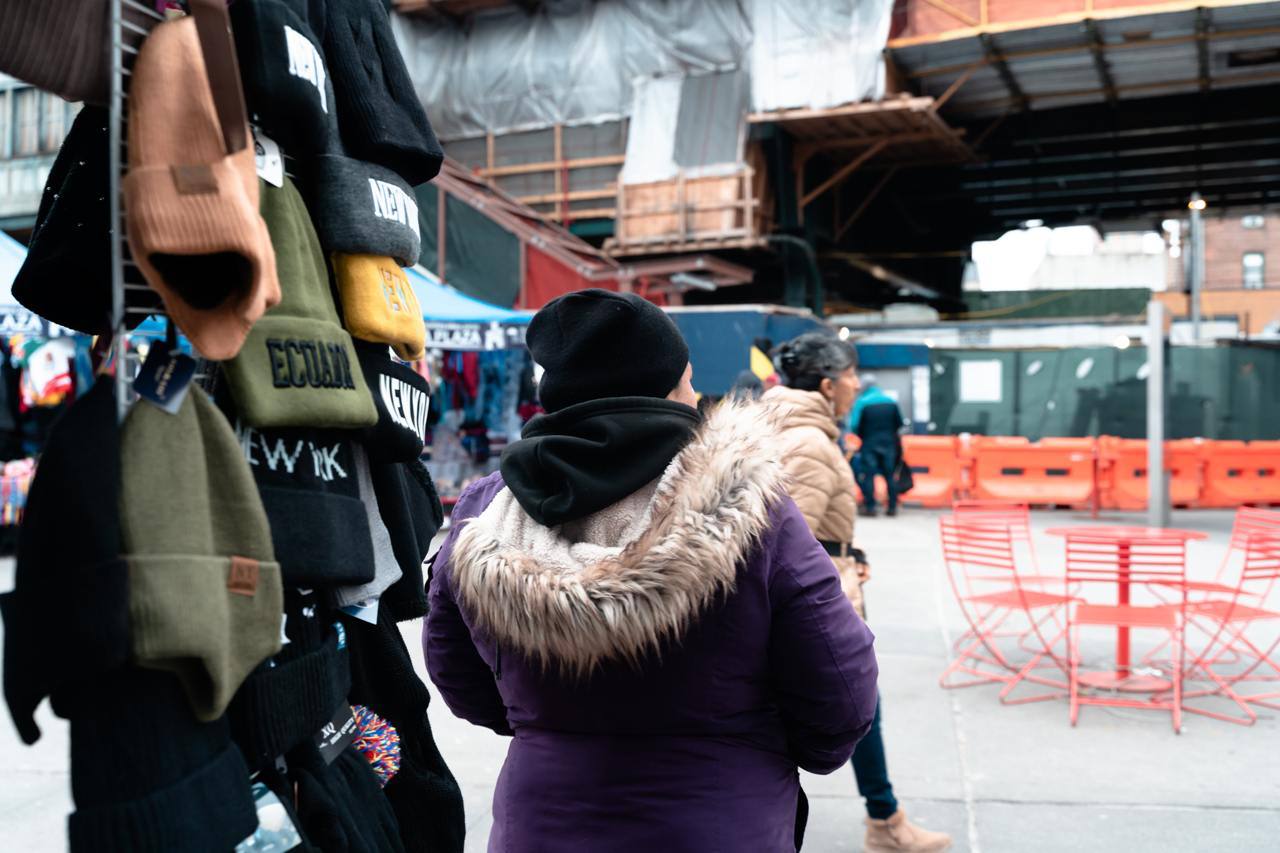
All of this, combined with intimidating paperwork, bureaucracy and language barriers, means that immigrant mothers like María are finding it exceptionally difficult to find a safe place for their children while they work.
In addition to Luis, María has two other U.S.-born children, ages 12 and 15, who accompany her to work when they are not in school. And while she hasn’t always been a street vendor, Maria has always been the sole breadwinner for herself and her three kids, ever since she crossed the border from Nogales, Mexico, to Arizona in 2007.
“I know the people who work in child care centers are trained. I think this new announcement is positive for people like me, who are looking for someone to take care of our children and feel confident that they will be safe,” María said, reflecting on what the expansion could mean for access to future child care services.
It takes a village
Still, while Maria says the announcement of expanded funding for child care is encouraging, she admits that as an undocumented parent, she still grapples with fears and challenges that go far beyond paying for care.
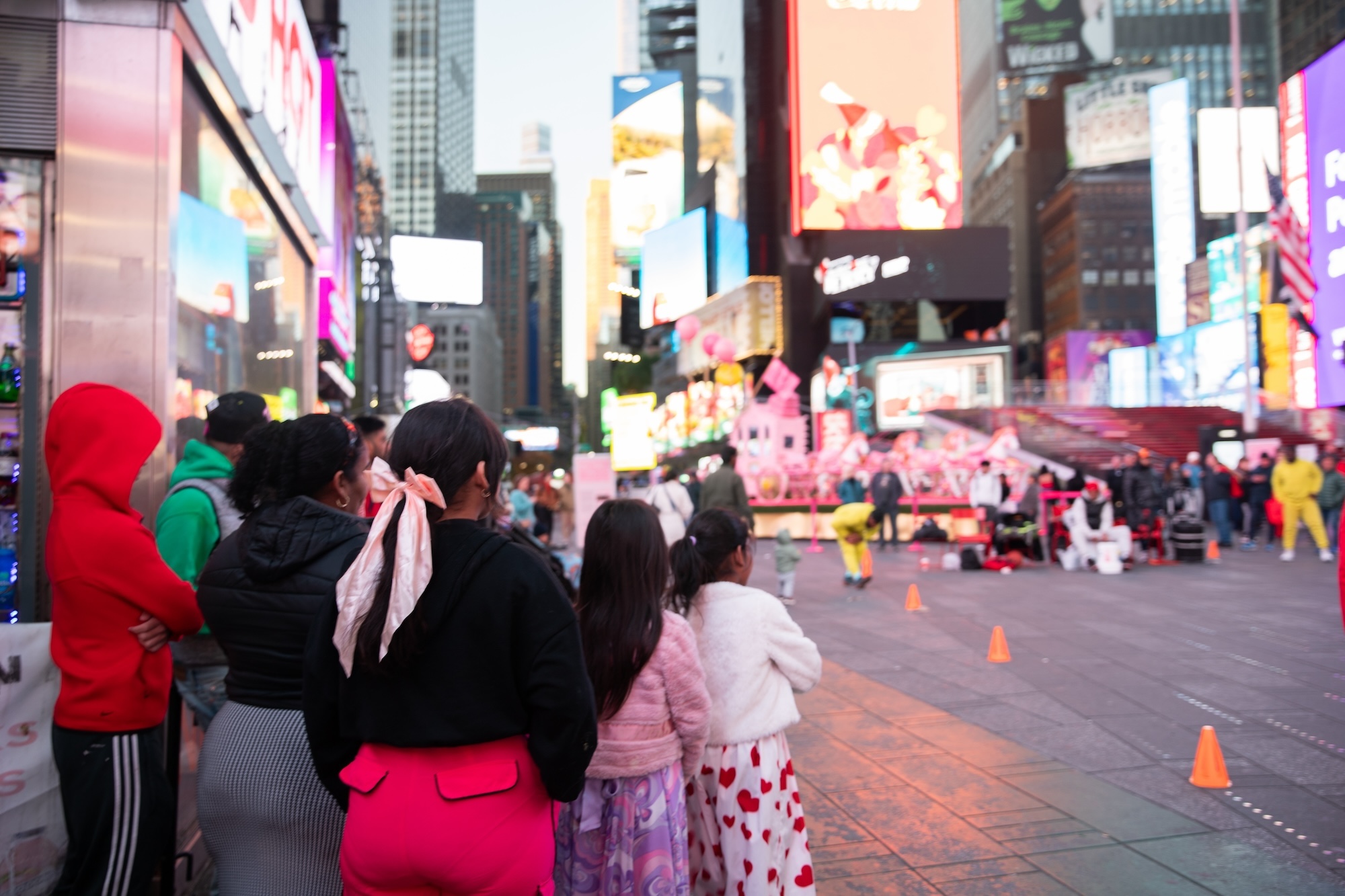
For many immigrant street vendors, Corona Plaza has become a default day care and community safety network. While some vendors care for their babies at their stalls and let their other children play among the plaza benches, vendors have also started organizing to alert each other to possible immigration raids.
Each day before leaving home, María checks the temperature and pulls up the group chat where other vendors share ICE sightings and tips — a system that often determines whether she works or stays home.
“When I have to go out, one of the perks of collaborating with other street vendors in Corona is that we communicate with each other through a group chat. For example, if they say that ICE is on 82nd Street, we can avoid those areas and not expose ourselves,” María said in Spanish.
Also Read: Zohran Mamdani to Street Vendors: I’m Listening

你知道吗?非公民办理驾照时的这个错误可能会导致选民欺诈

Still, her daily life remains marked by uncertainty. In a climate of heightened national immigration enforcement, María said she has had to consider scenarios she never thought about before, including what would happen to her children in case of her detention or deportation.
Although she doesn’t tune in to the news that often, immigration issues reach her home through her older children, who hear about raids and deportations at school. As a result, she has created an emergency plan and spoke with family about who could care for her children if she could not. “If they deport me, I will take them with me,” she said.
“I wish I had a place where [Luis] could be cared for, because having him with me at the stall is too risky,” she said.