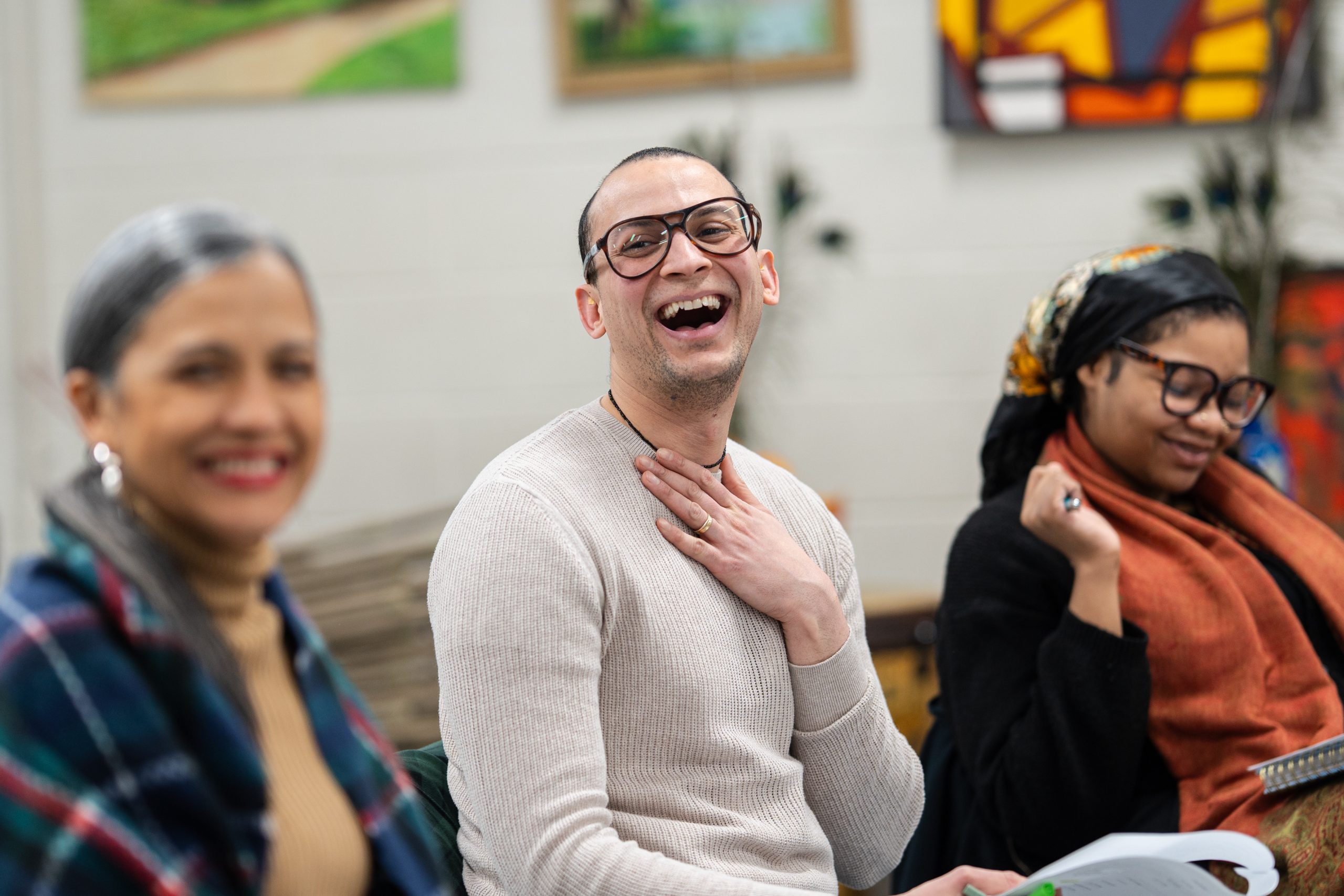


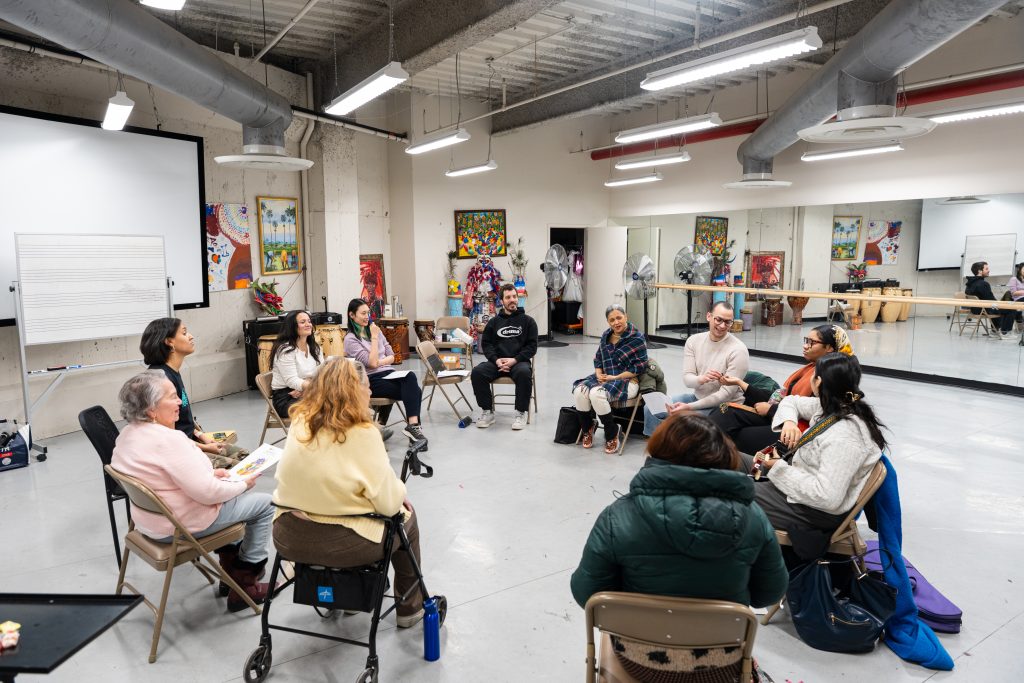
On a recent Wednesday night in February in Washington Heights, a group of New Yorkers gathered at the Alianza Dominicana Cultural Center to run a rehearsal. Sitting on mismatched chairs with curled script corners in hand, the troupe was just days away from opening night of their production, “Hogar(es): Places We Call Home,” at The Whitney Museum, which ended its run last weekend.
The community-created play, organized by The People’s Theater, was written by the show’s 11 cast members over the course of 10 days and rehearsed over the span of a month. The topic of their performance: the experience of leaving one’s home and immigrating to New York City.
The casts’ identities and experiences — of varying ages, immigration statuses, professions, and countries of origin — made their way into the script. The final play includes seven languages and is structured in chapters, each illustrating a different stage of the immigration journey.

“Don’t rush things,” said Arnaldo Galbán, the Cuban-born director of the production, providing notes to the cast. “We’re telling this story to make sure that the people listening can understand. So that means I say something, I look at the person, I check that person is following me. If not, I stop. I slow down, and make sure that the person is engaged.”
Galbán told Documented that he reflected on the transience of his own life — moving from Cuba to Brazil to Italy to Switzerland to Egypt from 2016 to 2021, and then to New York in 2023 – when forming the arc of “Hogar(es),” which is the Spanish word for home or hearth.
Also Read: Saheem Ali’s Mission to Center People of Color On Broadway
“I decided I wanted to talk about home — what it takes to build one, and what people think about when they hear or use that word,” Galbán said. “We talked about images, shared pictures, and discussed smells, sounds, and flavors. We were mining our memories.”
From that brainstorming, he built the story of peoples’ immigration into different chapters, from leaving one’s home country to building a life in a new one. The process led to a final script, Galbán said, and also turned the troupe from a group of strangers into a small community.
“He was like, okay, let’s hear your stories,” said Bárbara Moreno, a 20-year-old actor from Brazil who moved to New York in 2024 to pursue her career. “Each person has such a deep personal reason to be here, you know? So we got to hear everybody’s stories about how they came, how they adapted, why they came here, and we started seeing the overlap and putting our stories together.”
Actors were each assigned a different ‘chapter’ of the play, depending on which section of the immigration story resonated with them most.
“Me and my partner, who were doing the first chapter of the play, we started to describe some of our memories and the imagery that was most powerful to us according to this question of, what is the home that we left?” said Yanglu “Lulu” Chen, a 30-year-old psychiatry medical resident who was born in Japan to Chinese immigrant parents before moving to the U.S.
“Some of my questions that I try to answer in this part of the play are like, is it possible to even miss a home that I can’t remember? What do I remember of it? Was it real? Was it a dream? And how do I make sense of it?”
The theme of ‘hogar’ is woven throughout its storytelling. For the cast members, the question of what the word meant to them was deeply emotional.
Carmen Barbosa, an 86-year-old member of the cast, respectfully referred to as “Doña Carmen” by her fellow actors, answered the question of what home meant to her after rehearsal had wrapped around 10 p.m. Barbosa immigrated to NYC from Cartagena, Colombia, she said, to create a better life for her children.
“The definition, for me, of a ‘home’ is the union of people who live under the same roof who share everything: love, economy, culture, even religion and sometimes politics — many times. If they share that between four walls and a roof, that is a home,” she said in Spanish, adding, “Food, too.”
Also Read: “Dear John”: Rachel Lin Turns an Undocumented Childhood and a Father’s Letters Into Theater
Carmen Bitar, a 51-year-old high school secretary originally from Miami Beach, shared that home has an unrooted feeling to her, given her family history and their migration from countries including Lebanon, Venezuela, and Honduras. Rather than tied to a country or a place, she explained that home was tied more to being in relation to others. “Me seeing someone feels like home,” she said. “Me advocating for someone feels like home.”
Her Turkish castmate, Gamze Alkan, a playwright and psychology student, echoed that sentiment, pointing out that migration was something consistent throughout her family tree — either due to dramatic geopolitical changes, like the fall of the Ottoman Empire, or in order to find freedom and opportunity.
“Home for me, it’s not a place, for sure, because places change,” she said. “But I think the place that welcomes you, accepts you, a place that you can be yourself, and you can find a community that you can create with.”
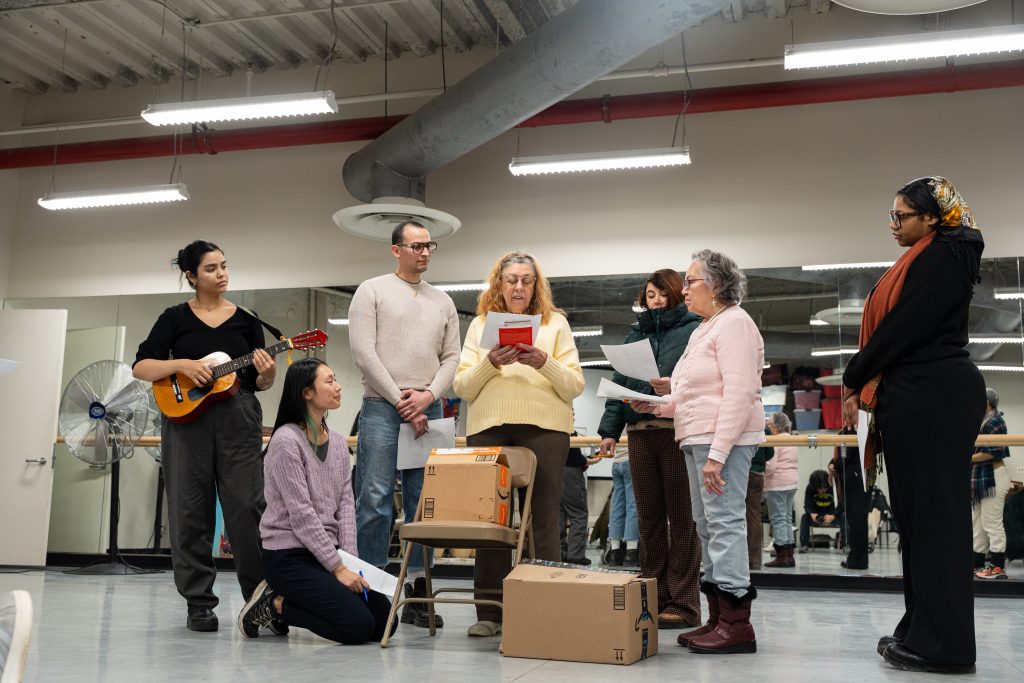
When asked about what the actors hoped the audience would take away from watching their stories, the conversation turned more political. Mary Anderson, a 78-year-old retired psychiatric nurse originally from Tupper Lake, New York, said, “I want people to see how people who have been in the city for a long time and people just coming to the city for the first time can gel and, you know, make a life and work together towards a common goal.”
It’s a message woven not just into the diversity and collaboration of the play’s cast, but also in the way the performance is constructed. Throughout the show, cast members took on multiple identities: as new immigrants, New Yorkers and Americans, immigration officials, and subway-riders — and at the very end, neighbors living side-by-side. Their stories and experiences are shown as something shared, fluid and interconnected.
Alba Bryant, a 24-year-old member of the cast who grew up in Harlem and now works as a legal advocate in the Bronx, said she hopes the play acts as a counter to the current negative discourse in the U.S. around immigrants.
你知道吗?非公民办理驾照时的这个错误可能会导致选民欺诈
“Especially with the current political climate and just dominant narratives that exist, it’s very xenophobic,” she said. “I hope the audience… even if they themselves aren’t immigrants, could see something of themselves in the stories that are being told throughout the show.”
Yulio Rondon, an actor from the Dominican Republic, emphasized the importance of using art and performance as a form of expression and resistance.
“We are living in a time where, in the place that we’re trying to make home, we are being removed,” Rondon said. “We are here to make it better. We have so much to offer and so much beauty, colors. We need this kind of art today, and we will need it tomorrow.”