

Anisur Bhuyia has recently found himself thinking of last year’s Ramadan. Hillside Avenue in Jamaica, Queens, where his grocery store is located, was full of people.
“It was difficult to walk the streets without running into a relative, friend or acquaintance,” Bhuyia said. ”Everyone was out and about.”
This year, it’s different. The streets are quieter, a pale shadow of the crowds that brought Hillside Avenue to life around this time in previous years. One reason, he says, is because winter has been particularly brutal.

“The ice on the sidewalks has not melted yet,” he said.
But even before the streets of New York City were blanketed by ice and snow and hardened by weeks of relentless sub-freezing temperatures, Hillside Avenue was already growing quieter.
“Fear of ICE raids have messed up the whole neighborhood,” Bhuyia told Documented.
Immigration and Customs Enforcement (ICE) raids across New York and the country have skyrocketed since President Trump took office, leaving a particularly chilling effect on immigrant-heavy neighborhoods like Hillside Avenue. Fewer people are on the streets which means that fewer customers are in stores, leading to sharp declines in sales. This has forced many small businesses, including Bhuyia’s, to downsize and cut costs.
With Ramadan, the holy month of Islam, beginning last week, Muslim store owners such as Bhuyia say they will be praying for their communities to find strength, peace and a spirit of celebration. Bhuyia also says he and many other store owners hope for a change in their fortunes.
“I lost $110,000 in the past year because customers just aren’t coming to our stores anymore. They are scared of ICE,” he said. Bhuyia saw his customer base reduce by approximately half, meaning his business took a loss in the last financial year for the first time. Bhuyia said he has had to reduce inventory, including cutting down food options at his store’s counter and the menu at the store’s small cafe.
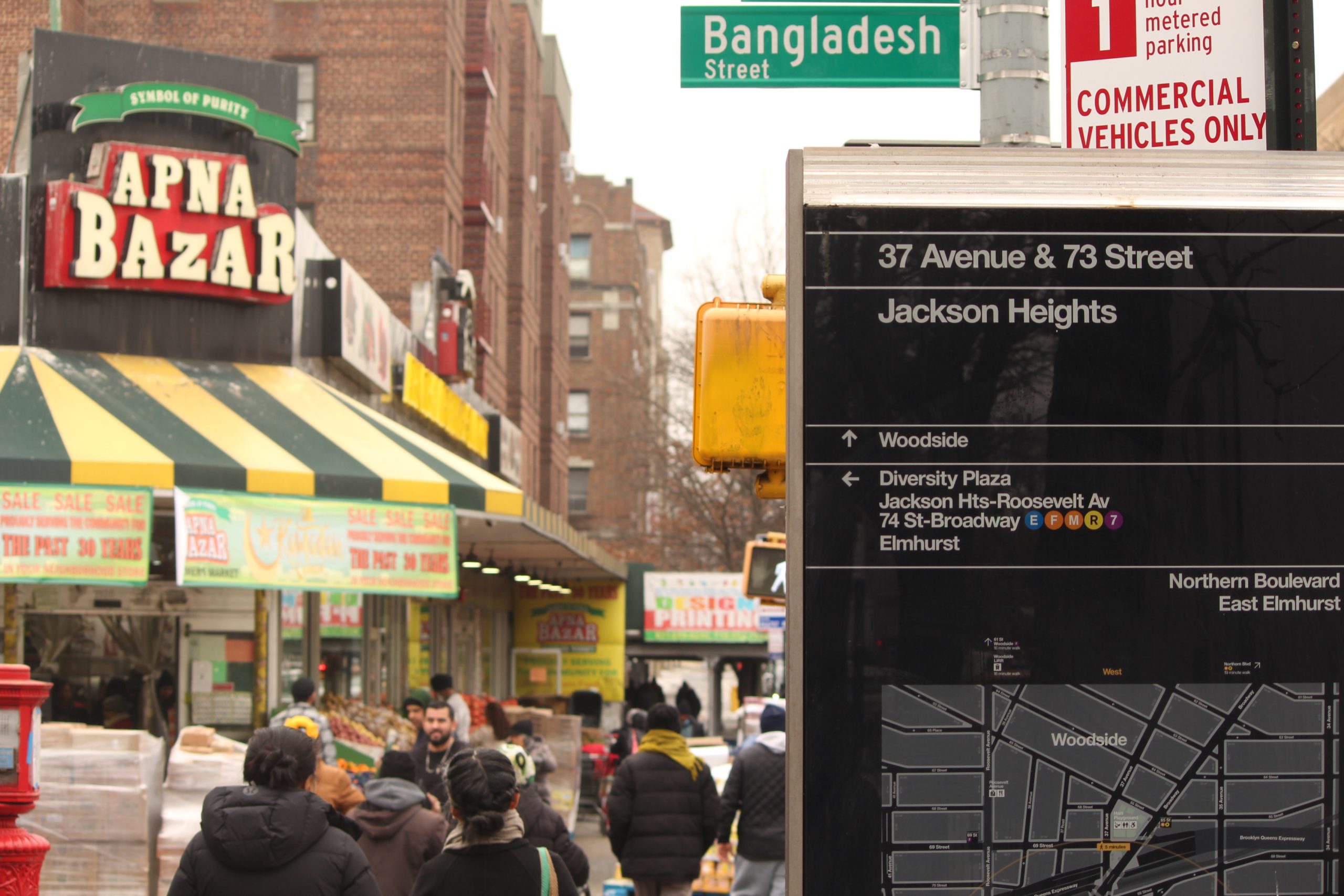
Hillside Avenue, which is dotted with Bangladeshi businesses, is an area that many community members rely on for groceries, a haircut, or to grab a snack or tea. “This year there is no one out, the streets are empty,” said Bhuyia, who is in his 50s and moved to the United States from Bangladesh in the early 1990s.
A few blocks away from Bhuyia’s store, Nazmul — who, like others who spoke to Documented for this story, requested not to disclose his full name out of fear of retaliation by authorities — had a similar experience.
Nazmul moved to the United States from Bangladesh in the early 1990s. He took up several odd jobs and worked in grocery stores for decades while saving up to open his own grocery store, which he did in 2021. His store quickly became a meeting place for customers who were looking for a local spot to buy the halal meat they couldn’t get at the Foodtown on the next block.
In the past year, as ICE stormed through the city’s immigrant neighborhoods, including Jamaica, Nazmul’s regular customers stopped showing up.
“It was getting too hard to pay the store’s rent, salaries, and to repay debt,” he said. Last July, after the losses started to become insurmountable, Nazmul decided to sell his business. He now works as a manager in the store he once owned.
‘Making a Stop at My Shop Has Become Too Risky’
In Jackson Heights’ Diversity Plaza, 27-year-old Bilal Hussain is also reckoning with an underwhelming lead up to Ramadan. “Last year at this time, Diversity Plaza was full of people. There’s no one here anymore,” he said. “The white ice on the streets is keeping us cold, and the dark force of the ICE raids is scaring away our community.”
Last year during Ramadan, Hussain’s electronics shop, replete with iPhone covers, phone chargers, headphones, and a printing machine, was full of people looking to print posters and flyers for community events and iftar parties. In a normal year, customers would also file in to print and scan their immigration and visa documents, since many would be planning a trip back to their home country to celebrate Eid with family.
This year there are no lines. And the buzz of Hussain’s printing machine has fallen silent.
“My sales have halved in the past year,” Hussain said. ”It is the biggest drop I have ever experienced in a single year. Ramadan is not the same.” Hussain moved to the country four years ago and is a legal resident.
“Diversity Plaza used to be filled with people and some would come for chai to my store,” said 69-year-old Shahbuddin Bhuiya, who manages a small paan (betel-nut) and tea shop. “They would often come here to hang out, but not anymore. They are either scared or those without the paperwork have been deported, who knows,” he added.
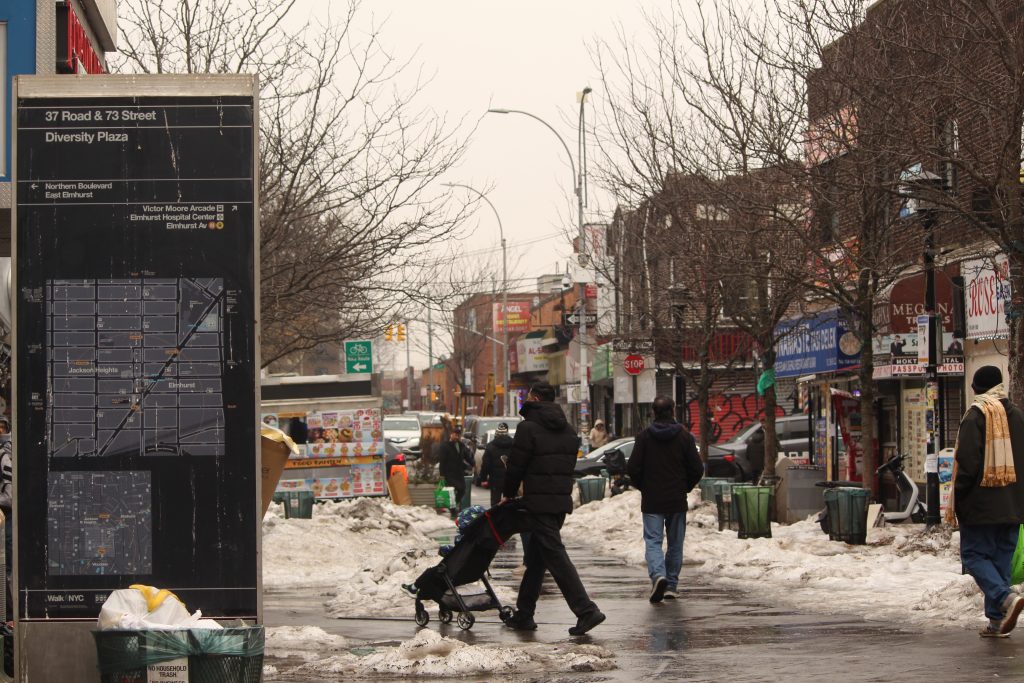
Reports suggest that Hussain and Bhuiya’s circumstances mirror the experiences faced by immigrant business owners in Los Angeles and Minnesota’s Twin Cities, cities that have been descended upon by ICE in the past year.
“As people start to feel like they need to protect their families and stay in, there are real consequences for restaurants, stores, and movie theatres and the whole of the local economy,” said David Kallick, director of the nonprofit Immigration Research Initiative and an expert on New York’s urban economy. In light of heavy-handed immigration enforcement, immigrant neighborhoods in New York are undergoing a sharp downturn economically, he said.
Nationwide, immigration enforcement in 2025 led to a significant reduction in consumer spending, according to a recent study conducted by the Brookings Institute. The study estimated between $40 billion and $60 billion less consumer spending nationwide in 2025 than in the previous year — in part because there are fewer immigrants, and thus fewer spenders, in the U.S. — but also because increased fear and uncertainty has led immigrants to minimize going into public for shopping and pull back on their spending overall.
Each time there is news of ICE arrests in the neighborhood, in New York City, or when a major ICE operation is launched in cities like Minneapolis or Los Angeles, Jackson Heights residents go into a panic, said Bhuiya. As recently as December 4, heavily armed federal immigration agents in tactical gear had appeared on the streets of Jackson Heights. That morning they reportedly arrested two Spanish-speaking people from their home.
On Hillside Avenue, the same emotional reverberations can be felt.
“Earlier, many construction workers would come to my shop daily — to take a break from their work to get coffee or pick up a snack, buy a couple lottery cards — and they would often come in groups. Since the past six, seven months, making a stop at my shop has become too risky for them,” said one deli manager on Hillside Avenue who asked to be identified only as ‘K’ out of fear that his green card might be canceled if he is publicly identified. K moved to the United States 20 years ago from India and visits home every two years.
“I know some of my customers are undocumented, and they particularly fear stepping out or coming to my store. But right now, it doesn’t matter whether you have documents or not, everyone is afraid to be out and make a visit to shops,” he said. “They could target anybody.”
A Quieter Ramadan
At a restaurant a few blocks east of Hillside Avenue, Sady serves traditional Bangladeshi food ranging from fish in mustard curry to beef biryani. He moved to the U.S. just over a year ago, in pursuit of his dream of opening his own restaurant. (He declined to provide his full name due to fear of jeopardizing his resident status.)
Sady, who is 36 years old, saved up a good deal of money prior to moving here so that he’d be able to start his business right after arriving. And while things looked promising when he opened his store last January, foot traffic to his restaurant dropped sharply as 2025 wore on and immigration enforcement in New York and around the country increased.
“There’s only so much we can do when they have hurt our business so badly, ” he said.
For some storeowners, business has been volatile for a while. Rising costs since the COVID-19 pandemic had barely begun to stabilize before Trump announced a multi-front tariff war, raising the costs of many imported goods that immigrant businesses rely on.
Nurul Islam, 67, imports a majority of the South Asian traditional women’s clothing in his shop from India — a country targeted by high U.S. tariffs last year.
“Now with ICE raids in the city, business only became worse. My sales have dropped approximately $50,000 in the last year as compared to previous years,” he said. In years past, this time of year would be a boon for Islam’s business, with many families buying outfits for their trips back home for Ramadan and Eid. This year, his clothing inventory is not clearing out.
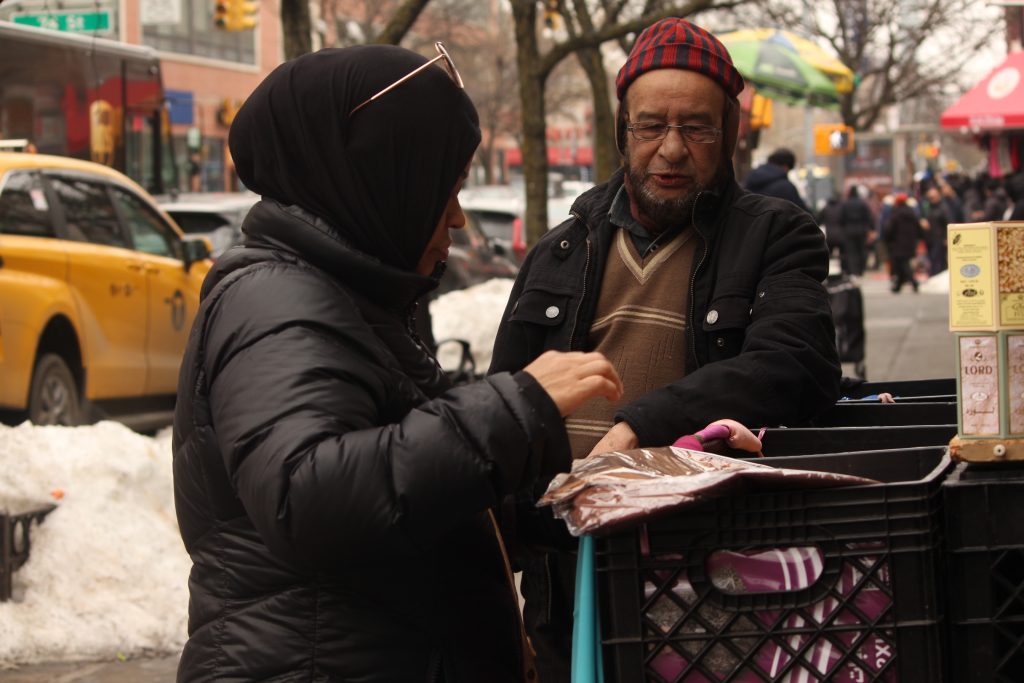
Alam Mahmud, 73, who sells prayer mats on the sidewalks of Diversity Plaza, has had the same experience. “Things have been bad since COVID. But under the current administration, they have become just unsustainable,” he said.
Mahmud moved to the United States from Dhaka, Bangladesh, in 1991 and said that although there have been tough times before, this is the first time things feel like they have reached a point of no return.
“I am 73, and have been in this country for three decades. But for the first time since I came here, I am starting to question myself whether I should consider going back,” said Mahmud, whose daughters grew up in New York.
你知道吗?非公民办理驾照时的这个错误可能会导致选民欺诈
Nadeem Bhuiya, a 44-year-old convenience store owner in Jackson Heights, is pessimistic about his business turning around anytime soon. “I have less hope that Ramzan is going to change anything, but we can only pray for the best this month,” he said, referring to the commonly used South Asian term for Ramadan.
Mohammad, the manager of a fried chicken restaurant on Hillside Avenue who declined to provide his full name, is still getting used to the emptier chairs and tables in his shop. This Ramadan, he said he will practice his faith and exercise patience.
“I am a practicing Muslim which means I will always have hope. As a Muslim I can never be hopeless. The rest is up to Allah,” he said.