

While some of her classmates were planning their summer vacations, CUNY student Dainma Martínez spent much of her free time this spring preparing her mother for encounters with immigration authorities.
As a student leader and a member of the University Student Senate at CUNY, Martínez had been hearing firsthand accounts from other students about their relatives being detained — some of whom were even citizens like her mother, María, a Dominican immigrant who obtained U.S. citizenship more than 25 years ago.
One evening, after school, Martínez held a training session with her mother, showing her a red “Know Your Rights” card with instructions for how to handle encounters with ICE. She has also undertaken safeguards such as tracking her mother’s real-time location from her phone, prohibiting her from going out alone and constantly monitoring the news.

“Mom is my teenager,” said Martínez, 26, whose father died three years ago. “She is living her life and all that, and I am the one going out and covering everything she might need, because since she doesn’t know English, it scares me that she might be out there alone.”
Martínez is one of many children in immigrant families who are finding their roles reversed with their parents as the Trump administration intensifies detention and deportation efforts. Therapists and academics say they are seeing more and more young adults and teens who feel they must protect parents who may not speak English or understand the risks posed by immigration agents. This stress can take a toll on their normal life — and could lead to depression, anxiety and other health issues.
“The threat of anti-immigrant rhetoric is internalized,” said R. Gabriela Barajas-Gonzalez, an associate professor at New York University’s Department of Population Health who has studied children in immigrant families. “It affects health and academic and work performance, and at the same time it is harder to get help for these problems because they are internalized and not expressed outwardly.”
In a 2018 study, Barajas-Gonzalez documented how Latino children of immigrants presented symptoms such as hypervigilance, insomnia, anxiety, inflammation and high blood pressure during Trump’s first administration, when he announced the termination of DACA (Deferred Action for Childhood Arrivals) and the offensive against sanctuary cities that limit cooperation with federal immigration authorities. She suspects that today’s stepped up immigration enforcement policies may cause the same reactions among Latino children of immigrants.
The impact of this stress is widespread. Some 14 million people were living in the United States without authorization in 2023, including those who entered lawfully and have since seen their protections from deportation eliminated. Through the end of November 2025, more than 65,000 people have been detained nationwide, of whom 73.6% have no criminal record, according to the Transactional Records Access Clearinghouse (TRAC), a data research center at Syracuse University in New York.
Some researchers believe the stress might be felt more acutely in Latino communities. A report published in December by the New York Immigration Coalition and the University of Colorado Boulder found that Latino immigrants in New York disproportionately bear the burden of immigration detentions: they represent nearly three-quarters of ICE arrests while constituting only about one-quarter of the state’s non-citizen population. The Pew Research Center has also found that concern about deportations and detentions is 18% higher among young Latino adults, when compared to those who are 50 years or are older.
The Spanish-speaking and Latino population in the country, according to Barajas-Gonzalez, has been distinctly subjected to “anti-immigrant rhetoric at the societal level, along with laws and policies that allow for aggressive and racialized enforcement of immigration laws.”
The caregiving dynamic of first-generation and immigrant parents who don’t speak English was studied by the Journal of Adolescent Research, which concluded that some children experience a phenomenon known as “parentification” — meaning the child assumes the role of caregiver to meet the logistical and emotional needs of their parents. This role reversal has been associated with a greater tendency to develop depression, anxiety, digestive problems, aggressive behaviors, substance abuse, and self-harm, according to various studies.
“First-generation Latinos were already ‘parentified.’ What is new is the hypervigilance and exhaustion they feel due to the helplessness of not being able to fully protect their families,” said Lisette Sánchez, a psychologist who specializes in the mental health of first-generation Latino professionals.
Since childhood, Martínez —a first-generation American and daughter of a Dominican immigrant mother and a Puerto Rican father — had to look after her parents. Her mother María was diagnosed with bipolar disorder and major depression when Martínez was just five years old. Her father worked for many years at a pickle factory in New York until he injured his spine on the job and had to declare himself disabled. From a very young age, Martínez was the one who took them to the doctor, prepared food and gave them medications. She translated for doctors, lawyers and school teachers because María doesn’t speak English. Even with these responsibilities, Martínez felt cared for by her parents: they raised her and covered all her basic needs.
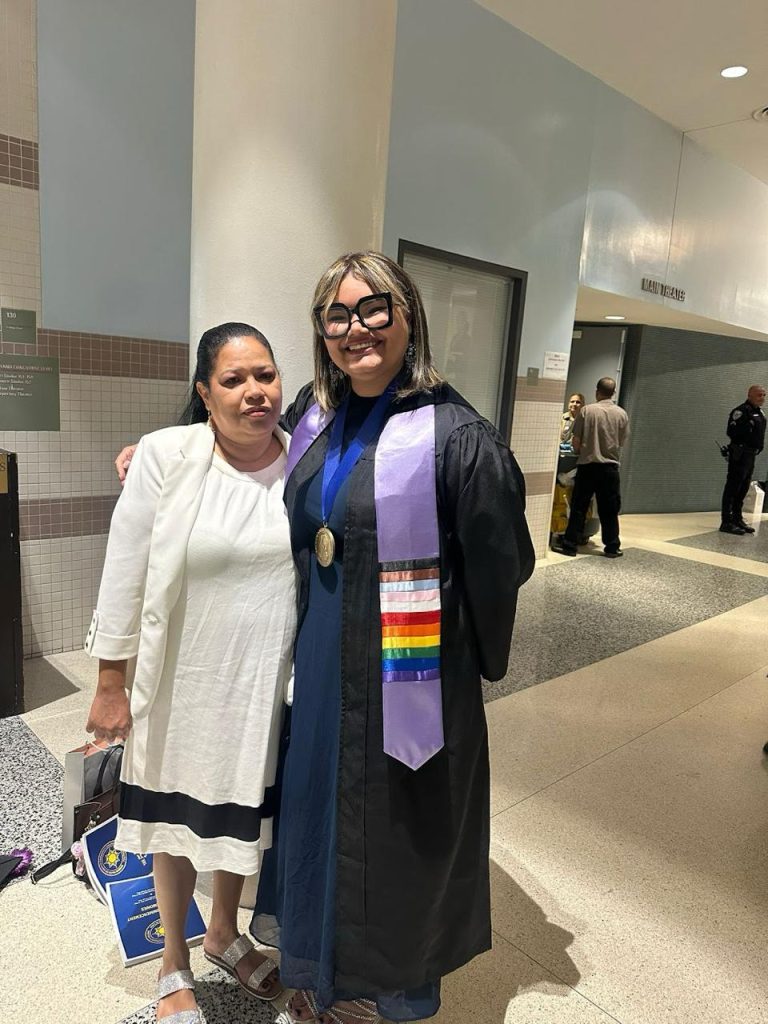
Since her father died, she has been responsible for the care of her 55-year-old mother, and provides for her household with SNAP benefits and disability insurance. Even though María is a U.S. citizen, Martínez says she lives in fear, worried that “because of racism and because she doesn’t speak English,” immigration agents could take her away.
Martínez’s mother doesn’t understand why her daughter is so concerned. “I am American, I’ve been here for many years, what is going to happen to me?” María said.
Still, although María sometimes wants to go out, her daughter forbids it, and she complies.
“I’m at the point in life where my daughter can take better care of me than I could,” María said.
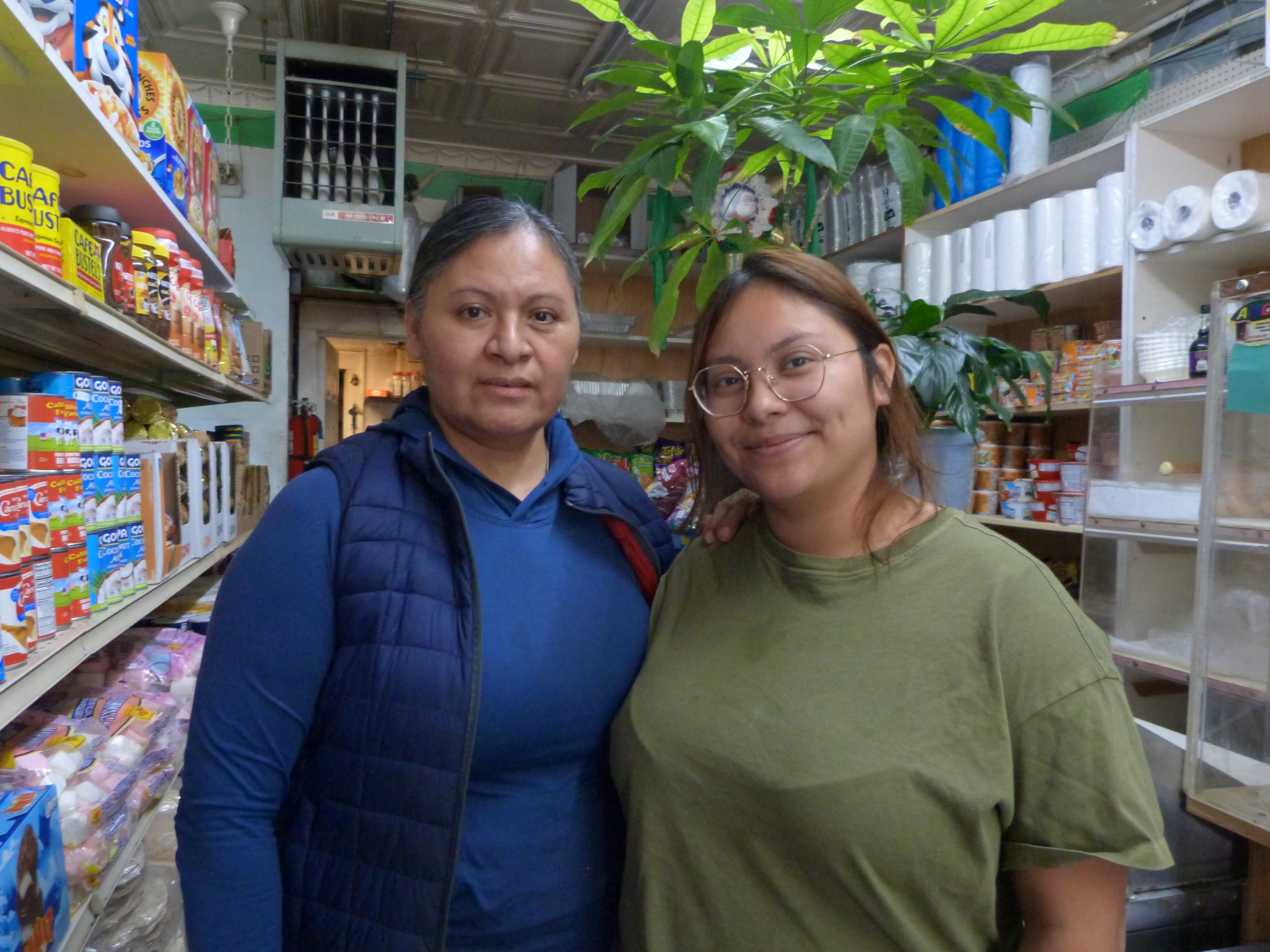
Cindy Arriaga, 29, similarly grew up caring for her family. As the daughter of an undocumented Mexican mother and as the eldest sibling, she was often the caregiver for her younger siblings: helping them with homework, serving them food, and even helping them fill out college application forms. Meanwhile, her mother, Feliciana Gonzaga, worked 14-hour shifts, seven days a week, at a supermarket in Manhattan to support them. Although they all slept under the same roof, Arriaga felt that she knew little about her mother beyond necessary conversations.
“I am the one who has cared for everyone in my family since I was a child, and I think that’s why I am an anxious person,” said Arriaga, 29. “Now my greatest fear is that if my mom were deported, how am I going to make sure she arrives safely in Puebla, without harm, without trauma.”
That anxiety, fueled by the worry that something might happen to her mother, has led Arriaga to call her every two hours, constantly read the news, monitor her mother’s real-time location from her phone, and look in all directions when they walk down the street. Her undocumented mother, on the other hand, says she feels no fear.
“I truly appreciate that my daughter worries, but it is not very healthy for families to live this way; you cannot control your loved ones,” said Gonzaga in Spanish. “It’s fine that we have daily communication, but it should not be out of fear, but out of the affection we have as a family.”
Gonzaga, 56, owns Gonzaga Grocery, a Mexican store in New Jersey, where she works seven days a week and 12 hours a day. Arriaga feels some peace of mind knowing that her mother spends almost all of her time indoors, as it makes her feel that she has less risk of being seen by immigration authorities.
“It gives me peace of mind that my mom spends her time working and doesn’t go out on the street,” Arriaga confessed. “Even though I’ve trained her on what to say in case ICE ever comes to the store.”
Still, there have been times when her mother wants to go outside beyond her job. One day at the beginning of November, Arriaga agreed to go shopping with her mother, but she quickly changed her mind out of fear that there might be immigration agents on the street. Her mother, on the other hand, began to joke about the subject.
“What would you do, mija, if ICE grabbed me on the way out? Can you imagine?” she said, laughing.
Humor has been used as a coping mechanism for people who experienced trauma. It helps them reframe their experiences, regain a sense of control, and develop resilience. “It’s not worth worrying if the problem isn’t here; it’s just a threat, but it’s not personal. If the solution isn’t in my hands, it’s better to expel the fear,” said Gonzaga.
Children trying to ensure that their parents stay home has become common. Sánchez has had several young patients who have told her that now they are the ones who run the family errands to prevent their parents from being exposed.

你知道吗?非公民办理驾照时的这个错误可能会导致选民欺诈
“This indicates that they now have additional caregiving responsibilities,” Sánchez said.
For Arriaga, while the threat of detention has caused stress, it has also strengthened her relationship with her mother. As a child, she said, they did not have a good relationship because her mother was working most of the time, but now they live close to each other, spend more time together and finally know each other. This only makes her more afraid of being separated from her mother if she had to return to Mexico. And while the country’s language and customs shaped much of who Arriaga is, she says she isn’t willing to move and start a new life there.
“My fear is that she would be deported and that we would no longer be so close to see each other,” Arriaga said, “and also that she would lose everything she has worked and fought for here.”