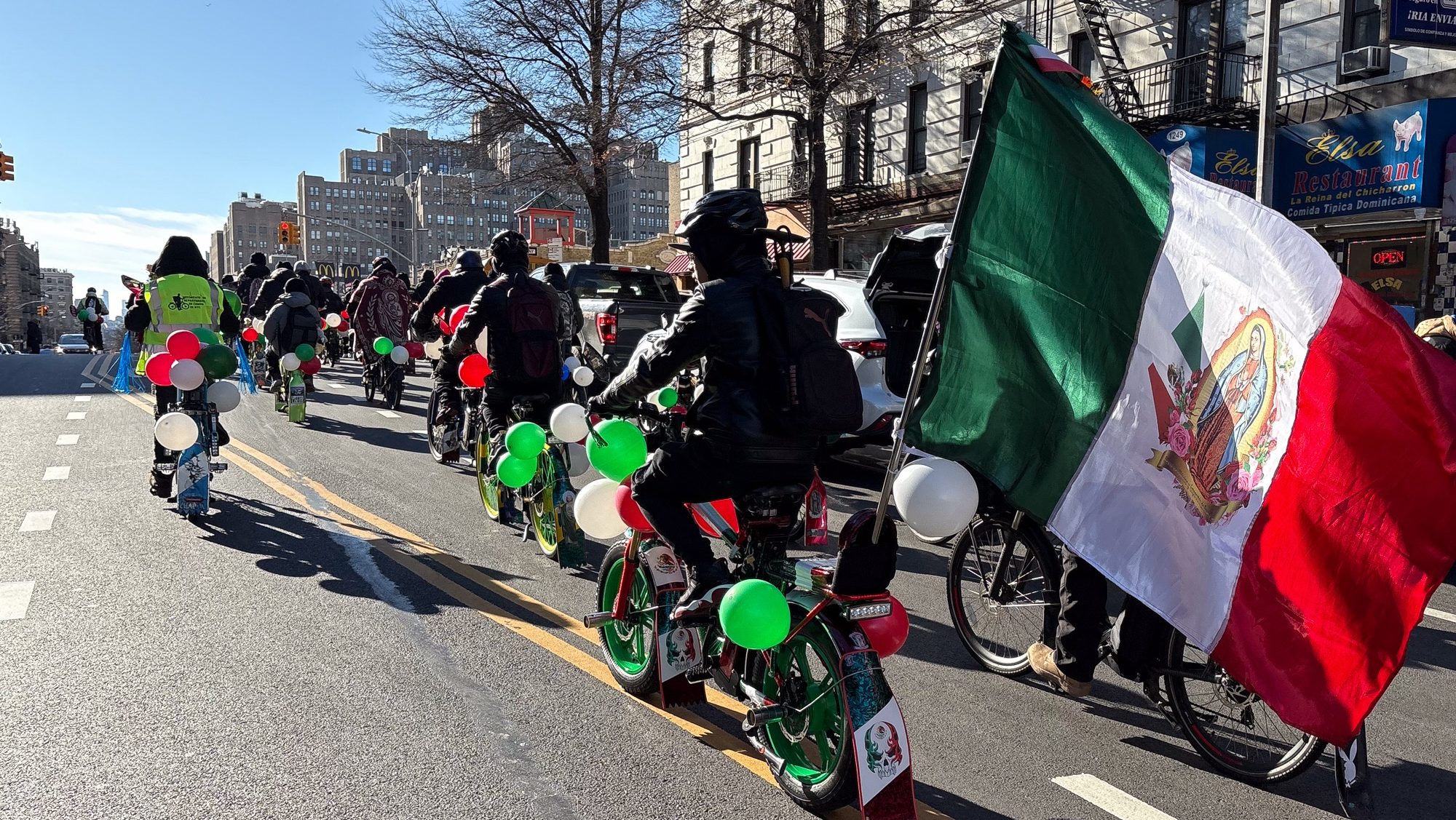


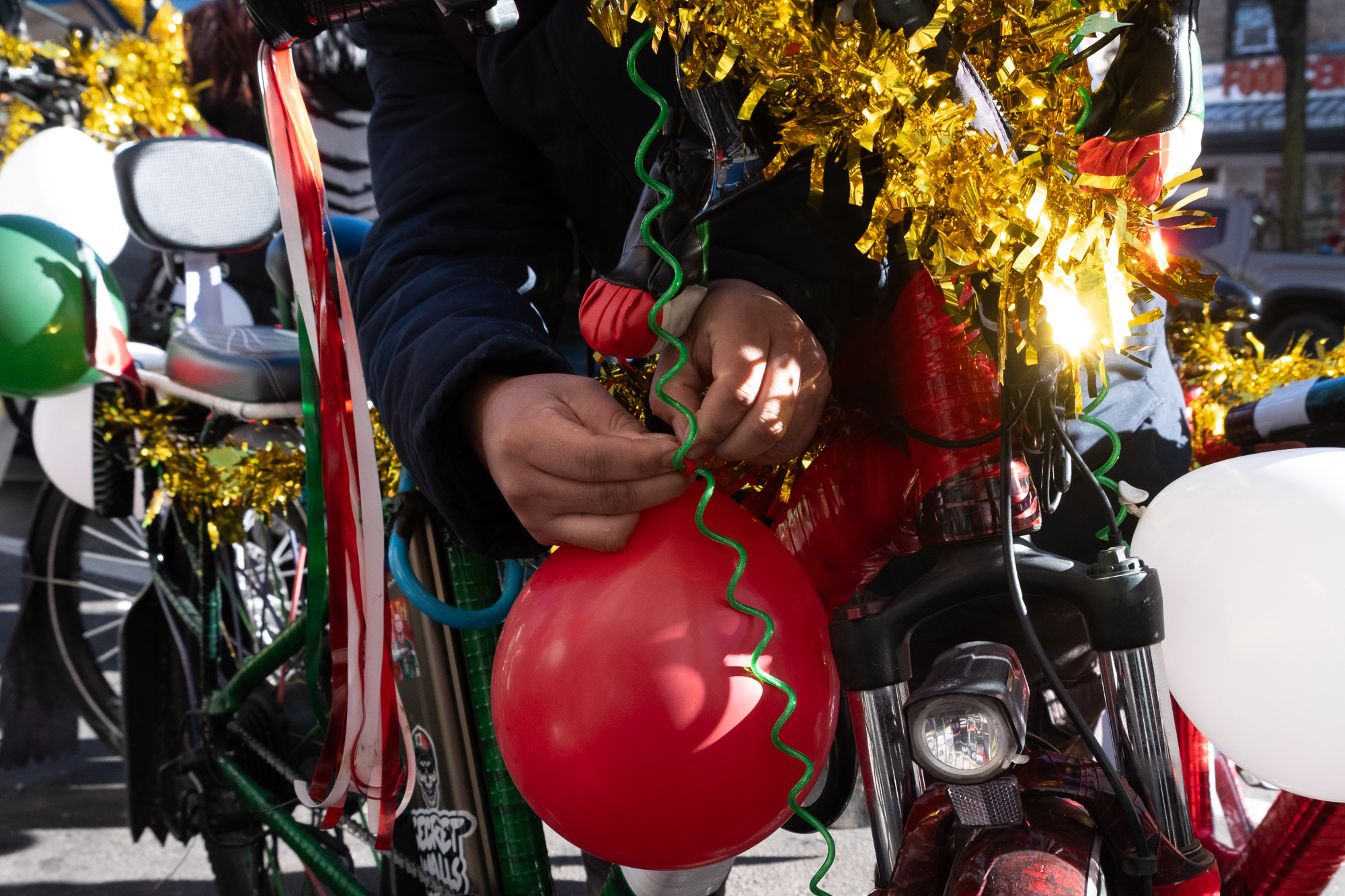
On a chilly Friday morning, dozens of delivery workers adorned their bikes with balloons, flags, flashing lights, and gold tinsel as they rode from East Harlem to the Bronx in an annual commemoration of the Feast of Our Lady of Guadalupe.
The cyclists joined Father Fabián Arias, of Saint Peter’s Church in Midtown, for the annual procession, or recorrido, some strapping statues of the Virgin of Guadalupe to their bikes in tribute to this figure of protection, strength, and Mexican and Latin American identity. At each stop along the route, Father Fabián blessed the business and its employees.
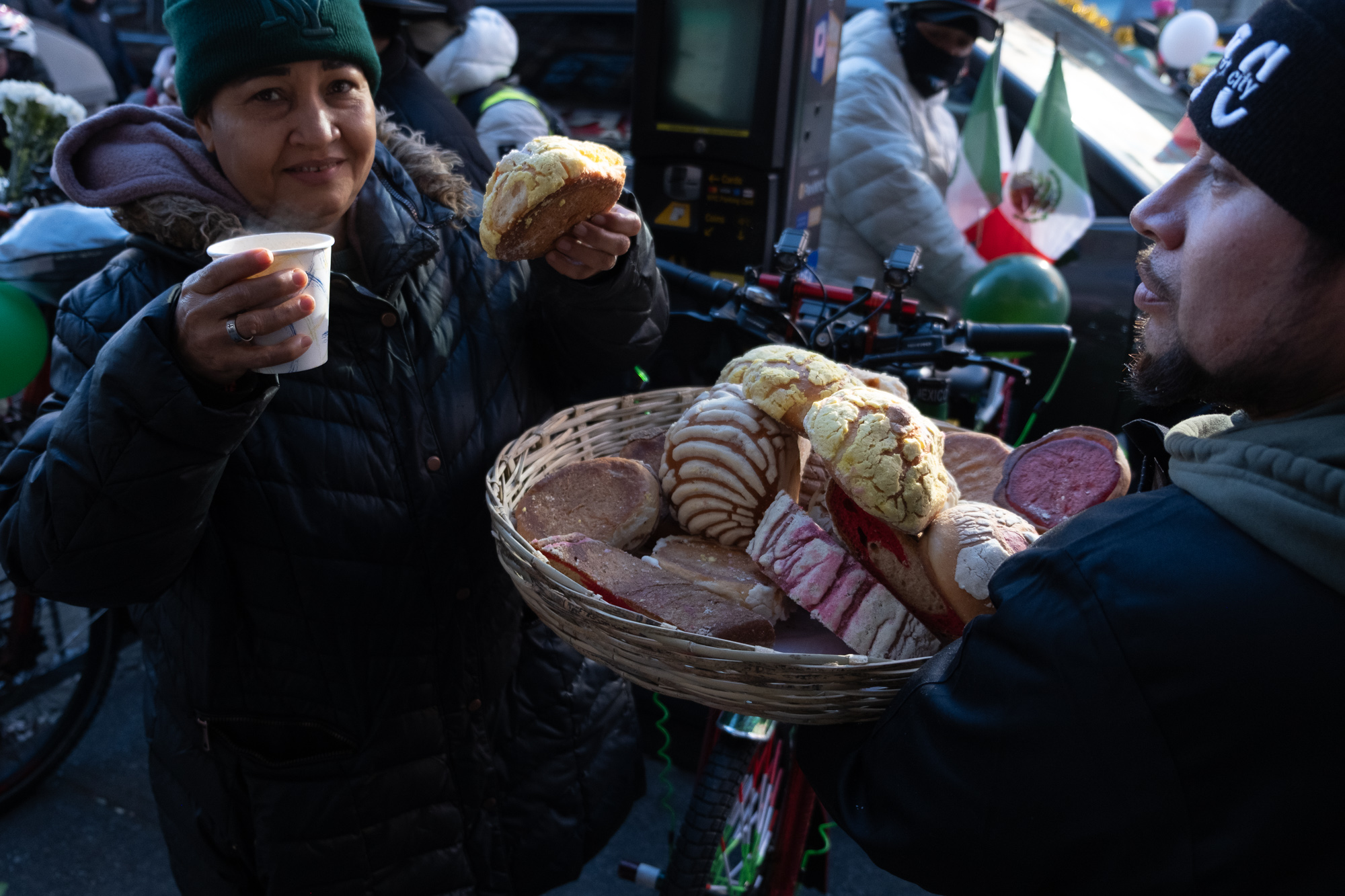
Restaurant and shop workers offered the bikers Mexican treats like pan dulce, steaming hot chocolate, and fresh tamales. Children came out to greet them. And biker volunteers, armed with stop signs and neon vests, formed a moving, protective perimeter for the group. Sounds of bike horns, sirens, and the “La Guadalupana” hymn filled the air.

“We’re the only ones who take care of each other,” said César Solano, founder of the social media page El Diario de los Deliveryboys en la Gran Manzana, and one of the event’s organizers. “It’s like right now in this procession — we’re looking out for each other to make sure everyone gets there safely, that nobody falls behind.”
This annual procession began five years ago, when Father Fabián asked Solano to join him in visiting local Mexican businesses as part of the feast day. The priest, who has been a guardian for dozens of unaccompanied children, knew Solano from years earlier — when he had helped him gain residency under the Special Immigrant Juvenile status program.
Solano’s Diario de los Deliveryboys group, and others like it, have become a resource for thousands of delivery workers, primarily from Mexico and Guatemala. Through Facebook, Instagram, and WhatsApp channels, the group raises funds to support delivery workers who have been injured in accidents, repatriate the bodies of workers who have died, cover funeral and vigil costs, and warn members about risks, such as bike thefts.
In its first year, the procession’s route included only four businesses. Now, as more Mexican shops and restaurants have asked for blessings, the list has expanded to fourteen businesses across Washington Heights, East Harlem, and the South Bronx. Last week, the procession kicked off around 11:30 a.m. and continued until its last stop, a perfume shop in East Harlem, after 10 p.m.
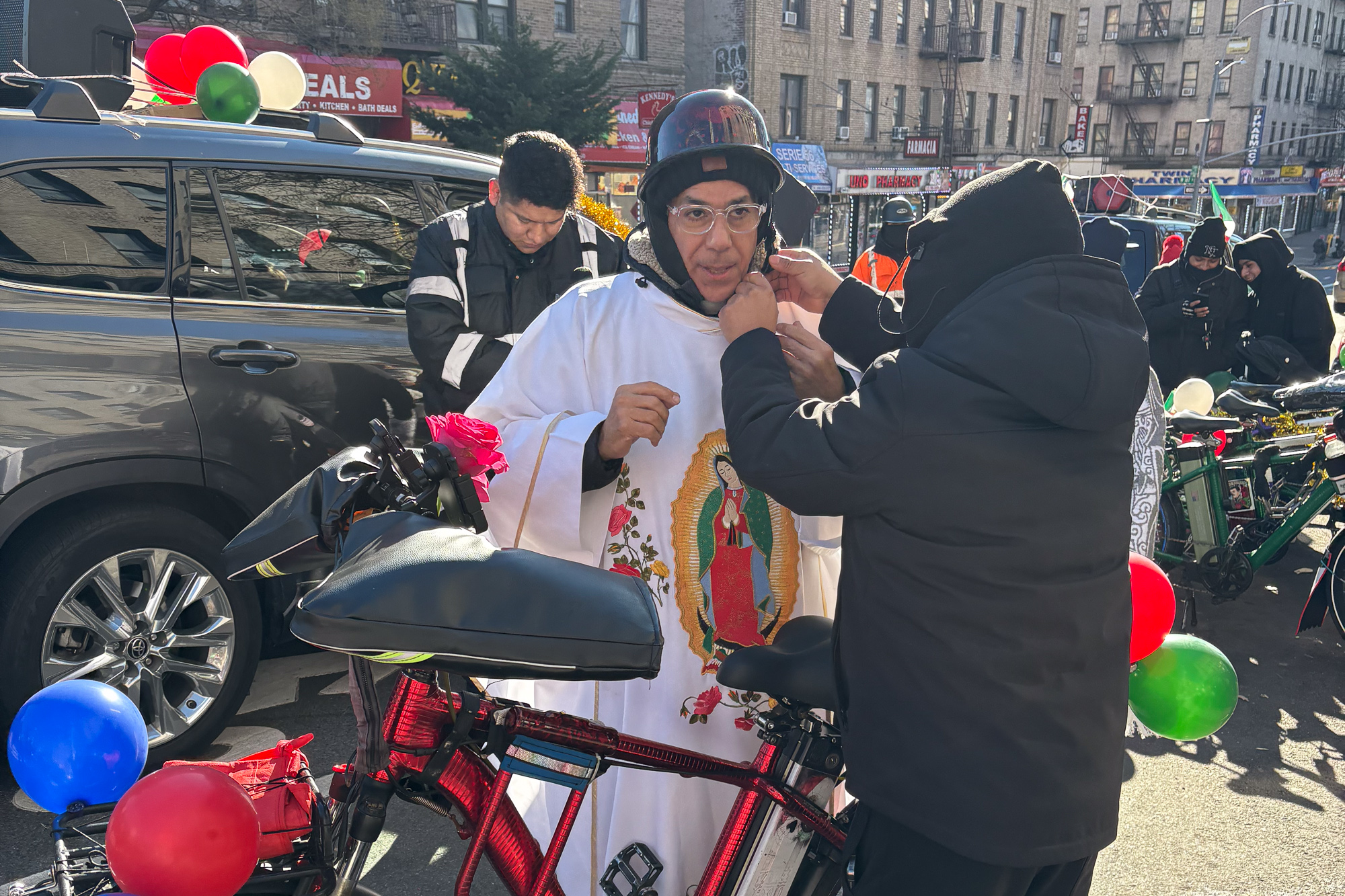
“This is a time in which we are all experiencing a crisis, not only in terms of immigration but also an economic crisis,” said Father Fabián, as he stood outside a Washington Heights restaurant, wrapped in a white robe embroidered with an image of the Virgen de Guadalupe and with a bike helmet firmly fastened on his head.
“But it’s not just the owners of these businesses who are affected by the crisis. Many people work here — and many others in the surrounding area, like all the delivery drivers, also depend on these businesses, which support entire families.”
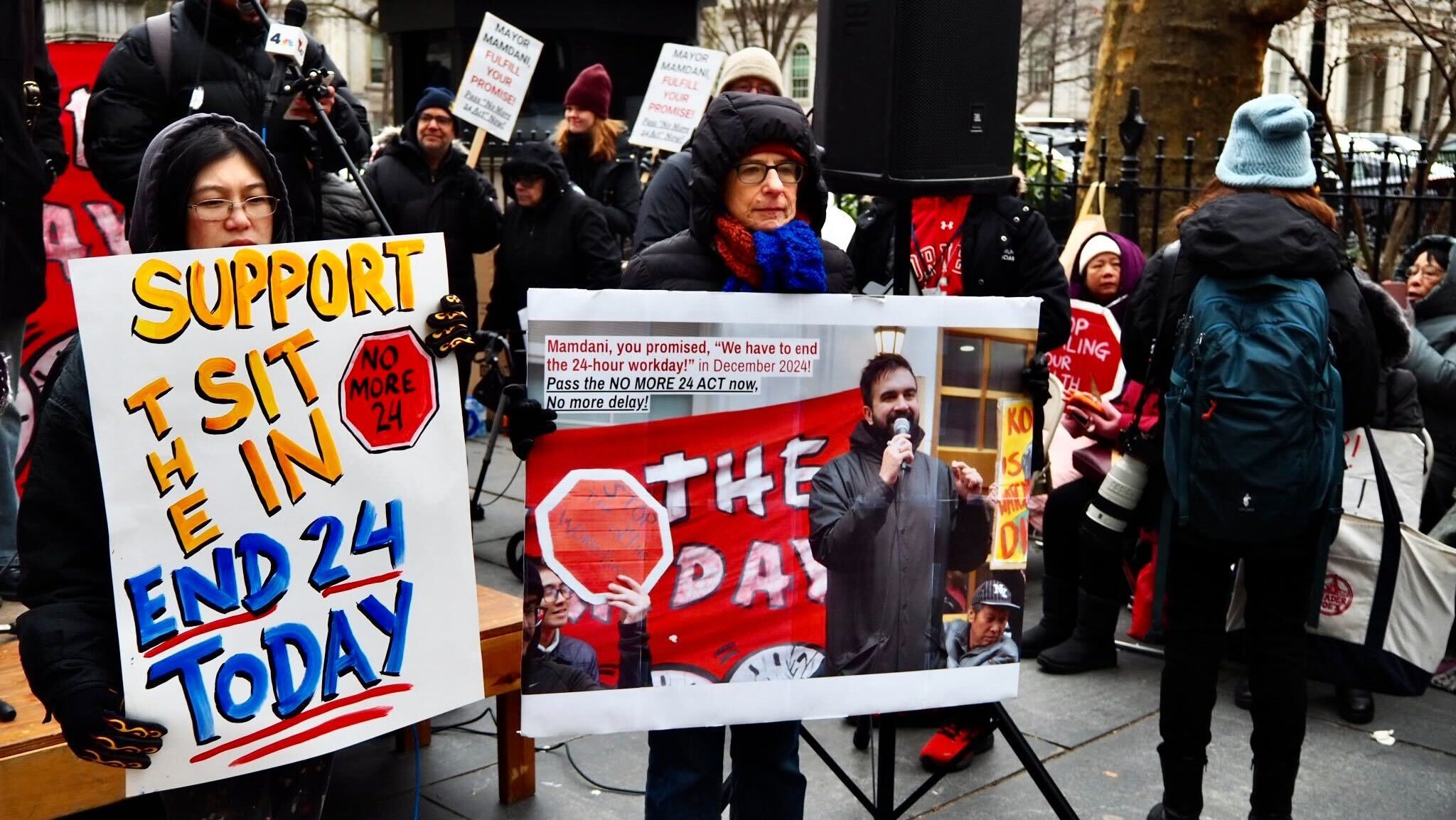
In January, a series of minimum wage and workplace protection laws passed by the City Council will take effect. But the laws have fallen short of addressing driver safety — and delivery work remains one of the most dangerous occupations in the city, according to 2024 reporting from Documented.
Solano’s group helps to fill that gap. During COVID, they stood guard at the entrance to the Willis Avenue Bridge, where delivery workers finishing their shifts in Manhattan faced frequent, violent thefts and attacks as they crossed to their homes in The Bronx.
José Jeronimo, a deliverista originally from Veracruz, Mexico, said thefts of bicycles, batteries, and tires have increased in recent months as work has become more scarce. Electric bikes cost between $1,500 and $3,000, and the theft of one can mean the loss of livelihood.
El Diario de los Deliveryboys encourages its members to add GPS tracking devices to their bikes, and members also share alerts about bike thefts and other problems affecting their work.
“Everyone is connected on WhatsApp, so we can all see what’s happening,” Jeronimo said. If a member needs help on their shift, “those who are not working will go to their aid.”
Deliveristas say the police provide little help.
“The police don’t do anything. Even though we inform them, they do nothing. They don’t support us,” Jeronimo said. “It’s too much of a hassle to report it to the police. Besides, even if the bike is yours, they ask for a lot of documents — like where you bought it and all that.”
In a statement, a Deputy Commissioner, Public Information (DCPI) spokesperson told Documented that bicyclists can register their e-bikes with the NYPD’s “Operation Identification” program, to help with quicker recovery of lost and stolen bikes. “If the individual who stole the bike is not initially apprehended, the case is then handed over to the precinct detective squad who will enhance and investigate the incident further. Victims can also walk into their local precinct to report the incident. The NYPD takes these crimes seriously and will investigate them with the goal of apprehending those responsible.”
Juan, who also goes by Juanito and requested that his last name not be used to protect his safety, said the police arrive late, if at all. “We talk to the police, and they don’t pay attention to us. They take forever to arrive,” he told Documented.
In the absence of institutional support, Juanito organizes a group called “Los Tigres Malos de Alto Manhattan.”
The group acts as a kind of rapid response to thefts. When they receive notice that a bike has been stolen, the group mobilizes.
“We get together, and say, ‘We’ve got to check it out,’” Juanito told Documented. “And then whoever’s available will say, ‘Ok, I’m free, I’ll go.’”
The last action Juanito took part in was on Dec. 4, when a bike was stolen in Washington Heights. The group followed the bike’s GPS device and was able to return it to its owner without a fight — although, Juanito says, recovery missions occasionally involve confrontations with bike thieves.
Juanito’s own bike was stolen last month. He tracked its location to an apartment building in East Harlem, but the Tigres Malos were not able to gain access. The police, he said, have still not responded.
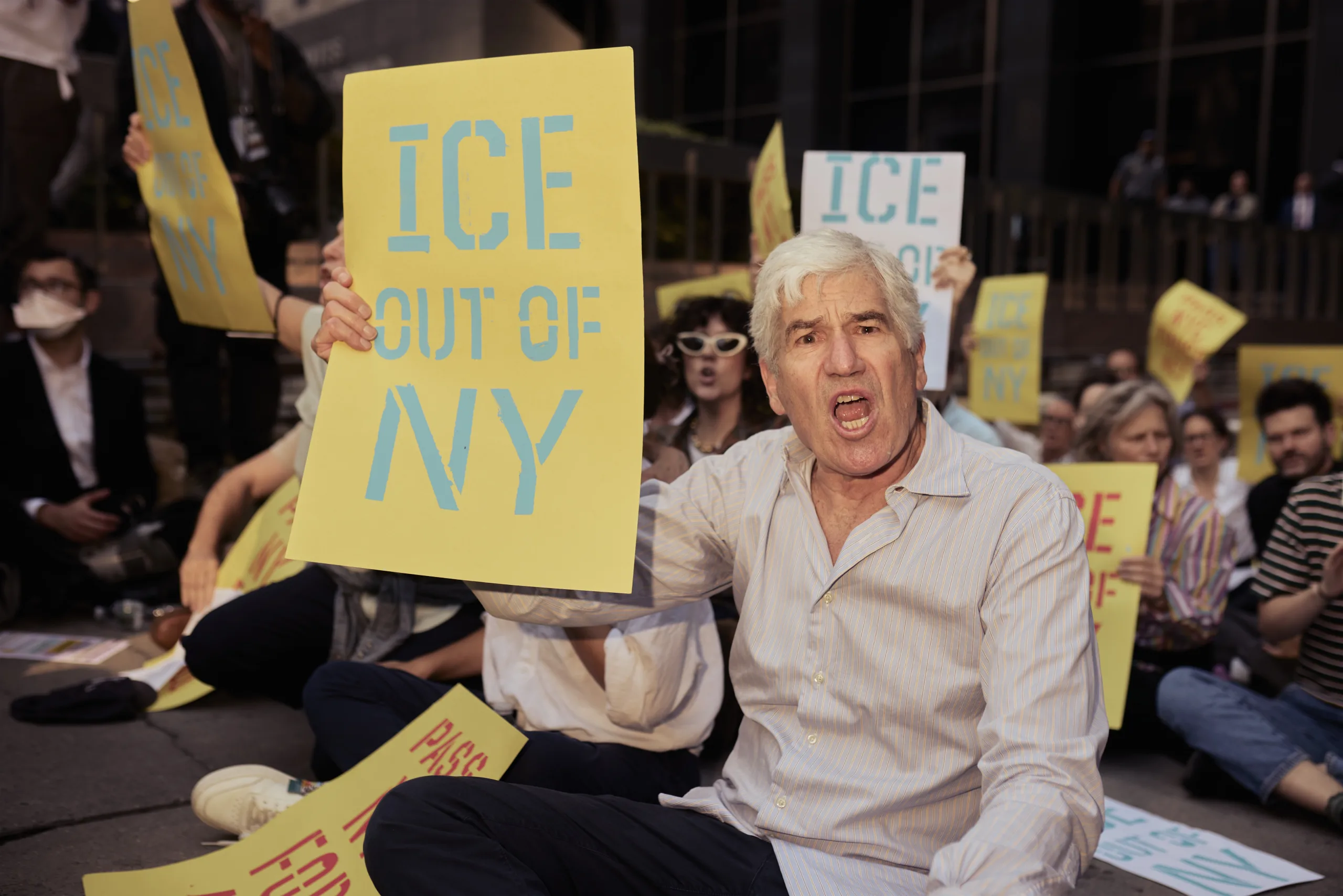
In recent months, the Deliveryboy WhatsApp and Facebook groups have taken on a new task: alerting community members to ICE activity.
你知道吗?非公民办理驾照时的这个错误可能会导致选民欺诈
“This is a very difficult time because in this moment, this is not America,” Father Fabián told Documented. “What is happening here? This country is a country for the immigrant.”
The Lady of Guadalupe, Father Fabián added, is an especially important figure for immigrants in these times. As the patron saint of Mexico, who first appeared to an Indigenous Nahua peasant in the 1500s, she holds particular meaning for Latino and Indigenous Catholics. “At this moment, she is walking with the vulnerable community,” Father Fabián said. “She really walks with the immigrant people.”
“She has blessed us by allowing us to be well in this country despite the difficult times,” Solano told Documented. “And so we continue on, because she gives us the blessing to keep going.”