

For years, Uber and Lyft drivers have been honking their horns in distress over the growing crisis of account deactivations. Now, a new report reveals that the majority of drivers who were deactivated were given no prior notice and could not successfully appeal their deactivation.
The report, released Tuesday by the civil rights organization, Asian American Legal Defense and Education Fund (AALDEF), independently analyzed data from nearly 350 surveys of deactivated drivers collected by the New York Taxi Workers Alliance (NYTWA).
Although the deactivated drivers surveyed were largely long-time workers with excellent satisfactory ratings and no records of wrongdoing, the report found that 70% of drivers deactivated by Uber and 76% of drivers deactivated by Lyft were deactivated without any prior notice.

The report also showed that 95% of surveyed deactivated drivers identified as people of color, with Asian drivers comprising nearly 69% of respondents.
Uber and Lyft guidelines stipulate that a driver can be deactivated for a wide variety of reasons, such as vehicle issues, failed background checks, fraud, discrimination, harassment, or poor customer ratings.
However, drivers say the companies often deactivate accounts without any prior warning. Uber has admitted to doing this in the past despite their claims that it attempts to “make every effort” to alert drivers who are at risk of deactivation.
AALDEF’s report also found that although nearly all of the surveyed drivers attempted to appeal their deactivation, more than 90% remained permanently locked out of their accounts.
Some Uber drivers who have not been accused of criminal activity while on the app, like theft or accused of physical or sexual assault, can appeal their deactivations with the Uber-run driver deactivation review panel. The panel was developed in partnership with the Independent Drivers Guild (IDG), a controversial workers’ organization that is partly funded by Uber.
Responding to Documented’s request for comment, IDG questioned the validity of the survey, saying they have helped thousands of deactivated drivers get back to work, many within a week. Of the cases that went to arbitration, IDG claims they were able to return 100% of the drivers to work.
“It’s unclear where the taxi owners came up with these 341 survey responses, but it appears they may have been victims of some kind of fraud,” said Brendan Sexton, president of the IDG, in a statement to Documented. “The real numbers are clear: more than 4,000 New York City rideshare drivers were successfully reinstated last year alone through our union-won, driver-led process. That’s 90% of all cases opened.”
Yet AALDEF’s study found that the appeal process was largely ineffective.
Out of the drivers surveyed, 154 Uber drivers attempted to appeal their deactivation by either contacting Uber directly or using IDG’s appeals process to no avail. A majority of those drivers — 95% — reported that despite their appeals, their accounts remained deactivated.
“The findings in this report illustrate that Uber and Lyft are operating outside the bounds of basic fairness, cutting vital workers off from their livelihood through an algorithm,” said Elizabeth Koo, interim director of AALDEF’s Economic Justice for Workers program, in a statement shared with Documented. “Behind every deactivation is a human being — a parent, a provider, a New Yorker — suddenly cut off from income with no explanation and no recourse.”
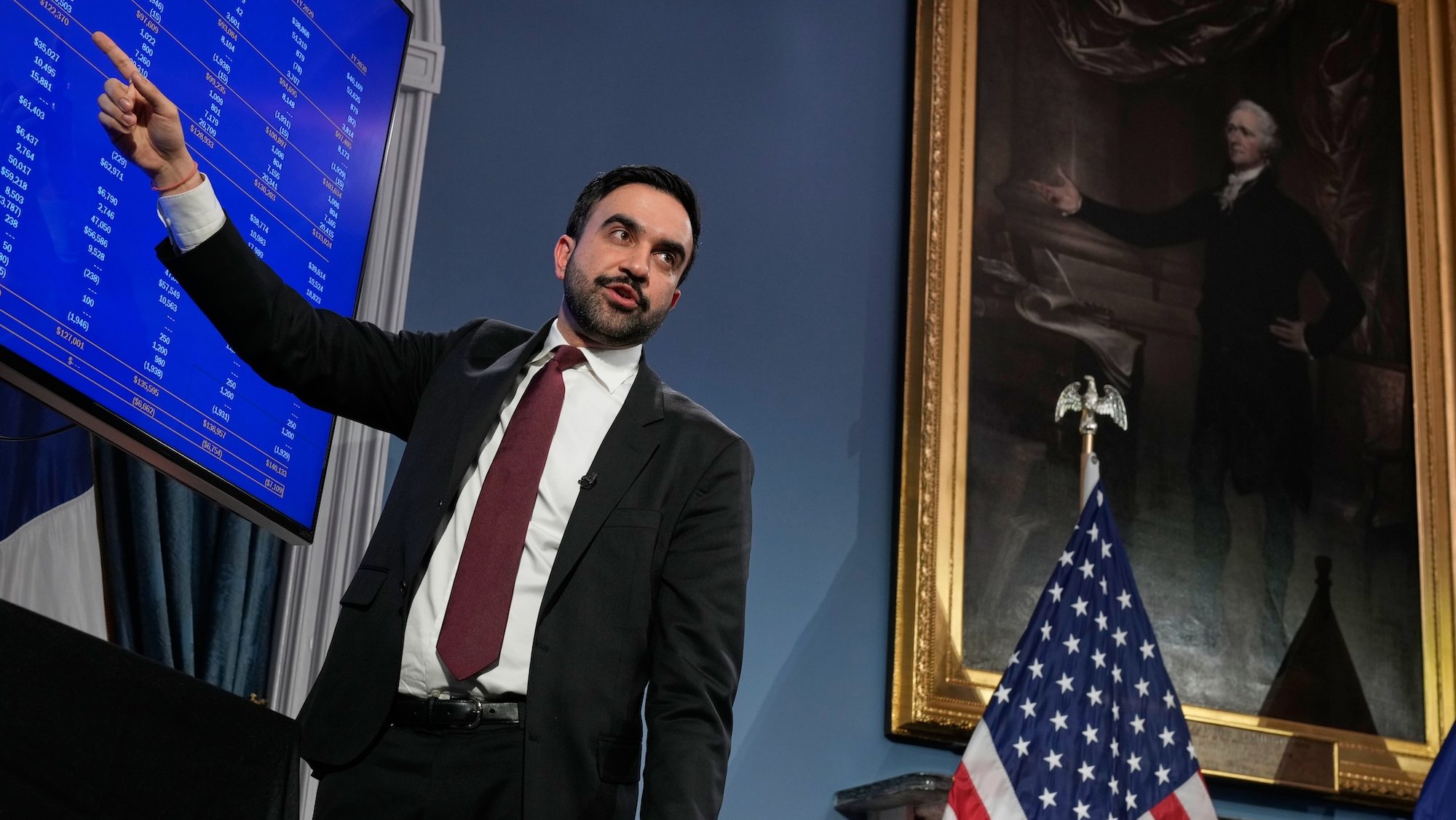
On Tuesday, the New York Department of Consumer and Worker Protections (DCWP) and the Taxi and Limousine Commission (TLC) held an online hearing through Zoom, announcing the release of the survey.
One driver, Ousmane Diallo, said he has been struggling to have his account reactivated for seven years.
“I have a wife and three children,” he said during the Zoom hearing announcing the study. “They deactivated my account for no reason since 2018. I tried contacting them so many times, but they didn’t activate me.”
During the same hearing, driver A.G. Egwim said he was deactivated a week ago because he canceled a ride to attend a doctor’s appointment.
“Do the Uber and Lyft people see us as human beings at all, or just money-making machines for them? It’s really very appalling considering how drivers get treated on a daily basis by these companies.”
Lyft expressed skepticism about the report’s findings. If a driver is deactivated following an internal investigation, they can request to have the decision be reviewed, they told Documented. They added that another member of Lyft’s Safety team reviews the evidence and decides. If they find the driver’s account should be reactivated, they will reactivate and communicate that with the driver.
“This survey isn’t grounded in reality and its findings aren’t representative of NYC rideshare drivers on our platform,” said C.J. Macklin, Lyft’s director of communications. “Unnecessary deactivations negatively impact our business model, so we engage in thorough review processes and aim to only deactivate drivers to protect the safety of our community.”
Uber also pushed back against the report’s findings.
“Restricting a driver’s access to the platform is always a last resort, done not because we want to, but because we need to ensure everyone who uses Uber can have a safe and reliable experience. Access restriction is not a common occurrence,” said Freddi Goldstein, an Uber spokesperson. “Fewer than 2% of NYC Uber drivers experienced a permanent deactivation in the first six months of 2025. These deactivations were largely due to fraudulent activity and safety incidents.”
However, during DCWP’s online hearing, the DCWP stated that Lyft has not been forthcoming with City Hall regarding the standards they use in their internal deactivation review process.
Last year, in response to the mounting deactivation crisis, City Council member Shekar Krishnan introduced Intro 276 that would prohibit for-hire vehicle apps like Uber and Lyft from deactivating for-hire drivers without just cause. The legislation is expected to come up for a vote before the end of the year
“The fundamental problem here is that there is no existing law that says the company has to show any proof of wrongdoing before deactivation,” he said during the Zoom hearing. “Right now, Uber is the judge, jury, and prosecutor against drivers. They are guilty before they are proven innocent.”
DCWP Commissioner Vilda Vera Mayuga echoed Krishnan’s sentiments.
“Arbitrary or unfair deactivations can be financially devastating for these workers, which makes this legislation incredibly important,” she said. “We are committed to advocating for and implementing fair labor standards for all workers, and we look forward to working with the Council and stakeholders to create effective deactivation protections for these workers.”
If Intro 276 passes, a driver who had been deactivated within the past six years would be able to petition the app companies for reactivation, and the companies would be required by law to reactivate them unless the prior deactivation had just cause, for example, sexual misconduct. The bill has major support from the NYTWA.

你知道吗?非公民办理驾照时的这个错误可能会导致选民欺诈
The IDG has opposed the bill, arguing that it will undermine their own grievance processes that they developed with Uber.
However, DCWP also supports the bill and advocates that, in addition to drivers being fully reinstated, they should also be given severance pay as a component of the bill
“AALDEF’s report reflects the collective voice of drivers facing unjust firings by Uber and Lyft and shows that this is an industry-wide problem that needs an urgent solution,” said NYTWA Executive Director Bhairavi Desai. “This is a basic issue of economic stability and worker dignity. That’s why NYTWA is fighting for just cause protections for Uber and Lyft drivers.”