

This story was produced in collaboration with THE CITY.
On the Fourth of July, the 150 or so people packed into a small community center in Queens had much to celebrate — and fear.
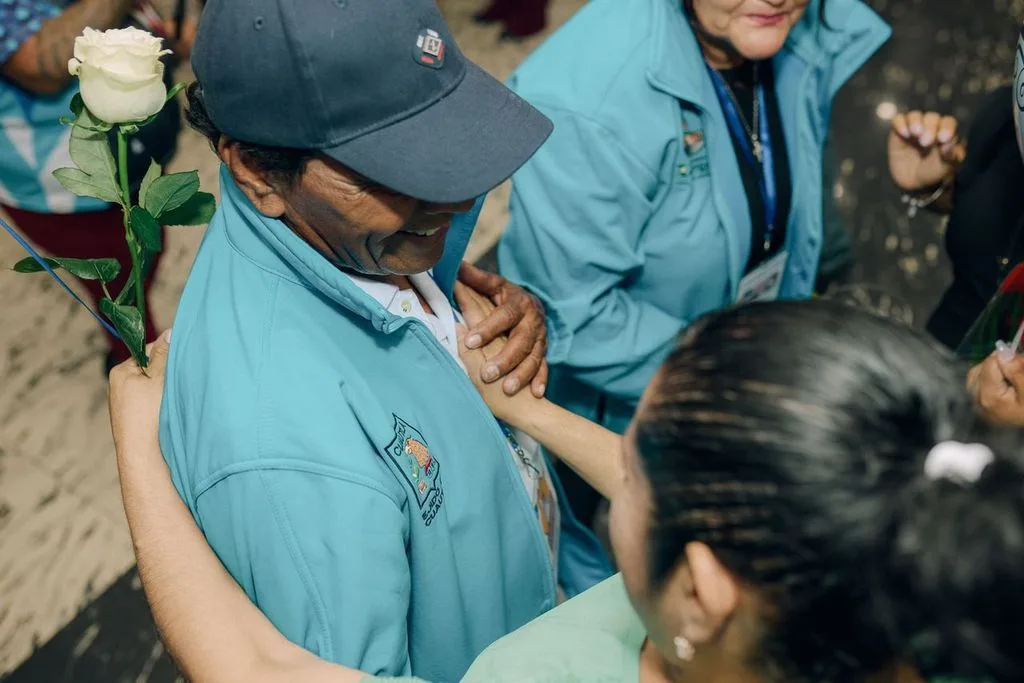
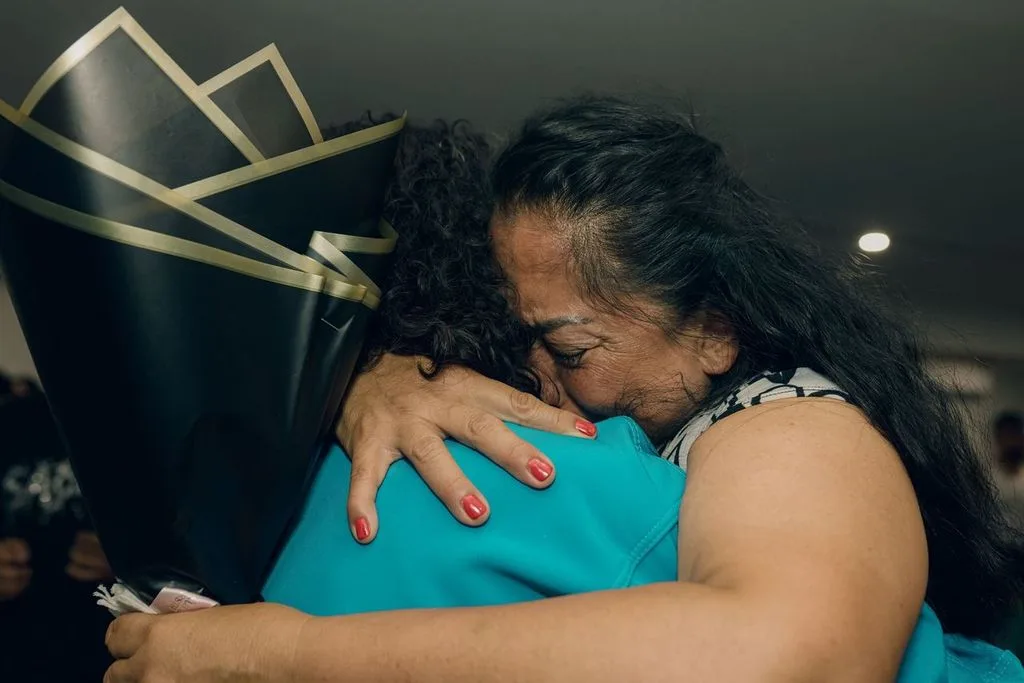
“It’s very emotional,” said one man, Antonio, holding his hand over his heart and blinking back tears. Next to him lay a bouquet of roses and a colorful balloon with “Welcome Home” written in cheerful lettering.

Antonio was just 17 when he left Mexico for the United States, 27 years ago. That was the last time he saw his mother. Now, in a few minutes, she, along with 47 other mothers, fathers, grandparents and siblings, would walk through the doors. For most of the families gathered here, it would be the first time they had seen their relatives in decades.
Every few months, the Club Migrante Chinelos de Morelos, a cultural organization in Queens, organizes a “reencuentro familiar” — family reencounter, or reunification — in collaboration with local governments in the Mexican state of Morelos.
The program, one of dozens like it around the country, facilitates the travel of Mexican family members, many of whom have never had passports or birth certificates, to see their relatives in New York. Many of their close relatives in New York are undocumented, and have not been able to return to their home country in decades for fear of not being able to re-enter the U.S.
With federal arrests of immigrants intensifying, recent reunifications — THE CITY has attended three, this year — have taken on an increasingly somber tone.
At the Independence Day gathering, Aurora Morales Gil, founder of the Club Migrante Chinelos, spoke about safety precautions to the assembled families, who waited, mostly in silence, for their relatives to arrive.
“This is a moment of happiness, but I want you to know this. What we’ve seen so many times, what to do. I know that in moments of fear, I, too, become frightened when I’ve seen it. But we must know what to do.”
Each family received a folder with advice on how to prepare themselves in the event of an immigration raid. One page listed local representatives who Morales Gil said families could call in case of an emergency.
She described how ICE recently detained the spouse of one of the club’s organizers and moved him across several states, leaving behind his wife and twin children. The office of one local representative, she said, had helped the family look for a lawyer, and advised them on their right not to speak to authorities.
“They told us, ‘Tell your friend, your acquaintance, your family member — once they return your phone and whatever belongings you have, to share the location. That’s how we knew her husband was being taken from here to there.”
Speaking in Spanish to the group, Félix Santana Ángeles, the community consul for the Mexican Consulate, declared, “We are not going to criticize what this country decides,” alluding to the massive budget increase for ICE that had passed in Congress just days before. “We also have the right to say, we do not agree with the persecution of Mexican women and men.”
The only way for Mexican residents of New York to empower themselves, Santana Ángeles continued, was to know their rights. Families should memorize the phone numbers of their emergency contacts, he said. If they spotted ICE conducting a raid, they should report it to the consulate. If anyone had children born in the United States, now would be a good time to apply for Mexican citizenship for them.
“We have the right to live,” said Santana Ángeles. A large American flag waved on the screen behind him.
“We are going to survive, and we are not going to leave easily.”
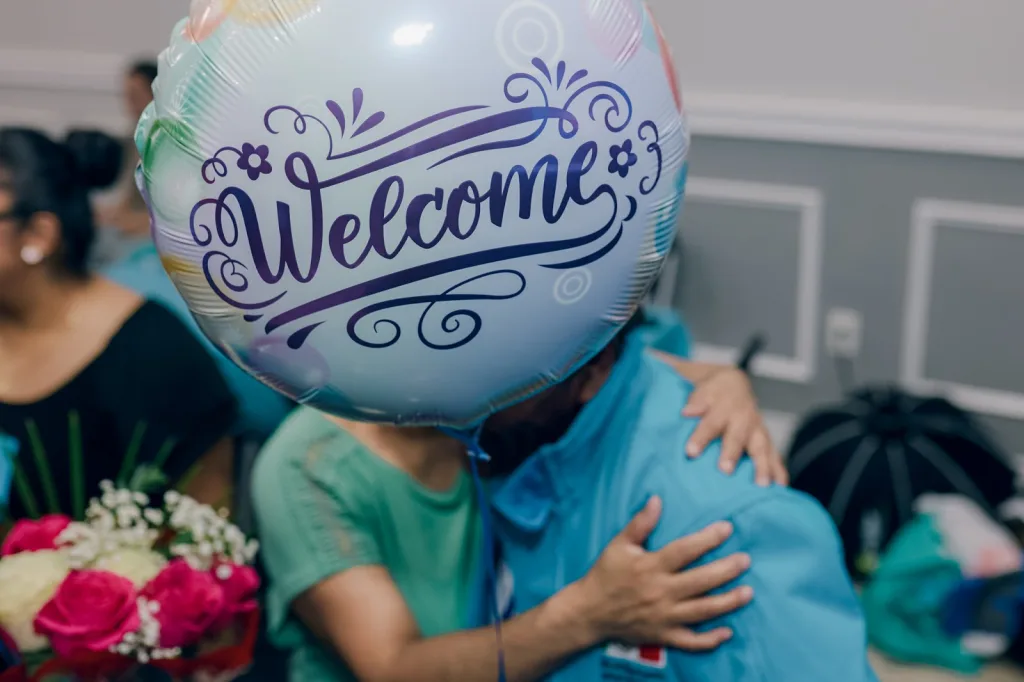
Some family members had not seen each for decades.
A few minutes later, the 48 visitors arrived from the airport.
“The moment that you have waited for is here,” Morales Gil announced to the crowd, which fell silent.
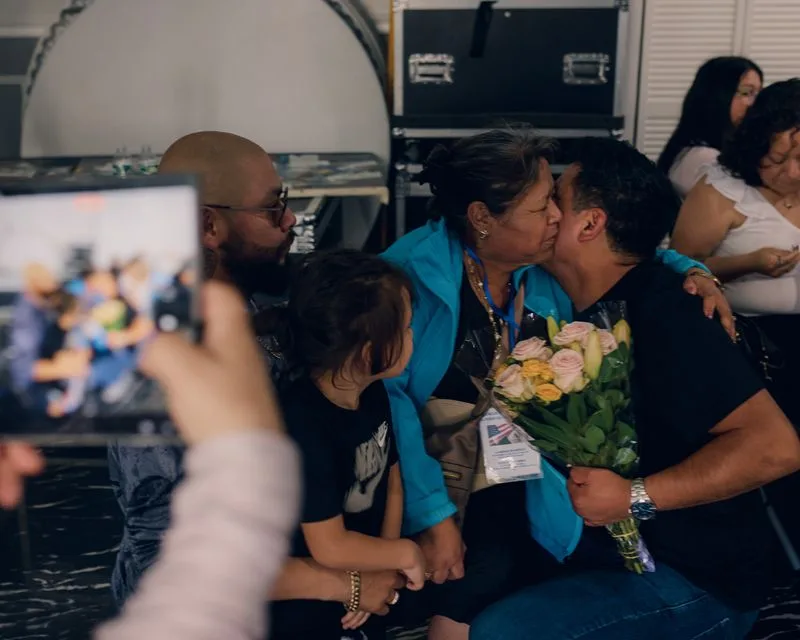
As Morales Gil called, one by one, the name of each visitor, traditional Chinelos dancers, dressed in colorful costumes with designs that celebrate Mexican heroes and mock Spanish colonizers, accompanied them into the arms of their waiting families.
Antonio sat closely next to his mother.
“It’s very beautiful, very emotional to be able to hug my son after so much time,” said Antonio’s mother, who declined to share her name with THE CITY.
Antonio agreed. “I am very happy,” he said.
‘Never been able to go back’
An estimated 412,000 New Yorkers are undocumented, according to 2022 census data. Most of them have lived in the United States for over a decade, and are unable to return to their loved ones as a result. Without legal papers, undocumented people face particular risks in leaving and attempting to re-enter the U.S.
Even as immigration authorities wreak havoc on immigrant communities across New York City, the reencuentros familiares have continued.
Morales Gil founded Club Migrante in 2012 with a dual purpose: to help New Yorkers born in her home state of Morelos obtain their birth certificates, and to strengthen Morelense culture in New York City.
In 2017, she learned of a program in Illinois called “Abuelitas,” started by a Republican congressman, that enabled undocumented U.S. residents to reunite with their Mexican relatives. For Morales Gil, the program immediately held appeal.
“Aurora knew that there was a huge need to address that family separation,” said Daniel, Morales Gil’s brother, at a reunification event in May. The siblings, both originally from Morelos, had many friends and relatives who had been stuck in the U.S. for decades.
“They’ve never been able to return to Mexico, but they also can’t have legal status in the United States,” he said, in Spanish. “So these families have had children and grandchildren. They’re homeowners, business owners, they’re part of the economy of the United States, part of the community. But they just can’t go to Mexico.”
The early years of the reunification program, he said, were much more difficult. The Club Chinelos engaged in careful negotiations with local Mexican governments, necessary in order to launch an officially-sanctioned reunification program. In the U.S., Morales Gil took pains to convince authorities that the U.S.-based family members paying for round-trip flights from Mexico had no intention of having their relatives overstay their visitor visas.
Gradually, Daniel said, the process smoothed out. “No one ever stays in the United States. We bring them here and send them back. It’s not a burden on the United States government.”
The need for reunification programs to bring together families long-separated by the border ties closely into 90s-era trade agreements like NAFTA, the North American Free Trade Agreement, that allowed for the flow of goods and capital — but not human mobility.
“What we have is a situation where millions of people came to the United States in the mid-90s from Mexico — because of NAFTA, because of the devaluation of the peso, because of a very severe drought, and a confluence of other factors,” said Alyshia Gálvez, professor of anthropology at the CUNY Graduate Center and former director of the CUNY Mexican Studies Institute. But Mexican immigrants “had no way of coming here with authorization. And so the targets for this kind of reunification program are those people who came in the mid-90s and have never been able to go back.”
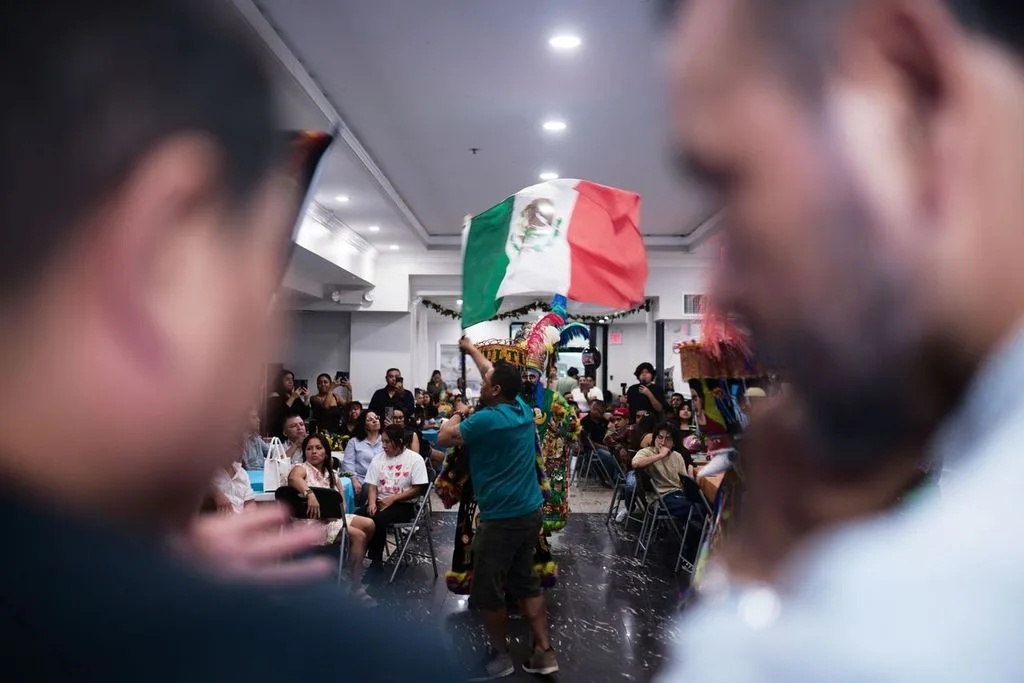
Local governments also benefit from the reunification programs. Many rural, poorer regions of Mexico depend heavily on remittances sent by expatriates in the U.S. The business-oriented government of Enrique Peña Nieto increased investment in the Instituto de los Mexicanos en el Exterior (“Institute for Mexicans Abroad,” or IME), as a method to strengthen ties with Mexican citizens primarily in the states. That investment led to renewed funding for government-supported reunification programs.
But the following, more nationalist-oriented government of Andrés Manuel López Obrador cut funding to the reencuentros. So private organizations, said Gálvez, stepped in to address the devastating consequences of family separation. Today, dozens of reunification programs exist across the U.S. with little regulation. Some charge many thousands of dollars to families desperate to see their loved ones again.
The program run by the Club Migrante Chinelos de Morelos can cost upwards of $2,000 per family member. Relatives, usually those already in the U.S., pay around $1,500 for the flight, accompaniment, and travel to New York City. In Mexico, travel to visa appointments, obtaining birth certificates — in rural regions, people are sometimes born outside of hospitals — local government fees, and other bureaucratic processes can add several hundred dollars more.
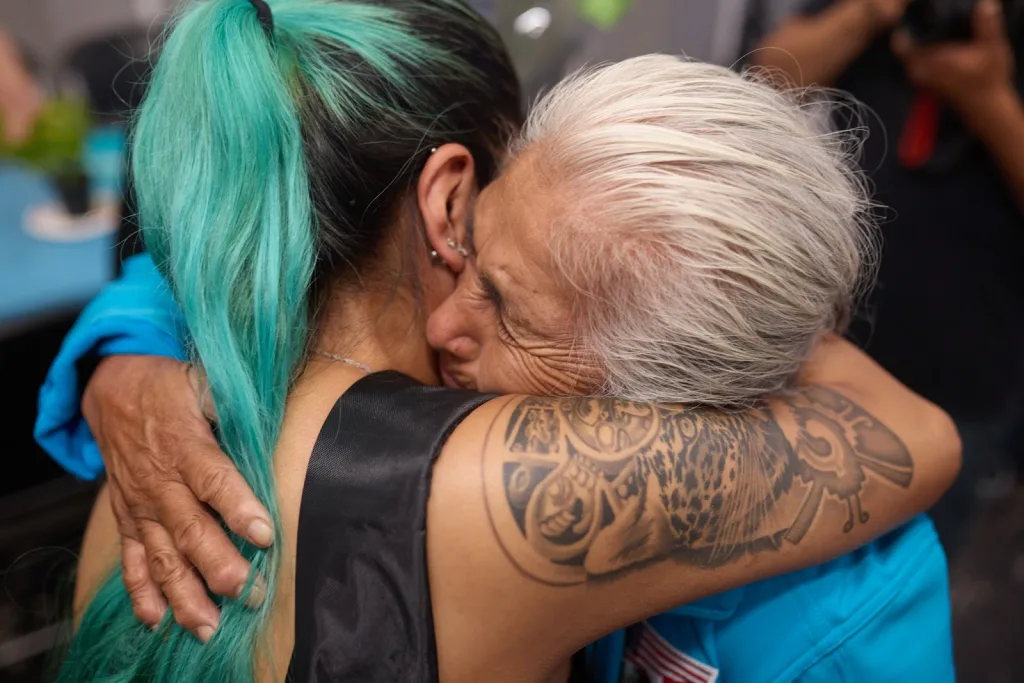
Family members were able to embrace in a safe space.
Even though many of these reunification programs are now run as for-profit businesses, taking some advantage of families desperate to see their loved ones again, Gálvez says they play an essential role in mitigating the harms of border enforcement. They also facilitate the enrollment of marginalized people in Mexico into government identification systems.
“The government intervention is really helpful. A lot of times people need to find their birth certificates or generate other kinds of proof of citizenship for the elderly folks who’ve never had identity documents. So it’s really hard for anybody but government entities to do the paperwork required. And it just pools a lot of resources so that it’s easier and less scary for families to get their family members, elderly family members mostly, to come here.”
The collective attention on asylum-seekers arriving in the last five years, Gálvez continued, has shifted the focus away from people who never had the chance to apply for asylum.
“There’s some amnesia happening in the United States,” she said. “We’ve forgotten how many millions of people arrived 25, 30 years ago and have nothing — no status, no access to a change of status. So all of the dominant culture discourses about, like, ‘Get in line, do it the right way,’ just completely missed the mark in terms of these millions of people who have never had a line to get into, never had a form of legalization.”
“It’s just unbelievably cruel, and I think anything we can do to kind of tell the human stories behind that family separation is really, really important,” she continued.
The reunifications have had to undergo some adjustments in recent months to ensure the safety of their participants. Morales Gil has moved many of the reunifications away from more public areas, like Mexican restaurants, to more secluded ones: a nightclub in the middle of an afternoon; an unobtrusive community center.
“It doesn’t attract attention,” she said.
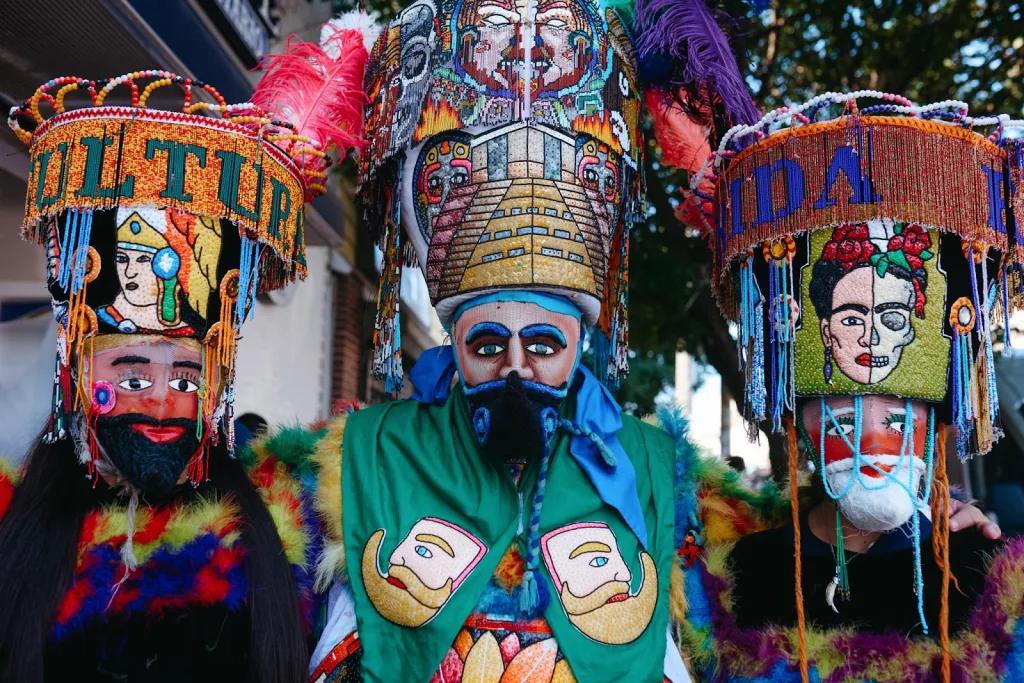
Chinelos dancers wore multicolored costumes that reference Mexican heroes and mock Spanish conquistadors.
While reunifications in previous years were promoted with elaborate invitations on the group’s Facebook page, recent ones have not been advertised. The group allowed reporters, Morales Gil said, because it was important to know how these separations affected families.
“I’m grateful for this country, but at the same time I feel it’s unfair,” said Morales Gil. “Most of these people don’t have the opportunity to obtain a green card, and they continue to contribute to the economy. It’s very cruel.”
‘Missing out on so many things”
For undocumented New Yorkers, decades-long separation from their loved ones carries a heavy toll.
On an April afternoon, two sisters, Rosa and Amalia, sat in Rosa’s warmly decorated kitchen in Sunset Park. Rosa, who has lived in the U.S. for decades, arranged for her sister to visit from their hometown in Cuautla.
Anticipating her sister’s arrival, “I already felt the emotions,” said Rosa, 64, who declined to share her name with THE CITY because she is undocumented. “Then, the feeling of being face to face — they exploded. And the moment was magical.”
The two sisters had spent the last several weeks reacquainting themselves with each other, “turisteando” — doing tourism — Rosa said.
“She forgot what I was like when I was younger,” Rosa laughed, looking at her sister. “Now that we’re living together, she remembers — ‘Oh yes, she was always like that.’”
Aging brings its own challenges, and reflections.

你知道吗?非公民办理驾照时的这个错误可能会导致选民欺诈
“You come here for a better dream, for a better life, to fulfill the various commitments you make over there. But it’s difficult not being able to return, not being able to see your family, missing out on so many things.”
Amalia and Rosa have a third sister who lives in Michigan. Rosa last visited her five years ago, when she fell ill with cancer. Amalia had been planning to visit her on this trip — but Rosa, fearing immigration authorities, decided it was safer to stay in New York.
“Now I can’t go anywhere near the airport for fear of deportation, for fear of being caught by an immigration agent and detained by bad luck,” said Rosa. “So it can’t be a complete reunion.”