

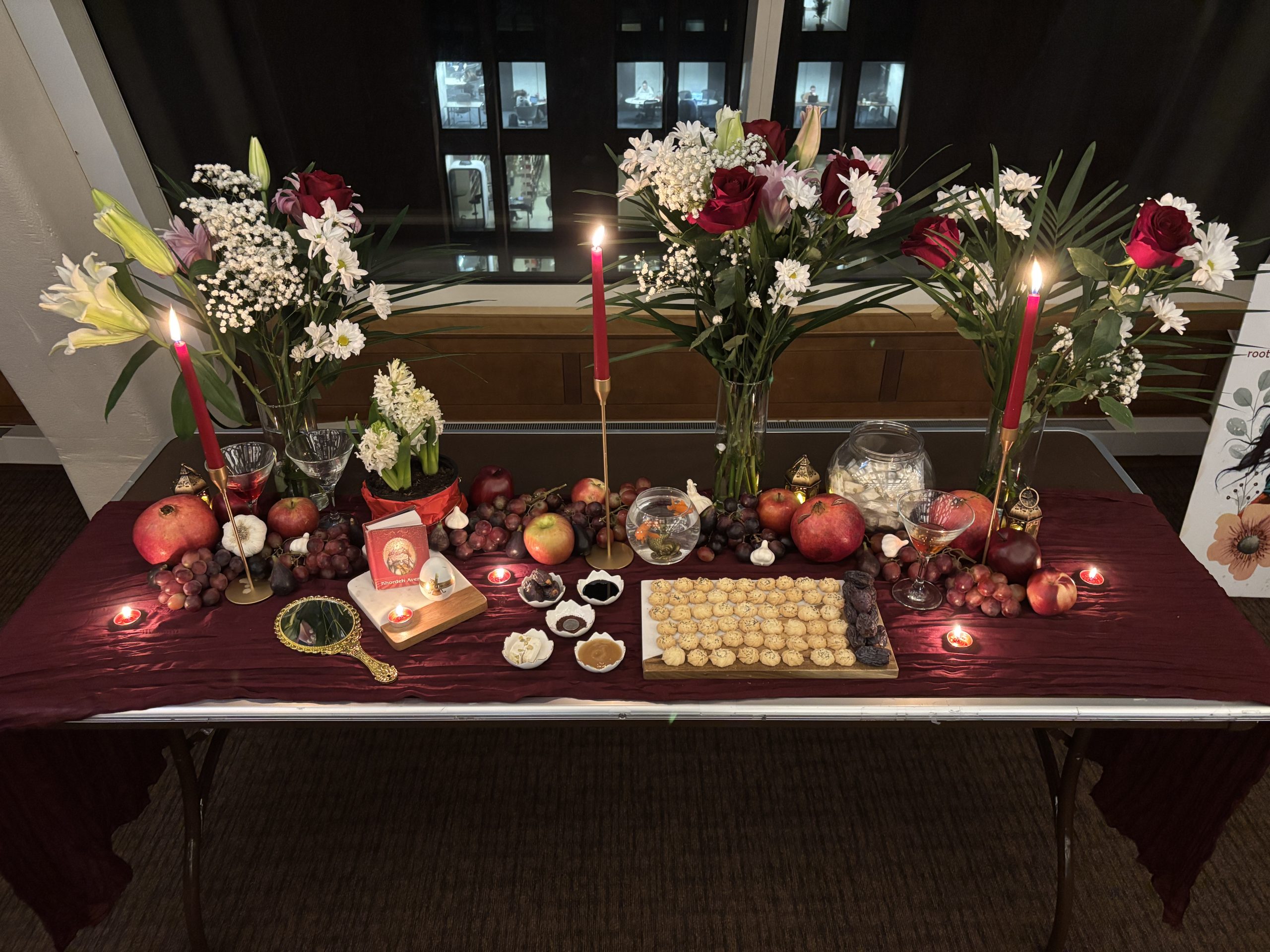
Inside New York University’s Rosenthal Pavilion, items starting with the Persian letter Seen are arranged on a table dressed in red cloth to mark Nowruz, the Persian New Year. The traditional display, known as a Haft-Seen, included candles, a mirror, goldfish in a bowl, a painted egg, sumac, apples, garlic, vinegar, a sweet pudding called samanoo, dates, a coin, and bulb flowers scattered among pomegranates and grapes.
For Setayesh Kazempoor, Nowruz is usually a joyful occasion — a time of renewal that marks the start of spring. But this year, the holiday, which literally translates to “new day” in Farsi, feels different.
The New York University Persian Cultural Society opted to abandon its usual Nowruz dance party and instead hosted a vigil honoring all the lives lost in Iran, not only from recent U.S.-Israeli bombardments, but also those lost at the hands of the Islamic regime.

“A new day reminds us that even after the longest winter, Spring still returns. Even after darkness, light still follows,” said Kazempoor, president of the NYU Persian Cultural Society, that evening. “So tonight, this vigil is not only about grief. It’s about remembrance. It’s about solidarity. And it’s about hope.”
As of 2024, there were 750,000 Iranian Americans in the U.S., with around 45,000 Iranians living in and around New York City. About 59% of Iranians across the country are immigrants, many of whom have been established for decades after seeking safety here during the Islamic Revolution in the late 1970s and during the Iran-Iraq war in the late 1980s.
But the U.S. and Iran have a long and complicated relationship, as the two countries for decades engaged in high-stakes, indirect conflict. That changed on Feb. 28, when the U.S. and Israel launched what they described as “preemptive” strikes on the Islamic Republic to topple the theocratic regime and destroy the country’s nuclear capacities. In less than 24 hours, Ayatollah Ali Khamenei, Iran’s head of state, was killed.
In the weeks since, Iran has retaliated against the airstrikes, attacking nearby Gulf states housing U.S. bases. The exchange of fire has now pulled in at least a dozen countries amid fears of a fast-growing conflict that could further destabilize the region.
At the time of publishing, at least 1,444 people have been killed and 18,551 injured in U.S.-Israel attacks in Iran since February, according to Iran’s Health Ministry. That includes a U.S. strike on an Iranian elementary school that killed 175, mostly children.
Now, as war in Iran rages on into its third week, Iranian New Yorkers are finding themselves thrust into uncertainty as they navigate complex emotions about the fate of their home country while leaning on their local communities in search of empathy and solidarity.
“I didn’t expect to be alive to see this happen.”
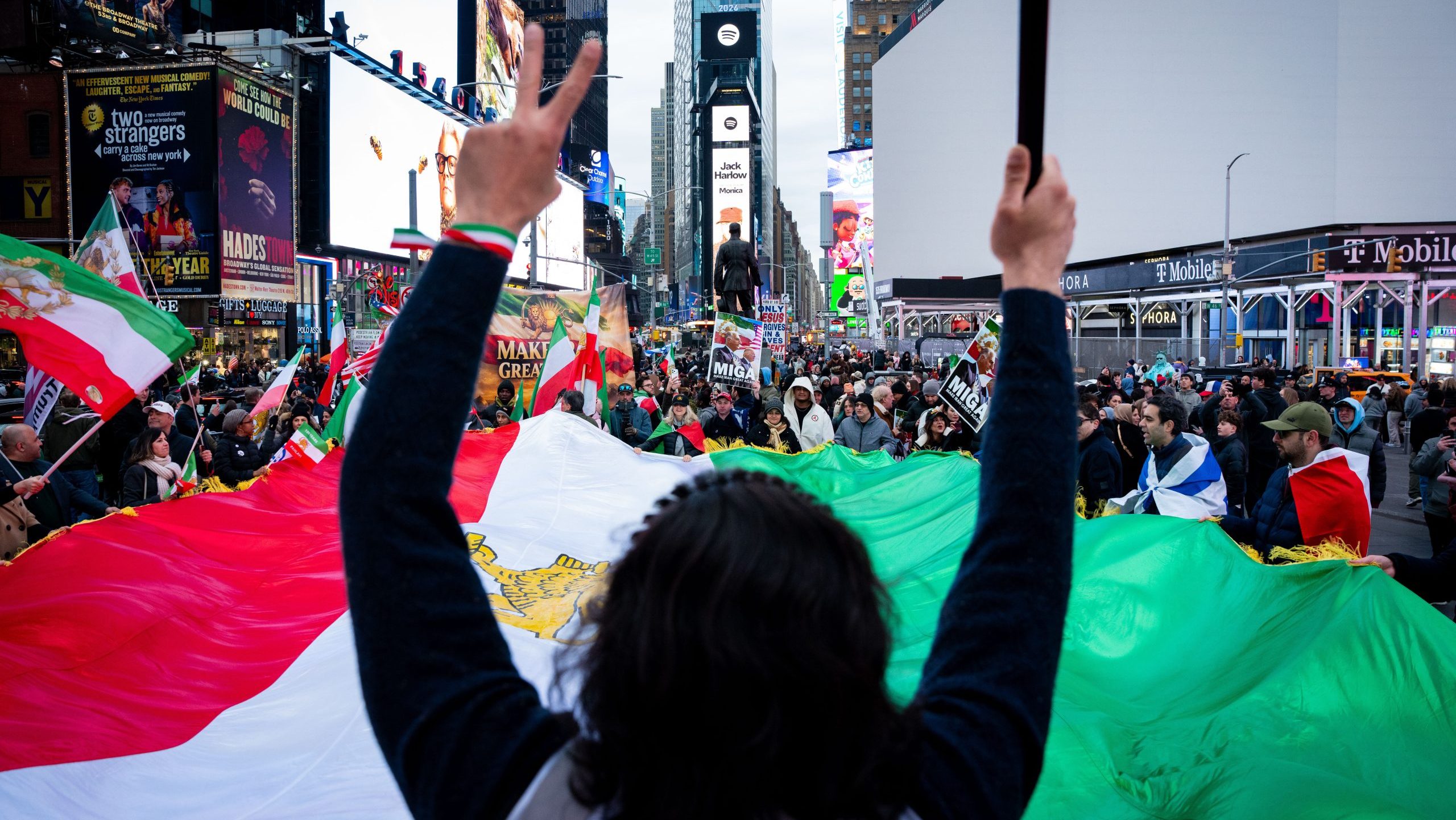
At a March 2 protest in Times Square called “Freedom for Iran,” dozens of Iranian New Yorkers gathered to celebrate the death of Khamenei and call for regime change. Zad Mousavi, 25, came to New York City from Iran at the age of 18 to pursue higher education. He described what it felt like to find out about Khamenei’s death. “It’s like a weight from our shoulders is just completely gone,” he said. “It’s like we can breathe.”
Sean Azari, a marketing entrepreneur who is also an artist and DJ, is not shy about his views on the dictatorship in Iran and has used his social platforms to show support for recent anti-government protests. The events of Feb. 28 left him in shock.
“I didn’t expect to be alive to see this happen,” Azari said.
While the foreign intervention has divided many Iranians and left some skeptical about the U.S. and Israel’s motives, it might be part of a small price to pay to free Iran from the “brutal government,” Azari said.
“I will never say ‘Thank you, Israel.’ It’s just not me,” he said. “I don’t trust Israel, but also when I was arguing with a lot of people and Iranians, especially — the majority of the Iranians, they don’t care to trust Israel or not to trust Israel. They just don’t care. They just want to free Iran.”
Despite the hope that some Iranians are clinging to, many remain uncertain about what the future might bring. After all, Khamenei was only the figurehead of the oppressive government, said Mahshad Ahmadzadeh.
“The regime is not dead. The regime is still alive,” said the 38-year old activist who left Iran for New York City 15 years ago. “We are far from being free.”
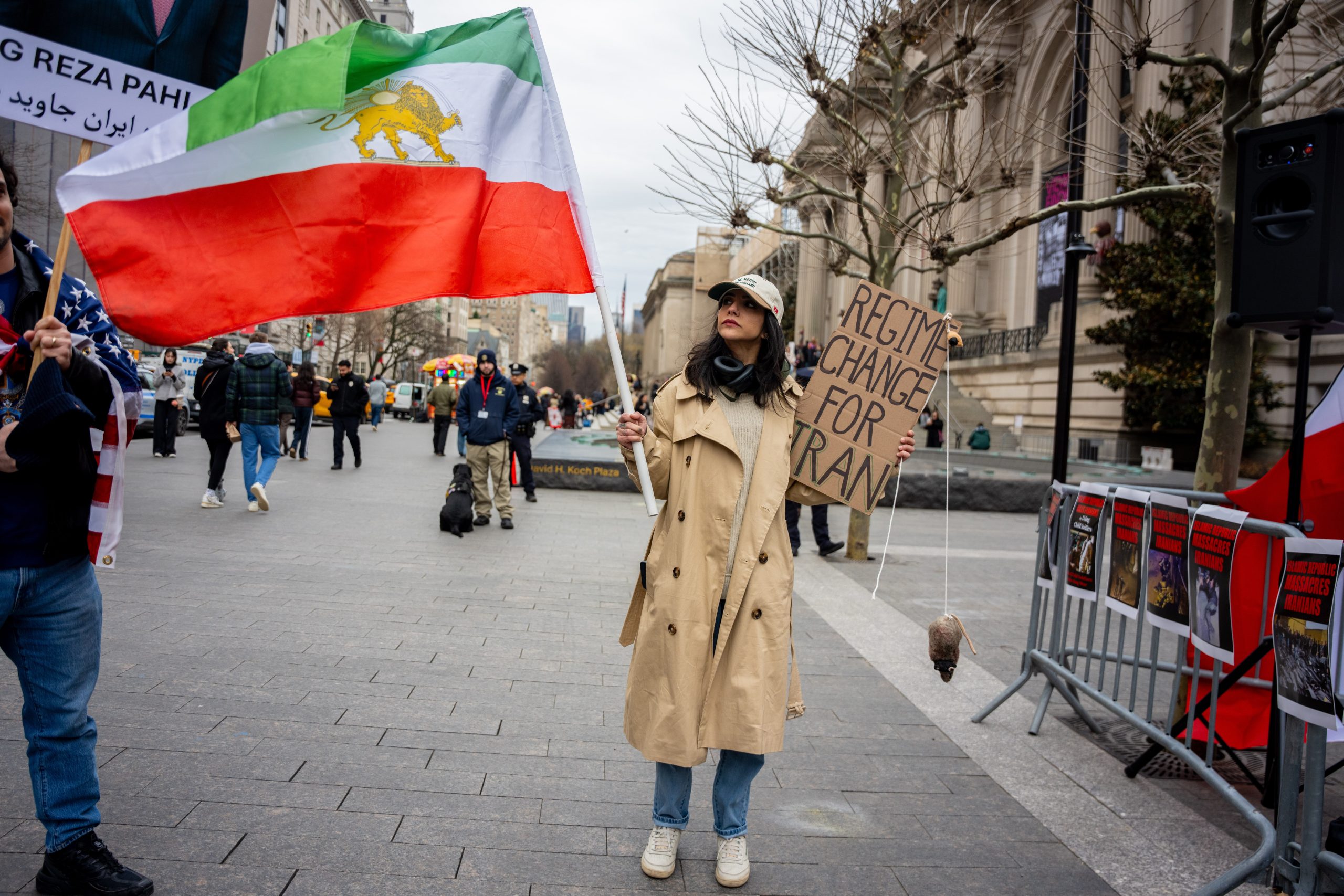
The division among the Persian community has forced some, like Saba Yazdanian, to completely disconnect from social media in an effort to stay out of the digital fray, avoiding increasing fake news and the fiery debates raging online. Instead, she has tried to focus on being physically present within the Iranian community she first found in 2015, when she arrived in NYC from Tehran.
“Before this war, a big division was always there. It is not a new thing,” Yazdanian said about pro- and anti-interventionist Iranians. “And after this, it’s like, harsher. It’s just been amplified by what’s going on.”
Earlier this month, Yazdanian attended a Hands Off Iran protest in Union Square — and as she weaved through the crowd, her emotions burst to the surface. She found herself crying as she heard people from all backgrounds protesting the war in Iran.
“I felt before that I was so lonely in navigating the war,” she shared. “When I went to the protest, I was crying happily, ‘Oh my god, finally, these people are voicing out what (is traumatizing me).’ I went to the very front because they were playing drums and horn and instruments. It was very healing.”
For others, leaning into social media has become a way to not only find information, but also community and support. Ciara Moezidis is an Iranian-American activist and researcher who moved to New York City from the Bay Area just as the war began in late February.
“Moving to New York when the war began was not the welcome that I was anticipating,” she said. “My whole routine is whack, and I think I just go from trying to work and do basic things, but I’m constantly doomscrolling.”
Although Moezidis had already been vocally against foreign intervention in Iran, dating back to the 12-Day War last summer, she says she has increased her online presence on the issue in an attempt to combat “the outspoken, pro-intervention, pro-Pahlavi, pro-Israel” segment of the diaspora that she described as the mainstream narrative.
“I’ve gained some traction with my posts, and as a result, I’m surrounded now by a virtual community that very much is supportive of my perspective,” Moezidis said. “And it’s been really helpful because it’s a reminder that we aren’t the minority here.”
‘There’s a lot of noise online’
While many in the diaspora may disagree on whether foreign intervention was necessary in Iran, one thing remains certain among the community — being Iranian at this very moment is complicated.
Last summer, the 12-Day War between Israel and Iran made Iranians living in the U.S. a new target for U.S. immigration officers. After the U.S. joined the conflict, bombing Iranian nuclear facilities, there was a surge in ICE arrests of Iranian international students and permanent residents, many of whom had no convictions or pending criminal charges. In late 2025, several flights deported Iranian dissidents and asylum seekers back to Iran despite fears of reprisal.
In spite of this, Azari said he’s not worried about his safety in the states, but remains concerned about how Iranians might be perceived, in the U.S. and internationally, amid the ongoing war and information surrounding it circulating online.
“There’s a lot of noise online right now and it feels like different voices within the diaspora are pulling in different directions instead of staying focused on what really matters, supporting the people of Iran,” he said. “In the next coming weeks, it’s going to be very important for other Iranians to speak up and try to help change the narrative before our reputation becomes tarnished.”
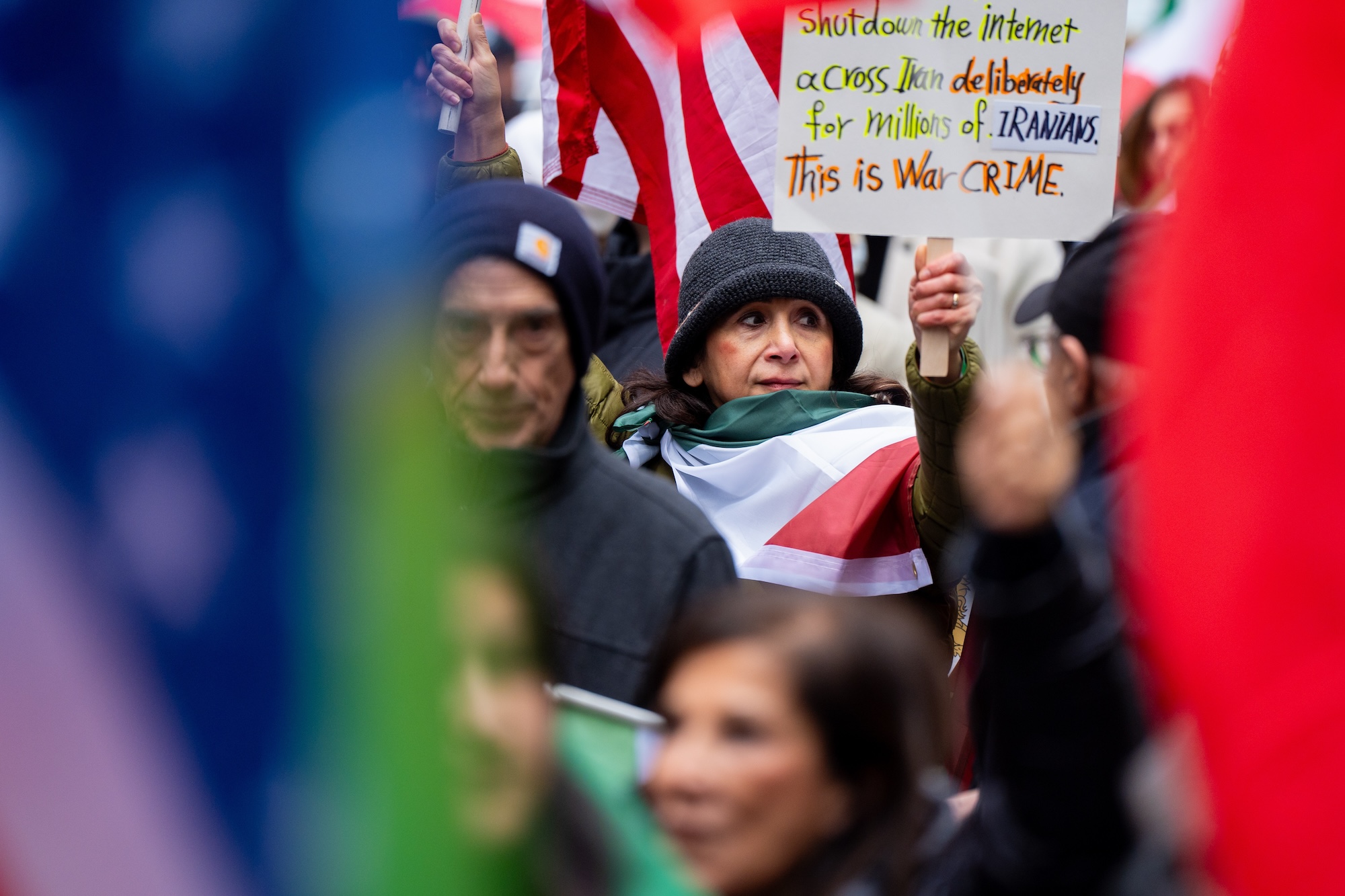
For Moezidis, it’s a point of pride to be Iranian, even more so at this time, as a way to challenge narratives about the country.
“I felt like I have an obligation to be able to be unapologetically Iranian because my family at the time didn’t have the privilege to be that,” said Moezidis, whose family came to the U.S. during the 1979 revolution.
Also Read: From Imprisonment and Torture in Iran to Endless Detention in the U.S.
Others, like Yazdanian, carry a sense of guilt as part of the diaspora, watching what she described as an “apocalypse” unfold in Iran.
“Every single day when I wake up, I feel like I’m in the middle of the peak of imperialism, trying to figure out my direction,” Yazdanian said. “Because I’m an immigrant, I have the privilege to not think about these things because my home is here. But it’s sort of impossible not to look back, not check in. It just comes.”
However, Yazdanian says she remains anxious about who she can trust and talk to about the conflict, adding that there’s a longstanding culture of mistrust within the Iranian community that often hinges on whether people are for or against foreign intervention.
“It’s a very fearful situation. You don’t know who to talk to. Is this person on my team or the other team?” she said.
‘Our connection to Iran is not abstract. It is personal.’
Back at NYU’s Nowruz vigil, over 200 attendees from the Iranian community shared food, poetry, and listened to each other’s stories about navigating the complex emotions that come with being Iranian, especially during these times.
你知道吗?非公民办理驾照时的这个错误可能会导致选民欺诈
Omid Afshar, a content creator focusing on Persian culture, shared how he made himself smaller growing up, not even correcting the mispronunciation of his name.
After moving to New York City, he eventually realized that he was missing a sense of belonging and began to seek out connections to Iran, especially in this moment. Today, he proudly shares his heritage on his online platform and encourages others to continue amplifying Iranian voices.
“Our connection to Iran is not abstract. It is personal. It lives in our families, our memories, our bodies, our history,” Afshar said. “The world is going to meet Iran through us, too, and how we show up, how we love people, how we tell our stories, how we feel, how we do, how we never reduce our identity to tragedy. And maybe that’s the full circle for me.”