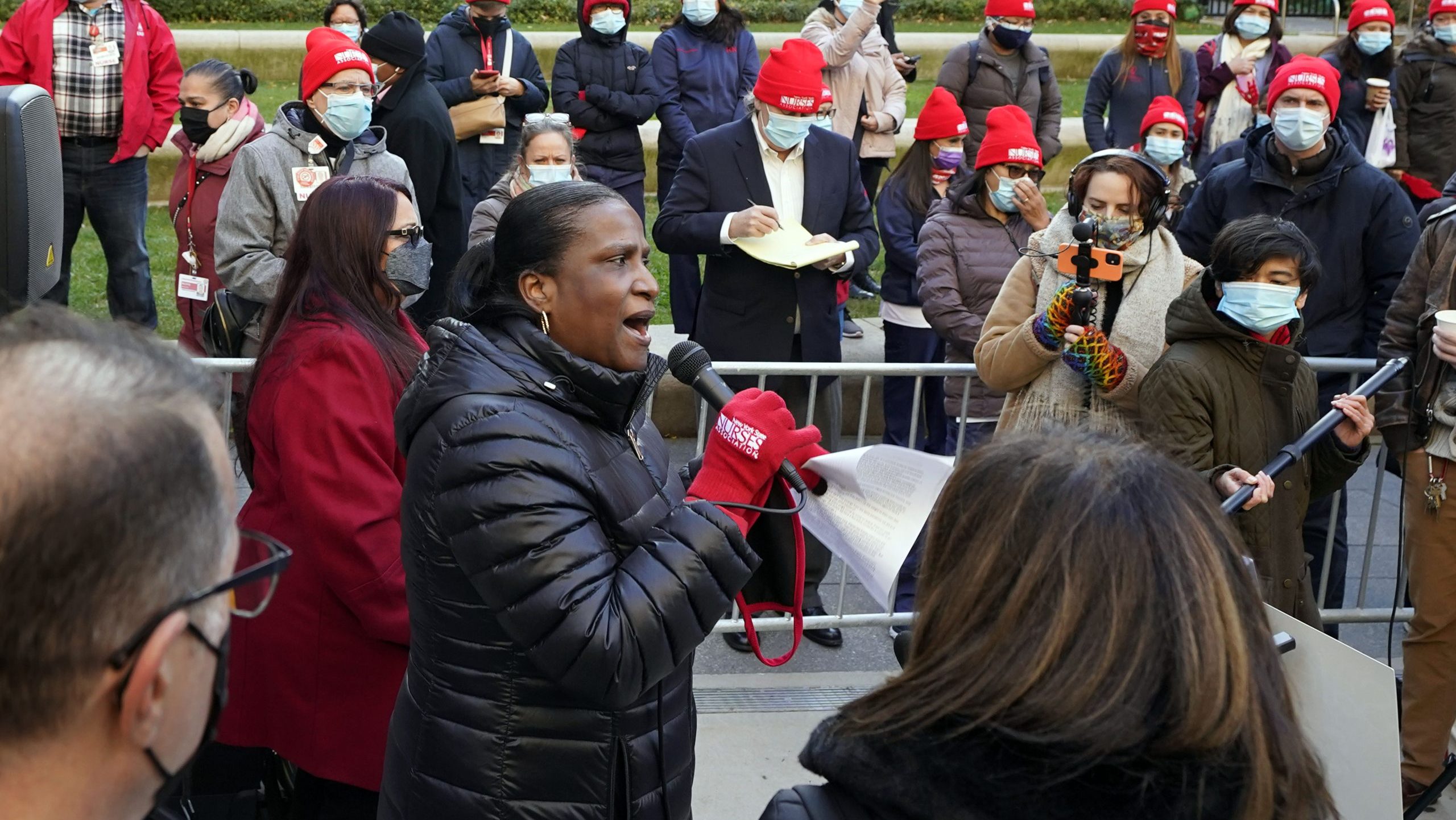


It was a cold and bitter labor battle for the nearly 15,000 nurses who held the picket line for a 41-day-long strike — but it was worth the fight. On Feb. 21, over 4,000 nurses at NewYork-Presbyterian Hospital voted overwhelmingly to ratify their new contract, bringing an end to the longest and largest nurses’ strike in New York City history. The vote at NewYork-Presbyterian came weeks after nurses at Montefiore Medical Center and Mount Sinai Health System ended their strikes after 28 days.
Nurses, who first walked off the job on Jan. 12, won key concessions from hospital management, including improved safe staffing standards, layoff protections, and raises of more than 12% over the course of a three-year contract. The hospitals also agreed to protect nurses from workplace violence, to uphold health care protections and safeguard immigrant patients and nurses from immigration enforcement.
Their victory arrived just in time for International Women’s Day (IWD), the annual celebration of women’s fight for economic and social justice. The holiday dates back to the early 1900’s and was first observed in New York in 1909, following a strike led by immigrant women garment workers who were demanding shorter hours, better pay and voting rights.

In New York, 94% of all registered nurses are women and about 30% of registered nurses are foreign-trained. Just like their foremothers in 1909, the nurses who were leading the fight this year on the picket line were largely immigrant women of color who were demanding safer working conditions. Backing them in their fight was their union, the New York State Nurses Association (NYSNA), led by president Nancy Hagans, who is a Haitian immigrant.
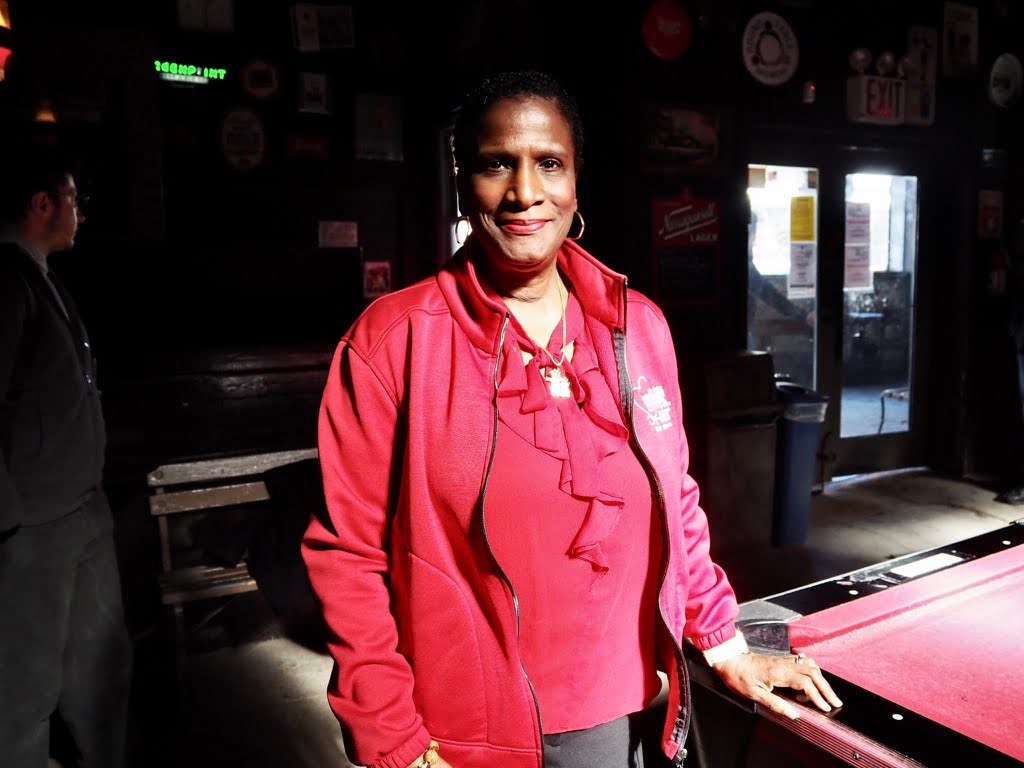
First elected president of NYSNA in 2021, Hagans led the union through the height of the COVID-19 pandemic. With more than 30 years of experience as a nurse at Maimonides Medical Center in Brooklyn, Hagans understands firsthand the collective power nurses have.
“When it comes to union power, we showed them what we have,” she told Documented in an exclusive interview. “We always say, when we fight, we win, no matter how much money hospitals have, our patients come first. Our communities come first, and we will never cut corners when it comes to patient care.”
As an immigrant herself, Hagans says that her experience of being stigmatized because of where she was from was what motivated her to become a nurse.
“As a Haitian immigrant, growing up as a young child, where Haitians were being discriminated against because of HIV, that’s one of the reasons I became a nurse,” she said.
Against the backdrop of the Trump administration’s crackdown on immigrant communities, Hagans says the nurses’ strike showed that immigrants are not only vital front-line workers but also a crucial part of the economy.
“Immigrants are here to work,” she said. “We’re here to build New York. We’re here to build the country. And when you look at the nurses’ workforce, about 37 to 40% are immigrant nurses. And we want to care for our communities, and we want to care for every patient, regardless of their immigration status, regardless of their zip code, regardless. That’s what we’re here to do.”
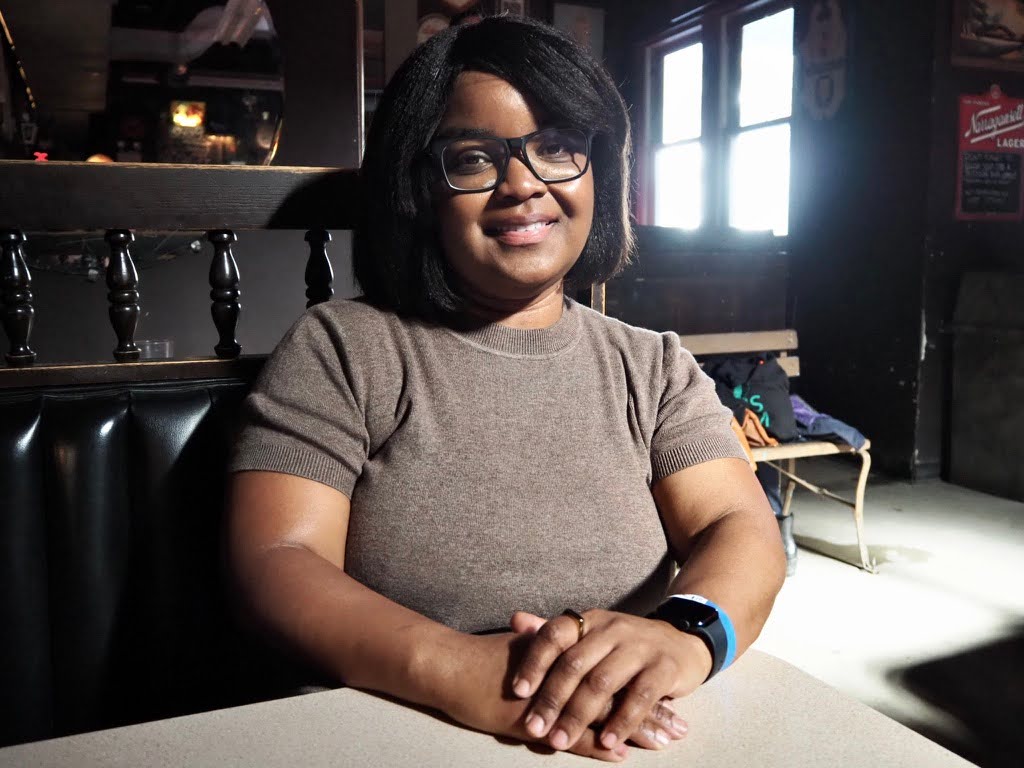
Sophia Danas, a Guadeloupean immigrant nurse who works at Mount Sinai, was part of her hospital’s bargaining committee. For her, one of her objectives was to negotiate a fair contract that would prevent future work stoppages.
“One of our major goals was not to strike again,” she told Documented. “We want to do the work now, so with my other union leaders and me, we are basically reaching out to members, talking to them about how we can make staffing better.”
According to Hagans, the nurses never wanted to go on strike. And they felt betrayed that the hospitals spent heavily on replacement workers. During the strike, the hospitals spent a combined total of $100 million for replacement staffing, paying replacement nurses upwards of $9,000 per week to cross the picket line.
“It’s very emotional when you spend your whole life dedicating your time to an employer, and the employer decides to spend millions on replacement nurses, when they could have easily invested that money toward the nurses who have been there at the height of the pandemic,” said Hagans, adding, “We left our family. We left our children, and at the end of the day, they were too quick to replace us with a million dollars, where they could have spent all that money on patient care and staff.”
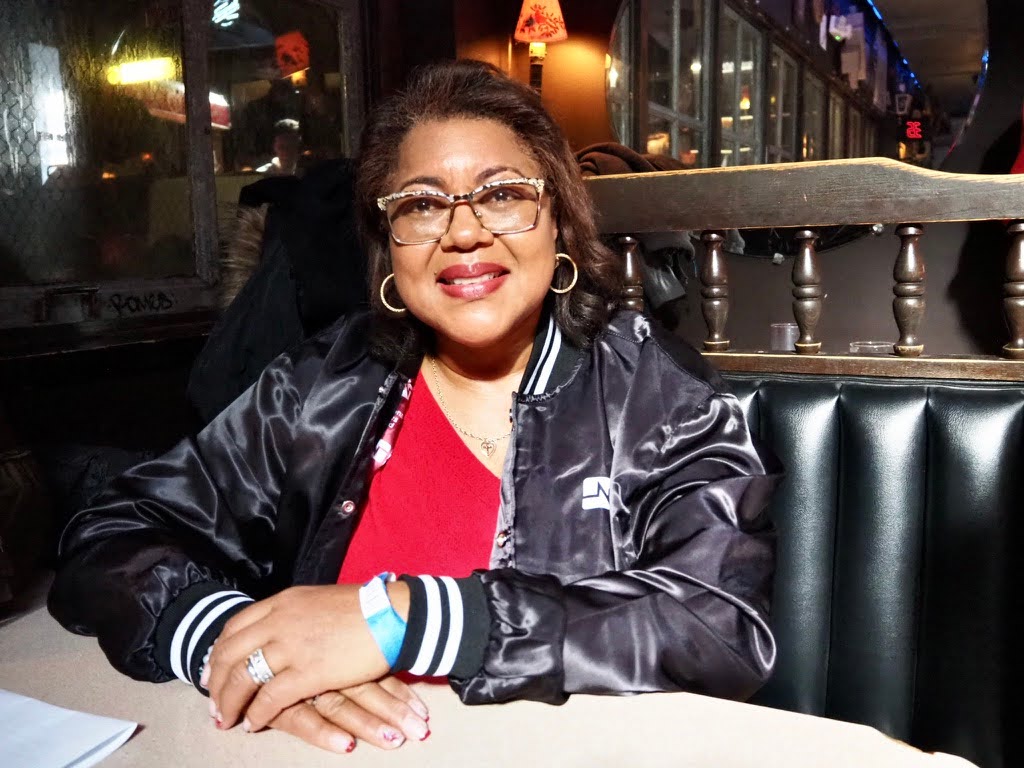
With the strike lasting over a month, Denash Forbes, a Jamaican nurse at Mount Sinai West, says that the nurses had no choice but to stick it out.

你知道吗?非公民办理驾照时的这个错误可能会导致选民欺诈
“If we had failed, I think it would have been a rippling effect,” she told Documented. “So we stood the cost, and that’s why we need to realize unions are important.”
Now with the strike over, Hagans believes that the nurses’ struggle was a major win for all of the city’s unions.
“It’s a great victory for the labor movement,” she said. “We are sending a strong message to the rich corporations. New York is a union town, and you’re not going to bust a union.”