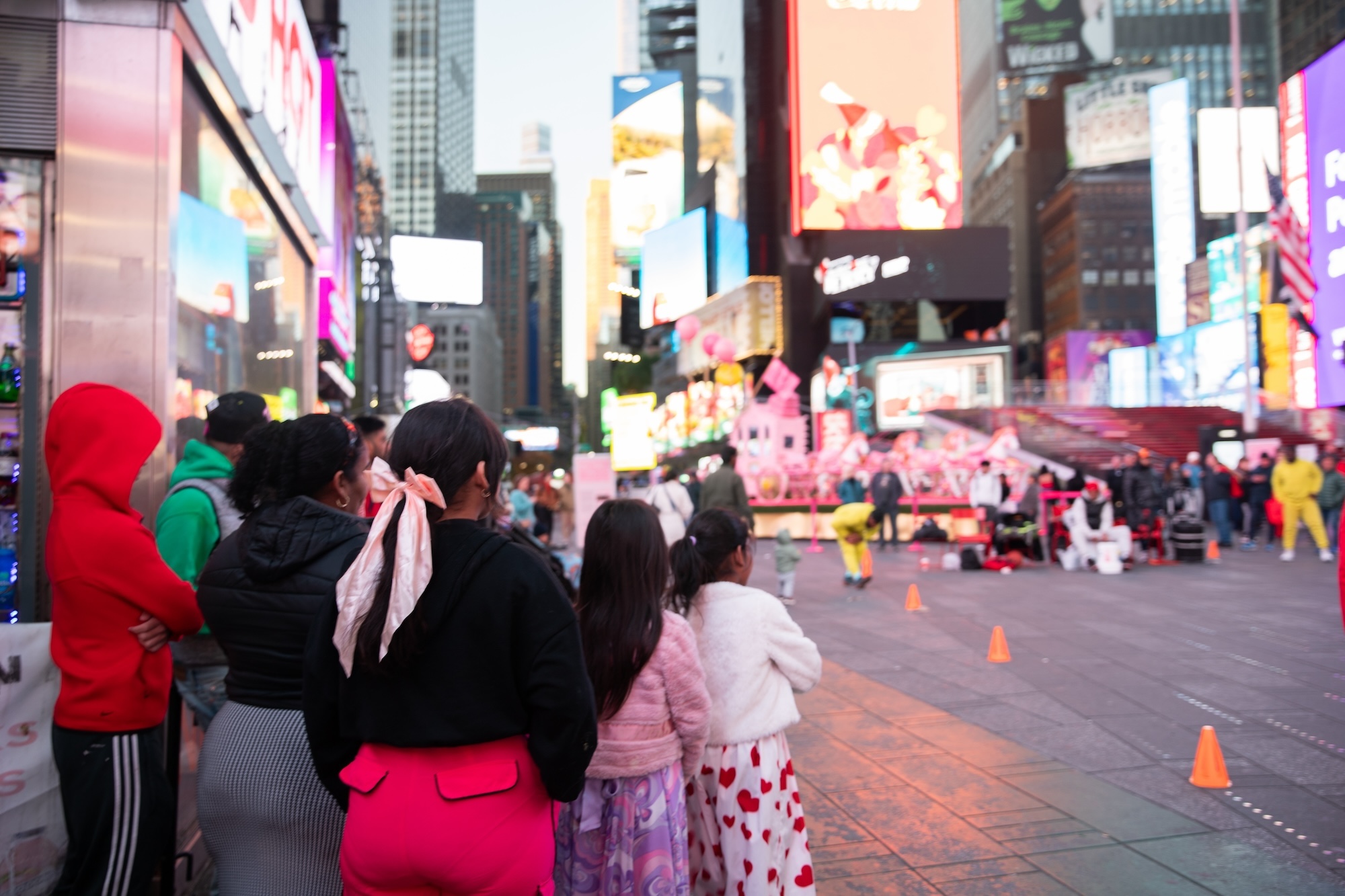


On any given day, Junction Boulevard in Queens is usually buzzing with street life. The rhythms of ranchera and salsa music reverberate as street vendors line both sides of the street, hawking fresh-cut fruit, roasted corn, and grilled meats, with an inviting scent that lingers in the air.
But just two weeks after Zohran Mamdani was sworn in as mayor, on the morning of Jan. 13, the bustling sidewalks fell silent. Officers with the New York Police Department closed off the entire block and swept through, demanding to see street vendor permits. If the vendors failed to produce one, they could be issued a criminal summons, face steep fines, and have their merchandise confiscated.
Vending near the intersection of Roosevelt Avenue and Junction Boulevard, Mirna, 53, saw the police coming and fled as fast as she could. Before fleeing, Mirna, an undocumented Honduran immigrant who chose not to give her last name out of concern for her safety, sent an alert on a vendor WhatsApp channel warning others to clear out.

“Patrol cars wouldn’t let any traffic pass through so they shut down Junction,” she told Documented. “They had the officers going up and down the street.”
Street vendors had viewed 2026 as a turning point. On the mayoral campaign trail, Zohran Mamdani, an avid consumer of halal street cart cuisine, pledged his support for decriminalizing street vending, saying to PIX 11 that he doesn’t think “this has to be a quality of life concern for the NYPD.”
Then, in the fall, a package of bills passed the City Council, including one to end the city’s years-long moratorium on issuing new permits that had prevented street vendors, many of whom are undocumented immigrants, from obtaining official vending permits. This had led to the vast majority of New York’s roughly 23,000 street vendors operating without a license.
The City Council also passed Intro 47, a bill supported by Mamdani that essentially decriminalized vending without a license, punishing vendors with civil fines instead of misdemeanor penalties that show up on their criminal records, which could jeopardize immigration status.
But just days before that law goes into effect on March 9, vendors are still experiencing raids like the one on Junction Blvd. And even after the law takes effect, they will still face steep civil penalties — a disappointment for some vendors who formed Street Vendors For Zohran to canvas on the mayor’s behalf.
The Mayor’s office did not respond to Documented’s multiple requests for comment.
Mirna, who doesn’t have a vendor permit, has sold fruit, yogurt, and beverages with her husband for nine years. They make an average of $500 a week. Under the current vending laws, Mirna could be issued a fine of up to $1,000 and face the possibility of three months in jail if she’s caught vending without a permit. Even without a fine, the mere presence of the police is enough to disrupt a vendor’s ability to earn a living.
“As soon as they arrived and started giving out tickets, I was able to pack up my materials, so I didn’t receive a ticket,” she said. “But I was displaced that day. I wasn’t able to vend it all. We had to hide everything so that they wouldn’t come and confiscate our merchandise.”
According to Mirna, vendors on Junction Boulevard play a weekly dance of cat and mouse. Vendors flee at the sight of the police, only to quickly return once the coast is clear.
“The police are there, usually every three days more or less, then they go away for like two days,” she said. “During that time, people start to trust that they can work. But then two or three days later, they come by again and then sweep everybody.”
‘They Took Everything’
On Jan. 8, another unpermitted vendor, who declined to give his name due to fears around his immigration status, was issued two criminal summonses while selling toys on 3rd Ave and 149th Street in the Bronx. (Documented has viewed the criminal summonses.)
The vendor said that an undercover police officer demanded his ID. When he refused, fearing the officer might be an ICE agent, 10 NYPD officers surrounded him and started throwing his merchandise into garbage bags.
“They put handcuffs on me, put me in the police car, and brought me to the precinct, where they took everything. They took off my shoes, I had to take off my belt,” he told Documented. “They held me there for two hours. Then my wife came looking for me at the precinct, and they told her they would let me out that same day.”
On Jan. 27, the vendor appeared in court, where he was able to successfully get the case dismissed. But the experience has left him shaken.
“I wasn’t crying, but I wanted to cry,” he said. “Because how is it that I’ve been living here for 15 years and this is the first time I’ve been arrested, like this in the street.”
In New York City, vendor laws are enforced by multiple city agencies, including the Department of Sanitation (DSNY), the Department of Health and Mental Hygiene, and the NYPD. In 2021, the administration under Mayor Bill de Blasio removed the NYPD from enforcing street vendor laws, but Mayor Eric Adams’ administration reversed course the following year. In 2025 alone, the NYPD issued 3,662 vending-related criminal summonses, with the vast majority of them going to vendors of color, according to city data analyzed by Documented.
In a statement, a spokesperson for the NYPD defended the department’s role in enforcing vendor-related laws and denied it issues criminal summonses, despite being presented with the criminal summonses reviewed by Documented.
“Although the Department of Sanitation is the primary enforcement agency for vendor-related conditions, the NYPD retains the authority to enforce these statutes, if necessary,” the spokesperson told Documented. “The NYPD’s focus regarding vendor enforcement is education; however, enforcement may be taken by issuing civil summonses returnable to [the NYC Office of Administrative Trials and Hearings].”
The spokesperson declined to comment if the NYPD planned to still conduct vendor sweeps after the new law takes effect March 9.
A Low Ceiling for Vendors
Street vendors that sell food are required to hold both a Food Vendor license and a permit to operate their cart from the Department of Health & Mental Hygiene. Food vendor licenses are fairly easy to obtain, but the permit to operate a cart has been a nearly impossible endeavor for most vendors. In 1983, the city limited the permits it issued for mobile food vendors to just 3,000. Since then, the city has only seldom increased the number of permits it issued, capping it at 5,100 for decades. This, in turn, forced many vendors to operate illegally, with an estimated three-quarters of the approximately 23,000 street vendors operating in the city unpermitted, according to the Immigration Research Initiative.
After a persistent campaign by vendor advocates, in 2021, the city passed a new law that aimed to increase the number of food vending permits issued to 4,450 over the next 10 years. Another bill this fall will increase the number of licenses to 17,000 by 2031.
Vendors in recent years have faced increased crackdowns and hardship, such as the forced removal of vendors from Corona Plaza. In 2024, the NYPD confiscated the food cart of Blanca Alvarado on Junction Boulevard and crushed it in the back of a garbage truck
“When they placed the cart in the garbage truck and crushed it, I had to turn away because I couldn’t watch,” she told Documented at the time. “It was horrible.”
In addition to the passage of Intro 47, the City Council under Mamdani passed three new vendor reform laws aimed at reshaping the archaic street vendor regulatory system. The new laws will expand the number of new vendor licenses available to vendors, cut the red tape involved in the licensing process for vendors, and create a Division of Street Vendor Assistance within the Department of Small Business Services (SBS). The new division will provide training, outreach, and education to all food vendors and general vendors on compliance with all applicable local laws, rules, and regulations.
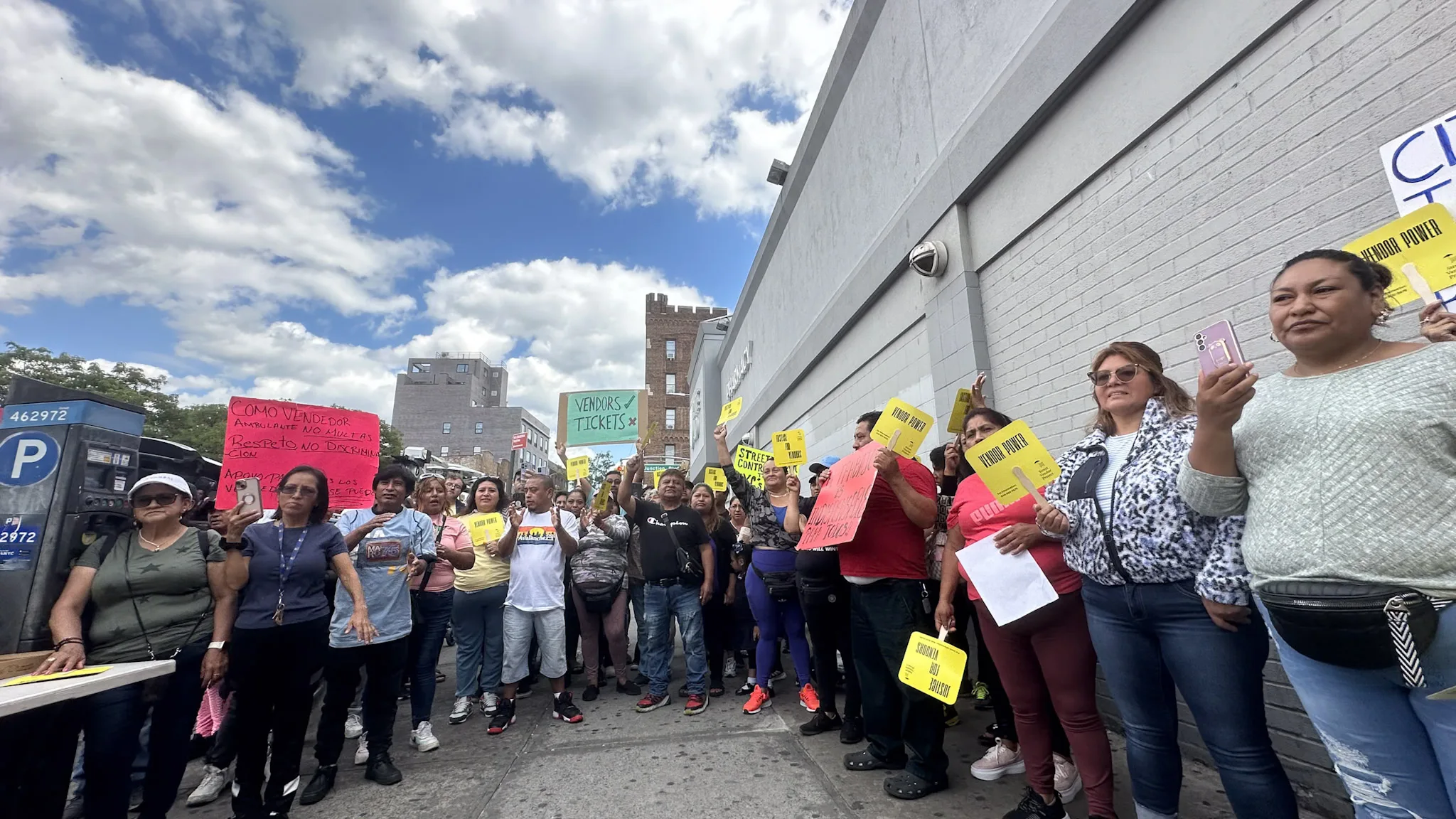
Despite these new laws, NYPD enforcement has persisted. On Monday, street vendor advocates will hold a rally to ensure that the NYPD abides by Intro 47.
Street vendor advocates say the NYPD should have no business enforcing street vendor laws, especially when other municipal agencies are well-equipped to do the same job.
“I can’t imagine NYPD officers with guns and handcuffs storming any other type of business, like a restaurant, demanding licensing,” Carina Kaufman-Gutierrez, deputy director of the Street Vendor Project, said in a statement to Documented. “Why should it be any different for street vendors, especially when the city has already invested significant resources to create an office of Street Vendor Enforcement at DSNY?”
Kaufman-Gutierrez hopes that the mayor could work alongside street vendors to find an equitable path forward. “At a time when our city is mobilizing to protect immigrant communities and streamline redundancies in the city budget, we look forward to working with Mayor Mamdani to reduce interactions between this primarily immigrant workforce and law enforcement and align the city’s management of street vending with other small businesses,” she said.
Although the slew of new vendor reform laws would give unpermitted vendors like Mirna a pathway to legitimacy, she has been disappointed so far by the new mayor’s continuation of the Adams administration’s criminal enforcement policy.

你知道吗?非公民办理驾照时的这个错误可能会导致选民欺诈
“We’ve had a lot of hope for him coming into office, that we’d be able to access permits, that there’d be a change in enforcement, that the police wouldn’t be involved in street vending anymore,” she said.
Still, with the vendor decriminalization law taking effect next week, she has faith that Mamdani will come through on his pledge.
“We still have hope,” she said. “He just got started. So we’re still hopeful that he’ll take us into account and make changes for street vendors.”