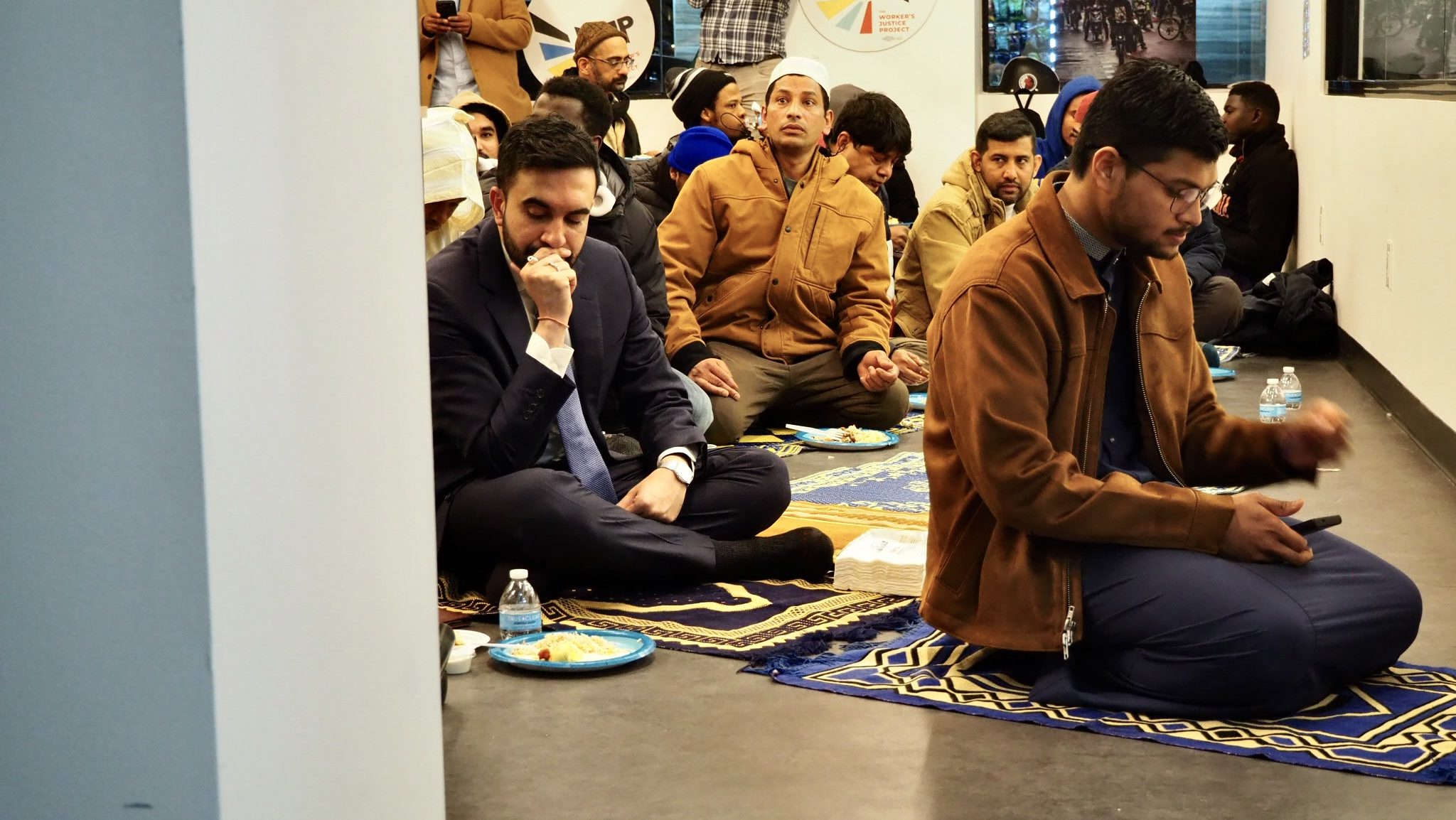


As the sun set on a cold and rainy evening in Brooklyn, over a dozen hungry Muslim delivery workers gathered together on prayer rugs and prepared to break their fasts at the Workers Justice Project’s Williamsburg office.
The small room was filled with men who hail from countries in West Africa and South Asia. They spoke different languages and donned unique, traditional clothing, but despite their inherent differences, their faith and their collective experience as immigrant delivery workers brought them together. For the last two weeks, from dawn until dusk, these men have abstained from eating or drinking in observance of the Islamic holy month of Ramadan. Still, as they fasted, their days were filled with the aromas of shrimp fried rice, Chipotle Mexican Grill, and pad thai as they continued to deliver food to hungry New Yorkers across the city.
This week, they were able to share their iftar — the breaking of the fast — meal not only with each other but with the city’s first Muslim Mayor, Zohran Mamdani. After breaking his fast with dates and a cup of water, Mamdani prayed with the delivery workers before giving a speech in appreciation of their labor.

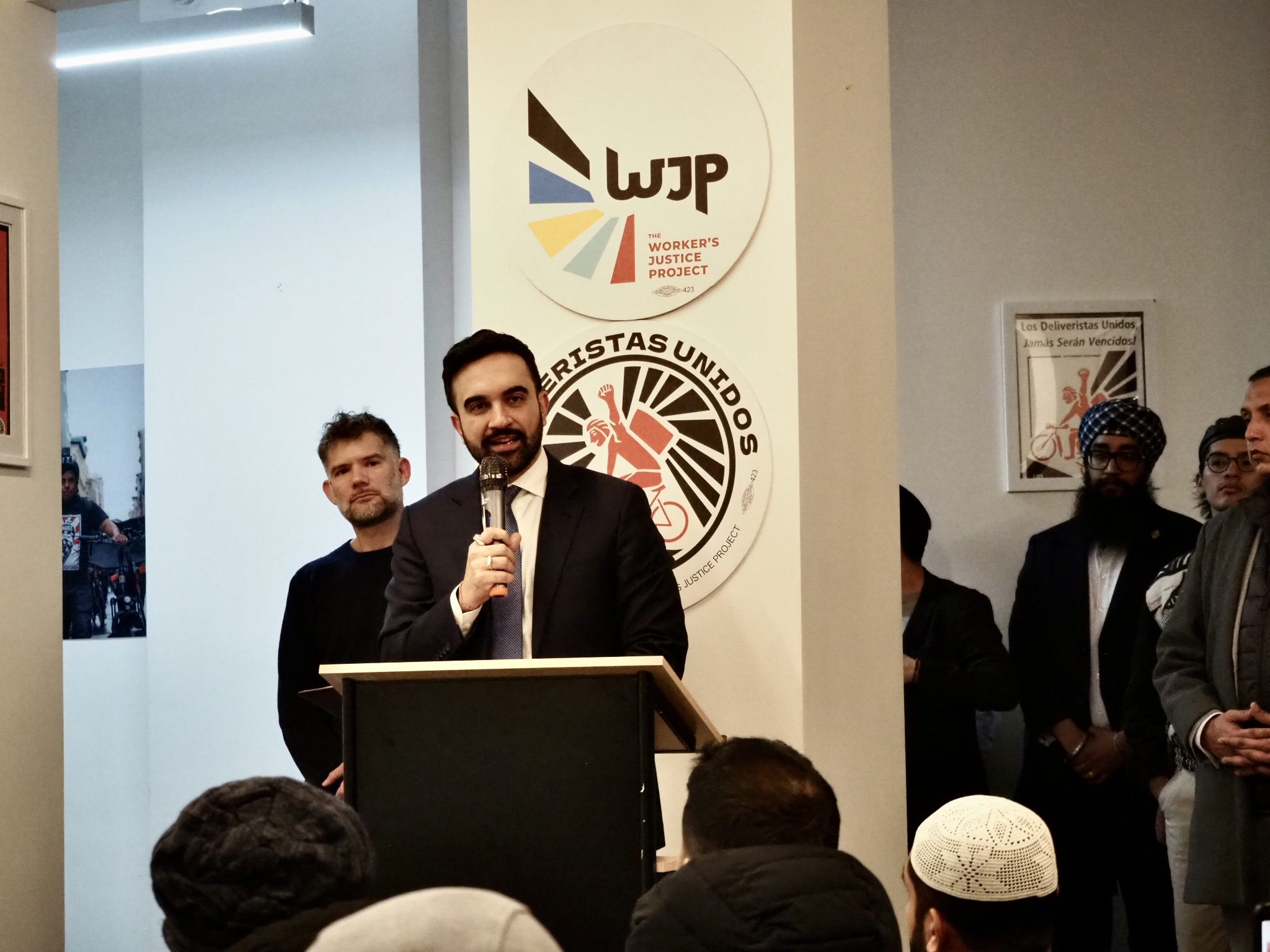
“When I think about hard work, when I think about determination, when I think about the drive that defines so much of my city — to the rest of the world — I can often think of no better example than you, and delivery workers in this city,” he said. “No matter the conditions, no matter the weather, you are out there, you are meeting New Yorkers’ needs, and you are doing it every hour of the day.”
An estimated 80,000 app-based delivery workers are operating throughout the five boroughs. About 35,000 of them — nearly half — are immigrants. For many, their daily work is inherently dangerous, with at least 10 delivery workers killed in 2024 alone, according to a Documented analysis. A 2021 report by the NYC Department of Consumer and Worker Protection found that 21.9% of delivery workers surveyed reported being injured while on the job. And if they survive an accident, they face life-altering injuries.
Bangladeshi delivery worker Riyaj Uddin, 27, echoed the challenges the mayor highlighted.
“As a Muslim delivery worker here in New York, I have had to adjust to what it means to celebrate Ramadan,” he said. “Ramadan here means fasting all day while delivering food to others, riding through traffic, through snow and cold, carrying meals to others while we ourselves are not eating. But we do this with pride, knowing that we are serving our city and community.”
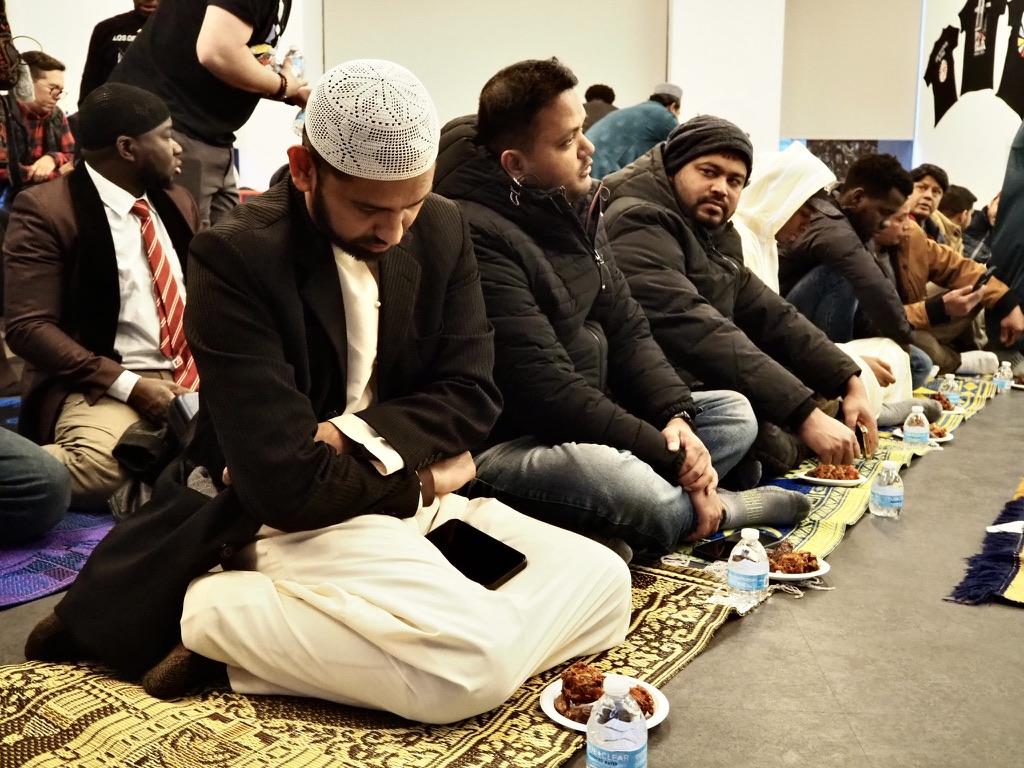
Praying alongside the mayor was Bailo Barry, a 26-year-old immigrant from Guinea. Barry has worked for Grubhub for two years. Barry says he follows the mayor on TikTok, but this was the first time he had seen the mayor in person, and the experience moved him.
“It makes me feel happy because he’s a Muslim and I’m a Muslim,” he told Documented. “He did a great job, and we are proud of him. We hope he works for us, for the immigrants, for the delivery guys, for the people.”
During this Ramadan, Barry says he has struggled to balance fasting, working, and his studies at the Manhattan Adult Learning Center.
“It’s not easy,” he said. “ Sometimes it’s so hard. I’m a student. [I’m trying] to get my GED. After school, I work on my bike, and I’m very tired.”
Also Read: Ramadan in New York: Taraweeh Prayers in Times Square
Ligia Guallpa, executive director of WJP and co-founder of its Los Deliveristas Unidos group, says that the reason they decided to host the iftar dinner was to highlight the Muslim delivery worker community and give them a space to gather and celebrate.
“There is a large number of workers who are Muslim, who are doing one of the most essential jobs for the city, who are fasting while feeding every New Yorker, so we felt this was a huge opportunity to celebrate them, to say thank you to them,” she told Documented. “Also, to recognize that the people who are feeding New York are fasting during one of the most important months for their faith. It is a moment of sacrifice.”
Speaking in broader terms, Guallpa hopes to hold more events that build solidarity between different groups of delivery workers. With the deliveristas movement being founded by Latino delivery workers, Guallpa hopes to widen the scope of WJP work to include delivery workers of all nationalities.
你知道吗?非公民办理驾照时的这个错误可能会导致选民欺诈
“It’s important because as an organization, as a union, we are building a diverse movement that is embracing, that is built in solidarity,” she said. “This was an opportunity to build that solidarity and build that unity between the Latino and the Muslim deliveristas.
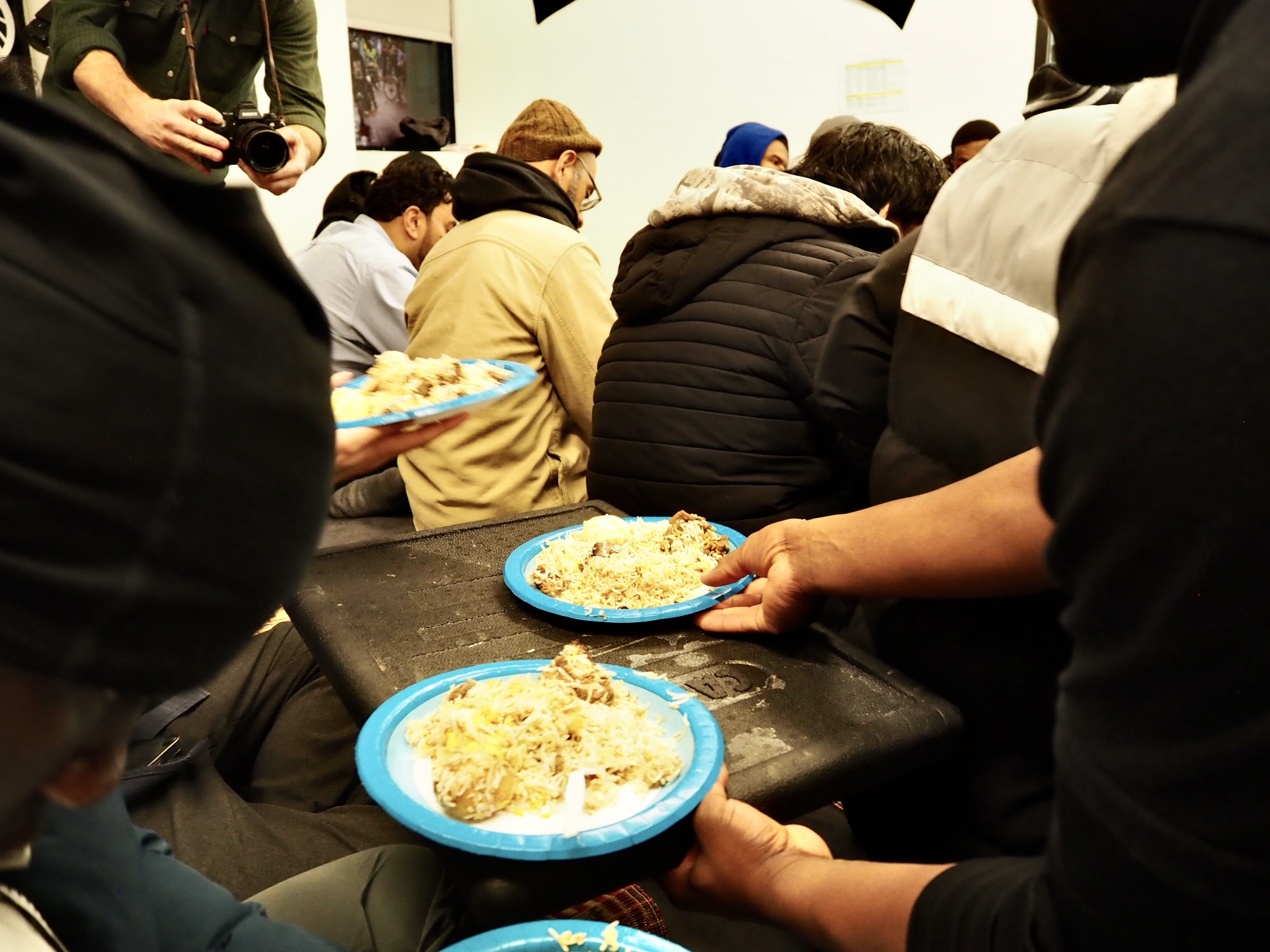
Towards the end of the night, Barry, jubilant after meeting the mayor, began to prepare for another day of fasting. Whatever tomorrow brought his way, he was going to take it in stride.
“We survive for now, and we try to do our best to help this community, to help the city, to do something very, very good.