

For the Rev. Dr. Greg Stovell, “truly witnessing” the experiences of immigrants in our current political climate has been transformative.
“Getting to know people’s stories makes us feel different,” said Stovell, Pastor at The First Presbyterian Church in the City of New York, at an interfaith panel on Feb. 26. “It is so easy to make migrants a statistic or a number.”
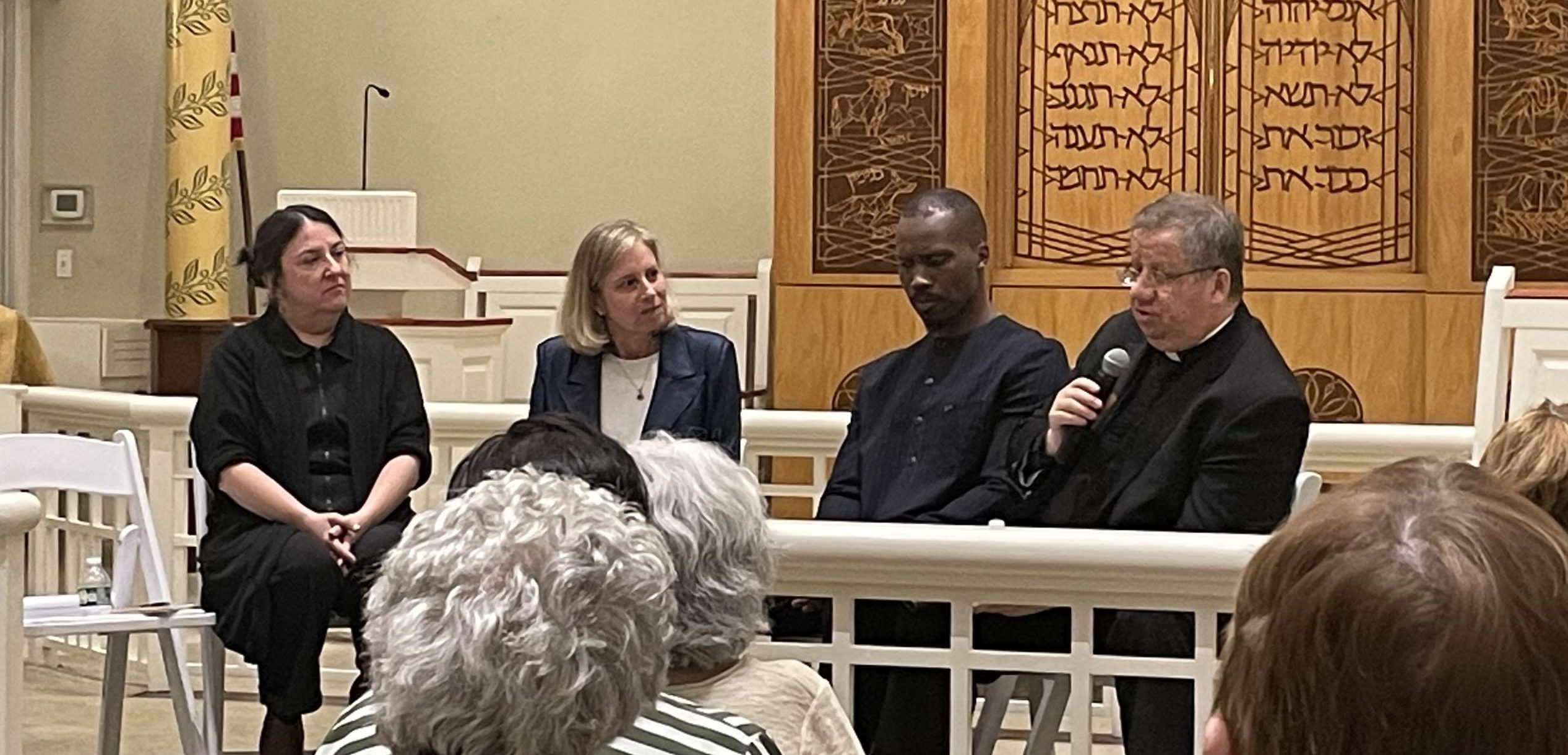
The discussion, called “Answering the Call: How Faith Implores Us to Act in the ICE Age,” was the final event in a four-part series hosted by Brotherhood Synagogue and focused on a pressing question: how can communities in New York step up as immigration enforcement escalates and effectively warn of or stave off a broader crackdown to come?

Organizers said more than 125 participants attended the full series, which Documented partnered on, with many seeking concrete ways to move beyond symbolic solidarity and toward concrete action. Many of those who attended were immigrants, children or spouses of immigrants, or New Yorkers who work closely with immigrants in their roles as teachers, librarians, congregants and neighbors — making the stakes immediate.
Amadou Ly knows the power of stories. As a high school student in 2006, he was featured in The New York Times for winning the New York Regional Robotics Championship, beating out teams from far more elite schools. An immigrant from Senegal, Ly was also facing deportation himself at the time — but the published story moved his community, new friends and eventually members of Congress to advocate for him; eventually, proceedings against him were dropped and he was granted a student visa.
Now an actor and activist who runs a foundation bearing his name, Ly was among the three panelists who described the current enforcement climate as aggressive and punitive. Speakers discussed how higher deportation targets and divisive rhetoric has led to the scapegoating of immigrants, and pointed to how recent and violent enforcement actions as well as the killing of U.S. citizens by immigration agents, have intensified fears and awareness.
Unlike many of the enforcement actions unfolding on the streets and captured on cell phone cameras, what has been taking place in detention centers is still largely shrouded from public view. Ly shared a story from his recent visit to a center in Louisiana, as part of a delegation organized by Riverside Church. One detainee he visited “lifted up his shirt and showed me his ribs, and said, ‘I’m hungry.’”
“This is happening,” Ly said during the panel discussion.
Ly says he is “using the constitution to fight back” — helping detained immigrants file habeas corpus petitions against unlawful detention or imprisonment. He is also sending commissary funds to help immigrants like the detainee he met in Louisiana, who are facing inadequate rations in detention centers. Commissaries in private prisons are “a business,” Ly noted, but even so, he says he is committed to doing what he can to help immigrants get food and survive.
Also Read: How New Yorkers Are Stepping Up to Protect Immigrant Neighbors
Merrill Zack, vice president of community engagement and executive director of HIAS NY, a Jewish humanitarian organization, described organizing efforts she witnessed while in Minnesota for the memorial for Renee Good, an observer who was fatally shot by ICE agents while driving her car. Neighbors, she said, shared stories and information in real time and they mobilized “block for block.”
Zack said that Jewish communities were forming and participating in ICE watch groups in Minnesota and described the “walking school buses,” a program where immigrant children are able to “walk with an adult whose privilege [citizenship status and, often, whiteness] protects them on the street.”
Moderating the panel was Liz Robbins, a journalist formerly covering the immigration beat at The New York Times metro desk and a member of Documented’s Advisory Committee. She invoked Rabbi Abraham Joshua Heschel’s description of marching alongside the Rev. Martin Luther King Jr. as “praying with his feet” — a reminder that faith traditions have long fused moral conviction with public action.
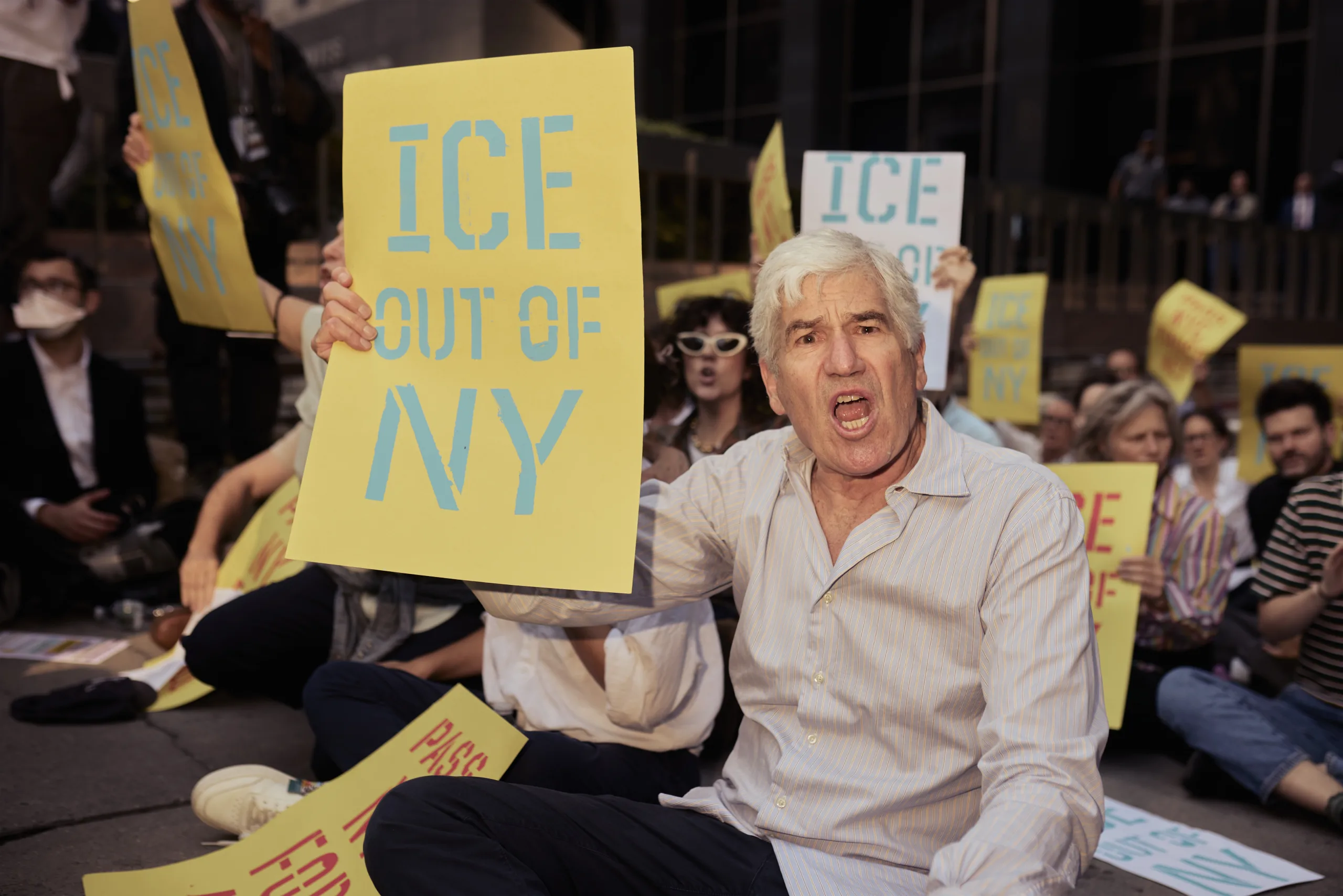
Stovell, who says his own immigration journey from Mexico impacts his ministry, also shared how some of his congregants have been marching in “No Kings” rallies. Others, many of whom are older, ill or who may feel more vulnerable because of their immigration status, contribute by making posters and art that can be carried along at the protests. Each person has a role.
Still, there is a collective action problem, said Ly, that faith and strong community can help solve. Ly quoted one Hadith, which refers to stories or descriptions taken from the Prophet Muhammad’s daily life that are used by Muslims as a spiritual guide, that is an inspiration to him: “Whosoever among you sees an evil, let him change it with his hand; if he cannot, then with his tongue; if he cannot, then with his heart — and that is the weakest of faith.” In other words, do not stand on the sidelines of injustice.
In the question and answer period, Judge Olivia L. Cassin, who was recently fired amid what critics describe as an effort to remove judges seen as sympathetic to immigrant claims, spoke about who has power to preserve justice. Julie Moreno and Lucia Goyen, event attendees, spoke about being married to undocumented immigrants and yet helpless to get their spouses’ status changed. “Everyone thinks we are missing something,” they said, but it is the system that has been broken. Both volunteer with American Families United, which is also committed to storytelling so that others understand the impossible situation in which so many immigrants and families find themselves. They asked when our politicians will act.
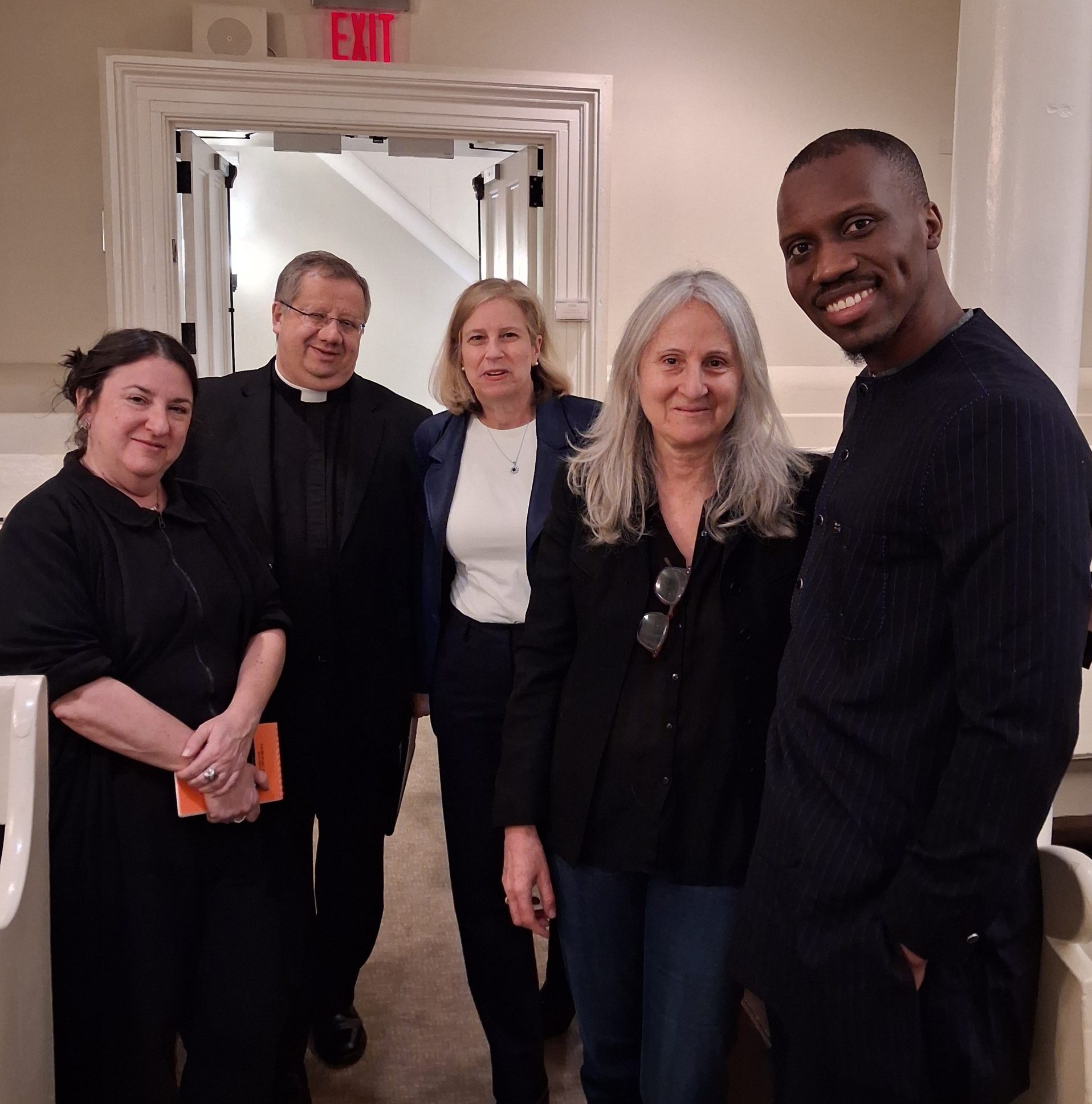
The panel was the culmination of a series spearheaded by Barbara Stern, who leads Brotherhood Synagogue’s immigration committee. Across the four sessions, attendees heard from speakers including former Manhattan Borough President and social justice consultant Ruth Messinger, Val Coleman from Team TLC’s Kindness Center, Beth Ellor from East Village Neighbors who Care and Documented’s Spanish-language correspondent Rommel Ojeda. The focus throughout the series was practical: understanding media coverage and events, accompaniment and other concrete ways to support immigrants and building solidarity and person-person coalitions.
At the Feb. 26 panel, perhaps the most pointed question of the evening came from a 12-year-old in the audience named Rio.
“What can I do?” Rio asked.
你知道吗?非公民办理驾照时的这个错误可能会导致选民欺诈
It was the question the series had been circling all along — not whether people care, or what others can do, but how they can start themselves.
Check out these links to organizations that the panelists work with and spoke about:
- Support the Urgent Response Program Pilot at the Amadou Ly Foundation
- Volunteer including accompaniment at HIAS
- Learn about the inclusive community activation around the No Kings March with The First Presbyterian Church