

Shakira Padilla has never been this busy.
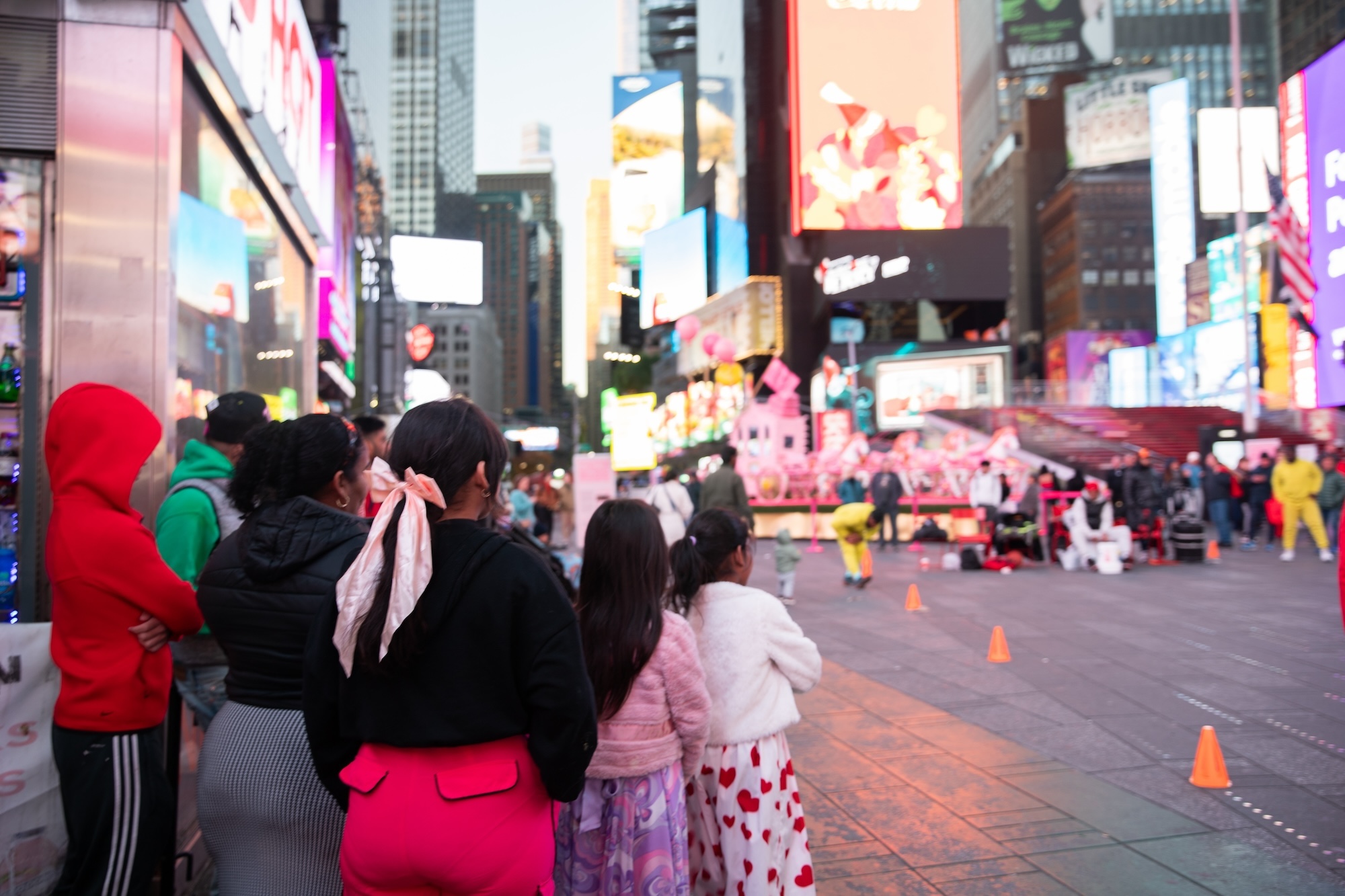
Her company, Expresito Carga, helps people move from the United States to Ecuador. “Recently, we had three moving services in a single day, which was not common at all,” she said.
At the very least, Padilla said, Expresito Carga has seen a 15% to 20% increase in its moving services from New York to Ecuador. There’s been another change: people have an urgency that was uncommon before 2025. At least half of the company’s customers “seem more desperate now,” she said. “They call us and want to accelerate the process or get on with it as soon as possible.”

Since the Trump administration began its most recent crackdown on immigrant communities, Ecuadorians have been affected the most acutely of any nationality, federal data shows.
According to the Deportation Data Project, a nonprofit that collects and posts anonymized U.S. government immigration enforcement datasets, U.S. Immigration and Customs Enforcement (ICE) arrested 5,174 individuals in New York City during the first 10 months of the Trump administration — a 98% increase over the same period in 2024.
Almost one in four of those arrested (24%) were Ecuadorians (1,224), of whom only 16% were convicted criminals. In contrast, of the 5,174 individuals arrested in New York City in that period, 26% were convicted criminals.
The arrests have clearly impacted the Ecuadorian community in the city.
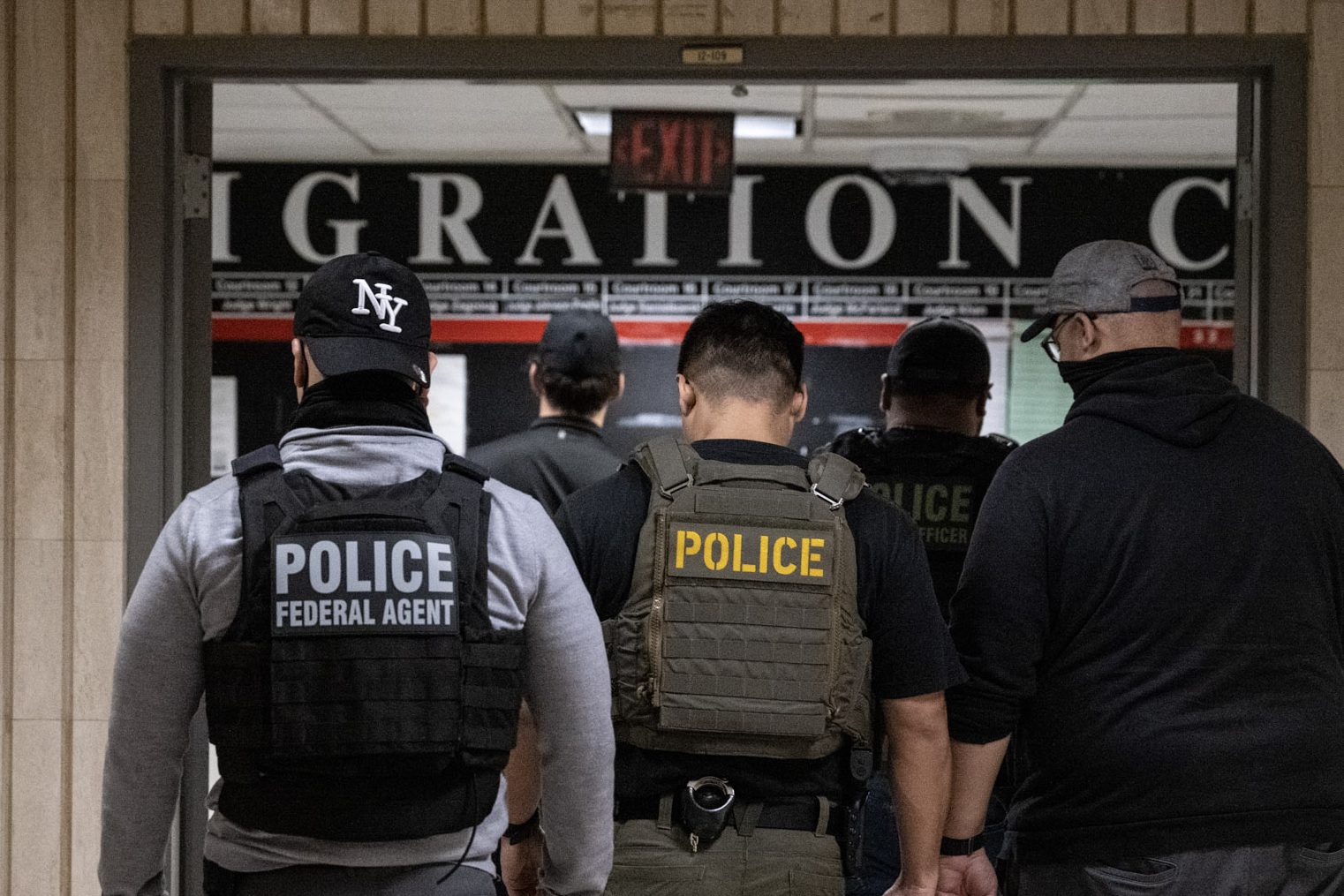
“ICE agents wait for people near their homes to arrest them when they leave for work or to buy coffee, or they wait outside workplaces and at gas stations,” said Walther Sinche, founder of Alianza Ecuatoriana Internacional, a nonprofit that offers Occupational Safety and Health Administration certificates to construction workers in Jackson Heights, Queens, where most of the Ecuadorians living in the United States (about 100,000) live and work.
“It’s racial persecution.”
According to Sinche, who has certified more than 15,000 immigrant workers in the last three years, the desperation of Ecuadorian immigrants has driven them to seek attorneys in preparation for a potential deportation or after they are apprehended by ICE. He has learned of many abuses and frauds by unscrupulous attorneys. He has also noticed more Ecuadorians complaining about wage theft because immigrants are wary of denouncing it, even to state or city officials. “People don’t want to run any risks.”
The fear has spread throughout the community over the past few months.
Take the case of J.L., who asked to be identified only by his initials for fear of retaliation by ICE: “In the 20 years I have lived here, I’ve never had this fear: that I could be arrested while walking on the street just because of how I look, even though I don’t have a criminal record.”
J.L. arrived in New York from Ambato, Ecuador, in 2005. “But this is how I live now,” he said. ‘There’s been a radical change in how I feel.”
ICE detained J.L.’s father-in-law near his home in Elizabeth, New Jersey, in November. “He went to the Latino bakery where he likes to buy bread and never came back,” J.L. said. The masked, federal agents who arrested his father-in-law were apparently targeting the bakery’s customers.
Also Read: ICE Street Arrests in New York City Increase 212% Under Trump
“It is very stressful to imagine they could take me away from my wife and children,” J.L. said. His U.S.-born children are 10 and 5 years old. “We used to go to many places on the weekend to have fun; not anymore,” he said in an interview in Spanish. “It makes me very sad that my kids are also affected.”
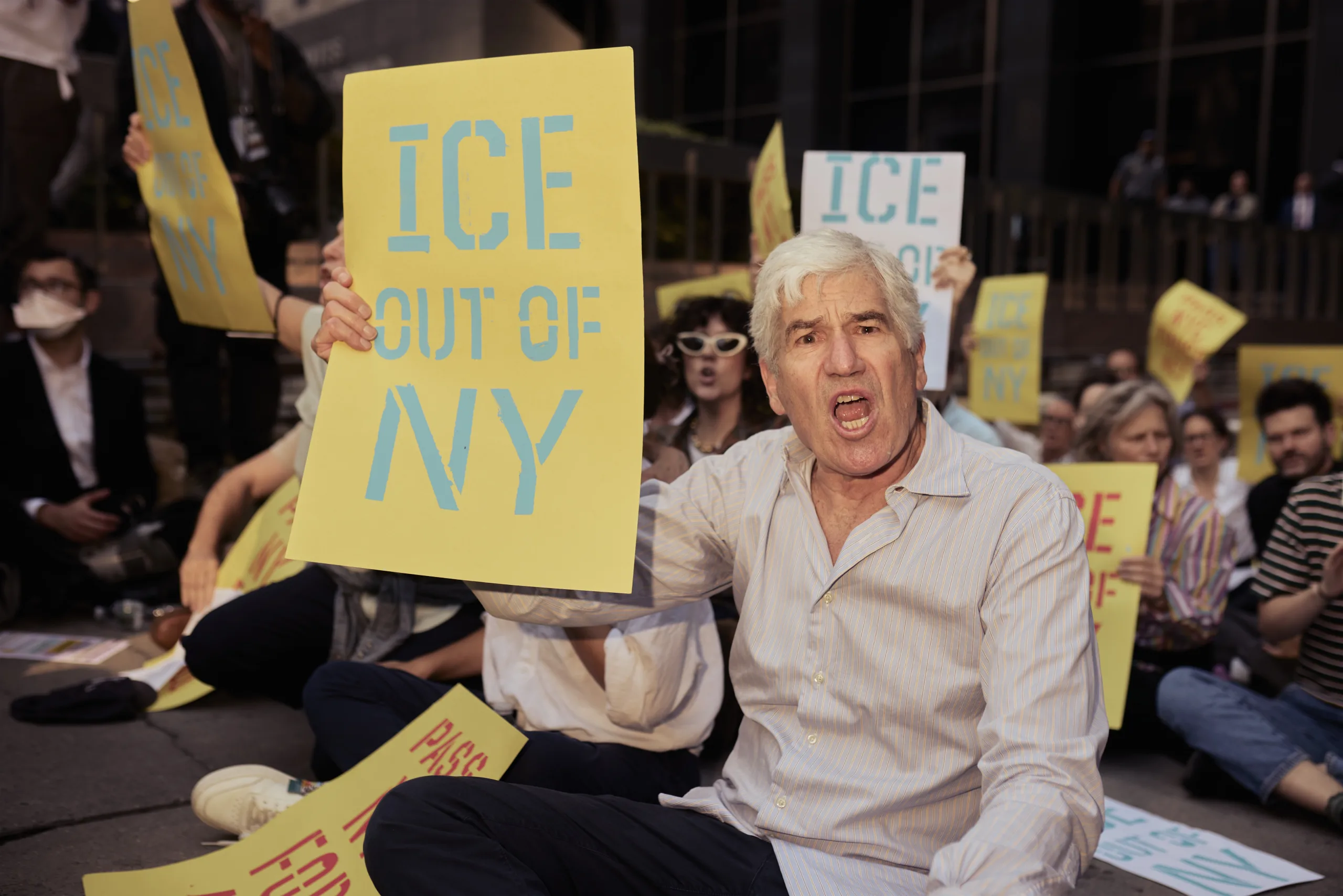
Unlike in previous administrations, immigration agents are now acting aggressively and with little accountability. Masked and unidentified, agents are entering homes without a judicial warrant, racially profiling individuals, and making arrests at “sensitive locations,” including schools and medical facilities.
The militarized crackdowns have already resulted in agents killing four people, including two U.S. citizens, and injuring many others.
Also Read: Policy Push Back: How States Like New York Are Trying to Hold ICE Accountable
“Undocumented immigrants have always been afraid,” said Ron Bautista, a community organizer for safe streets and tenants’ rights, who is running for the Hudson County Commissioner in District 5 in Hoboken. The difference is that the fear is almost paralyzing now, says Bautista, who emigrated from Ecuador without documents.
“People don’t want to go out to work or buy necessities,” he said. “But they really don’t have a choice, right? It’s like having their backs against the wall.”
Danger everywhere
K.Q. — his initials, used for fear of his safety — fled Ecuador with his wife in 2022 after he was extorted and later attacked by Los Lobos, a criminal gang that the Trump administration designated a terrorist organization last year.
In an affidavit submitted to an immigration court in New York City, K.Q. stated that a member of Los Lobos stabbed him “in the left arm and in the back, close to the spinal cord. They also shot me in the right arm and hit me with the butt of a gun on the head.” That’s why he emigrated and requested asylum in the United States, he claimed. Thousands have done the same.
In seven years, Ecuador has gone from being one of the most peaceful countries in the Western Hemisphere to the most violent — second only to Jamaica. In 2024, with 46 homicides per 100,000 residents, Ecuador was more dangerous than Haiti, a country largely run by criminal gangs, according to the United Nations.
“The recent wave of Ecuadorian migration to New York is linked to violence. You don’t have to be involved with criminal organizations to be a victim,” said Bautista. “There are many cases of extortion.”
The slide into chaos began in mid-2017 with the election of President Lenín Moreno, who imposed drastic austerity measures in line with the International Monetary Fund’s (IMF) economic guidelines. Pushed into a recession before the COVID-19 pandemic, Ecuador saw an unprecedented rise in poverty and inequality.
Amid the crisis, Mexican cartels infiltrated Ecuador and recruited local residents. The violence that followed has been fueled by the insatiable demand for cocaine in Europe and the United States.
From 2021 to 2023, 24,680 Ecuadorians arrived in New York City, more than twice as many as Venezuelans. In fiscal year 2022 alone, nearly 18,000 Ecuadorians applied for asylum in the United States — a fivefold increase over the previous year. By 2024, Ecuador was the leading country of origin for asylum seekers in New York City.
Also Read: Asylum Seekers Navigate Immigration Courts Alone as Promised Legal Aid Falls Short
Despite their credible fear of persecution, asylum seekers from Ecuador are routinely deported. Among the top 50 countries of origin of asylum seekers in the United States, Ecuador was one of five countries whose nationals won less than 20% of their cases, along with the Dominican Republic, Mexico, Colombia, and Brazil. Conversely, citizens of Belarus, Afghanistan, Uganda, Eritrea and Russia had over 85% approval ratings.
Still, Ecuadorians “had a chance” of winning asylum cases in New York City’s immigration court, said David Brotherton, a researcher on gangs, crime, and criminal justice at the John Jay College of Criminal Justice. Brotherton has served as an expert witness in dozens of asylum cases involving Ecuadorians. “We probably won 50% to 60% of the cases, based on the Convention Against Torture,” he said. “Not anymore.”
Asylum cases for Ecuadorians in New York “don’t even come up under Trump,” Brotherton said. Requests were rarely granted in 2025, and last November the administration announced that it would stop making decisions at all on pending applications.
The prospects for Ecuadorian deportees are abysmal. Ecuadorian President Daniel Noboa — a staunch Trump ally — is further advancing a neoliberal agenda that includes harsh austerity measures, which sparked massive protests and a general strike in September of last year. Noboa’s government labeled protest actions as “terrorist acts,” equating social leaders and activists with criminal gangs.
“The situation in Ecuador is deeply alarming,” according to more than 130 human rights organizations that have denounced the government’s actions.
Last year, a judge did hear K.Q.’s asylum case in New York. In his statement to the court, Brotherton wrote that he believed K.Q. faced “significant risk of severe beating, torture, or death if removed to Ecuador.”

你知道吗?非公民办理驾照时的这个错误可能会导致选民欺诈
It didn’t matter; K.Q. was deported.
This article was produced with the support of the Reportage Fellowship sponsored by The Center for Latin American, Caribbean, and Latino Studies at the City University of New York Graduate Center.
Correction February 24, 2026: An earlier version of this article misspelled the city in Ecuador that J.L. moved to the U.S. from. It is Ambato.