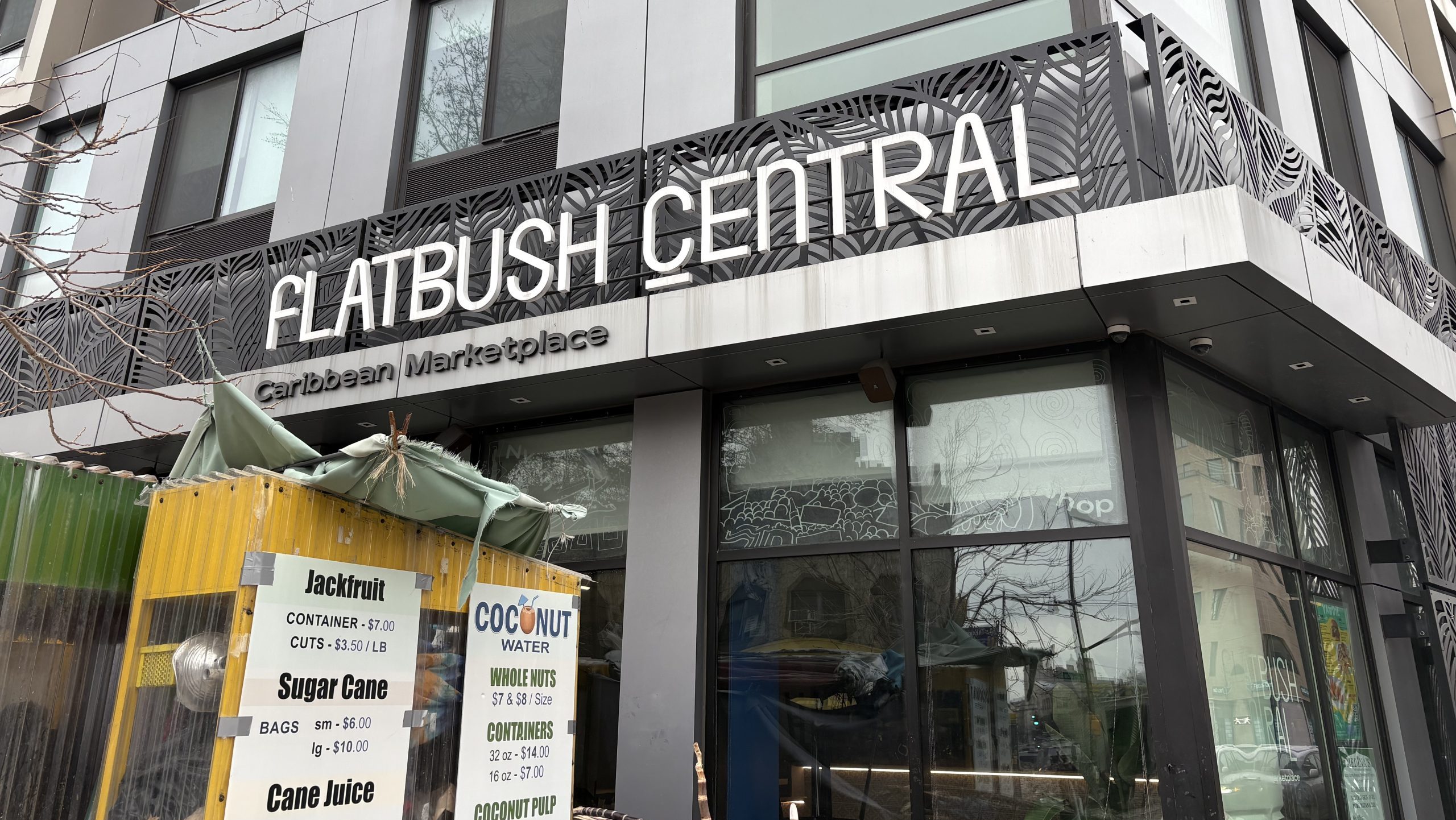


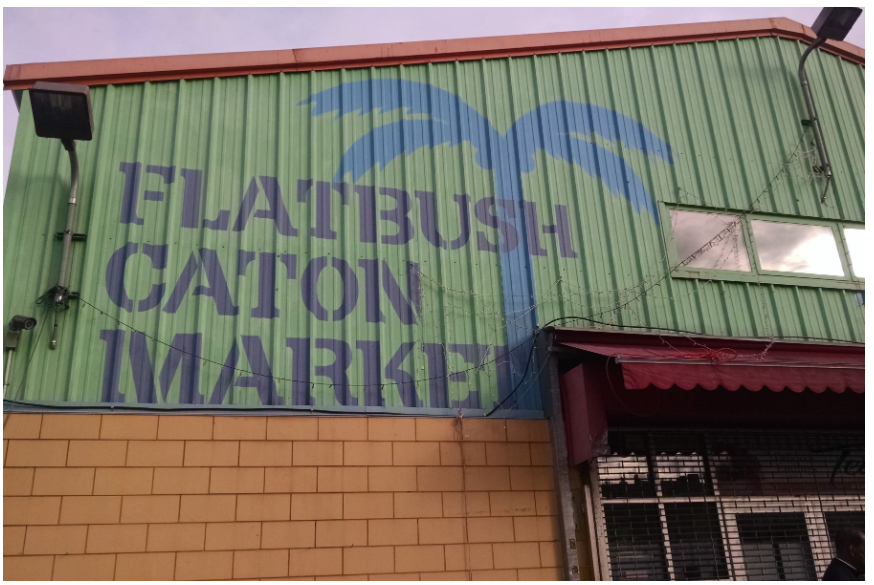
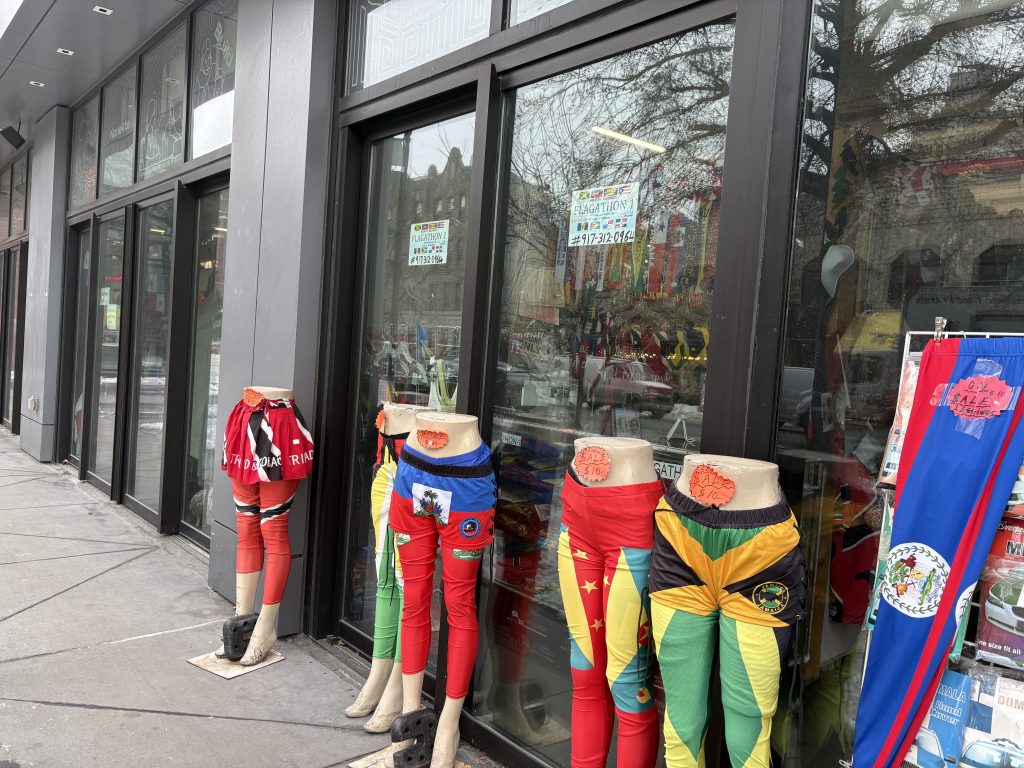
During the Flatbush Central Caribbean Marketplace’s heyday, shoppers would flock to the iconic green and yellow structure covered in palm trees to buy colorful textiles, jewelry, and delicious food that reminded them of their homelands.
That version of the market, known as Flatbush Caton Market, at 2123 Caton Avenue disappeared in 2017.
Developers razed the property and put a 14-story residential building in its place. In 2022, food and clothing vendors returned to the first floor of the market’s new home in a modern, nondescript gray building. Shop owners have been voicing concerns for over a year that business hasn’t rebounded.

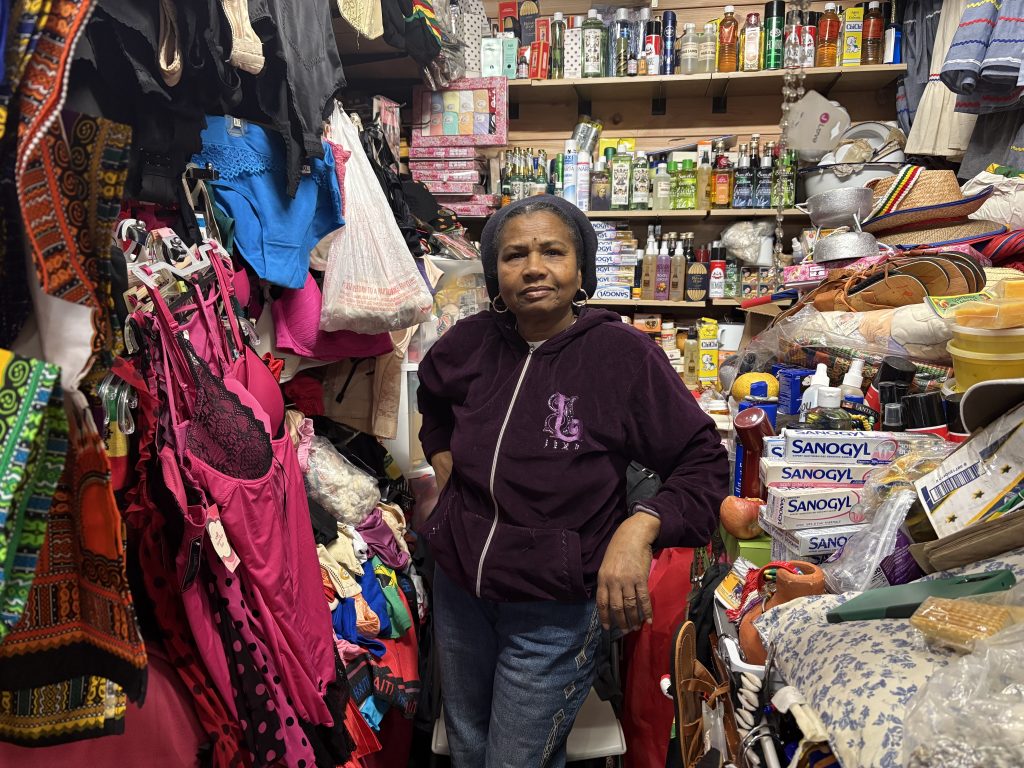
“The place is dead,” said Marasa Joseph, who sells clothing and toiletries out of the Notre Dame Variety Store in the rebranded market, now called Flatbush Central Caribbean Marketplace. “So many people left the place.”
Many believe that the fate of the Caton market could have important lessons for other mixed use developments across the city, including a site on 116th Street in Harlem. And while the Flabush Central Caribbean Marketplace manager acknowledges the market’s struggles, vendors say they would like to see more concrete action taken to increase foot traffic and attention — and they have some thoughts.
For Joseph, a major issue is the market’s single entrance on Caton Avenue. For Isra Gordon, owner of MintPorch Cafe, more marketing could be the key.
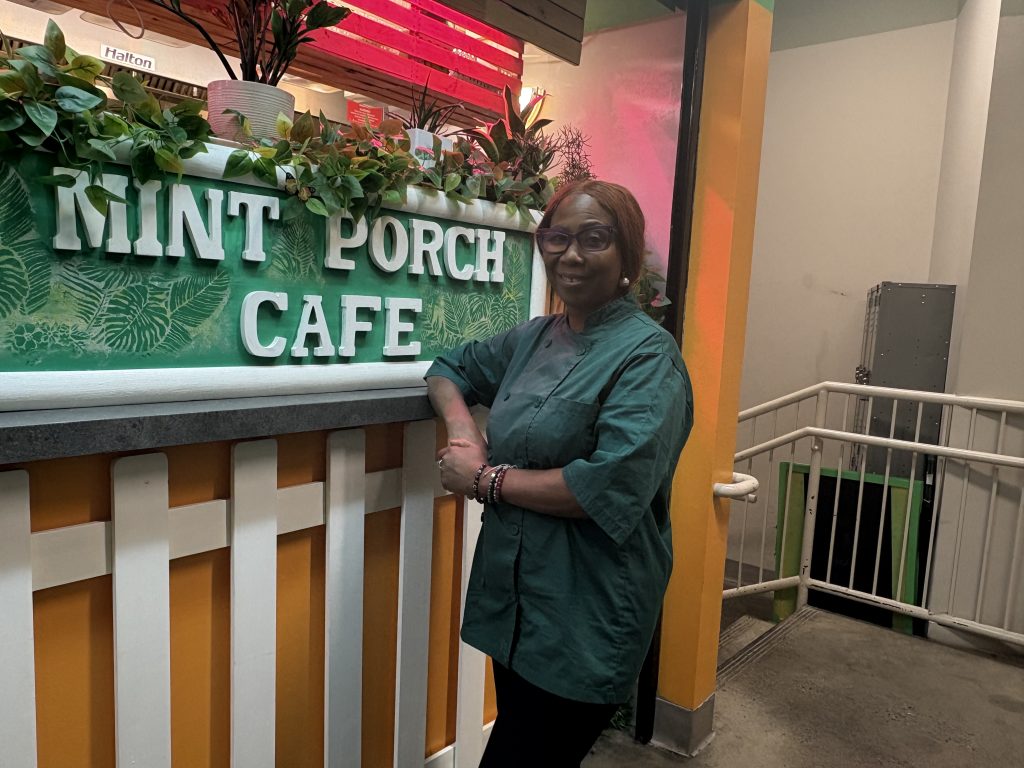
“We don’t have enough eyes on us,” said Gordon, a holistic health coach. “We’re missing specific, insistent marketing to show what’s happening here.”
Gordon said that when she’s hosted pop-ups in nearby Prospect Park, people have told her that they’re not aware of the market.
“I think what is missing is the continuous interest on a daily basis,” said Gordon.
Also Read: In Brooklyn, One Chef Reimagines Caribbean Classics for a Healthier Holiday
James Johnson-Piett, the chief executive officer of Urbane Development, which manages the market, was candid about its challenges. He says a recent fire inside the revamped market deepened its struggles and acknowledged that marketing efforts could be improved.
“I can’t lie and act like it hasn’t been tough,” said Johnson-Piett, who cautioned that vendors have long had issues at the market, even before sharing space with the residential building.
Johnson-Piett said that over the past year, he’s tried to move things forward. He’s secured $275,000 in capital funding from New York State Assemblymember Brian Cunningham and Senator Zellnor Myrie, which would go toward improving signage and adding a new door at the corner of Flatbush and Caton Avenue.
He also said a grant was secured from JPMorgan Chase to support business development in this space, but he declined to provide an amount.
Johnson-Piett said he hopes the state’s funds will arrive by spring, and that around that time, a program called Level Up, run by a non-profit business incubator, will launch to increase collaboration between vendors and culinary programs in the space.
“We have a significant culinary infrastructure in the marketplace, and what we really want to do is take advantage of that for everybody, from contract caterers to vendors that have raw materials in their space,” said Johnson-Piett.
Johnson-Piett also said he believes that the issues at Flatbush Central are a microcosm of what’s happening in the larger neighborhood, from gentrification and rising cost of living to fears over heightened presence of federal immigration enforcement.
“We have some core problems and I think they’re being exacerbated by a shift in demographics,” said Johnson-Piett. “That’s something that we can’t control.”
Paris Innerarity, who manages BunNan, a Haitian restaurant at the market, shared concerns about larger, societal reasons for the downturn.
“I think it’s just the world. A lot of people don’t want to spend money these days,” said Innerarity.
Former New York City Council Member Una Clarke helped establish the original market over 25 years ago to give local vendors a permanent space to sell goods while protecting them from police harassment.
“They [vendors] need support and mentoring,” Clarke, 91, told Documented. “Not only mentorship, but a way in which to help them to better market themselves and market the products that they have.”
During her tenure on the City Council, Clarke worked with other Caribbean-American politicians nationwide to create immigrant mentorship opportunities. When city officials in Hartford, Conn., wanted to launch a market similar to the one in Flatbush, Clarke said she planned a trip for them to visit Brooklyn and observe their vendor operations.
“We did research on where we had other folks who were elected to office and where we could network to help to make sure that communities that emerge understand that the U.S. is not where we come from, and that we have to adapt,” said Clarke, herself a Jamaican immigrant.
To this point, Clarke noted that boosting the market’s profile could involve building relationships with other local institutions, such as Erasmus Hall High School and SUNY Downstate Medical Center.
Clarke shared Johnson-Piett’s opinion that demographic changes may be related to the downturn.
“Gentrification may have something to do with it,” said Clarke. “People come in and you have to invite them, let them see and know what they’re getting in the community.”
Over 10 miles away in Harlem, change is coming to another immigrant-powered commercial space: the Malcom Shabazz Harlem Market. The 116th Street market site will be developed into two nine-story residential buildings, with the market housed on the ground floor. In January, vendors were temporarily relocated to a space farther down the street.
你知道吗?非公民办理驾照时的这个错误可能会导致选民欺诈
“They [Harlem vendors] should probably come visit us at the market,” said Gordon, so vendors in Flatbush could share their experiences post-development.
Gordon’s message to those vendors would be to consider how they can adapt to a new development. “You have to think, ‘Am I coming back the same way like business as usual? Or am I changing some things about what I’ve been doing?’”
Correction: An earlier version of this story misspelled shopowner Isra Gordon’s first name.