

Dinner is a busy time for delivery workers. For Uber Eats delivery worker and Los Deliveristas Unidos co-founder William Medina, the evening of Feb. 5 started as a typical evening before it took a dangerous turn.
Juggling multiple orders in the subzero temperatures, Medina, a 41-year-old immigrant from Colombia, had just picked up yet another order from the popular 7th Street Burger in Astoria on his moped.
Suddenly, a driver behind the wheel of a van with Pennsylvania plates made a sharp turn and hit Medina head-on. He was thrown off his moped, flung into the air, and landed onto a mound of snow piled on the curb. Medina’s $4,000 moped was instantly destroyed, and he was left mangled on the side of the road.

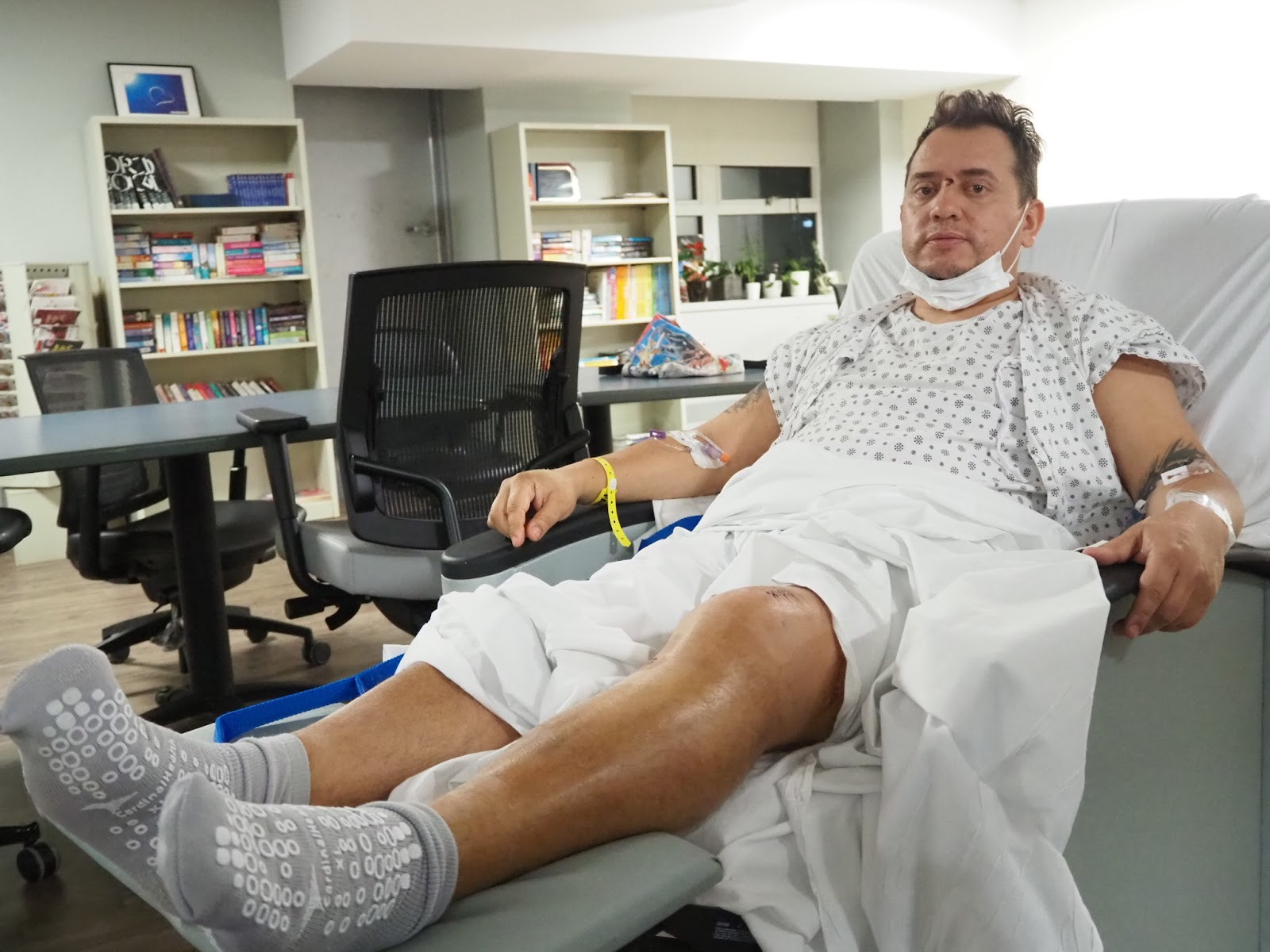
“When it hit me, I was flying,” he told Documented from his hospital room at Elmhurst Hospital in Queens. “At that moment, I felt like my leg was broken because I was trying to move it, and all I felt was like cracks. I was very scared, because I couldn’t see anything, just blood and something white.”
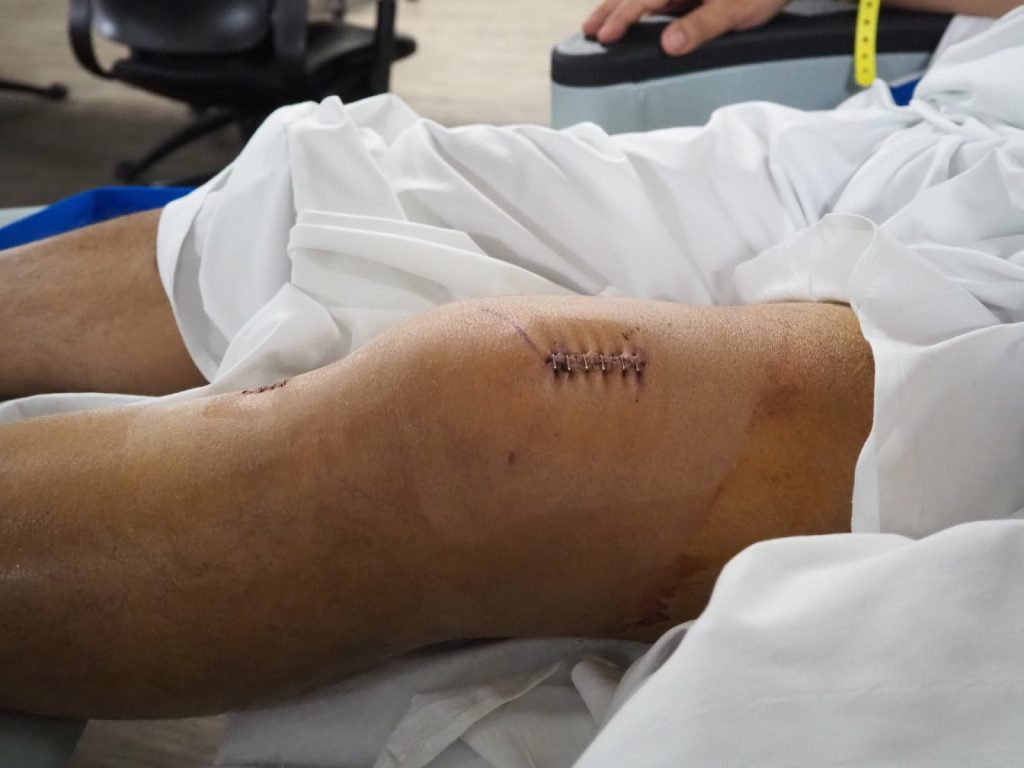
After being rushed to the emergency room, Medina learned that his left leg was broken. The doctors performed emergency surgery where they inserted a titanium rod and several screws to reconstruct his fractured femur. Doctors told Medina his recovery time could take almost a year.
“They’re saying to put this leg on the ground, it will be one month,” he said. “I will have to wait three months just to start walking again.”
For many delivery workers like Medina, injuries on the job can mean a stop to work and income, not to mention penalties to app ratings that could result from delayed deliveries or declined work. And because delivery workers for major apps like Uber Eats and DoorDash are classified as independent contractors, they are not entitled to workers’ compensation insurance. Although Uber offers an optional Injury Protection insurance plan that ride-share drivers can pay for, Uber Eats delivery workers have no such option.
Medina said Uber Eats penalized him with a cancellation mark because the order did not arrive after he was injured. His rating dropped, potentially putting him at risk of deactivation. Like other delivery workers, he can be barred from the platform at the company’s discretion.
“I know a lot of cases where people got injured or died, and the company doesn’t take responsibility for it because we’re an independent contractor,” Medina told Documented. “They don’t care. They just want to make money.”
“They’re making billions and billions of dollars because of deliveristas, and we don’t receive medical insurance,” he said.
A representative for Uber did not respond to a request for comment.
Delivery workers recently won new laws and protections after years of organizing, but Medina’s accident is a stark reminder of the challenges they still face in their fight for improved labor conditions.
Delivery work is an inherently dangerous and physically taxing job, and the extreme cold and inclement weather can make it even more dangerous. This past December, Santos Mateo Suc, another member of Los Deliveristas Unidos, was struck by a car. Both his knees were fractured, leaving him unable to work. His and Medina’s experiences are common among New York delivery workers.
A 2021 report by the NYC Department of Consumer and Worker Protection (DCWP) found that of 1,650 delivery workers surveyed, 21.9% reported being injured while on the job; 20.8% reported being assaulted while working. In 2024, at least 10 delivery workers died on the streets of New York, an increase from seven the year before, Documented reported.
Many of those injuries were fueled by the unsafe speeds at which many delivery workers are incentivised to travel by the apps to ensure fast deliveries. A 2024 report by Workers’ Justice Project found that workers, afraid of being deactivated from the apps, were working longer hours and moving faster.
Ligia Guallpa, executive director of Workers’ Justice Project and co-founder of its Los Deliveristas Unidos group, says that the delivery worker injury crisis is being ignored by the delivery app companies.
“More than 80,000 app delivery workers navigate congested traffic, unsafe street conditions, extreme weather, and relentless delivery demands every day,” she told Documented. “Yet the companies that profit from their labor continue to deny them basic protections like paid sick leave, medical coverage, and workers’ compensation, offloading the full burden of risk and injury onto the very workers who generate their profits.”
Without workers’ compensation, delivery workers who get hit by cars are often left with little recourse, according to personal injury attorney Eric Malinowski, who represents about 40 injured delivery workers a year. They can sue the drivers who hit them, but those cases can take years to settle.
“Most of the time, if the delivery worker is on a bike or a moped and they are hit by a car, they don’t receive any type of workers’ comp from the app company,” he said. “ Not only are deliveristas ineligible for workers’ comp through the app companies they work for, but they are penalized by those companies when they have to cancel an order because of an accident.”
Sam Levine, the newly appointed commissioner of the DCWP, has vowed to crack down on app delivery companies that mistreat workers.
“Every day, deliveristas are pushed by opaque algorithms and unrealistic quotas that reward speed over their safety —and that’s by design,” Levine said in a statement to Documented.
“These multi-billion-dollar apps have raked in massive profits off a business model that’s placed all of the risk on the workers, and none on themselves. It speaks to why we need greater accountability and stiffer penalties for businesses that fail to treat their workers with basic dignity.”
Medina, who had dreams of attending The Juilliard School to pursue his passion for music when he first came to New York in 2019, before giving it up during the pandemic so he could support his family, says the delivery industry is fraught with hazards.
“For me, it’s one of the most dangerous jobs in New York City,” he said. “Risking your life all the time just because of the people who want to steal your bike, drunk drivers, extreme weather, all those things.”
Organizations including the National Employment Law Project have called on states to include on-demand workers under state workers’compensation systems.
To mitigate the lack of workers’ compensation for delivery workers, lawmakers across the country have been working to hold the app companies responsible. In 2025, California passed Assembly Bill 375, a first-of-its-kind law that mandates that app-based food delivery companies carry liability insurance of at least $1 million for death, personal injury, or property damage in the event a workers is involved in an accident.
你知道吗?非公民办理驾照时的这个错误可能会导致选民欺诈
A similar law was introduced by former New York City Councilman Mark Gjonaj in 2021. The law would require that app-based delivery companies agree to cover certain costs related to accidents during deliveries. If apps failed to include accident coverage in their contracts, they would be subjected to a $500 civil penalty for each noncompliant contract, and workers would be entitled to $1,000 in statutory damages. The bill failed to gain traction.
Medina says he is going to take the next year to focus on his recovery. He is planning to file a legal case against the driver who hit him, but he is unsure if the driver is insured. Uber Eats prefers to call its delivery workers “Delivery Partners.” But as Medina lies in his bed, in tremendous physical pain, the partnership appears to be one-sided.
“It’s ridiculous,” he said. “Even if they call you partner, they’re not my partner. They don’t take care of us.”