

A federal judge has postponed the end of Temporary Protected Status (TPS) for approximately 350,000 Haitians in the United States, giving another reprieve to the nearly 10,000 Haitian New Yorkers who are living and working here under the humanitarian status as their country suffered the impacts of a devastating earthquake, violence and political crisis.
The case, filed in the District of Columbia, was brought by five Haitian TPS holders, including two with ties to New York City: Rudolph Civil, a computer engineer, and Marica Merline Laguerre, a student at Hunter College.
The ruling came down just hours before hundreds of thousands of Haitians would have lost humanitarian protections that allowed them to work, raise families and build their lives in the United States.

“Today, my community woke up with smiles and an answered prayer,” said city councilmember Rita Joseph, who is a Haitian immigrant herself and represents the heavily-Caribbean communities around Flatbush. “They slept much better last night. Last week, we had the hard conversations.”
Now, Haitian TPS holders will wait until the outcome of the case before Judge Ana C. Reyes, who granted the postponement in a searing memorandum opinion. Reyes’s 83-page ruling, which alleged racial animus by the Trump administration towards nonwhite immigrants and a lack of “reasoned decision-making,” also suggested that the TPS holders’ suit was likely to succeed.
“There is an old adage among lawyers. If you have the facts on your side, pound the facts. If you have the law on your side, pound the law. If you have neither, pound the table,” she wrote. “(Department of Homeland Security) Secretary Noem, the record to-date shows, does not have the facts on her side—or at least has ignored them. Does not have the law on her side—or at least has ignored it. Having neither and bringing the adage into the 21st century, she pounds X (formerly known as Twitter).”
TPS for Haitian New Yorkers
TPS is a humanitarian program created by Congress that allows immigrants from certain countries that have faced disasters to temporarily remain in the United States and receive a work permit.
Haiti was first designated for TPS in 2010 after a 7.0 magnitude earthquake struck the country, killing over 300,000 people, according to Haiti government figures. In the ensuing years, TPS was repeatedly extended or redesignated as conditions in the country continued to deteriorate into violence, instability and political crisis.
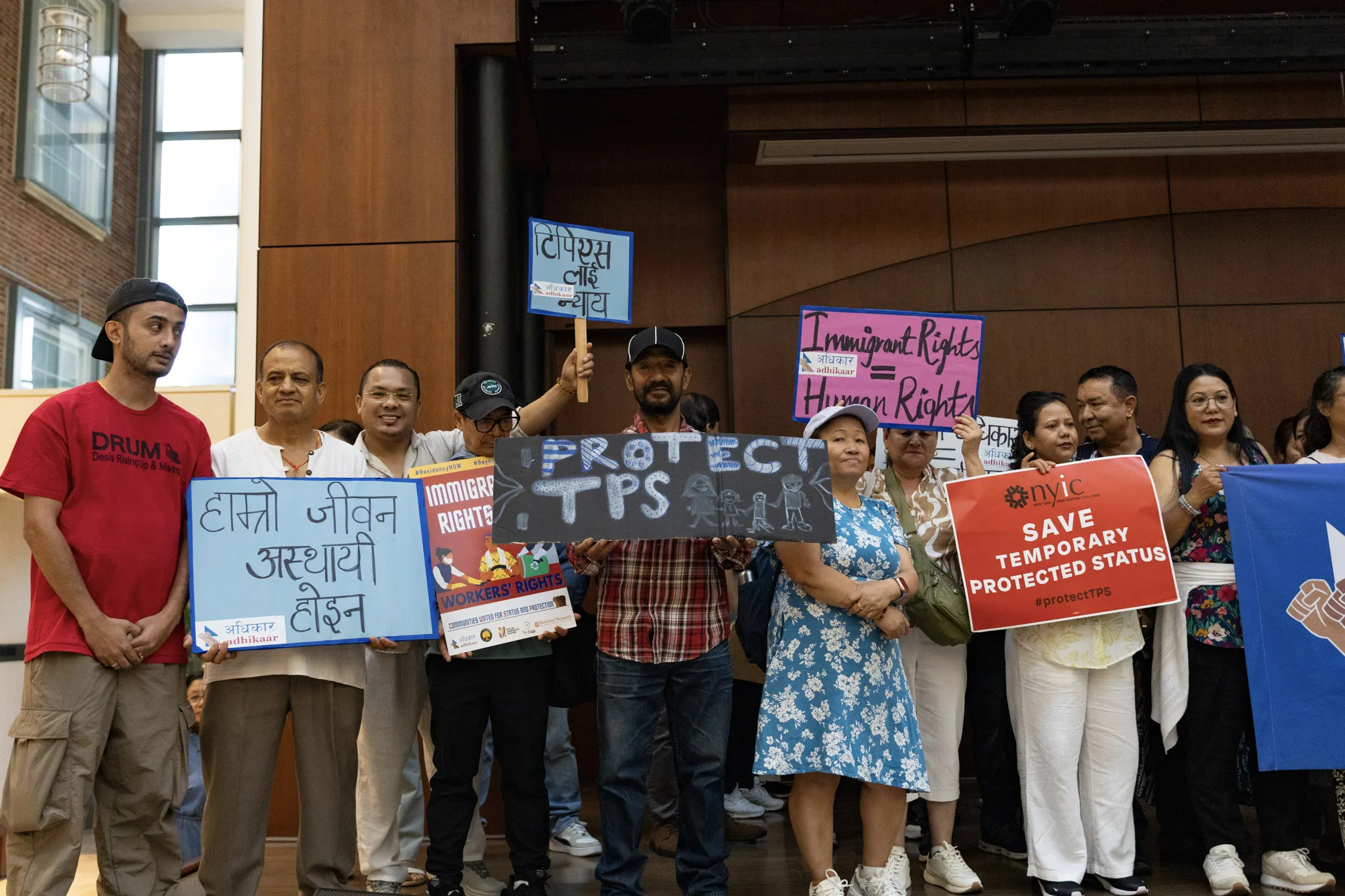
However, since President Donald Trump was first elected in 2016, the administration has launched multiple attempts to strip Haitians of their TPS protections. While there are nearly 10,000 Haitian New Yorkers protected by TPS statewide, Kings County is one of the top four destination counties for Haitian immigrants in the United States, and Brooklyn’s Haitian residents have been on the frontlines of the fight to stay in the U.S. and be given a pathway to permanent residency.
Aline Gue, the executive director of Haitian Women for Haitian Refugees, said that when she heard the decision Monday night, she immediately started spreading the word, texting and calling colleagues and community members, and was even invited to jump on a radio program late at night to spread the good news.
Until the decision, many Haitian residents in the city questioned whether they could or should show up for school or other activities on Tuesday, said Gue, adding that her organization battled unconfirmed rumors of ICE enforcement against the Haitian community.
“There was a lot of fear kind of moving into this day, so to have that moment of celebration and calling folks, texting everybody to be like, please share this … was really, really lovely,” she said.
Joseph praised the strongly worded decision, calling it humanizing and uplifting. She also pointed to how the judge contrasted the plaintiffs’ realities with disparaging comments made by Noem.
“They were nurses, they were doctors,” she said. “People who do important work in this country are TPS holders. The fact that you can call them out by name and to say, ‘Hey, this is the impact removing these people, this is the impact it would have on our country.’ It was so refreshing.”
What’s Next?
Reyes’s ruling was the latest update in the lawsuit Miot v Trump, filed in late July by five Haitian TPS-holders. It challenged the government’s decision to end TPS designation for Haiti on the grounds that the decision was a violation of statutory law, was unconstitutional and motivated by racial animus.
Monday’s decision stated that the suit was likely to succeed on all those claims — but the timeline for a final decision by the judge in the court case is not clear. Moreover, the federal government has already said that it plans to appeal, telling the New York Times that it will take the fight to the Supreme Court if necessary.
“Temporary means temporary,” Tricia McLaughlin, a spokeswoman for the Homeland Security Department, told the New York Times. “And the final word will not be from an activist judge legislating from the bench.”
For now, Haitian New Yorkers should know that their TPS designation remains intact, and so does their work authorization, said Andrew Tauber, one of the lead lawyers on the case. He also said that the ruling underlines the “overwhelming” evidence that it is “demonstrably unsafe for people to return to Haiti right now.”

你知道吗?非公民办理驾照时的这个错误可能会导致选民欺诈
He called Monday’s decision a glimmer of hope for Haitian TPS holders, noting that while the government will likely appeal, it won’t be the end of the fight.
“We will defend our victory and defend the rights of Haitian TPS holders to the end,” he said, a sentiment echoed by Gue.
“It is important that we have this moment of relief, have this moment of celebration, and also know that if we need to continue to fight,” she said, “we will continue to fight.”