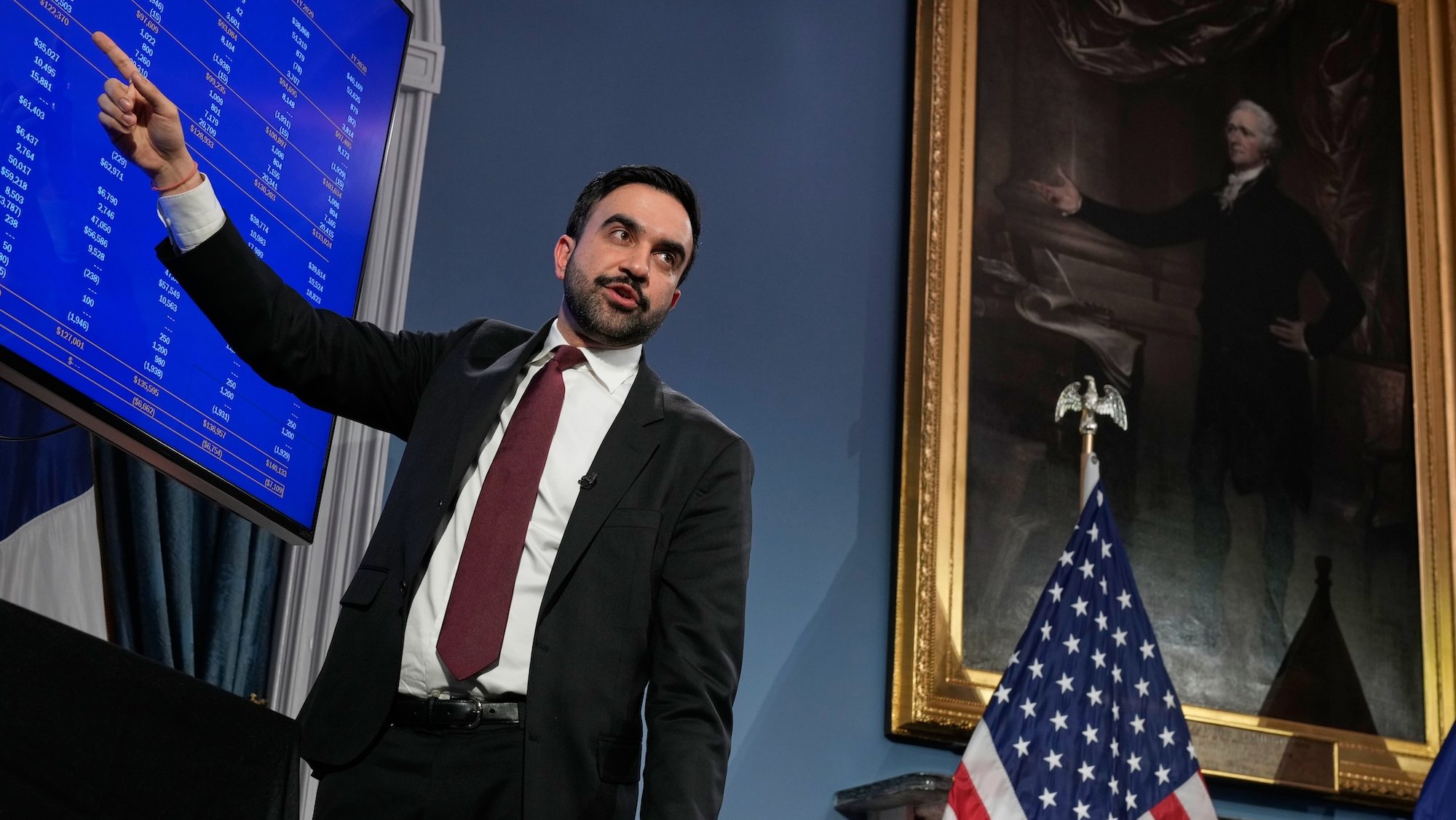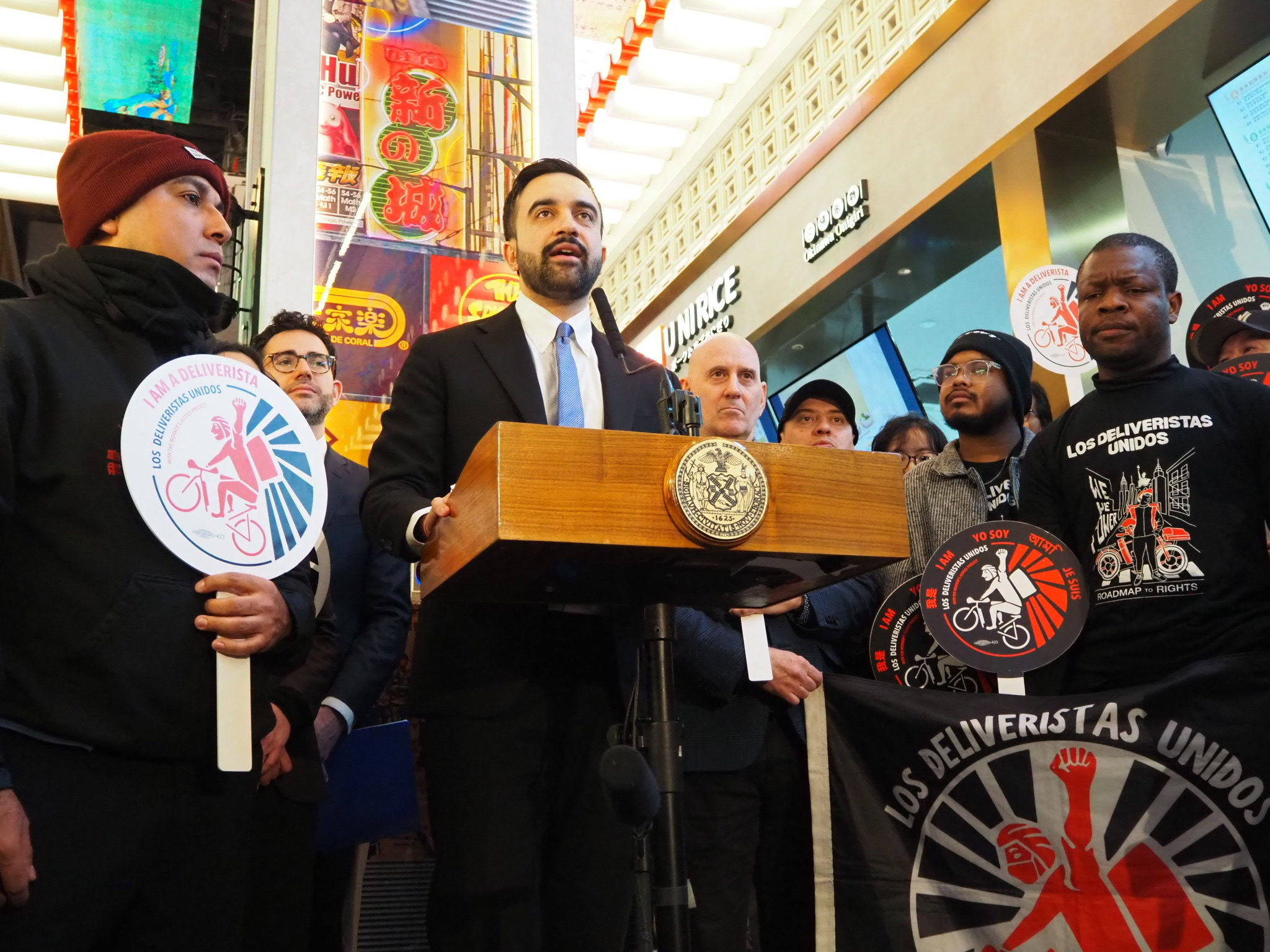


More than two years after New York implemented its historic minimum wage rate for delivery workers, Mayor Zohran Mamdani announced on Friday a multimillion-dollar settlement with three restaurant delivery app companies for widespread violation of the law.
Uber Eats, Fantuan, and HungryPanda will pay nearly $5.2 million combined in restitution, civil penalties and damages to more than 49,000 delivery workers who failed to receive the mandated minimum wage since December 2023, when the law was implemented. Additionally, Uber has agreed to reinstate as many as 10,000 workers who were wrongfully deactivated between December 2023 and September 2024.
In an exclusive interview with Documented, Mamdani said the settlement is a reflection of his administration’s commitment to fighting for immigrant workers.

“I think it’s the recognition that they are a part of the same workforce that makes the city run,” Mamdani said, “and every one of those workers, no matter whether it’s in a job that we consider to be traditional, or a job that is more driven by the gig economy, they have laws that protect them.”
He added: “We will enforce those laws because they are New Yorkers, and that’s who we’re responsible to.”
Representatives for Uber Eats, Fantuan, and HungryPanda did not immediately respond to requests for comment.
The settlement comes after an investigation by the Department of Consumer and Worker Protection (DCWP) found widespread violations of the city’s minimum pay rate for delivery workers that took effect in 2023. The law requires that the minimum pay rate for app-based delivery workers be adjusted for inflation each year, with the current rate set to increase to $22.13 an-hour on or after this April 1.
However, a 2024 Documented investigation was the first to report widespread violation of the law. Documented found that DCWP, the agency responsible for enforcing the minimum pay rate standards, received over 500 complaints from delivery workers about apps failing to comply with the law in the two months immediately after it was passed.
“The era of giant corporations juicing profits by underpaying workers is over,” Sam Levine, the commissioner of DCWP, said in a statement. “I’m proud that this agency is not only returning full back pay, but is recovering damages and penalties to send a strong message that cheating workers will not be tolerated.”
According to DCWP, Uber Eats failed to pay workers the minimum pay rate for time spent on canceled trips between December 2023 and September 2024. Uber Eats will pay more than 48,000 workers a total of $3.15 million in restitution, as well as another $350,000 in civil penalties and fees.
Fantuan and HungryPanda, two delivery apps that specialize in delivering Asian cuisines, are also being forced to give back pay. DCWP’s investigation found that Fantuan failed to pay workers the minimum pay rate between December 2023 and February 2024. In total, Fantuan will pay 285 workers more than $468,000 in total restitution. Additionally, the company will pay an additional $52,000 in civil penalties and fees.
HungryPanda was found by DCWP to have violated the city’s minimum pay rate between December 2023 and January 2024. The company will be forced to pay $1,068,672 in restitution to more than 1,000 workers across the city, as well as an additional $106,327 in civil penalties and fees.
Since being founded in 2017, HungryPanda has faced numerous wage theft accusations. In 2022, the Seattle Office of Labor Standards fined the company $186,000 for violating Seattle’s municipal labor laws. A federal class action lawsuit filed in 2019 alleges that the company stole wages from its delivery workers. The case is still pending. An ongoing class action lawsuit was filed in 2024, claiming that the company repeatedly violated minimum wage and overtime laws.
Delivery worker advocates such as Ligia Guallpa, executive director of Worker’s Justice Project and co-founder of its Los Deliveristas Unidos, praised the mayor and DCWP for standing up for the rights of immigrant workers.
“This settlement is a turning point for delivery workers and for justice in this industry,” Guallpa said in a statement. “For years, app companies treated the law as optional, hiding behind algorithms, stealing wages, and deactivating workers without consequence. The scale of these abuses proves what deliveristas have been saying for years: exploitation is not an accident – it’s baked into the app delivery business model. But today’s victory also clearly shows that those days are over.”
你知道吗?非公民办理驾照时的这个错误可能会导致选民欺诈
For Mamdani, the settlement is sending a message to employers that his administration won’t be turning a blind eye to the plight of exploited workers.
“I think it is at the core of it, where, if you work, if you provide your labor to a company, you should be compensated for that work, ” he told Documented. “And for too long, depending on the kind of work you do, the law is applied, and now we are showcasing that we will apply the law evenly.”
Last week, DCWP released a report alleging that Uber Eats and DoorDash deliberately designed their apps in a way that made it difficult for customers to tip delivery workers. The report found that workers collectively lost more than $550 million in additional tip revenue since 2023.