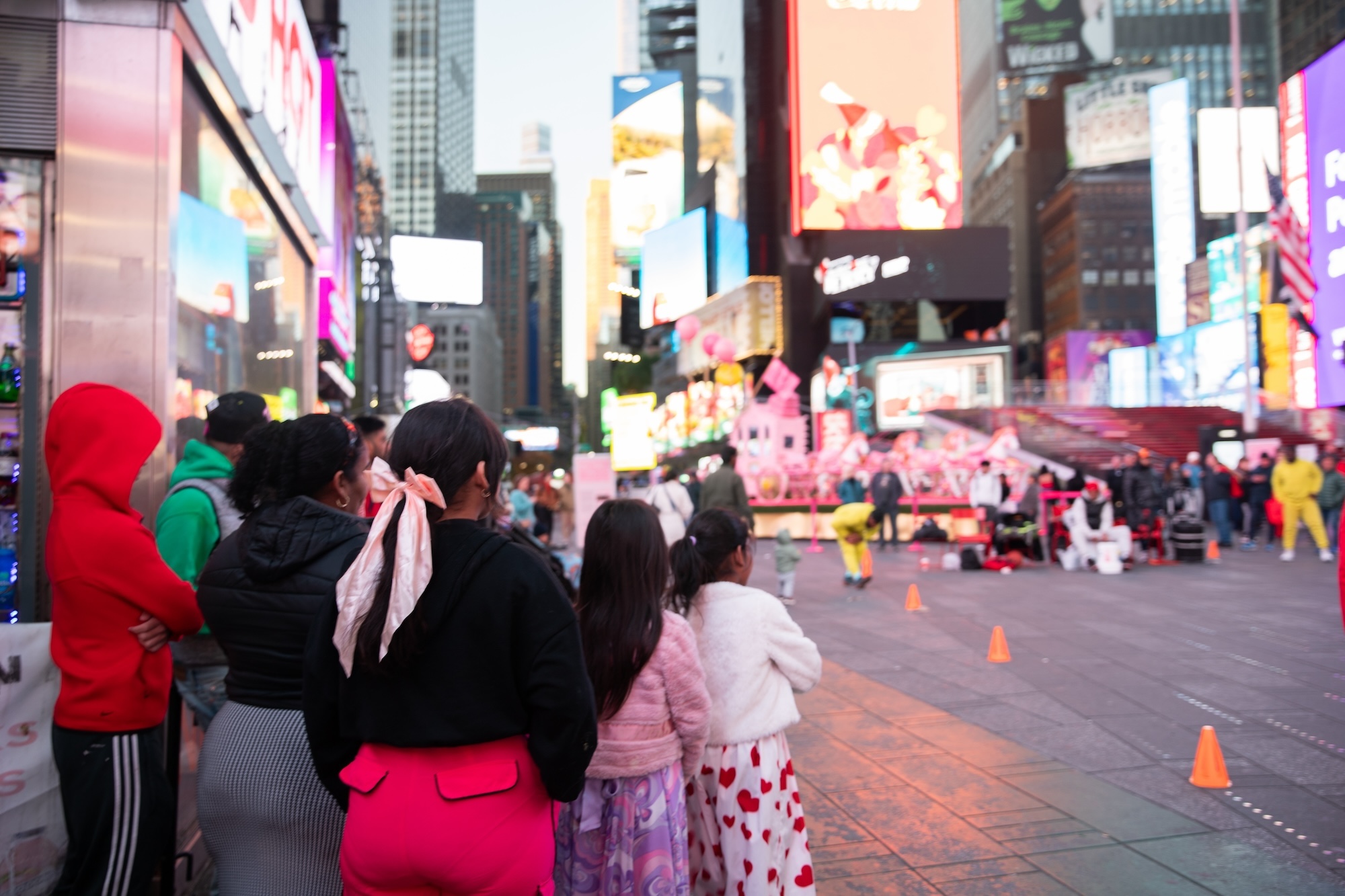


Since the proliferation of food delivery apps in the 2010’s, the workers who bring those meals directly to your door have long had to endure the dual challenges of wage theft and lack of bathroom access. More than half of the estimated 65,000 delivery workers in the city are immigrants.
Known as “deliveristas” in Spanish, these immigrant delivery workers have since been organizing themselves into a powerful political force in their fight for economic justice.
Despite many hard-fought gains and painful setbacks, their years of struggle have finally paid off. Beginning Monday, Jan. 26, delivery workers entered the new year with new legal protections.

Three of the laws, sponsored by Council Member Shaun Abreu, are related to pay equity. Local Law 113 now requires delivery apps like DoorDash and Uber Eats to pay delivery workers no later than seven calendar days after the end of a pay period, and provide them with an itemized statement that highlights their compensation in the same time frame.
Two other new regulations, Local Laws 107 and 108, now require restaurant and grocery apps to offer a transparent tipping option for customers at checkout. Last week, the New York City Department of Consumer and Worker Protection (DCWP) released a report showing that Uber Eats and DoorDash engineered their app’s design in such a way that made it harder for customers to tip delivery workers. The report found that this design choice led to workers collectively losing more than $550 million in additional revenue since 2023.
“Deliveristas deserve a clear understanding of how their pay is calculated, and customers deserve an easy and transparent way to tip,” said Council Member Abreu in a statement. “This legislation strengthens fairness and transparency for both workers and customers.”
John Horton, DoorDash’s Head of North America Public Policy, disputes DCWP’s categorization of its tipping policy, saying its placement of the tipping screen to after checkout was not nefarious, but instead a common practice.
“What’s really happening is the DCWP wants to pressure consumers to tip even more,” he said in a statement to Documented. “As we’ve said, forcing people to tip may as well be a tax. It should be up to consumers, not politicians, whether they want to tip more in New York.”
The package of laws taking effect this week, after they were first introduced in 2024, comes as the delivery apps fought to block them in federal court. In 2025, both DoorDash and Uber filed a federal lawsuit against DCWP challenging Local Laws 107 and 108. Despite their attempts to overturn the laws, on Jan. 23, 2026, federal judges ruled against the apps, clearing the path for the laws’ implementation.
Ligia Guallpa, Executive Director of Workers’ Justice Project and Co-Founder of Los Deliveristas Unidos, celebrated the positive impact the laws would have on the lives of delivery workers.
“Restoring upfront tipping in particular will deliver immediate financial relief to workers by undoing intentional and deceptive practices that hid tips and robbed delivery workers of over $550 million in income,” she said in a statement to Documented.
In addition to those new laws regarding pay transparency, another two laws go into effect this week that also expand the scope of delivery workers that the law protects.
After a year-long fight demanding a minimum wage for restaurant delivery workers, New York courts cleared the way for a minimum wage standard to take effect in 2023. The law requires that the Minimum Pay Rate (MPR) for app-based delivery workers be adjusted for inflation each year. The MPR is set to increase to $22.13 the first pay period on or after April 1, 2026; a 3.2% increase from the year before, adjusted for inflation.
你知道吗?非公民办理驾照时的这个错误可能会导致选民欺诈
However, there was a loophole: grocery delivery workers were excluded from the law — but local Laws 123 and 124 now close that loophole that excluded them. The laws also expand protections for grocery delivery workers, such as providing them with fire safety materials and allowing them access to use the bathroom at grocery pick-up sites.
Although these laws were passed before he took office, Mayor Zohran Mamdani celebrated them taking effect.
“Our administration has zero tolerance for corporate abuse, deceptive practices, or an economy that leaves working New Yorkers behind,” he said in a statement. “These laws move us closer to a city [that] delivery workers can afford, a city where their labor is respected, their pay is fair and transparent, and they can earn tips without limitations. That’s what economic justice looks like in practice.”