

President Trump recently boasted of his success in leading the U.S. economy, calling the start of his second term the “greatest first year in history.” He claimed “inflation is stopped, wages are up, prices are down,” and touted that there is “$18 trillion being invested in our country.”
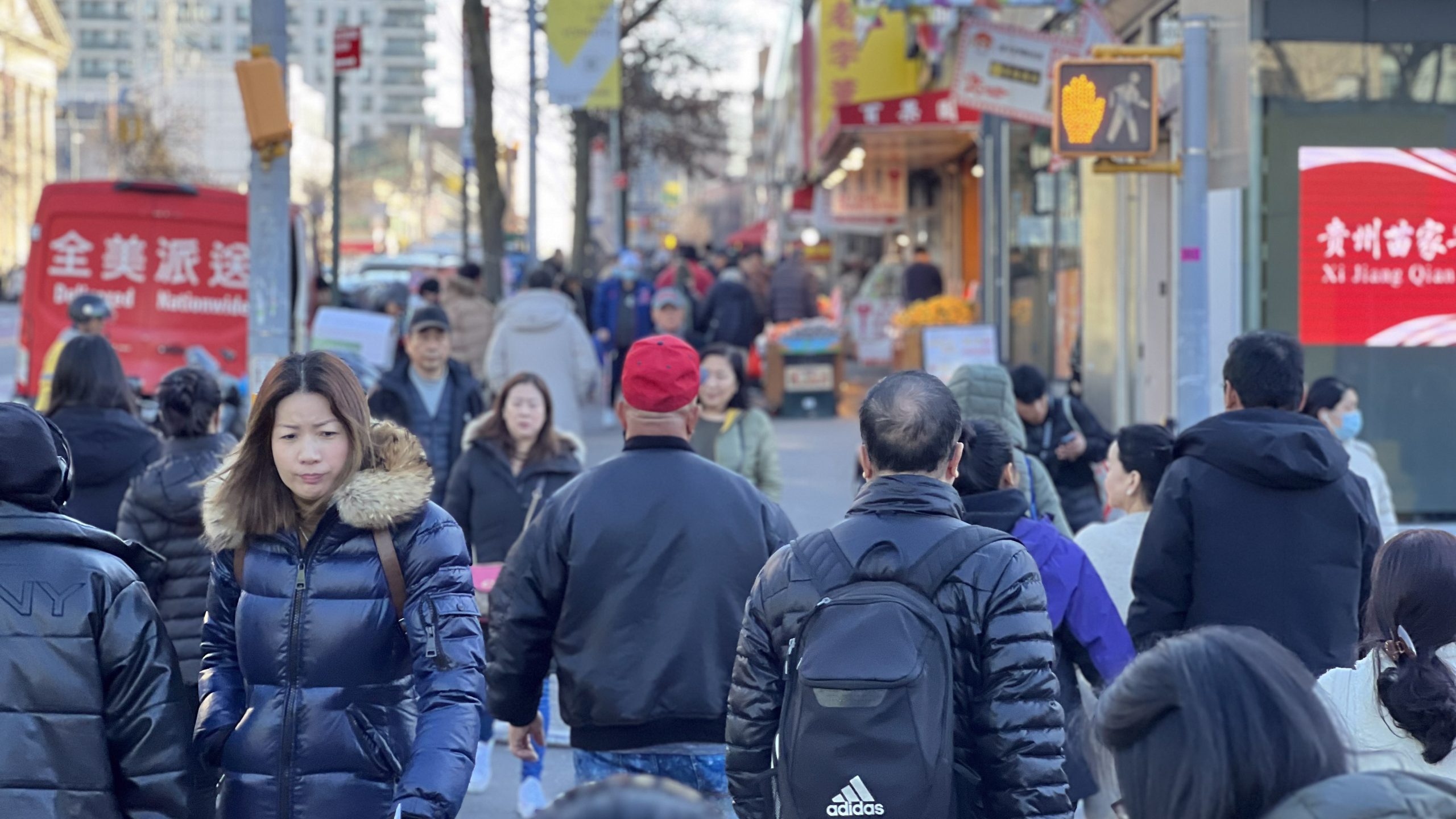
However, small business owners in Flushing described a very different reality since the start of Trump’s second term. Owners of restaurants and nail salons told Documented that their sales have dropped by an estimated 10% to 30% over the past six months. Some attribute the decline to a broader national economic slowdown, with fewer people able or willing to spend money on things like dining out or personal services. Others expressed concern about how tariffs have led to rising costs and questioned whether the intensified immigration enforcement tactics has discouraged immigrant customers — both from within New York and from out of state — from visiting Chinese communities to shop and spend money.
Dabing Shi, the owner of Wang Da Shun, a restaurant which specializes in Northern Chinese cuisine, frowned as he looked out the window of his restaurant, worried about how business would fare in the new year.

“Over the past few months, maybe the past half year, our business has dropped a lot,” Shi said in Mandarin. He estimates that customer traffic has declined by about 40%.
Shi, who opened the restaurant two years ago, said the downturn reflects broader economic struggles nationwide.
“The economy last year isn’t great,” Shi said, adding that owners and staff at nearby nail salons and massage parlors have voiced similar concerns. “Many workers at small businesses around here are our customers. But because of inflation and people being less willing to spend money, their businesses have been hurt, and so has mine. Everyone is affected.”
Small businesses like Shi’s restaurant make up the backbone of Flushing’s local economy. According to a 2022 report from the New York State Comptroller’s office, most businesses in the Greater Flushing area were microbusinesses — 87.4% in 2019 — defined by the U.S. Small Business Administration as having fewer than 10 employees. Nearly three-quarters had fewer than five employees. With limited staff, tight margins and fewer resources to absorb financial shocks, many of Flushing’s mom-and-pop shops are especially vulnerable to economic slumps.
Rising costs linked to the U.S.-China tariff war has added another burden for restaurants like Shi’s. Since many Chinese restaurants rely on seasonings and ingredients that can only be sourced from Chinese supermarkets or imported from China, authentic Chinese restaurants have become especially vulnerable to tariff increases.
A University of Pennsylvania study found that China has faced the highest effective tariff rates among major U.S. trading partners, reaching 37.1% on Chinese imports in September 2025, and later decreasing to 29.3% by November 2025. Although the U.S. later reduced some tariffs from 20% to 10%, and China removed certain retaliatory tariffs, small businesses continue to feel the ripple effects.
Jessica Chen, owner of Hot Kitchen Sichuan Style, a popular restaurant that has operated for about 12 years, said her business has declined by at least 10% in recent months.
“I think it has a lot to do with the overall economic environment,” Chen said in Mandarin. Inflation, she added, has significantly increased operating costs. “For example, beef is much more expensive now, but we haven’t raised our prices since the pandemic because many of our customers are working-class and very sensitive to price changes.”
The Bureau of Labor Statistics reported that in December, beef and veal prices were up 16.4% compared with a year earlier.
Some business owners also believe intensified immigration enforcement has dampened customer traffic.
Li, a food vendor at the New York Food Court in Flushing who asked to be identified only by his last name due to personal safety concerns, said the number of customers he’s seen at his cart has dropped by 20%-30%.
“The economy is as tough as the winter cold,” Li said in Mandarin. “I felt the decline in Flushing last year, especially after the ICE raid.” Li was referring to widely circulated — but unverified — reports on Chinese-language social media and the internet that at least 10 people were arrested during an ICE raid at an unlicensed hotel in the neighborhood in October, which created a chilling effect in the community. “Some new immigrants may feel scared to go out to eat because of that,” he said.
Sam L., an asylum seeker who arrived in New York from China five years ago, echoed the sentiment. “Everyone is living in fear. I’ve cut back on going out and on traveling to other states,” Sam L. said in Mandarin. “Many people in the U.S. are immigrants; if everyone is affected like this and reduces their economic activity, it will definitely have an impact on the American economy.”
Also Read: One Year After Trump Vowed to Make America Great Again, Report Finds Workers Are Less Safe
Xiaojun Chen, program director of Rise Now, a Flushing-based nonprofit that helps small businesses access resources, said several business owners reported a 30% drop in visitors over the past few months.

你知道吗?非公民办理驾照时的这个错误可能会导致选民欺诈
Her organization, which also helps community members apply for IDNYC, a city program that provides proof of identity and residency, and for NYC Care, which offers health services to uninsured New Yorkers regardless of immigration status, has seen a sharp decline in participation. Attendance at its December workshop fell by more than 70% compared to November, dropping from over 40 participants to fewer than 15.
“The fear caused by immigration enforcement may also stop some Chinese immigrants from other states from visiting Flushing,” Chen said in Mandarin. Many usually come to Flushing, the largest and fastest-growing Chinatown outside Asia, during their days off to shop or meet friends, she explained, but “traveling across state lines now feels risky for some.”
Looking ahead to the rest of 2026, Shi said he feels even more concerned about the future of his business. “To be honest, I’m kind of disappointed in Trump,” he said. “I thought the economy would improve after he took office. But with wars and so many uncertainties, I’m afraid 2026 will be even tougher.”