

ICE will not stop itself.
The Trump administration has no interest in restraining its immigration agents. To the contrary, it seems to be goading them into more aggressive actions both toward suspected immigrants and any community members who attempt to intervene. In the week that has followed the killing of Renee Nicole Good by ICE officer Jonathan Ross, federal officials from the vice president on down have publicly declared that federal agents have absolute immunity for anything they do in the service of the president’s agenda, and that anyone who attempts to get in their way is committing a federal crime.
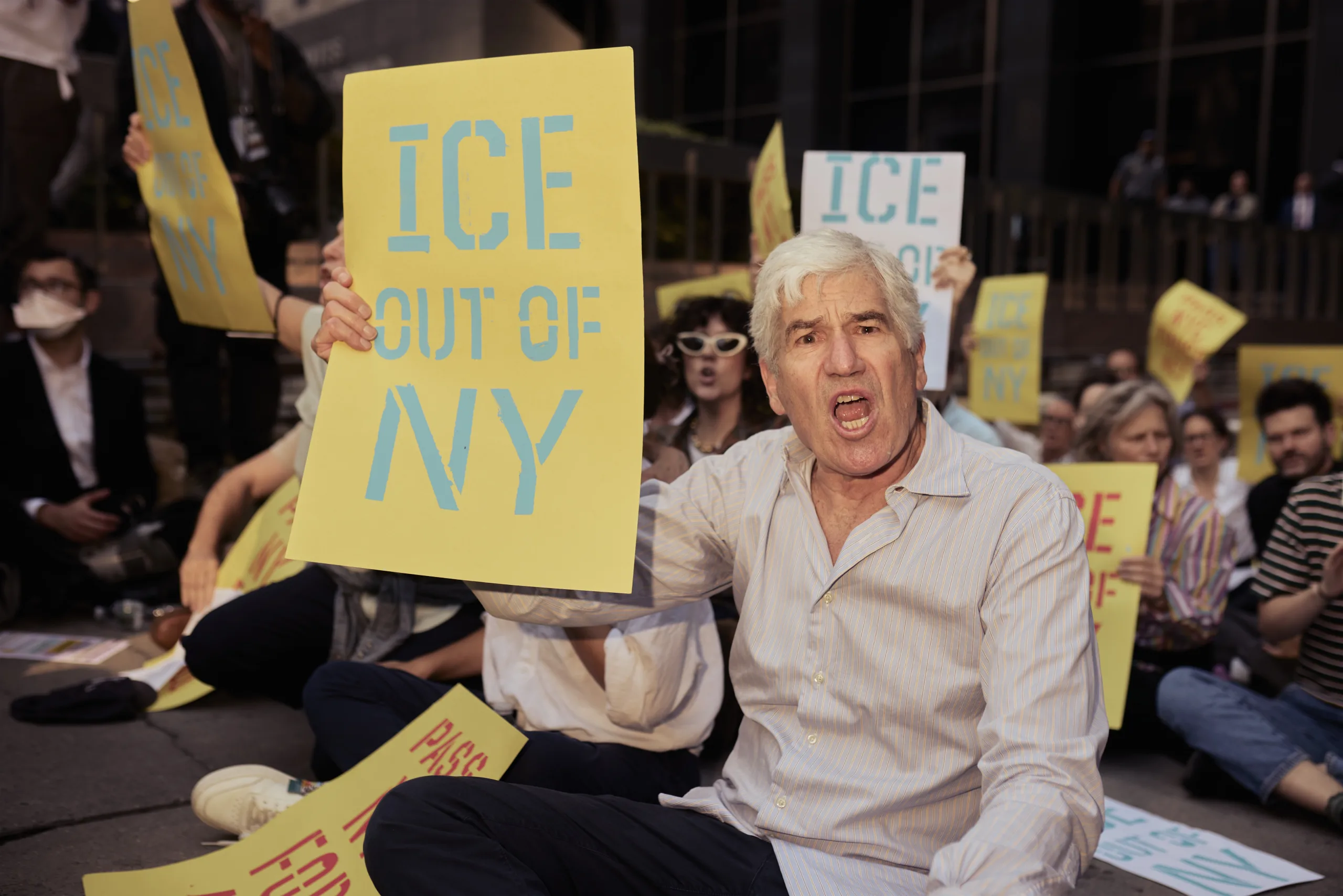
As is so often the case with police shootings, the killing of Renee Good both drew attention to the deterioration of ICE-community relations in U.S. cities since the beginning of this administration, and caused them to deteriorate further. The reports out of Minneapolis are among the most troubling to come out of this administration. Door to door raids. Ramming vehicles. The violent detention of a teenage Target employee. And using the death of Renee Good as a taunt to threaten protesters.

So if ICE won’t stop its own agents, who can hold them accountable?
There are a few levels on which you can answer this question. The most concrete way is to look at what options exist right now, under current law and policy.
But it’s important to put this in context: by the time we are asking “what can be done to hold federal officials accountable for their abuses?” accountability has already been badly eroded. A government agency is supposed to uphold the rule of law; a law enforcement agency is supposed to protect the public. The “culture” of an agency might seem amorphous, but it’s supported by actual practices – recruitment, training, internal guidance, discipline – and under this administration, those practices are simply not being used to hold people accountable for causing harm to community members.
It’s historically been true that federal law-enforcement agencies have been more restrained – more professional – than many of their state and local counterparts. This is probably because the work they do is different – for the most part, federal law enforcement agents haven’t been in the business of hanging around U.S. cities looking for people to arrest. But it’s also a reflection of U.S. history: from the “nullification” crisis of the 1830s to the Civil War to the efforts to desegregate public schools, it has most often been local and state governments depriving people of their civil rights, and the federal government that has had to step in to protect them.
Because of this history, civil rights haven’t suffered because federal law so often trumps state governance. But it might now.
Violent crimes like murder are generally a matter of state law, not federal law. So even under a different president, ICE agent Ross wouldn’t have been prosecuted by the feds for the murder of Good. But the feds can (and often do) take on cases like this one as civil rights cases – arguing that Ross deprived Good of her civil rights by killing her. If there was any question of whether this Department of Justice would do that, however, it was answered earlier this week, when several federal prosecutors resigned from the Civil Rights Division over the decision not to investigate Ross (while several assistant U.S. attorneys resigned from the Minneapolis U.S. Attorney’s Office over an apparent directive to investigate Good’s widow).
Minnesota officials are attempting to step into the breach, and investigate Ross for potential criminal charges under Minnesota state law. But it’s an uphill battle.
First of all, the federal government can hamstring an investigation by refusing to provide state officials with evidence – or even allowing its agents to move evidence out of investigators’ reach. More concerningly, the federal government can literally block the state from being able to try Ross in a state court.
If the feds argue Ross was acting within the scope of his duties as a federal employee, they can successfully get the case against him “removed” to a federal court – even though the case would still be a matter of state law. Furthermore, they would be able to prevent the case from going to trial at all – Ross would be immune from prosecution if he could demonstrate that he acted under federal law, and that he acted reasonably within the circumstances. (In use-of-force cases, “reasonableness” can be a very forgiving standard for a police officer, especially in the context of a confrontation – this is one reason why the Trump administration’s efforts to paint Good as the aggressor are so noteworthy.)
If the feds won’t hold Ross accountable, and the state can’t, that leaves the people – which is to say, a civil lawsuit. But the deck is stacked in favor of federal employees there, too. The Supreme Court ruled in the 1970s that federal officials could be sued for depriving someone of constitutional rights, but the court has spent the last several decades narrowing the kinds of violations that would allow someone to sue. And any suit can be tossed on the basis of “qualified immunity” – a general doctrine that protects officers from being sued for doing their jobs.
As one trainer at the Federal Law Enforcement Training Center (which handles training for ICE as well as other agencies) put it, “Qualified immunity is designed to protect all but the plainly incompetent or those who knowingly violate the law.” In order to keep the case in court, the plaintiff would have to argue that there was a clearly-established constitutional right that had been violated, and that the officer should have known he was acting unreasonably and contrary to law.

你知道吗?非公民办理驾照时的这个错误可能会导致选民欺诈
The first of those wouldn’t be a problem for Good’s widow – but it could pose a problem in plenty of other cases of less-than-lethal ICE abuses. (Is it a clearly established constitutional violation for a U.S. citizen to be detained by ICE for a few days and then released? And if it isn’t already clearly established, and any case about it is tossed out of court on that basis, how would it get established?) The second of those is, again, a standard that gives a great deal of leeway to ICE agents in the context of a confrontation – even if the circumstances of that confrontation were of their own making.
All of this feels, frankly, threadbare. It’s grasping at rights that crumble at your fingertips. The fundamental problem is that the law cannot enforce itself – and the people who control the system can’t be forced to use their powers for good.
This is why conversations about accountability so often take the form of looking forward to a post-Trump future – asking what should be done to those who have served this administration, and what federal immigration enforcement should look like under a different one. That’s the conversation people are gesturing toward (but not actually having) when they debate the political utility of “Abolish ICE” as a slogan. It’s a worthwhile conversation, but it also reflects just how little can be done, in the moment, to enforce the rule of law from below.