

The Department of Homeland Security formally announced in November 2025 that it will terminate Temporary Protected Status (TPS) for Haiti effective Feb. 3, 2026. That decision follows a legal battle over earlier efforts to end the program. Unless a court or the Trump administration changes course, Haitians who have been granted TPS will lose their work authorization and their protection from deportation on that date.
Now, in the figurative final hours, organizations are pulling out all the stops in their attempt to obtain an extension of TPS for Haitians or a redesignation of Haiti for TPS.
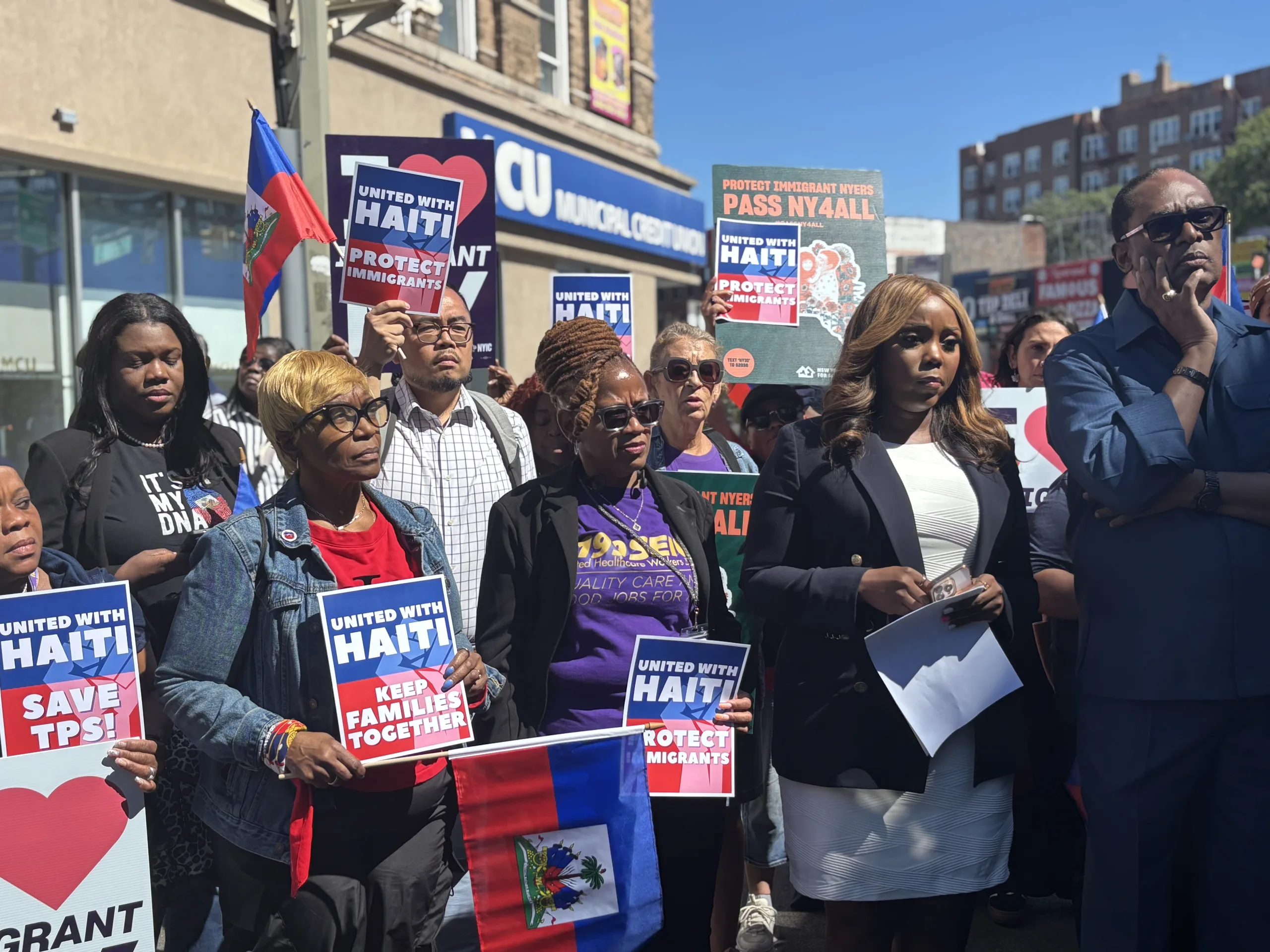
“We are looking at several approaches so that we can get the protection for our people,” said Guerline Jozef, the Executive Director of the Haitian Bridge Alliance, a non-profit organization that advocates for immigrants’ humanitarian rights in the U.S. “We are taking the litigation route, the congressional route, and also the community route, because all of these routes are really to focus on the fact that it is in the best interest of the United States to protect Haitian TPS holders.”

TPS was created by Congress in 1990 to allow immigrants from countries facing armed conflict, disaster or other extraordinary and unsafe conditions to remain in the United States temporarily with a work permit and protection against removal. Haiti was first designated for TPS in January 2010 after a devastating 7.0 magnitude earthquake killed about 300,000 people and destroyed much of the country. Since then, the designation has been extended and redesignated multiple times amid continued instability, violence and a prolonged political crisis. According to the most recent government estimates, about 353,000 Haitian nationals currently hold TPS in the United States, with close to 10,000 of those Haitians living in New York State.
Pressure campaign targets Washington
Advocates say the looming expiration is causing confusion and fear in communities that have relied on the protection for more than a decade. In turn, they are trying to intensify their efforts to persuade the Trump administration or Congress to act quickly.
“This is not just paperwork,” said Tessa Petit, Executive Director of Florida Immigrant Coalition, which is composed of 83 organizations advocating for pro-immigrant policies at the state and federal levels. “These are people whose lives are built around this status. Without it, they lose work, stability and family unity.”
Together with the American Federation of Labor and Congress of Industrial Organizations (AFL-CIO), the largest federation of unions in the U.S. representing about 15 million workers, the Haitian Bridge Alliance has begun circulating a letter addressed to the White House. The letter urges federal officials to extend and redesignate TPS for Haiti on humanitarian, economic and security grounds. So far, it has been signed by labor unions, civil rights groups and business associations.
“We are pushing for Congress to pass a resolution to protect Haitian TPS holders. We are also asking organizations and companies where Haitian TPS holders are working to sign the letter that we are going to send to the President and the Secretary of State, asking them to reconsider their termination of TPS for Haiti, and urging them to redesignate and extend TPS for Haiti,” said Jozef.
The signatories argue that the roughly 350,000 Haitian TPS holders who live and work in the U.S. are deeply integrated into key sectors of the U.S. economy — including health care, construction and hospitality —and that losing their work authorization would not only strain employers, but also cut billions of dollars from the economy. The letter also warns that forcing larger numbers of immigrants from the U.S. back to Haiti, where gang violence and displacement remain rampant, could fuel regional instability and lead to more people trying to flee to the U.S. by land or sea.
“This is not an appeal to charity; it is an appeal to pragmatic self-interest, grounded in facts,” the letter states, adding that extending TPS is “safer and cheaper” than mass deportations and aligns with U.S. economic and security interests.
Fear and uncertainties for TPS holders
For many Haitian immigrants with TPS, the possible end of the program has ushered in fear and uncertainty.
“I was always told we would face a lot of problems once Trump was elected,” said Kelly Darius, a 29-year-old Haitian immigrant living in Brooklyn. “But I held on to hope that he wouldn’t touch TPS.”
Darius came to the United States in March 2023 through the CHNV (Cubans, Haitians, Nicaraguans, Venezuelans) parole program, which grants certain individuals permission for a two-year stay in the United States. She applied for TPS in July 2024 after the Biden administration redesignated Haiti, extending TPS for Haitians in the U.S. Eager to start working quickly, Darius enrolled in home health aide and patient care technician training and soon found a job. While working during the day, she studied at night for her certified nursing assistant training and passed the exam. In about seven months, she moved from entry-level training to working as a CNA and now, she is preparing to become a registered nurse.
“With the current immigration enforcement, my plans are shattered,” she said. “There are things I wanted to accomplish, but this situation affects me mentally and forces me to give up my plans.”
Darius said that returning to Port-au-Prince is not a realistic option because of the security crisis on the ground. Heavily armed gangs control about 90% of the city, according to the United Nations. She said her last hope is an asylum application — she has a U.S. Citizenship and Immigration Services (USCIS) appointment scheduled for the last week of January. USCIS has announced a pause on processing some asylum applications, but Darius said she has not received notice that her appointment was canceled.
“Sometimes I still have a small hope for a TPS extension,” she said. “But the bad news on social media stresses me out. I’m not OK.”
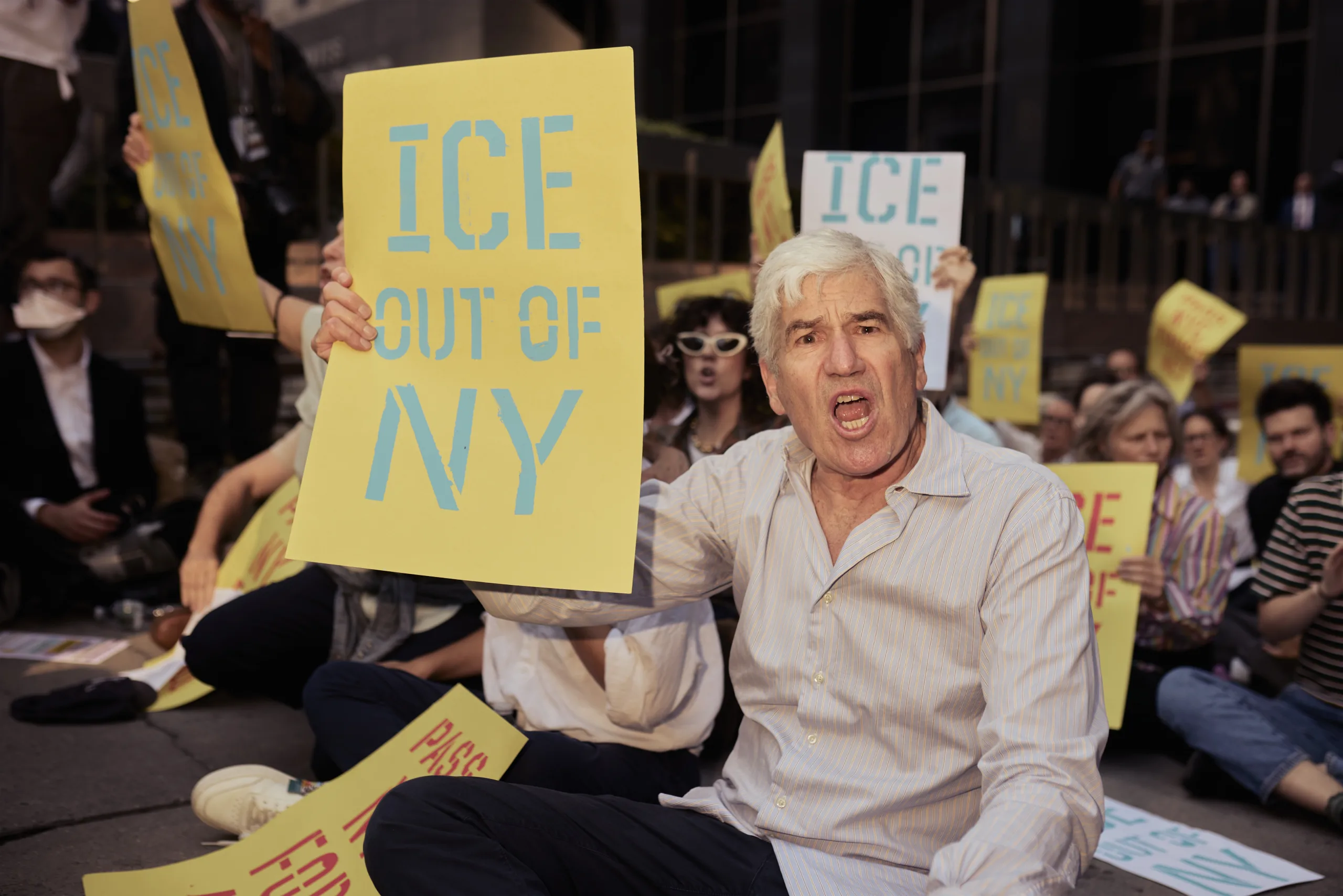
“I don’t want to be arrested or deported like what I’m seeing online,” she said in Haitian Creole. “When I see messages from (Homeland Security Secretary) Kristi Noem, it scares me. I barely go out because I’m afraid of running into ICE.”
Another TPS holder, Gessie Alexis, 48, said she shares the same fears. Like Darius, Alexis came to the United States via the CHNV parole program about three years ago. After the Trump administration ended CHNV in June 2025, she applied for TPS. She moved to New York with her 8-year-old son, who is enrolled in school and, she said, has adjusted well.
“I believe things will change,” she said in Haitian Creole. “My plan is to hide so ICE doesn’t catch me until things get better. We left one stressful situation only to end up in another. I hope this ends.”
‘The clock is more than a policy deadline’
Advocates say Haiti’s crisis has not eased. The country is still facing widespread gang violence and deep humanitarian need, conditions which existed long before the 2010 earthquake and have only worsened over time.
“We cannot send 300,000 people back to a country where there is famine, where there is violence, where there is no established governance, where there is no access to health care, and there is no employment,” said Petit.
Despite that, Noem issued a notice that Haiti no longer meets the statutory criteria for TPS, asserting that conditions have improved sufficiently to end the designation. A federal lawsuit now pending in Washington, D.C. (Miot v. Trump), challenges that decision. The plaintiffs argue the administration is ending TPS even though Haiti remains dangerously unstable, and they say the government’s justification does not match the reality on the ground. The administration, for its part, argues that immigration law gives the secretary broad authority to decide when TPS should end. The future of the program now partly depends on the court rulings. Judge Ana C. Reyes held a hearing on Jan. 6 and ordered the government to turn over more information as the case continues.
As the deadline nears, advocates are planning public events, community meetings and beefing up their outreach to elected officials to underscore the urgency of their cause. They also intend to document the consequences if no action is taken.
For TPS holders like Darius and Alexis, the policy deadline is more than just a ticking clock. It represents a constant and dreaded uncertainty — for themselves, their families and community.

你知道吗?非公民办理驾照时的这个错误可能会导致选民欺诈
“Haiti is my country, but honestly, this isn’t the ideal time to go back. The situation there isn’t favorable,” Alexis said. “If things were good in my country, I never would have come here.”
Advocates say they will keep fighting and supporting the community no matter what the government decides. In the meantime, they are urging Haitian TPS holders in New York and across the country to make family plans in case protections end. In parallel, they are also teaching the community about its rights and options, while preparing to help families with jobs, housing and legal support as they confront the possibility of separation.
“It is in the best interest of the United States and the current administration to make sure they protect TPS for Haiti,” said Jozef. “We are fighting with everything that we have and we are hoping and praying that we are going to have a victory at the end of all of those efforts.”