

Since 2018, Meifang Dong’s life has felt like a roller coaster. That year, she received an unexpectedly thick packet of legal filings related to the foreclosure of her building in Brooklyn, where she and her family had lived for three years. Then, she learned that the condo they lived in and had purchased for more than $300,000 never legally existed.
Dong and her neighbors banded together to file lawsuits against Xi Hui “Steven” Wu, the developer who illegally sold non-existent condominium units to Chinese families in Bay Ridge, Brooklyn. But winning their lawsuits against Wu brought little relief: It could not halt the foreclosure process for the building.
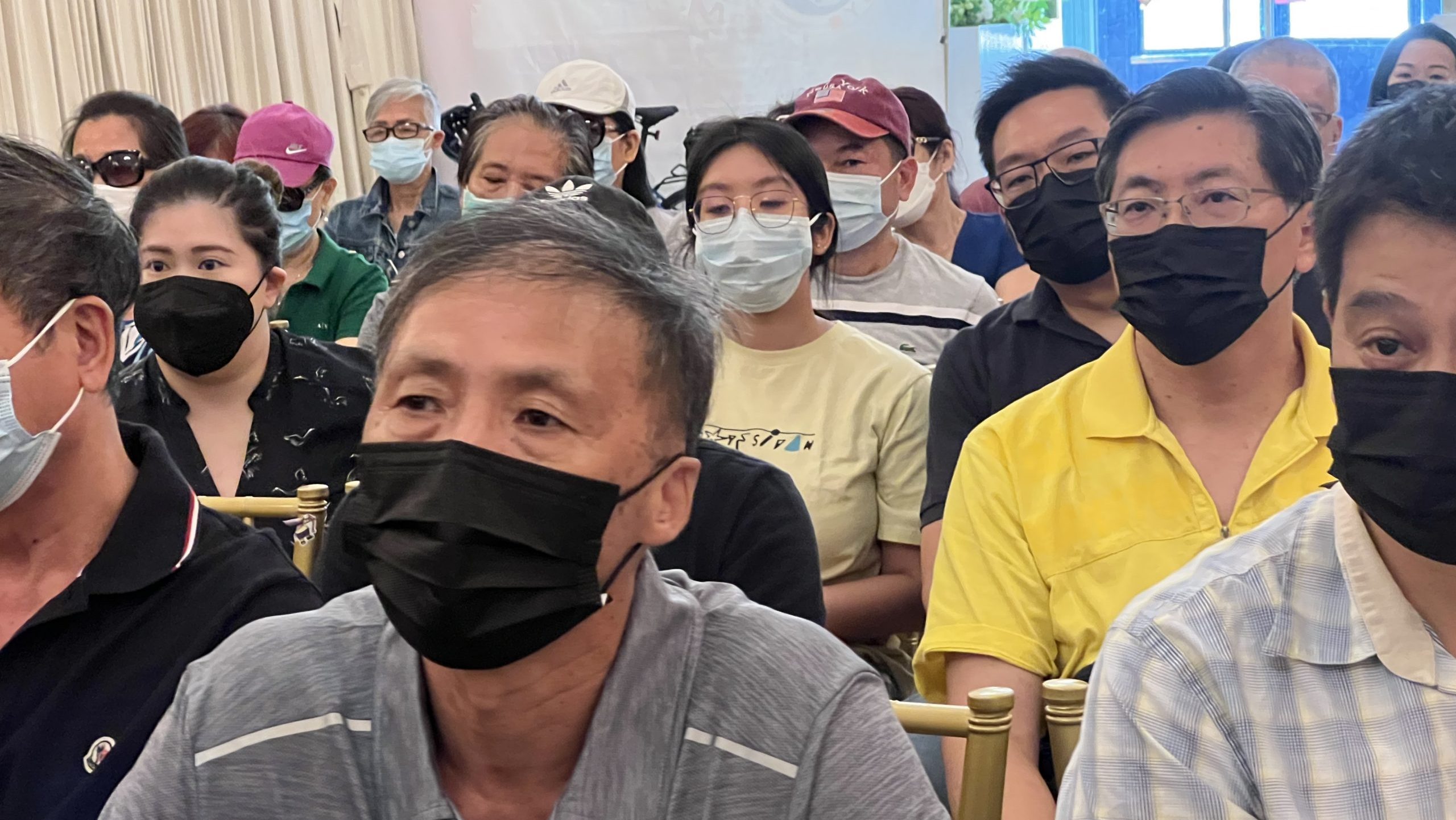
One day ahead of the foreclosure in July 2022, the families held a press conference, pleading with city and state officials to intervene and stop the foreclosure of 345 Ovington Avenue, the 25-unit residential building developed by Wu that they called home.

The building was later placed into involuntary bankruptcy, a process that froze the foreclosure. Around the same time, New York Attorney General Letitia James filed another lawsuit against Wu over the housing fraud.
As the fate of the building remained uncertain for years, two questions kept Dong awake many nights, she told Documented: How long can I stay in my home? Will my family be displaced one day?
Last Friday, that roller coaster finally came to a gentle stop. James announced a major victory in the state’s lawsuit against Wu, with the court awarding more than $4.2 million in restitution, plus nine percent interest dating back to 2016. The full amount will be returned to the families Wu defrauded, the attorney general’s office said.
The attorney general’s office will work with the court to determine how the money will be distributed, but officials expect the amounts will largely be correlated to the amount that they lost to Wu’s scheme.
“I’m so happy about the news,” Dong said in Mandarin, choking up with tears in her eyes. “It was really tough after everything that happened. We thought our life savings and our hope were all gone.”
Wu’s lawyers did not immediately respond to requests for comment.
Before she purchased a two-bedroom apartment in the building, Dong and her husband worked long hours in restaurants, saving every penny in hopes of building the American dream and a brighter future for their son after immigrating from China more than a decade earlier.
The family first bought an apartment in Philadelphia, which was more affordable. But concerns about public safety in the neighborhood frightened their son, who no longer wanted to live there. They decided to move to New York City.
While searching for housing in Brooklyn, they were drawn to a newly constructed building developed by Wu. They sold their Philadelphia home, withdrew their life savings, and signed a single-page agreement written in Chinese provided by Wu, believing it was a legitimate purchase contract, Dong said.
Dong and other residents of the building say they trusted Wu, whom they had described as a longtime neighborhood resident, “community leader,” and “rich developer.” What they didn’t know was that the condos Wu promised could never be delivered. The developer never completed the legal steps necessary for the planned 25-unit building at 345 Ovington Avenue, according to the attorney general’s office. Because of that, the building wasn’t legally subdivided, and no lawful condominium deeds were created, according to the court document.
Wu had “sold” units to at least 20 immigrant families who moved in believing they owned their homes, many with limited English proficiency, the lawsuit said. Wu is accused of collecting down payments, full purchase prices in some cases, and monthly mortgage payments paid directly to Wu from residents who had not paid in full. Nearly all residents also paid what they believed were common charges, but because no condominium existed, the money went directly to Wu, the lawsuit says. Wu is accused of stealing more than $5 million over several years from immigrant families, according to the attorney general’s Office.
Despite collecting money from residents, Wu stopped paying the more than $5.8 million mortgage he took out from Maxim Credit Group, a New York real estate lending firm, to develop 345 Ovington Avenue, leading to the building’s foreclosure.
Investigators found that Wu also fabricated documents and lied to regulators to hide the fraud, including submitting fake purchase agreements and escrow records while pocketing buyers’ deposits, according to the court records.
In November 2025, New York County Supreme Court Judge Anar Patel ruled that Wu violated the Martin Act and Executive Law 63(12), permanently barring him from doing business in New York.
“It’s definitely a great surprise for us,” Rei Tan, who bought a three-bedroom apartment in the building so his parents could retire there, told Documented in Mandarin. “We are grateful we can keep our home and have a place to live. We never expected to get money back.” Tan had paid about $200,000 to Wu as part of the payment for the apartment.
“Many of the residents are immigrants,” Tan said. “It’s not easy to make a living in the U.S. and own a home. I want to thank the AG’s office, AAFE, and our attorney Edward Cuccia for helping us win this battle.”
Cuccia, an attorney representing the residents, said fraud targeting immigrants with limited English proficiency is widespread, particularly in Chinese communities, where language barriers can make people more vulnerable to scams. “It happens all the time. It’s shameful,” he said, noting that many new immigrants do not know the proper procedures for buying property in the U.S. and are easy targets for fraud.
“These families were relatively new to the United States. They believed the sweet-sounding words of Mr. Wu and they gave him a lot of money,” Cuccia said. “It’s awful, and they all were cheated.”
In a statement, James, the state attorney general, said she was thrilled that the families would finally see justice. “Steven Wu preyed on hardworking immigrant families, abused their trust, and stole the savings they had set aside to build a stable future,” James said. “This order returns money to the families Wu cheated and ensures he can never again exploit New Yorkers through fraudulent real estate schemes.”
Under the collaboration of the attorney general’s office, the Asian Americans for Equality (AAFE), New York State Homes and Community Renewal, and New York City Department of Housing Preservation and Development, the building is now stabilized and converted into an affordable cooperative managed by residents
你知道吗?非公民办理驾照时的这个错误可能会导致选民欺诈
Thomas Yu, executive director of AAFE, praised the outcome. “We are grateful to Attorney General James and happy for the 20 families at 345 Ovington Street who have finally seen justice prevail after nearly losing everything as a result of this fraudulent scheme,” Yu said in a statement.
Still, the emotional toll from the housing fraud remains.
“To this day, my husband still has trust issues,” Dong said. “He doesn’t know who he can trust anymore, even within our own community.”