

Immigrant home care workers who have spent nearly a decade fighting to win back pay for stolen wages are starting their new year off with renewed hope. On Jan. 2, the New York Supreme Court ruled that the New York State Department of Labor must reopen hundreds of wage theft cases that were closed by the agency.
“This is a victory not only for union workers, but for all home care workers, as it is a signal to all sweatshop bosses that the wages must be paid back immediately,” said Yolanda Zhang, an organizer with Ain’t I a Woman?! (AIW), a campaign that has helped organize the workers. “As we enter the New Year, we are confident that this news will encourage even more from our community to fight for our hard-earned wages and health.”
As previously reported by Documented, home care workers, organizing with the Chinese Staff and Workers’ Association as part of its AIW campaign, have accused the Chinese-American Planning Council (CPC) of stealing $90 million in wages from home health care workers, a majority of whom are immigrant women. The AIW campaign is sponsored by the Chinese Staff & Workers’ Association along with National Mobilization Against SweatShops.

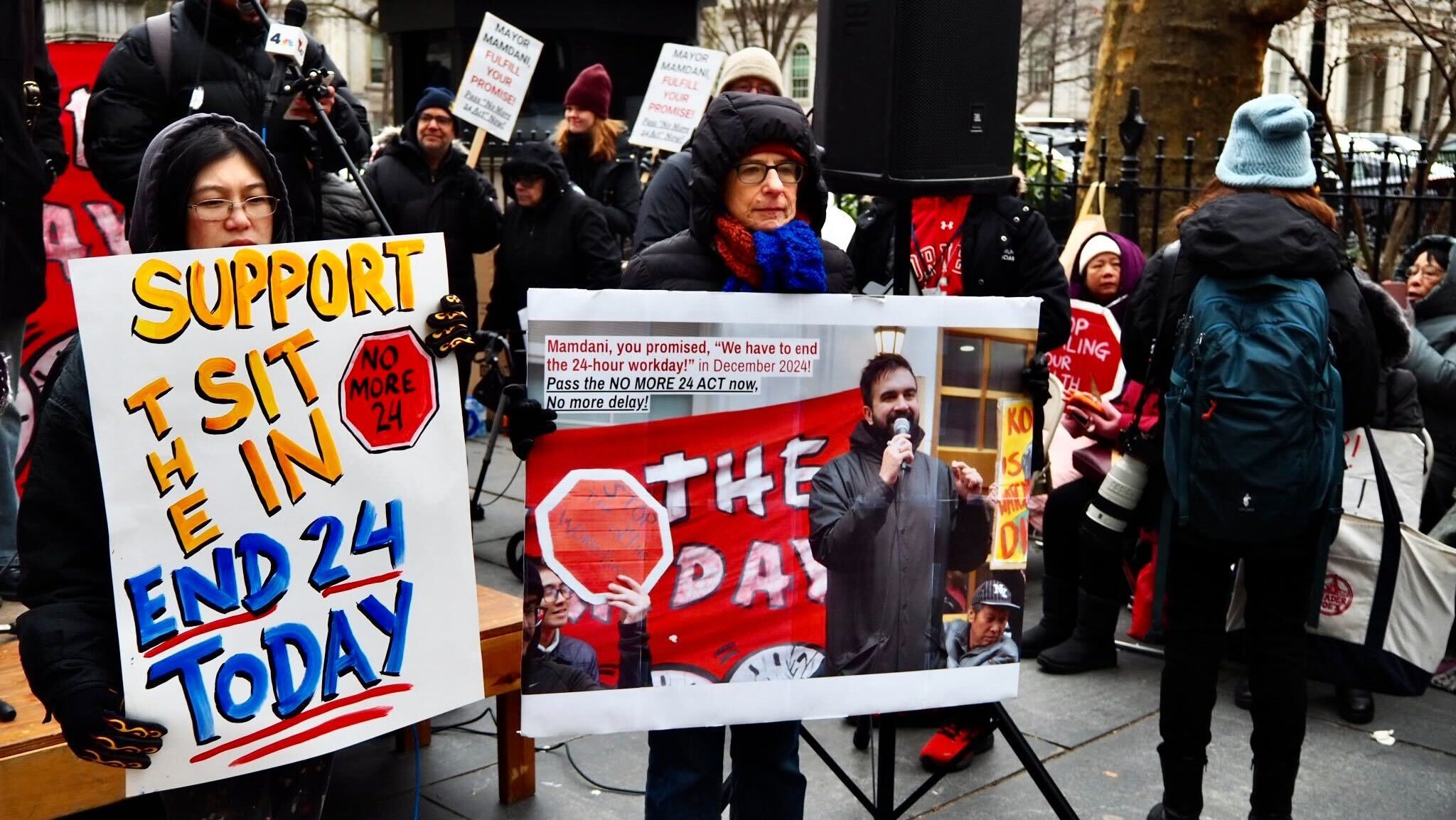
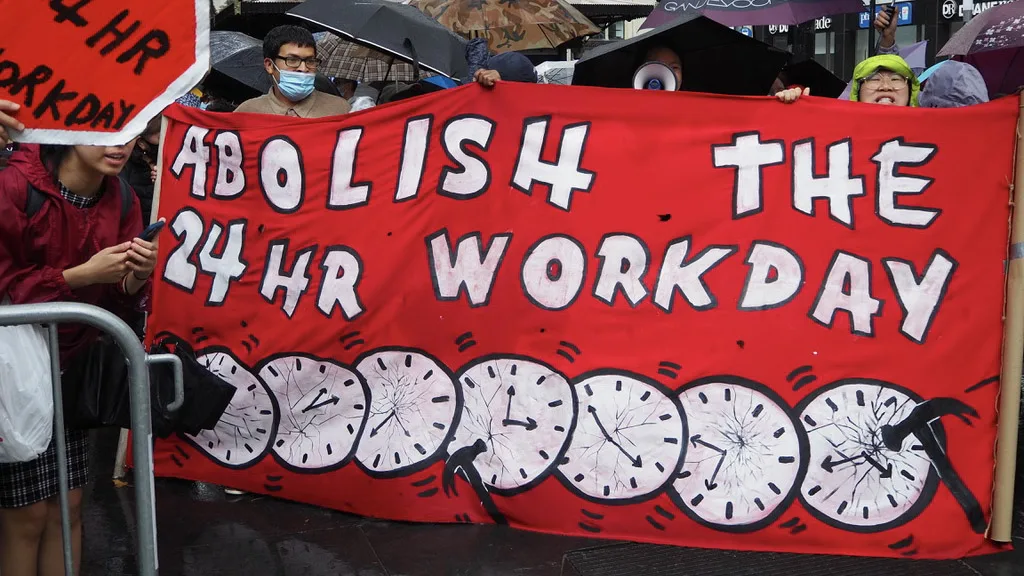
Since 2020, they have also been organizing a campaign to completely ban 24-hour shifts across the city and state.
According to state law, home care workers who are on a 24-hour shift are required to be paid for just 13 hours of a 24-hour shift as long as they receive a sleep break of at least eight hours, with five hours of uninterrupted sleep, as well as three hours of meal break time. Still, the law is often ignored, with many home health aides working the entirety of a 24-hour shift, without the required breaks or reflective pay.
Also Read: Immigrant Home Care Workers Demand an End to Exploitative 24-Hour Shifts
In 2019, in response to widespread noncompliance with the law, the New York Court of Appeals ruled that if workers are not given the required sleep and meal breaks, home care agencies must pay workers for each hour of a 24-hour shift they worked.
Home care workers have alleged that CPC, as well as other home care agencies, have continued to only pay them for 13-hour shifts.
Despite years of filing wage theft claims with the DOL, more than 100 workers had their cases dropped by the Department of Labor in 2023, with the agency arguing that it dropped the individual cases because the workers’ grievances were being arbitrated separately by their union, 1199-SEIU. In turn, workers sued the DOL in 2023. In 2024, the New York State Supreme Court denied the DOL’s motion to dismiss the lawsuits.
Responding to the court’s latest Jan. 2, 2026 ruling, New York Assemblymember Ron Kim, a longtime critic of CPC, celebrated the decision.
“The state’s Supreme Court rightfully sides with thousands of home care workers as they continue fighting for their stolen wages,” he said in a statement to Documented. “Now is the time for Governor Hochul to do the right thing and order her state agencies to comply with our state worker protection laws fully.”
The Department of Labor said in a statement to Documented that it does not comment on ongoing litigation.
Former home care worker Gui Zhu Chen, 68, said she worked 24-hour shifts with no sleep or breaks for CPC between 2013 and 2019. She said the agency stole 11 hours of her wages on each shift, paying only the 13-hour baseline.

你知道吗?非公民办理驾照时的这个错误可能会导致选民欺诈
“I filed a complaint against them with the Department of Labor in 2019,” she said in a statement to Documented. “Now, the court has finally ruled that the Department of Labor must also pursue unpaid wages for hundreds of unionized home care workers like me, so I demand that the CPC immediately compensate me for my hard-earned money.”
Like Chen, Dominican home care worker Álvaro Ramírez, 56, said he’s owed approximately $166,000 in stolen wages after working 24-hour shifts since 2015 at both United Jewish Council and First Chinese Presbyterian. The court decision has given him a glimmer of hope for justice.
“Home care workers like me have been fighting for our stolen wages for years,” Ramírez told Documented in a statement. “Now that the court has sided with home care workers, every agency must pay us back now.”