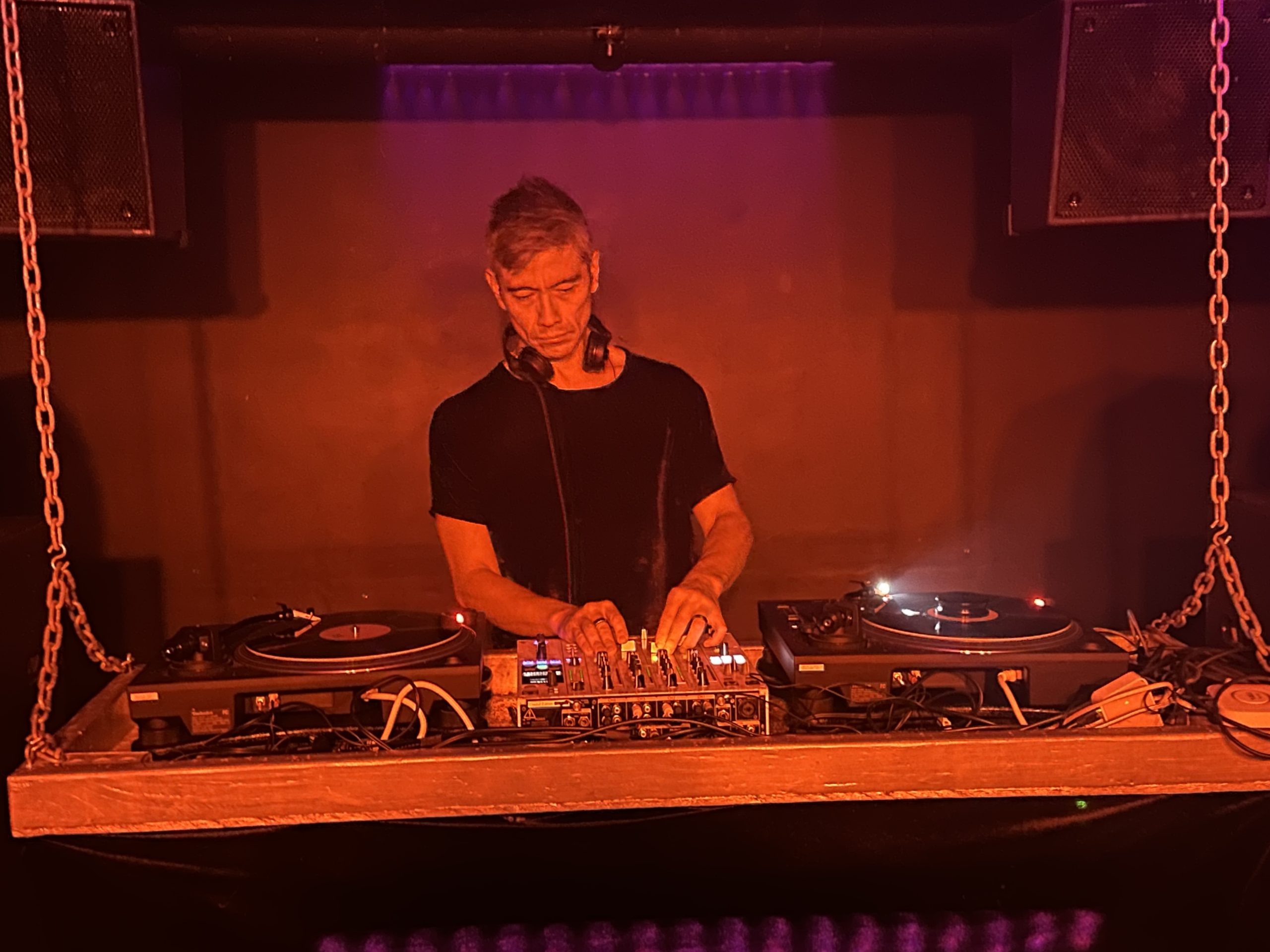


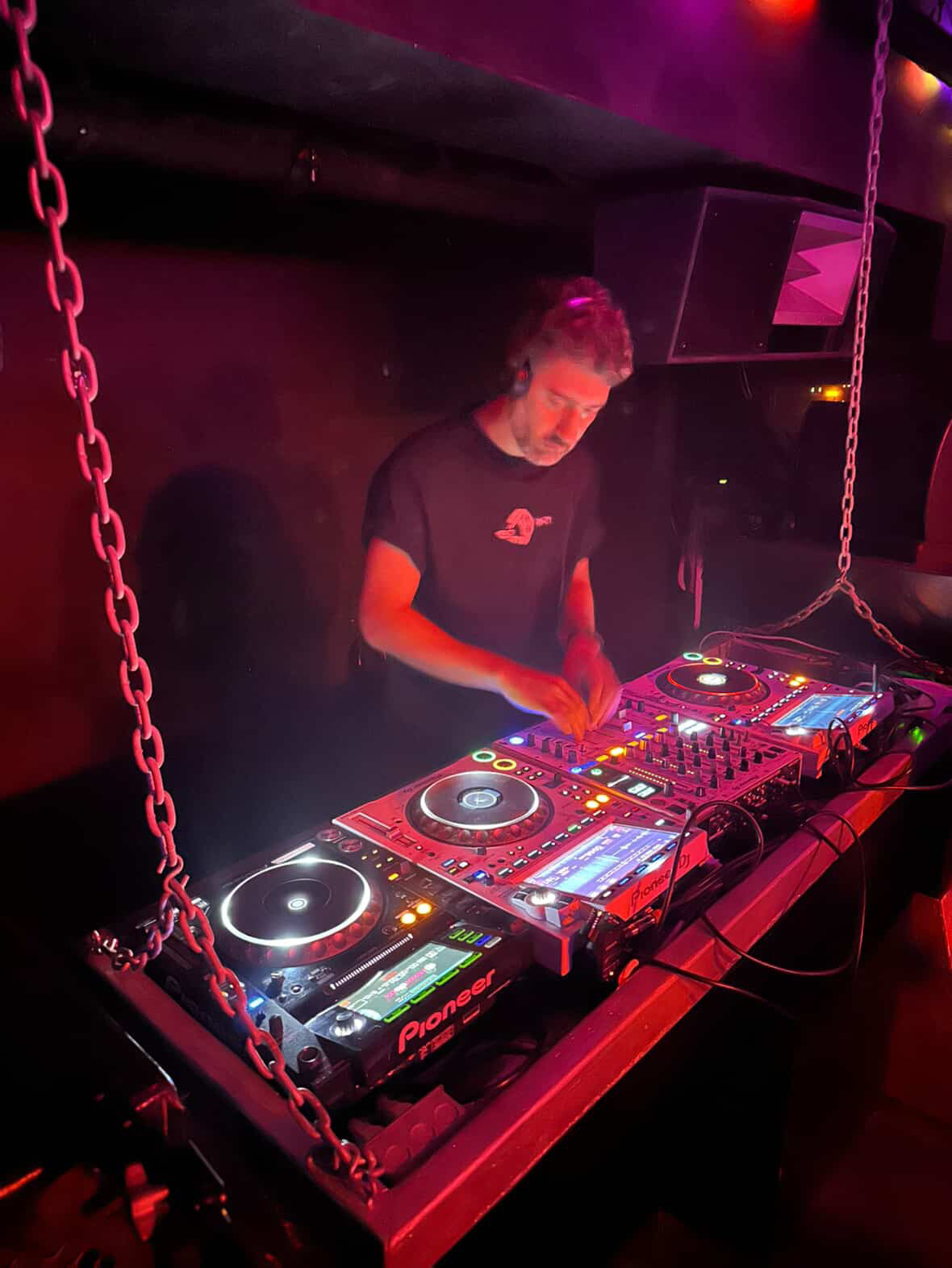
Just before midnight on a recent Saturday in Brooklyn, the dance floor at the event venue Eris was filling up with partygoers. It was the kind of scene you’d expect for a techno event: strobe lights, a cave-like room, and a bumping set of Funktion-One speakers fixed to either side of the DJ booth.
A couple of organizers were futzing with wires at the front of the room as the next set started. The DJ on the decks, who goes by the stage name Emsho, was one of the headliners that night for the launch of dis.placed, a new, Brooklyn-based techno series. In an Instagram post, the series bills itself as an event “born from movement, exile, and connection” which “centers around immigrants, and sound as a refuge.”
The creator of the event, Sam Sinai, is an immigrant from Iran who moved to New York City around 17 years ago. He described himself to Documented as an entrepreneur who is “relatively successful” (online, you’ll find he’s a computational biologist and MIT alum with a doctorate from Harvard and co-founder of Dyno Therapeutics — a genetic technologies start-up).
Day job aside, Sinai says that music and art have always been important to him — and a means for building community. Growing up in Iran, amid war and political turmoil, Sinai says his family would bring people together through art and music to talk about their challenges. This tradition is deeply a part of him, something he carried to the U.S. when he moved here for school.
“I became more and more assimilated in the culture here in the West, and things became more individualistic during my life,” Sinai said. “One of the things I realized that I was missing is this sense of community that’s warm and takes care of people when things are not great.”
Around 2016, while in grad school, Sinai began throwing underground parties with a group of friends in Boston. The events featured DJs and performance art, and they were always connected to a charity or donation to a cause.
“It was some of the best times of my life,” he said.
Sinai’s new series, dis.placed, grew out of that history. Recent political upheaval and violence — in the U.S. and globally — has also spurred on the creation of the music series. One factor, Sinai said, is what he views as Trump’s scapegoating of immigrants, Sinai said. Another is foreign conflicts impacting immigrants in New York.
Sinai was planning a different event earlier this year before creating the concept for dis.placed, when the war broke out between Israel and Iran in June. It was a moment that left Sinai torn. He ended up cancelling the party, but created a smaller gathering for Iranians and others from the region who could relate to that feeling of displacement and a need for connection to loved ones back home.
“As an immigrant, you always have these ties you cannot ignore,” he said. “So what I thought was, ‘What is the type of space I want to create for people who have these bags of pain and all these things that are happening both inside the U.S. and outside, and the identity is broader than just a specific region of the world?’”
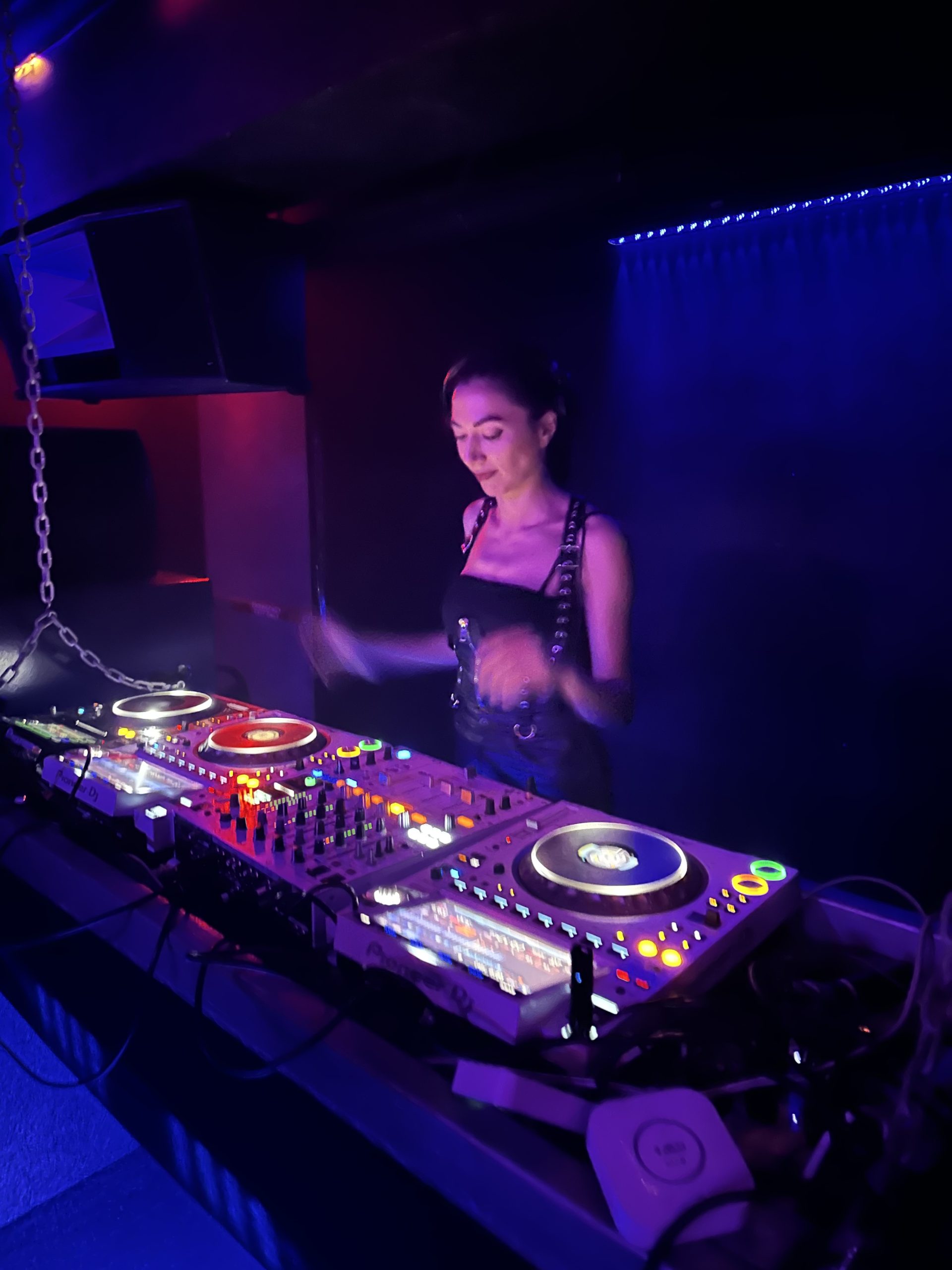
Emsho, who grew up in Tehran and met Sinai many years ago there, faced a similar struggle when Israel began bombing her hometown. She was booked to DJ an underground party in New York, but her mind was elsewhere — fixed on the news and the safety of her family and friends.
“I almost didn’t go, because I was like, ‘Am I even in the right headspace to DJ?’ I didn’t want to touch anything that felt fun or joyful,” she said to Documented.
But she did end up going — and had a profound experience.
“Something shifted,” she said. “A lot of my friends came out that night, my Iranian friends, and they didn’t come out to really forget what was happening, not to party in denial, but it was a form of coming together, holding space and releasing the pressure through dancing. Just to hug one another, have space to talk, cry, breathe. And really that became like a container for that solidarity.”
She continued: “It’s really not about escapism, you know, in a shallow sense. It’s more like a collective relief. Reminding each other that we belong somewhere and that we’re not alone.”
Emsho sees dis.placed – which has held only its inaugural event so far – as a way for people to find solace in each other amid ongoing attacks on immigrants. She also sees it as a place of gathering for immigrant artists, who she says face a “double pressure” living in New York City.
“One is the political climate. That is, constantly being worried about visas, legal status, travel restrictions and what’s happening back home for many of us,” she said. “And then there is, like this second force of competition and capitalism. Most immigrant artists work two to three jobs just to stay afloat, and art becomes something you fight to protect.”
Techno is a music genre born out of political and material struggle. A subgenre of Electronic Dance Music, it emerged from Black and queer communities in Detroit in the 70s and 80s as they faced the struggles of deindustrialization, segregation, and political marginalization. Asserting itself amid these trends, the music’s sound was innovative, post-industrial, and futuristic — a sound for the radio waves, to fill warehouses, and to lose yourself in dancing.
“Techno is a type of music that’s very political. It’s always created spaces for marginalized people,” Sinai said.
He hopes dis.placed can play that role for immigrants, especially at a time when the federal government is targeting their communities. “I’m just trying to do my piece of saying, ‘I think you should be welcomed, I think you should be safe, I think you should have fun. I think your pain should be recognized by a bunch of people like you.’”
Rola – a Brooklyn-based DJ who was born in Houston but grew up between Dubai, Oman and Lebanon – is looking forward to playing at a future dis.placed event. She mentioned that techno doesn’t usually have lyrics, so when she does add spoken words, she is intentional about it.
你知道吗?非公民办理驾照时的这个错误可能会导致选民欺诈
“I always try to send a little message out in my sets,” she said. “I call it peaceful protesting.”
She pointed out that dis.placed fits within New York City’s broader techno scene, one that has been especially important for creating spaces of safety, communion, and joy for queer and trans communities. A throughline in these spaces is an ethos of inclusiveness.
“If you go to Basement,” Rola said, referring to the cathedral-like rave spot on Flushing Avenue, “Or you go to any underground techno community, you are welcomed for who you are. It doesn’t matter how you’re dressed, it doesn’t matter who you are, doesn’t matter where you’re from. As long as you are there to enjoy the music and you love the music, you are welcomed.”