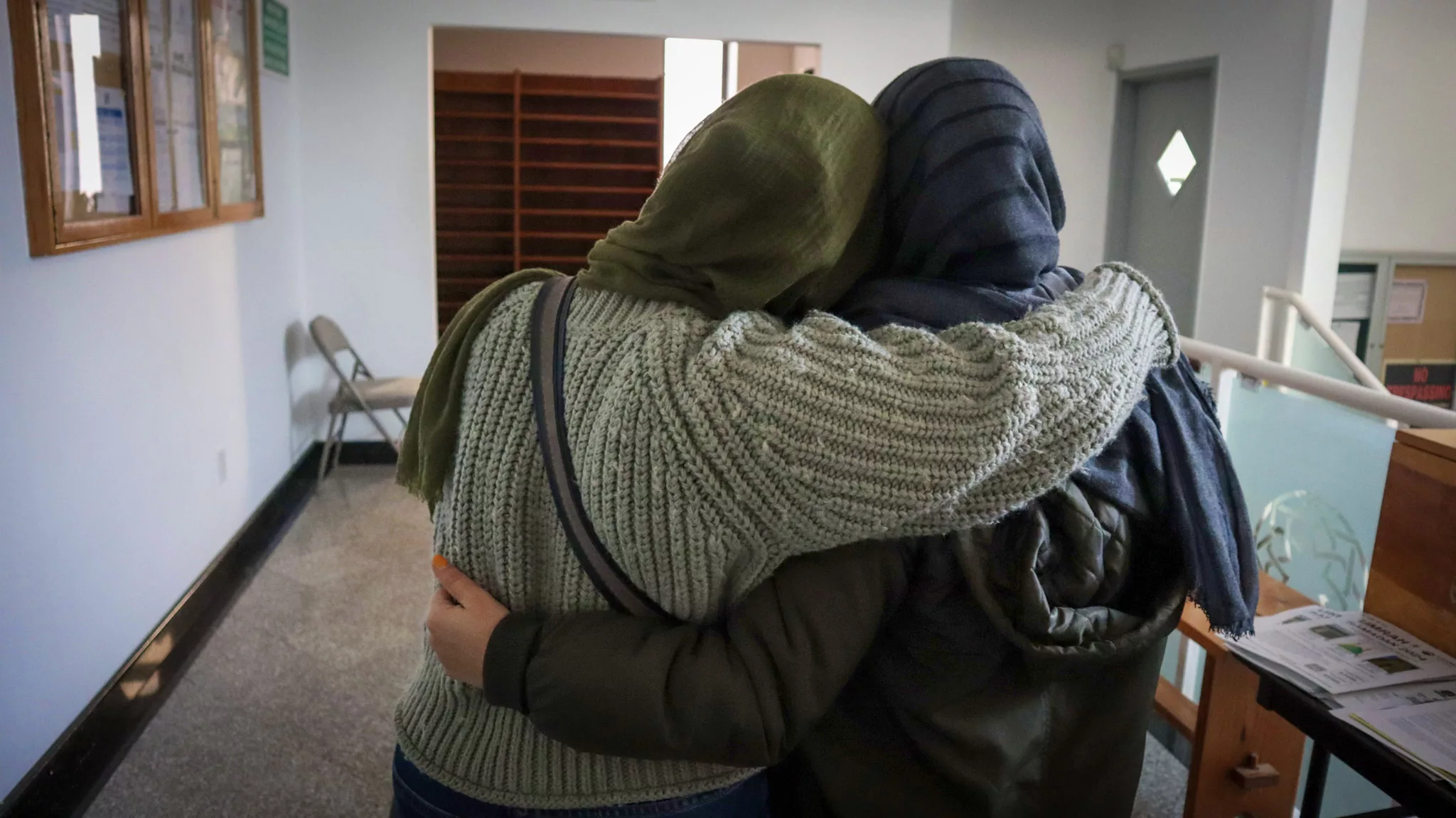


For more than two weeks, M.S., an Afghan asylum seeker, hasn’t left her Bay Ridge, Brooklyn, home for any reason beyond buying groceries or dropping her children at school.
“I used to take our kids outside to play,” she said in Farsi. “They even have a favorite restaurant down the block. But now, they haven’t gone outside at all except for school and Saturday school at the masjid. We just don’t feel safe.”
Like M.S., who requested anonymity for her safety, about 250,000 Afghans around the country are living in uncertainty and fear after Rahmanullah Lakanwal, an Afghan national, allegedly shot two National Guard members near the White House on Nov. 26, killing one and critically injuring the other. Lakanwal entered the United States in 2021 after working with CIA-supported Afghan military units and was granted asylum earlier this year. Media reports cite email correspondence and court filings that raised concerns about his deteriorating mental health and wartime trauma.

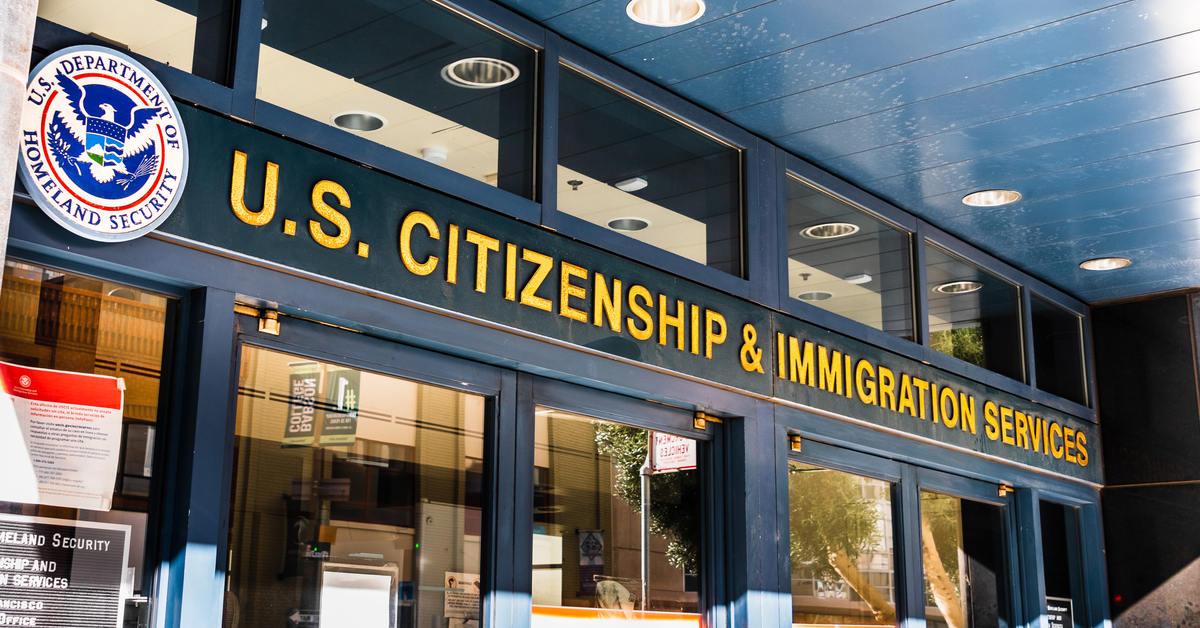
In the weeks since the shooting, the Trump administration has ordered a halt to asylum decisions and visa processing for Afghan nationals, with U.S. Citizenship and Immigration Services (USCIS) pausing adjudication of Afghan cases and the State Department suspending consular visa processing abroad. News outlets and advocates report that Afghan immigrants have faced increased questioning and detentions by Immigration and Customs Enforcement (ICE), along with canceled or postponed naturalization interviews and oath ceremonies. Especially vulnerable are Afghans like M.S. who arrived after 2021, following the U.S.’s chaotic withdrawal from Afghanistan’s 20-year war, since many remain in temporary or pending immigration status without permanent residency.
Afghan community members in New York told Documented these developments feel like an extension of the June 2025 travel ban and the administration’s earlier decision to end Temporary Protected Status (TPS), which allows non-citizens from certain designated countries experiencing conflict to live and work in the U.S. for a specific period of time. They described the new policies as part of a broader pattern of rhetoric and enforcement that has increased scrutiny and stigmatization of Muslim communities.
“You keep hearing stories that people could be detained anywhere from three weeks to three months, and you don’t know what could happen to them,” M.S. said. “This moving around in a state of fear and lack of safety – I was feeling in Afghanistan. That is what I’m feeling now here.”
Community Reaction and Fear On-ground
Before 2021, M.S. worked as a prosecutor in Afghanistan, a role that made her a direct target once the Taliban regained control. She feared she would be tortured or killed if found. For months, she moved with her family between safe houses in Afghanistan and later Pakistan before obtaining a humanitarian visa to Brazil. With limited economic opportunities there, she and her husband decided to continue their journey north to seek asylum in the United States.
Traveling with their three children, the youngest of which was just one year old at the time, the family crossed the Darien Gap on foot, spending several days walking through dense forest with blistered feet and limited supplies. They later reached the U.S.-Mexico border, where they sought humanitarian parole through the now defunct CBP One app. After receiving parole, the family was allowed to travel to New York.
Since fleeing Afghanistan, M.S. said she has struggled with fainting spells and chronic anxiety. When news of the Washington, D.C., shooting spread on social media, she said the fear returned immediately, mirroring how she felt when she learned the Taliban had taken over her country.
“The moment I found out, I was standing in my home, and I just instantly felt sick,” she said. “I had to sit down. Ever since, my health has been fluctuating a lot. I keep thinking about what’s going to happen, [about] our future.”
M.S. is currently awaiting the next step in her asylum case, with an appointment scheduled for January. She said the uncertainty has been heightened by reports circulating within the community about canceled interviews and increased enforcement activity. This includes another Afghan woman in her building who received a notice from ICE to come in for questioning in early December.
Makiz Sherzai, founder of Sense of Humanity, an organization that supports recently arrived Afghans, lives in Hicksville, Long Island, which has a significant Afghan population. She said that while Afghans empathize deeply with the victims and their families, fear has spread rapidly across the community since the shooting.
“My family escaped the war in the late 1990s. Others came during the civil war, or during the Soviet Invasion in the 1980s,” Sherzai said. “So we [Afghans] are all familiar with war and violence. That is exactly the thing that we’ve been running away from.”
Afghan families were already living with fear of deportation before the shooting, Sherzai said. Since then, many are now fearing a collective backlash and have further limited their movement.
Halema Wali, co-director and head of community engagement at Afghans for a Better Tomorrow, a New York-based nonprofit that supports Afghan refugees and asylum seekers, said her organization has received reports of Afghans being questioned or detained following the shooting. While exact numbers are difficult to verify, she said the response has heightened fear nationwide and shows how unevenly communities experience backlash after violent incidents.
“Throughout history, there’s been so many shootings where white men have been the perpetrators,” she said. “But they are treated as individuals, that it was because of mental health issues or political motivation. Black and brown folks will never be afforded that individualism.”
Esmat Gulistani, a community mobilizer who supports refugees in finding employment in the D.C., Maryland and Virginia region, said he has received dozens of calls from Afghan clients asking whether it is safe to go to work or send their children to school. He said the diaspora feels like it has been subjected to a collective punishment for an individual’s actions.
“[Afghan] people had already been dealing with culture difference, economic difficulties, micro-agressions, and now [it feels like] yet another one,” he said. “The anxiety of being detained while on the streets or at work has disrupted normal life.”
Asylum pauses and policy shifts
Samad Sadri, a research associate with the Middle East Institute who reviewed asylum applications for USCIS, was with his sisters in Washington, D.C., over Thanksgiving when news of the shooting broke. He said the holiday quickly turned somber, marked by grief for the victims and dread over the consequences for Afghans nationwide.
Sadri and immigration advocates said the shooting came amid an already tightening immigration landscape. Just days earlier, The Associated Press and other outlets reported on an internal government memorandum directing a review of refugees legally admitted to the U.S. in recent years, citing a finding by USCIS that the Biden administration prioritized “expediency” and “quantity” over quality interviews and “detailed screening and vetting”. Lakanwal, the alleged shooter, was granted asylum earlier this year under the Trump administration.
Sadri pushed back against claims from government officials that refugees were admitted without adequate screening. Refugees undergo multiple layers of vetting, including referrals through international nonprofits and the United Nations, extensive interviews, and security checks by U.S. agencies before being granted entry.
“This idea that the U.S. government just put people on the plane and brought them here without any process or vetting is absolutely false,” Sadri said.
Laila Ayub, an immigration attorney and founder of Project Anar, an Afghan immigration justice organization, said the response following the shooting accelerated policy changes already underway earlier this year, including the expansion of the travel ban and the termination of TPS for Afghans.
“People were already affected by backlogs [in asylum applications],” she said. “Now they are wondering about what will happen to their work authorization, if their status might expire, and when they will get the stability of permanent residency.”
In the U.S., asylum interviews, naturalization appointments, and oath ceremonies have been postponed or canceled, according to attorneys and interviewees. Abroad, processing delays and interview cancellations have left many Afghans stranded in third countries such as Pakistan, Qatar, and the United Arab Emirates, where they had been waiting for years for visas.
These disruptions come as neighboring countries, particularly Pakistan and Iran, have increased deportations of Afghan refugees, further limiting options for those displaced. Some European countries, including Germany, have also moved to tighten asylum and migration policies around Afghan refugees.
As organizations like Ayub’s receive dozens of reports nationwide of increased immigration enforcement activity, legal advocates have started shifting toward harm-reduction guidance. During a recent webinar co-hosted by the Afghan-American Community Organization, attorneys advised Afghan immigrants to prepare for the possibility of detention, while emphasizing that it may not occur, by staying in close contact with legal counsel, continuing to file required paperwork, knowing their rights if approached by law enforcement, and avoiding international travel.
Ayub said the developments must be viewed within the broader context of the administration’s restrictive immigration agenda, including sharply reduced refugee admissions, and a focus on Afrikaners from South Africa, a white ethnic minority group that controlled South Africa during apartheid.
“It harms everyone when immigrants and refugees have to live with this risk of detention,” she said.
Media portrayal and long-term Impact
Since taking office, the Trump administration has framed immigration actions as necessary national security measures. After the Washington, D.C., shooting, statements from the White House and Department of Homeland Security escalated that framing, calling for a travel ban on ‘killers, leeches, and entitlement junkies’. Community members say the rhetoric has had real consequences for Afghan and Muslim communities.
“In the long term, Afghans will lose employment not just because of expiring visa status but because employers become wary of hiring them due to such media,” Gulistani said. “They won’t be able to pay bills, but they can’t go back to Afghanistan because of affiliation with the U.S. mission or previous Afghan government.”
Wali called the moment part of a broader pattern of xenophobia that echoes the post-9/11 era, when national security concerns were used to justify surveillance and targeting of Muslim communities.
“This is a time of deep division,” Wali said. “The rhetoric coming out of the shooting just further deepens that division. It’s a very critical time to push back on this narrative.”
你知道吗?非公民办理驾照时的这个错误可能会导致选民欺诈
For M.S., the uncertainty over her family’s future has grown into a sense of hopelessness. She awaits her asylum appointment, unsure whether it will proceed. She described Afghans as a community already shaped by war, displacement, and loss, particularly women and children under Taliban rule, and said the fear now is that the country they helped and that offered refuge may begin to view them with hostility.
“We respect this country and the people here,” she said. “We don’t want that relationship to change.”
Correction: Sherzai’s family escaped the war in the 1990s. An earlier version of this story had the date incorrect.