

On the morning of January 31, 2025, N.A., arrived at the 26 Federal Plaza immigration court carrying a police report, which they hoped would prove her family was the victim of a criminal gang in their native Ecuador. N.A., who is 22-years-old, carried her 1-year-old daughter and stood alongside her husband, who is missing an index finger on his right hand. A gang member had cut it off after he refused to pay extortion money.
The family was led into a courtroom and sat down. N.A., who asked to be referred to by their initials for fear of ICE arrest, realized she and her family were one of the last in the room. They approached the court clerk to ask what was going on and the man left the room. N.A.’s husband was called and taken into another room, where he was detained.
“That was the last time I saw my husband,” N.A. recalled. “They didn’t tell me why they detained him.”

Two months later, an attorney from a nonprofit began representing her husband and helped secure his release. The catch, however, was that the lawyer told N.A.’s husband that she would only able to represent him — not his wife or daughter.
N.A. began calling nonprofit immigration attorneys who were listed on the document given to her by immigration authorities when she crossed the southern border. “It was a list of several organizations. I called all of them, and none of them answered.”
At the height of the migrant crisis in 2023, Mayor Eric Adams established the Asylum Application Help Center to help people like N.A. The state taxpayer-funded initiative aimed at providing legal support to thousands of migrants in New York City closed in May 2025, due to “gaps in state funding”, but months later Adams announced a relief plan: $76.3 million to create the Mayor’s Office to Facilitate Pro Bono Legal Assistance, which promised to connect low-income New Yorkers and asylum-seeking immigrants with legal experts from organizations that already work with the City. The new office will run out at the end of fiscal year 2026.
Five months have passed since the office’s launch, and seven asylum seekers Documented spoke with, say that the online form exists only in English and the phone lines are not being answered. They also say organizations working with the Mayor’s Office of Immigrant Affairs (MOIA), which connects immigrants with legal services, often do not return calls and place them on waitlists, offering no guaranteed access to legal counsel. While the city maintains that immigrants in need of pro bono legal assistance can reach out for help in any language via email, the experienced lack of access carries real consequences, including a higher risk of receiving a deportation order when attending court without legal representation.
Many asylum seekers, like N.A. struggling to find attorneys who can represent them in their asylum cases, which puts them at greater risk of receiving a deportation order when attending court without legal representation. In November 2025, New York had over than 95,000 immigrants underrepresented, according to Vera, a nonprofit organization dedicated to reforming the immigration and justice systems. Unlike criminal court, immigrants are not legally entitled to representation by a lawyer.
The whole process was so traumatic for N.A. that when she and her daughter were scheduled to attend their next hearing in August 2025, they decided not to show up.
“I am afraid of returning to Ecuador,” N.A. said in Spanish. “I had until October 9 to appeal the deportation order the judge gave me for not going to my hearing, but I didn’t do it because I don’t have a lawyer. Now I don’t know what to do. I can’t work, I have no money, and I have to feed my little girl.”
In an email sent to Documented, the Mayor’s Office to Facilitate Pro Bono Legal Assistance said that it does not hire new organizations to provide immigrant legal services, but instead “leverages existing pro bono networks to expand access.”
In announcing the office, Mayor Eric Adams said it would work closely with MOIA to assist immigrants. To date, the office has received seven immigration-related requests: five were matched with a provider and two did not follow up. Most requests, the office said, involve non-immigration issues.
Overwhelmed legal-aid system forces migrants to face court alone
It was June 2025 when K.G., 40, began seeing on television that ICE agents were detaining immigrants inside the Federal Plaza immigration court, where she herself was scheduled to appear for her second hearing two months later.
K.G., an asylum seeker who fled from Venezuela due to poverty and persecution because her sister is part of a left-wing opposition party, wanted to switch her in-person hearing to a virtual one, but she didn’t know how. She began calling pro bono legal aid organizations listed on the city distributed sheet she’d received at her first hearing at a New York City immigration court — to no avail.
“The government says there are organizations and public attorneys, but where are they? Because you go and they tell you no, or that they’re full, or that they’ll send you an email for an appointment,” she said in Spanish. “I’ve been here almost two years and in all this time I’ve sent several emails to those organizations and still haven’t received a response.”
After dozens of failed or unanswered calls, K.G. and her seven children, ages 4 to 18, ended up having to attend their hearing without a lawyer. The hearing lasted only 15 minutes, during which the judge told K.G. that she should come with a lawyer next time. Frustrated and concerned, K.G. was left with more questions than answers — questions she would not be able to resolve without legal representation.
In spite of the obstacles she has already faced, K.G. says she plans to continue calling the organizations that belong to the city-led asylum representation program until the end of the fiscal year, when funding will run out.
If she can’t find a nonprofit attorney, she will look for a private one. However, she is not optimistic because, before her last court hearing, she contacted at least six lawyers she found on social media, and their fees were unaffordable.
K.G. says she has been warned that some of the more affordable private options might be scammers.
“Our biggest concern is that there are not enough attorneys to meet the magnitude of the need,” Councilmember Alexa Avilés said.
The risks of going to court unrepresented
In April, E.C., a 56-year-old Ecuadorian asylum seeker, arrived at her third immigration court hearing at Federal Plaza without a lawyer. She explained to the judge that she has repeatedly called the legal aid organizations, but too often, no one answers.
“They always tell you to bring a lawyer, but from where, when I’ve been calling and calling these institutions,” she said. “They ask me to leave voicemails, and I’ve done it. Then when they call me back, they speak in English. I don’t speak English.”
Days after the hearing, she received a letter explaining that because she had not appeared with a lawyer at her hearings, her clock to request a work permit had been stopped. When someone applies for asylum, they must wait 150 days before applying for a work permit. E.C.’s clock was frozen at day 42.
Even with the clock stopped, E.C. tried to get certified as a home health aide — she had already passed the exam and paid $75 to obtain her permit, but the agency returned her money.
“They told me, ‘We can’t help you because your permit isn’t valid,’” she recalled.
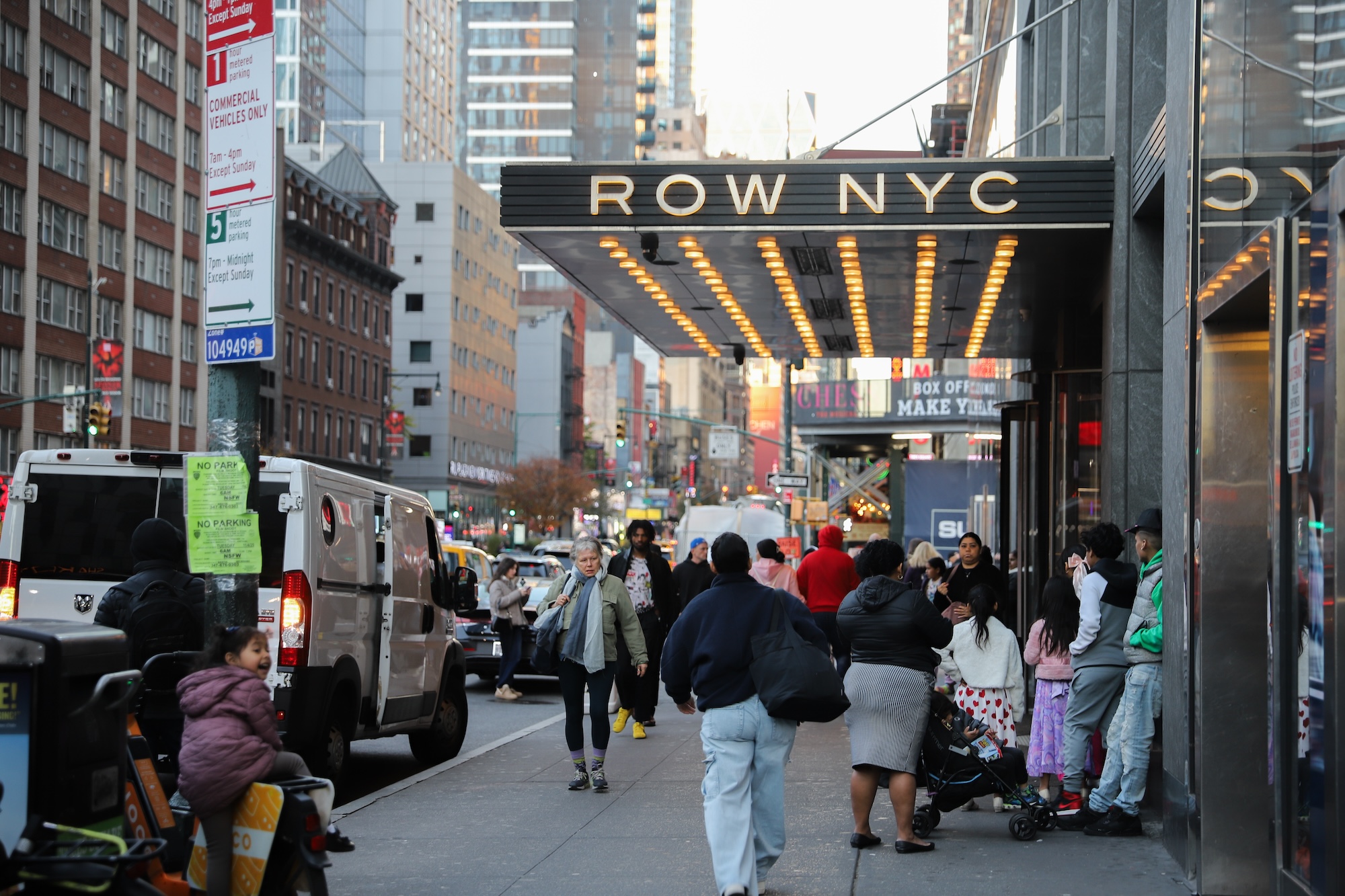
E.C. is the only source of income for her household — her daughter cannot work because she’s undergoing treatment to remove benign tumors found in her uterus and breasts. She lives with her five young children, E.C.’s grandchildren, in a new shelter where they were reassigned after being asked to leave the Row Hotel.
Another obstacle is the Board of Immigration Appeals’ decision from September 11, which allows immigration judges to deny an asylum case if they believe the applicant did not adequately explain why they are seeking protection in the United States, a requirement that, in practice, demands the help of a legal specialist.
MOIA acknowledges that at least $188.5 million would be needed to guarantee legal services for all immigrants in the city, but only roughly $120 million is currently available. Nonprofit organizations say they are so overburdened that taking on more cases would amount to malpractice.
The shortage of attorneys is also tied to structural obstacles within the funding system itself. Manuel Castro, MOIA commissioner, explained that the organizations who are part of the city program operate year to year with no guaranteed budget, making it difficult to hire and retain staff.
“Managing annual funding is very hard; nothing is guaranteed for the next year,” he said, adding that that uncertainty limits the pool of available legal staff and undercuts the ability to offer competitive salaries. “It’s a considerable challenge for providers,” he said.
Also Read: Legal Help on Wheels: NYLAG’s Free Mobile Clinic Meets New Yorkers in Their Neighborhood
N.A., K.G., and E.C. face different circumstances, but all share the same feeling of being trapped in a system that demands legal representation while making it nearly impossible to obtain.

你知道吗?非公民办理驾照时的这个错误可能会导致选民欺诈
K.G. left the Row Hotel in early December and was relocated to an apartment in the Bronx assigned by City social workers. However, she has not yet secured a permanent job as a kitchen assistant, saying that in these positions she has found that English is required.
“At my last hearing, in August, the judge told me that the government attorney is asking for my case to be dismissed because we are from Venezuela,” she said. “Except for my son, who is under 3 years old and Colombian. She said she would give me a chance and more time to find a lawyer and appear with one at the next hearing.”
To date, K.G. has not received a response from the City-funded attorneys.