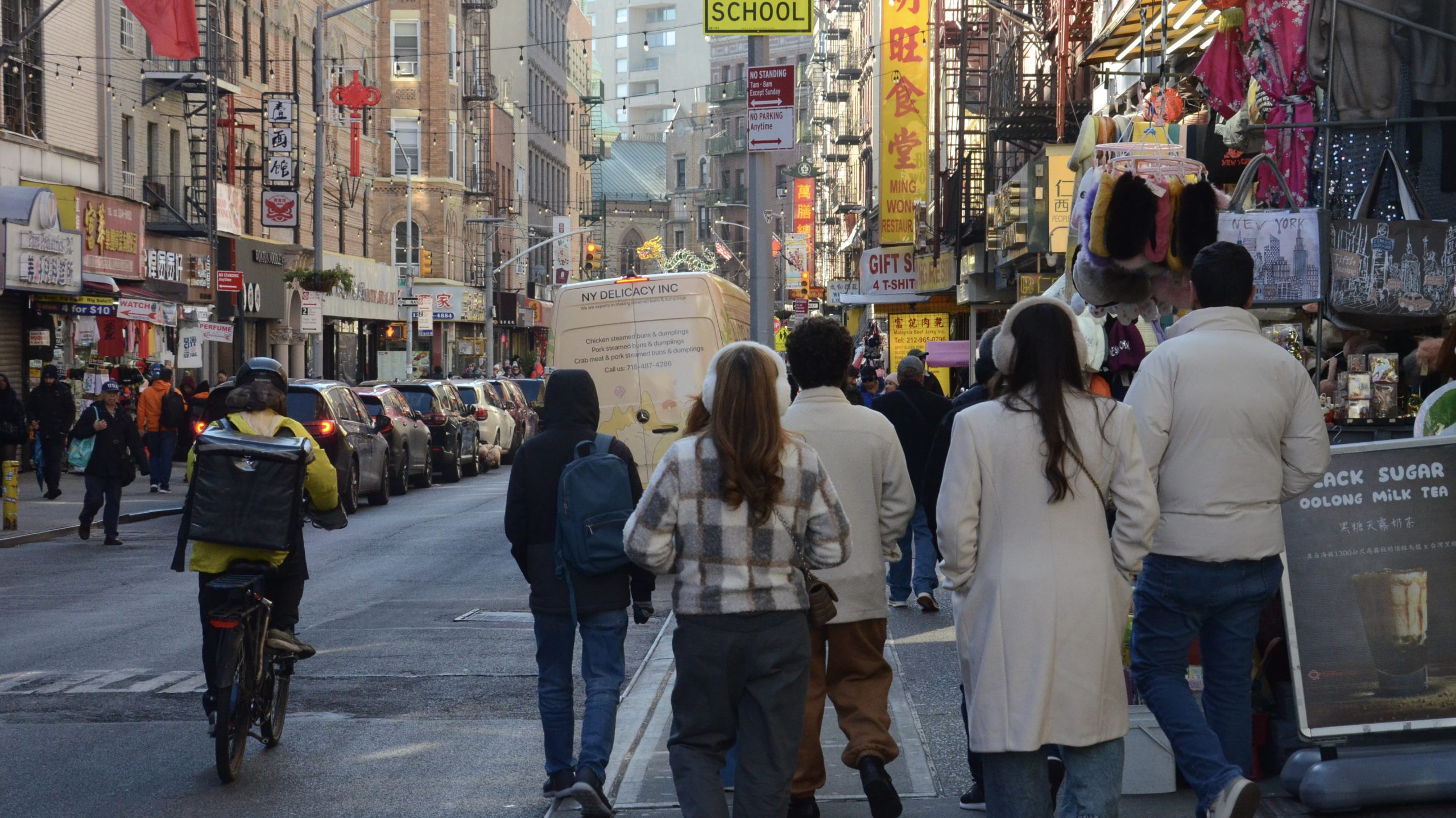


On a cold afternoon in Chinatown, the smell of roasted coffee drifts from Artbean Coffee Roasters down Doyers Street, a kinked, one-block-long street which has weathered more than a century of change. Five years ago, during the worst months of COVID-19, Doyers Street was hollowed out — shuttered stores and an absence of tourists left a palpable heaviness in the neighborhood.
Today, the streets are loud once again. Tourists pose for photos. Elderly residents push grocery carts packed with food and vegetables down the sidewalks on their way home. International students from China eagerly line up in front of trendy, new bubble tea shops. And behind a growing number of decorative shop windows and charmingly hectic food counters, a new generation is taking the keys.
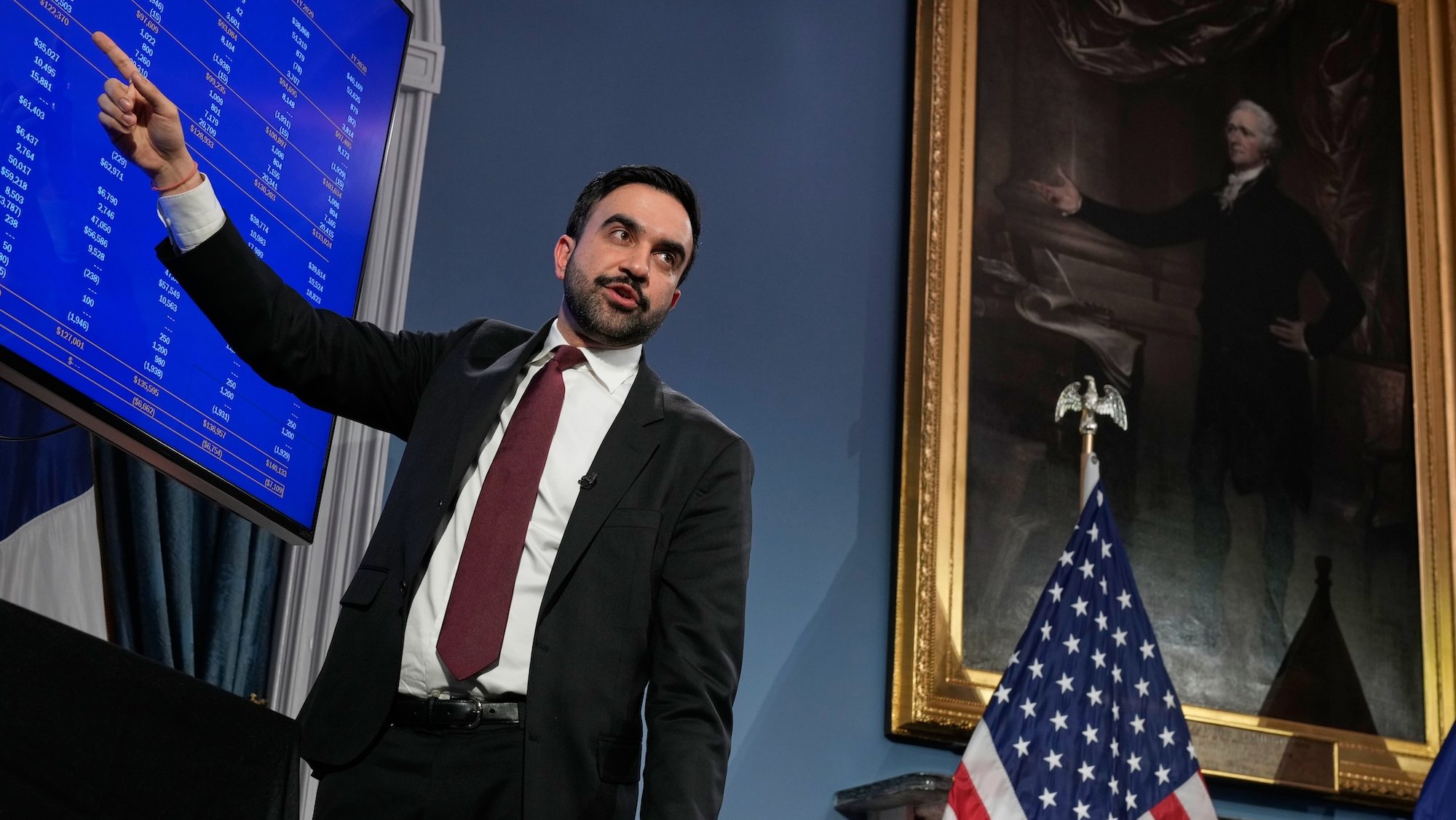
Businesses opened by second-generation entrepreneurs have been a key driver of Chinatown’s post-COVID rebound. That trend is backed by new research from Professor Zai Liang, a principal researcher in SUNY Albany’s Departments of Sociology and East Asian Studies, who has spent years studying Chinatown. His new research traces the neighborhood’s trajectory through the pandemic and into its recovery.

Liang’s recent survey, conducted with the Chinatown Partnership Local Development Corporation, covers 249 local businesses in Chinatown, and the findings are clear: in 2020, about 93% of businesses reported revenue losses. Some never reopened. But by 2025, Liang sees renewed stability and resilience — 33% of Chinatown’s small businesses opened between 2020 and 2025, and nearly 30% of small businesses and nonprofits are now owned by entrepreneurs who are second-generation immigrants.
Compared with first-generation immigrant business owners, second-generation entrepreneurs are more likely to be college-educated, fluent in English, and comfortable experimenting with new business models and using social media to promote their businesses. The mean age of second-generation business owners is 39.74, younger than the mean age of first-generation owners, which is 44.42. Increasingly, their shops — coffee houses, tea and dessert spots — double as community hangouts and cultural bridges.
Second-generation owners are also shaping the neighborhood’s recovery with a willingness to blend the old with the new, said Liang. According to the research, they’re more likely to lean in on social media and open businesses that invite broader audiences while keeping cultural ties intact.
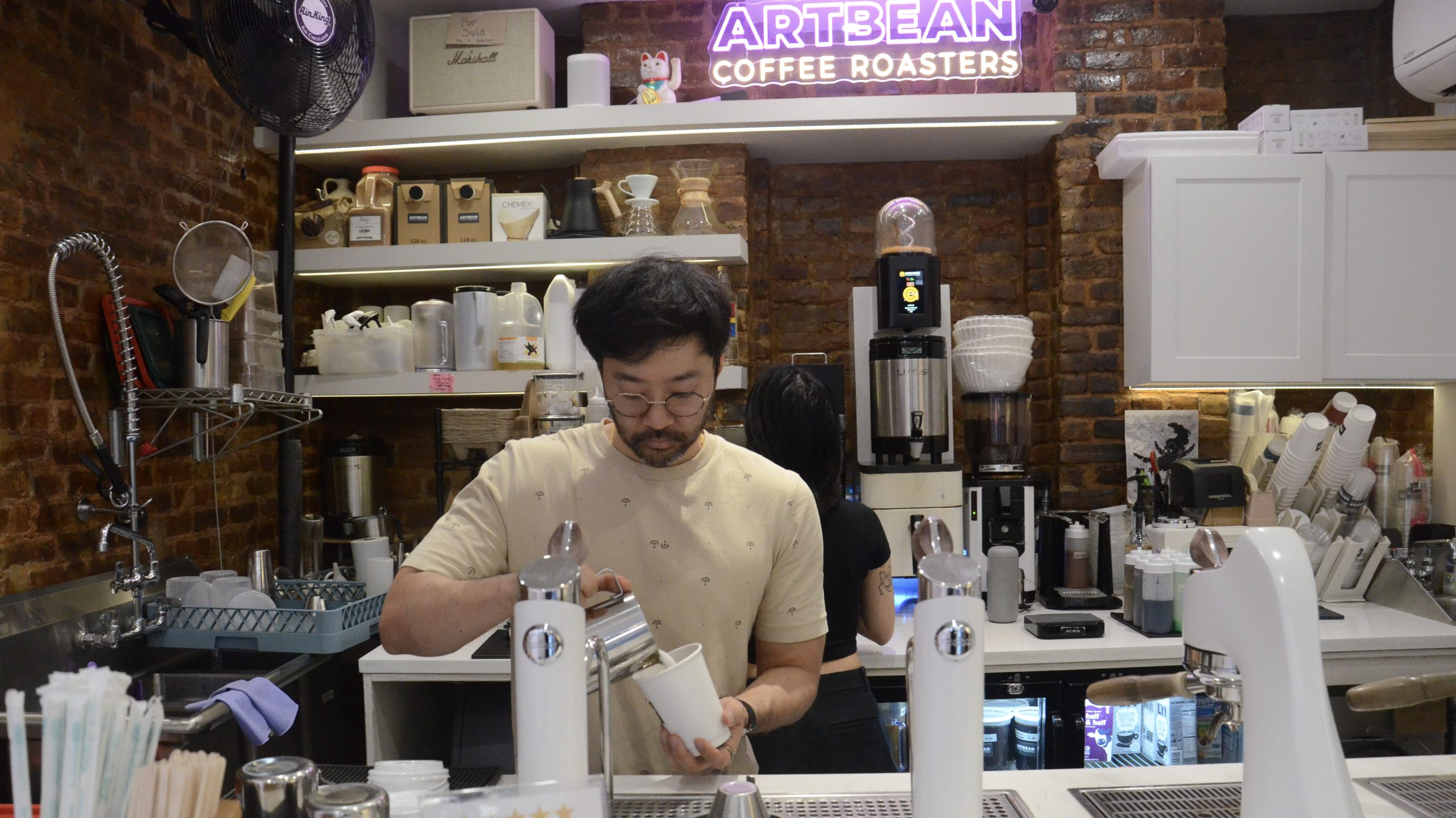
Located at 19 Doyers Street, Artbean Coffee Roasters, run by husband-and-wife team Spencer Okada and Khanh Tran, was among the first new businesses to open on the block during the pandemic. In 2022, Chinatown was still reeling from anti-Asian hate and the pandemic’s punishing financial impact, and many storefronts shuttered. But for Okada, a transplant from Reno, Nevada, the colorful and historic Doyers Street, once known as “the Bloody Angle” for its famed sharp bend in the middle of the block, felt like “the most interesting street” to start a business. He also saw potential: specialty craft coffee infused with Asian flavors.
Artbean’s menu features ube, pandan, and black sesame drinks — novelty creations that stir in Asian cultural heritage and flavor. The couple also turned their shop into a community space and miniature gallery for AAPI artists and creatives that showcases everything from ceramics to books. With their first exhibition, held in collaboration with Oakland artist Jocelyn Tsaih, they donated 10% of proceeds to Soar Over Hate, a nonprofit supporting the AAPI community.
As a third-generation Japanese and Chinese American, Okada said Chinatown felt instinctively familiar. “I think just being Asian, being Asian-owned, it feels like a subconscious thing,” he said. “Race plays a pretty big role in how comfortable you feel with your community and the people you deal with day to day.”
A few blocks away, Raymond Tsang opened Café Diem with friends last March. Located at the foot of Confucius Plaza, the first major federally subsidized housing development for Chinese Americans in NYC, the shop blends traditional Asian elements with modern American café culture. Under bright lighting stands a sparkling, tinsel-laden Christmas tree — and right next to it is a pavilion-style tea room adorned with wooden latticework and a plaque bearing the Chinese saying “难得糊涂”, translated as “Where ignorance is bliss, it’s folly to be wise.” At the counter, American-style coffee drinks sit alongside lava mooncakes, pineapple cakes, and other pastries.
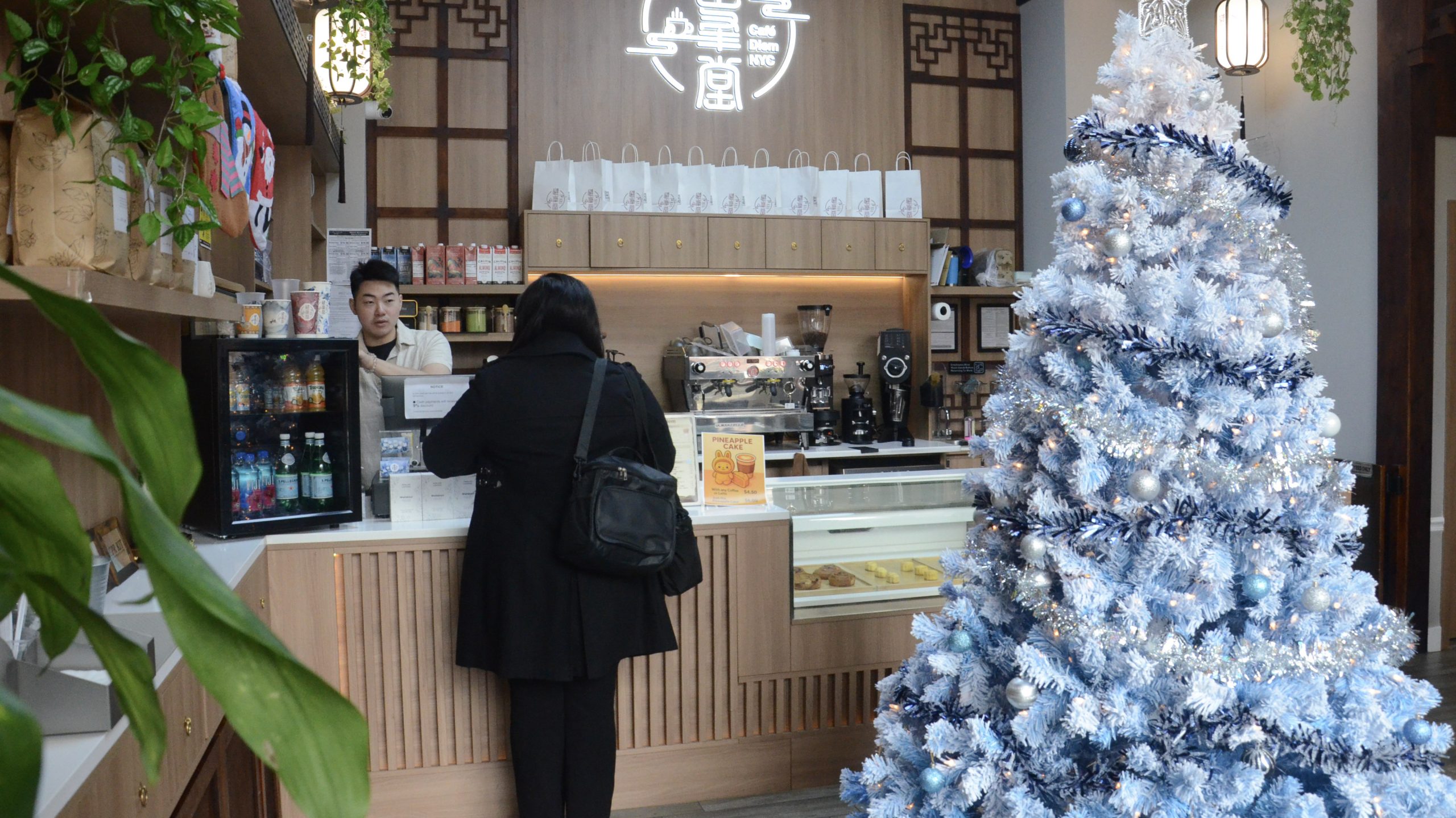
Tsang is a second-generation Chinese American who grew up in Chinatown and once served as president of Chinese Consolidated Benevolent Association, one of the oldest community organizations in Chinatown. He opened Café Diem hoping to boost foot traffic in the neighborhood. “If people come for coffee, maybe they’ll stay for dinner, shopping, dessert,” he said. “We have to get people walking around more so everyone can survive.”
When talking about the design of the shop, Tsang sounded proud. “We think about honoring the cultural heritage by doing the design that fits into the community,” adding that he has encouraged entrepreneurs to consider cultural competence when bringing new businesses into a local community.
But revitalizing Chinatown also comes with challenges, including inflation, tariffs and congestion pricing. Silu Chen, a member of Professor Liang’s research team, noted that the tariff war has significantly affected Chinatown’s small businesses. About 38% of owners partially rely on Chinese supplies, and roughly 24% rely primarily on them. More than 75% of surveyed businesses expressed concerns that tariffs could force them to close.
你知道吗?非公民办理驾照时的这个错误可能会导致选民欺诈
Like many products that are rooted in place, coffee beans aren’t immune to policy shifts. Although coffee was exempted from the 10% global tariff last month, Okada said the disruption has already affected supply and pricing: “Damage has been done by implementing them and then taking it back.”
Beyond tariffs, Tsang says that other post-COVID realities — like rising labor, material, and build-out costs and congestion pricing — are impacting local businesses. For decades, Chinatown relied on visitors who drove in and spent the day. Now, he said, some feel that the $9 congestion fee is “better spent on groceries,” reducing crucial customer flow.
As Chinatown continues to rebound, Liang said meaningful support is still essential, from government financial assistance to digital marketing help. He sees second-generation business owners as key to the neighborhood’s future, bringing fresh energy, vision and a healthy dose of cultural capital. Liang said their approach of engaging a wider audience practically generates positive ripple effects throughout the community, from bringing in more foot traffic to benefiting creating more jobs. “To me, it’s the hope of Chinatown,” he added.