

Over 233,000 refugees arrived in the United States in the nearly four years between February 2021 and January 2025.
At the time, that number represented a triumph for the U.S. government and President Joe Biden. The Trump administration had all but razed the infrastructure that identified, vetted, and resettled refugees during his first term, and President Biden’s ambitious campaign promise of 100,000 or more refugees per year was finally met in the last full year of his term.
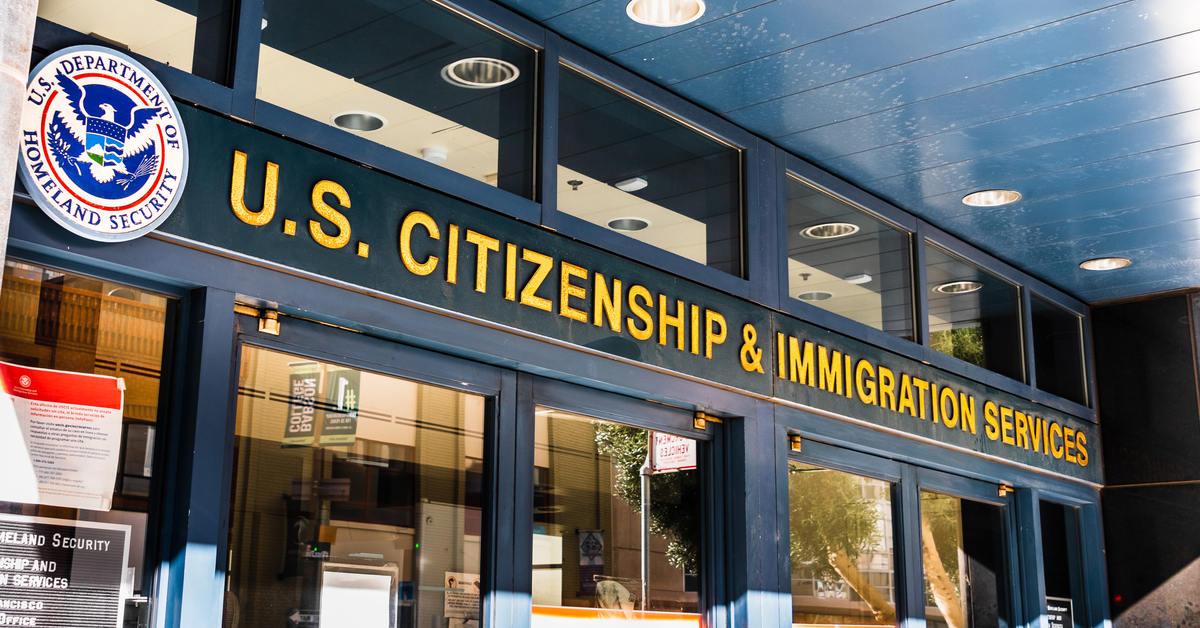
Now, that number could represent an immense bureaucratic headache — or worse — for those 230,000 people, with effects that could ripple outward to other immigrants waiting to hear back from U.S. Citizenship and Immigration Services (USCIS) about their applications for legal status or citizenship.

Over the past week and a half, USCIS has made sweeping changes in two directions. One has been to freeze processing of a whole swath of applications – including all pending asylum applications, all pending green card applications from Biden-era refugees, and all applications from anyone from the countries covered in Trump’s most recent travel ban.
The second – and arguably more alarming one – has been to review applications that have already been approved in the past few years.
And while some of these new policies were supposedly announced in response to the tragic shooting of two National Guard members last Wednesday, the concept of reopening large numbers of cases was already on the agency’s mind. A few days before the shooting, USCIS had already directed officers to review every one of those 233,000+ refugee applications approved under the Biden administration; to conduct interviews or re-interviews if needed; and to terminate the refugee status of anyone who they believed to be ineligible.
Also Read: The Throughline: What Happens When Border Patrol Comes To Your Town
The timeline to implement those directives is unclear, though employees have been directed to submit a list of cases to prioritize for review and re-interview within 90 days.
Three of the most important questions to ask about any policy change are: Is this legal? Is this normal? What happens next? We’ll cover all three of those for this announcement.
The second question — is this normal? — is the easiest to answer: no, it is not. USCIS famously has its hands full processing its current backlog of applications. The Refugee and Asylum Division, where refugee determinations are made, is also the division sitting on a backlog of 1.5 million applications for “affirmative” (proactive) asylum.
Additionally, while various administrations have had different priorities for what kind of refugees should be admitted to the U.S. — both by setting particular regional targets as part of the annual determination for how many refugees to resettle, and by adding particular priorities for, for example, relatives of U.S. citizens — it’s generally been understood to be a form of triage. It’s not that these are the only deserving refugees; it’s just that, in a world where fewer than 1% of refugees can be resettled anywhere, hard choices have to be made.
This administration does not believe that. During Trump’s first term, he and his officials showed skepticism that, say, adult men from Syria could possibly be refugees of that country’s civil war instead of participants in it. More generally, the administration’s attitude that people should stay in their own countries to fix their problems doesn’t leave much room for accepting that governments can sometimes oppress and kill their own people — the entire basis of persecution on which the Refugee Convention was based after the Holocaust.
That brings us back to the first question: is it legal?
The short answer is yes: USCIS has the authority to terminate the refugee status of anyone who it finds did not qualify as a refugee when they were admitted. An essential part of refugee eligibility is making a credible case of persecution (or a well-founded fear of future persecution) based on race, nationality, religion, political opinion, or membership in a particular social group. In theory, a USCIS governed by a new administration – one with a different standard for what counted as persecution (or as credibility) – could end up finding that someone admitted under the prior administration was ineligible for refugee status to begin with, and therefore eligible to have their status terminated.
However, federal regulations require USCIS to notify someone in writing if it intends to revoke their refugee status, and give them 30 days to submit evidence on their own behalf. Alternatively, if USCIS chooses to refer someone to an immigration judge for deportation based on the argument that they never qualified for refugee status to begin with, it has to serve them a Notice to Appear. That’s very important to know for anyone who may be caught up in this: the government has a legal obligation to inform them if they are on track to lose their refugee status. In a federal lawsuit over a different policy this spring, a judge determined that the administration’s efforts to strip protections were invalid until sufficient individual notice was given.
The review also includes people who have already received green cards after living for one year or more as refugees within the U.S. In that case, in order to fully strip them of status, the administration would have to revoke both their green cards and their refugee status. While it’s possible for USCIS to itself rescind a green card, it’s more typical to refer someone to an immigration judge and have the judge hammer out the question of eligibility — and, again, in either case the person has to be informed.
So what happens next? Within 90 days, USCIS is supposed to review all 233,000 grants and come up with a priority list for re-interview. Any of those grants could end up being terminated at the end of the process — which could be inside the 90-day window, or could be after. Individuals will be notified, and will either get a chance to go before an immigration judge when USCIS refers them for removal proceedings, or will be subject to removal (if they don’t have another form of immigration status) with the same rights as anyone else in their position.

你知道吗?非公民办理驾照时的这个错误可能会导致选民欺诈
But the other answer to the question of “what happens next?” is that USCIS agents will be pulled off whatever they have been doing in order to re-scrutinize 233,000 cases that they thought were already closed. That’s time that can’t be spent reviewing current applications. While the processing freeze issued this week — on asylum applications and on all applications from the 19 travel-ban countries — could free up some bandwidth, the purpose of that freeze is supposed to also be to subject applications to further scrutiny.
USCIS has a finite number of officers. And, unlike newly cash-flush ICE, its budget is constrained by the fees it has coming in. When old cases get reopened, new cases will inevitably be left unattended.
That means that, most likely, far more people’s lives will remain on hold than the ones whose cases were officially frozen. And far more people are likely to feel a little less secure in their current status than those whose cases are officially under review. It’s been a hard week and a half for anyone with a USCIS-granted status to feel that they’re actually safe.