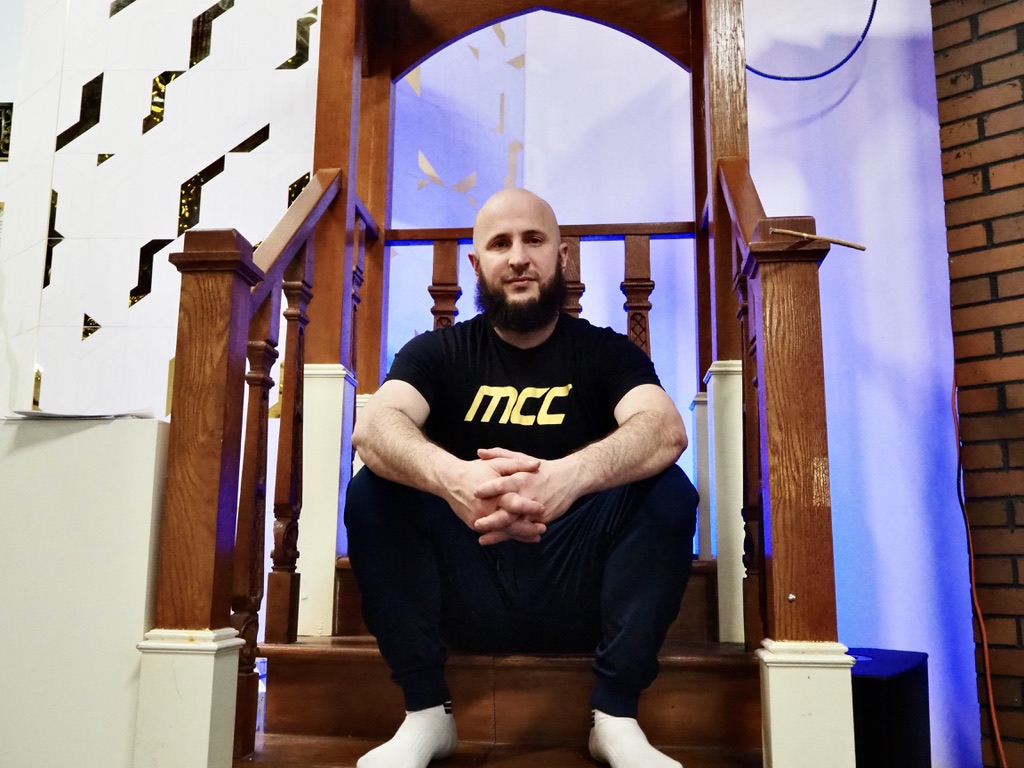


In a courtroom full of supporters, Mohamed Bahi, Chief Liaison to the Muslim Community in Mayor Eric Adams’ administration, awaited his sentencing.
The 41-year-old sat stone-faced, his hands folded on the table before him. In August, he pleaded guilty to one count of wire fraud in connection with Mayor Adams’ straw donation scandal, where it was alleged that Bahi coordinated illegal campaign donations between the mayor and Uzbek businessmen.
On Tuesday, Judge Dale Ho gave his sentence: three years’ probation, with one year of that under home confinement. Bahi was also ordered to pay $32,000 in restitution to the New York City Campaign Finance Board.
Ho dismissed the prosecution’s request for incarceration, finding it excessive in light of the prosecution having dropped all charges against Mayor Adams. Instead, he sentenced Bahi to probation, noting that Bahi was only a small part of a larger pyramid.
“It’s hard to escape the impression that Mr. Bahi is left here holding the bag,” he said.

The news of Bahi’s arrest in October 2024 had made national headlines. But even as prosecutors dropped the federal corruption charges against Mayor Adams, Bahi’s case remained. More than a year after being charged, Bahi told Documented that he struggled financially, emotionally, and spiritually while waiting for a potential jail sentence.
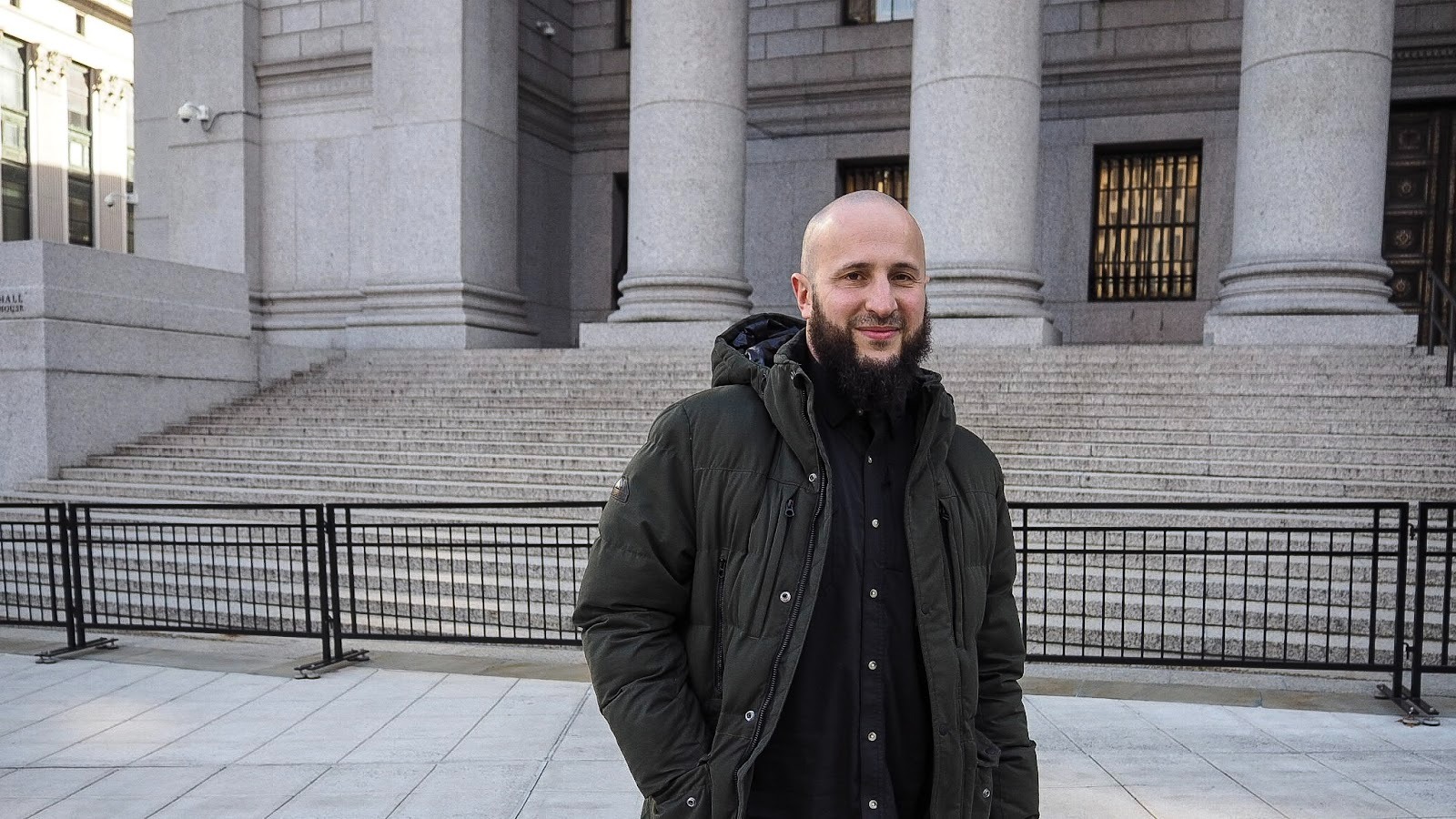
Outside the Lower Manhattan courthouse after he was sentenced, Bahi was somber.
“This has been the lowest of the lowest of my life,” he said. “Allah [God] knows best. I’ll leave it to him.”
As the only Adams official to be federally prosecuted and convicted of a crime, Bahi’s case is the culmination of a 15-month-long saga that has engulfed his life.
It also marks the end of Bahi’s once-promising career in public service.
‘You’re on the menu’
When Bahi first accepted the position of Chief Liaison to the Muslim Community for Mayor Eric Adams in 2022, he had ambitious plans.
Although reluctant to take the job at first, he dreamed of the day that the adhan, the Muslim call to prayer, would be as common a sound across the city as church bells on a Sunday morning.
He hoped to help make halal meals widely available to all Muslim public school students, food prepared in accordance with Islamic law. As he saw it, his job was an opportunity for him to amplify the voices of the Muslim community at City Hall and bridge divides that had grown strained after decades of NYPD surveillance and mistrust.
Also Read: Did Mayor Adams Take Straw Donations From an Uzbek Construction Boss?
“If you’re not at the table, you’re on the menu,” said Bahi in an exclusive interview with Documented in April.
Bahi was able to achieve some of his goals in the two years he was part of Adams’ administration. But in 2024, made headlines — not for his achievements, but for his entanglement in Mayor Adams’ ongoing corruption scandal.
Although he wanted to fight the charges, in August, Bahi pleaded guilty to the lesser charge of wire fraud.
“What am I supposed to do? I don’t have money, I’m already in six-figure debt, and I haven’t worked full-time for months,” he said. “I took a big hit.”
According to court records reviewed by Documented, the FBI charged Bahi with one count of witness tampering and one count of Destruction of Records. The FBI alleges that sometime in June 2024, Bahi met with Uzbek developer Tolib Mansurov and four of his associates and “directed them to lie to law enforcement officers in connection with a federal criminal investigation being conducted.”
The FBI also alleges that when they visited Bahi’s home on Staten Island on July 24, 2024 to execute a court-issued warrant, Bahi hid in his bathroom and deleted the encrypted messaging application Signal before they could seize his cellphone.
Bahi came to the attention of the FBI during their investigation into straw donations made to the Adams campaign. Text messages from Bahi to Mansurov, reviewed by the FBI on Mansurov’s phone, indicated that before working at City Hall, Bahi had arranged a private fundraiser for Adams on Dec. 10, 2020.
The fundraiser was held at Mansurov’s Brooklyn office, where Mansurov’s employees each donated $2,000 to the campaign. The FBI alleged that Bahi not only organized the fundraiser but also suggested to Mansurov that he should reimburse the donations made by his employees.
But Bahi was not charged for his connection to the straw donor scheme. Instead, the FBI charged him with witness tampering, alleging that after they raided Mansurov’s home on June 13, 2024, Mansurov called Bahi immediately for help. Federal authorities allege that during their meeting, Bahi encouraged Mansurov and his employees to lie to federal investigators by denying that they had made straw donations.
Bahi denies that he told Mansurov to lie or tried to persuade him not to cooperate with the investigation.
“I didn’t tell them to lie, they already lied, they already gave them a false story,” he said. “I said to stick to whatever you told them and don’t talk anymore, and get a lawyer. And because of that, they gave me witness tampering.”
Bahi claims that the FBI had been pressuring him to become a witness against Adams and only charged him with a crime after he refused.
“For months, they were pressuring me to cooperate and be a witness,” he told Documented. “To be honest with you, there was nothing for me to be a witness to. I was never in the inner circle. They told me it wasn’t about me; I was just a small piece in the puzzle. They were indirectly threatening me.”
Despite pleading guilty to wire fraud in connection with the straw donation scheme, Bahi insists he had no official role in organizing fundraisers for Adams. Instead, it was Ahsan Chughtai who was in charge of fundraising, he claims.
Chughtai served as Adams’ Senior Advisor on South Asia and Muslim Affairs but was fired last year after the FBI raided his home as part of Adams’ corruption investigation. He has not been charged with any crime.
“I was not the money guy; I never organized the fundraiser,” claims Bahai. “I was volunteering, just helping out, but I wasn’t the one collecting the checks.”
Instead, Bahi acknowledges his role in becoming a middleman between Mansurov and the Adams’ campaign, despite feeling the deal was not kosher.
“I knew it was funky, but I was just the middle guy,” he said. “But that’s when I should have definitely pulled out at that time and not been involved.”
Chughtai could not be reached for comment by phone by press time.
Bahi’s Unlikely Road to City Hall
Bahi’s road to city hall was an unlikely one. Immigrating with his family from Algeria amid its bloody civil war in 1993, when he was just 9 years old, Bahi grew up in Sunnyside, Queens.
When he was 17 years old, the attacks on 9/11 took place, forever changing not just the country but the course of his life. As a Muslim and Arab young man, Bahi experienced, firsthand, the rising tide of Islamophobia that followed, leaving him alienated from mainstream American society.
He said his alienation drew him closer to Islamic fundamentalism. Hanging out in internet cafes in Jackson Heights, Bahi met other like-minded young Muslim men and joined the local branch of Al-Muhajiroun, an Islamic fundamentalist organization banned in both Saudi Arabia and the United Kingdom. The organization has been linked to several terrorist attacks.
“After 9/11 I was probably part of the worst extremist group in the world,” he said. “We were really hardcore.”
He co-founded a homegrown spin-off organization called the Islamic Thinkers Society (ITS). The group would often hold protests outside the Israeli mission and burn the American flag during demonstrations.
Over time, Bahi says he grew disillusioned with the movement, often disagreeing on what direction the movement should take.
“I was in agreement with fighting armies, but when talks came to attacks here like 9/11, I was not on board.”
A decade later, in 2012, Bahi changed course: “I changed my life completely and I started countering the negative perception of Islam.” He co-founded Muslims Giving Back, which provides hot meals and other essential goods to the homeless across the city. He also co-founded the Muslim Community Center (MCC) in Sunset Park, Asiyah Women’s Center, a shelter for Muslim women and children, and Mercy Bakery, a humanitarian relief organization that donates food to Yemen and Gaza.
His prolific charitable efforts and past links with an identified Islamic fundamentalist organization made him a high-profile target of the NYPD. After 9/11, the NYPD began widespread surveillance of the city’s Muslim communities, which was found to be unconstitutional in two landmark lawsuits filed by the New York Civil Liberties Union.
Bahi’s organization, Muslims Giving Back, was one of many Muslim organizations to be infiltrated by police informants.
“I used to be followed,” he said. “Two or three cars would be behind us everywhere we go. I felt like James Bond.”
After it was revealed that their organization was targeted by the NYPD, Bahi was one of the few Muslim organizations that joined the lawsuit that eventually brought an end to illegal spying.
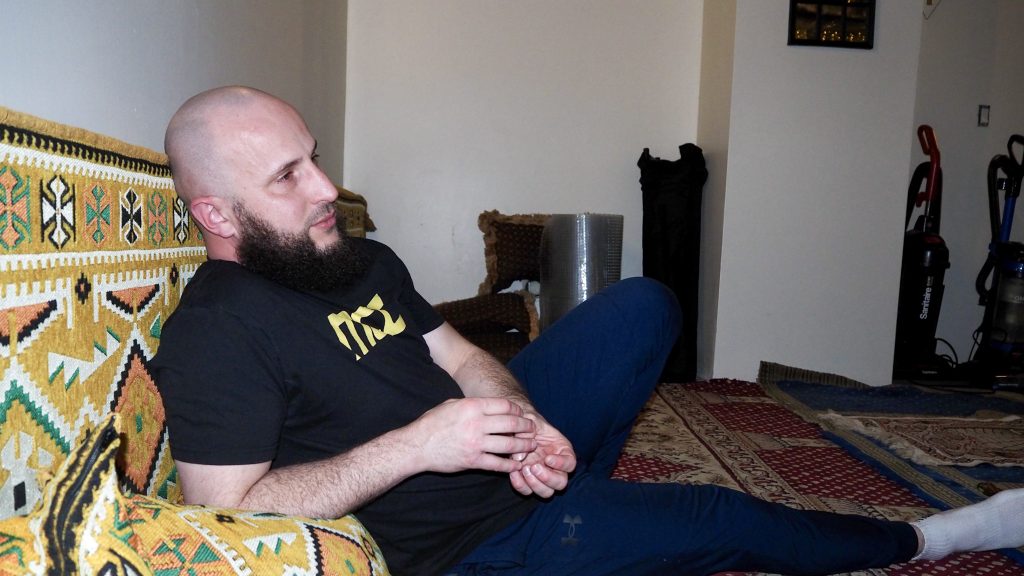
An Ear to Power
Enter Eric Adams. Because Bahi’s Muslim community center was based in Brooklyn, he had crossed paths with Adams, then borough president, on numerous occasions. Adams would often join Bahi to distribute food to the homeless, visit his mosque, and invite him to events at Borough Hall.
Although he personally found Adams charming, Bahi says he was hesitant to get involved with the campaign, but was convinced by Chughtai to volunteer.
“I told Chughtai that I don’t do politics,” he said. “But he told me that if Adams became mayor, things could change for us. We need people inside.”
Because of his negative experience with the NYPD, Bahi felt that having the ear of the mayor would help his community as a whole.
“At that time, when the infiltration happened by the NYPD, I felt naked,” he said. “I was like yo, who can I go to? No politicians were standing up for us.”
So, Bah threw himself into the campaign, taking Adams to various mosques and community centers where they would meet potential supporters and donors.
After Adams became mayor, Bahi was offered a job in the new administration.
“I told Eric that I’ll take the job, but one condition I have is to have direct contact with you,” he said. “I’m taking this job to benefit my community.”
The role of Muslim Community Liaison was first established under the de Blasio administration. Dr. Sarah Sayeed was the first person to occupy the role and helped shape it.
“The establishment of a Muslim liaison role in the Mayor’s Office reflects the rise of an organized Muslim political constituency in New York City,” Sayeed told Documented via email. “That’s how I see it, and I approached my role as a call to reinforce Muslims’ political and civic engagement.”
In a post 9/11 world where Muslims were often treated by the Bloomberg administration with suspicion, Sayeed said her goals were to bridge relationships between police and community, as well as help government colleagues understand the breadth and diversity of Muslim New Yorkers.
“I sought to be the community’s go-to person for all their issues and created as many opportunities as possible for community stakeholders to connect with a variety of agencies and the Mayor’s Office,” she said. “I also served as an advisor for agencies as they worked to develop culturally responsive engagement with Muslim New Yorkers. My approach to this work included dialogue, education, and advocacy inside the administration as well as with the diverse groups included in this constituency.”
When Bahi joined the Adams administration, he hoped to emulate and build on Sayeed’s legacy. But he said he soon came face to face with the municipal bureaucracy.
“I almost became like a case manager,” he said. “All the problems with mosques, department of buildings, department of transportation, permits, construction, business, health department, individual cases, immigration. Every day, it was something else, and on top of that, I had to deal with the big policy issues. I thought it was just going to be attending events and doing policy stuff.”
Bahi claimed that it was not uncommon for mosques and other Muslim-owned businesses to contact him for help with their issues with various city agencies.
“My job is the liaison,” he said. “If there are issues with Muslim businesses, they come to me and I streamline them and connect them to the proper channels so they don’t get lost in the system.”
One of those calls came from Tolib Mansurov, the Uzbek developer. Mansurov and Bahi had known each other for years. Mansurov helped construct Bahi’s Muslim Community Center in Sunset Park. They even went on Haji, the Muslim pilgrimage, together. This happened before Bahi had arranged a private fundraiser for Adams at Mansurov’s Brooklyn office in 2020.
Mansurov could not be reached for comment by press time.
In 2022, Mansurov asked Bahi, who was then working for the Adams’ administration, for help in lifting a stop-work order on his luxury condo project in Brooklyn. Bahi tried but could not help his friend.
“I worked on his issue for like four months,” he said. “He got a stop-work order on his project, and he was losing money every day. For four months, I couldn’t do anything. I was calling this commissioner and that commissioner, trying to get him help by the book.”
Finally, Bahi said that he told Mansurov to try giving Adams a call himself.
Mansurov did, and the stop-work order was lifted.
From Leader to Community Pariah
Even before Bahi was arrested, he says his time at City Hall overwhelmed his personal life. Despite his hopes of giving a voice to the Muslim community, that very community began to shun him after Oct. 7, 2023, when the Gaza War broke out.
When Mayor Adams voiced support for Israel, Bahi was heavily criticized by the Muslim community for continuing to work for the mayor.
“A lot of our donors went away, and all these organizations turned on me,” he said. “They started saying I support this Zionist mayor.”
Inside City Hall, Bahi’s co-workers also looked at him with suspicion because of his outspoken support for Palestine.
“I used to fight tooth and nail with people,” he said. “The first three months were the worst; he couldn’t even say the word Palestine.”
A year later, after his arrest, an organization he had founded cut ties with him.
“The day I got arrested, my own organization, Freedom Bakery, voted me out,” he said. “Muslim Giving Back tried to kick me out, too.”
But not everyone turned their back on him. Fahd Ahmed, executive director of DRUM-Desis Rising Up & Moving, praised Bahi for his community work.
“I probably have a lot of political disagreements with Bahi, but when it came to taking care of people, taking care of our community and people in need, there is nobody in New York City that I can count on more than Bahi,” he told Documented. “If families were struggling to eat, he would figure out a way to give them food and groceries. From migrants needing a place to stay, he would figure out which [mosque] would accommodate them.”
Bahi told Documented in April that he was shocked that the target of the investigation, Mayor Adams, escaped any serious consequences when federal authorities dropped the charges.
“There is no way on earth all these people go free and I’m the one that’s going to get pinched,” he said.
When asked if he regrets not cooperating with the FBI, he insists that he had nothing to offer them.
“I told the FBI, you guys are threatening me with jail, [and] there’s nothing in this world that means more to me than my daughter,” he said. “You think Adams is worth more to me than my daughter? That’s when they offered a plea because they realized I had nothing to give them. Nothing is worth more than being away even a week from my daughter, let alone years.”
Since his arrest last October, Bahi has been unemployed and piling up debts. He says he has continued to do community work, devoting himself to building up the second Muslim Community Center location on Staten Island. He has also continued his charitable work, helping people find places to stay, organizing food drives, and placing child refugees from Gaza with families.
Adama Bah, founder of Afrikana, an organization that supports the African Diaspora across the city, says Bahi has been a strong ally in supporting the work of her organization.
“Us black Muslims often get forgotten about, but Bahi helped us out a lot,” she said.
“The worst part about all this, the worst part, is the uncertainty,” Bahai said in April as he awaited sentencing. “Every day I’m just sitting here, uncertain of what’s going to happen. I can’t do anything. I can’t get a full-time job. Who’s going to hire me? I’ll have to deal with this for the rest of my life.”
你知道吗?非公民办理驾照时的这个错误可能会导致选民欺诈
Before his sentencing, Bahi said he was fearful for the future of his wife and three kids, and a father in poor health.
Reflecting on his rise and fall in city government, a movie buff, Bahi quotes a line from “The Dark Knight:”
“If you don’t die a hero, you live long enough to be a villain.”