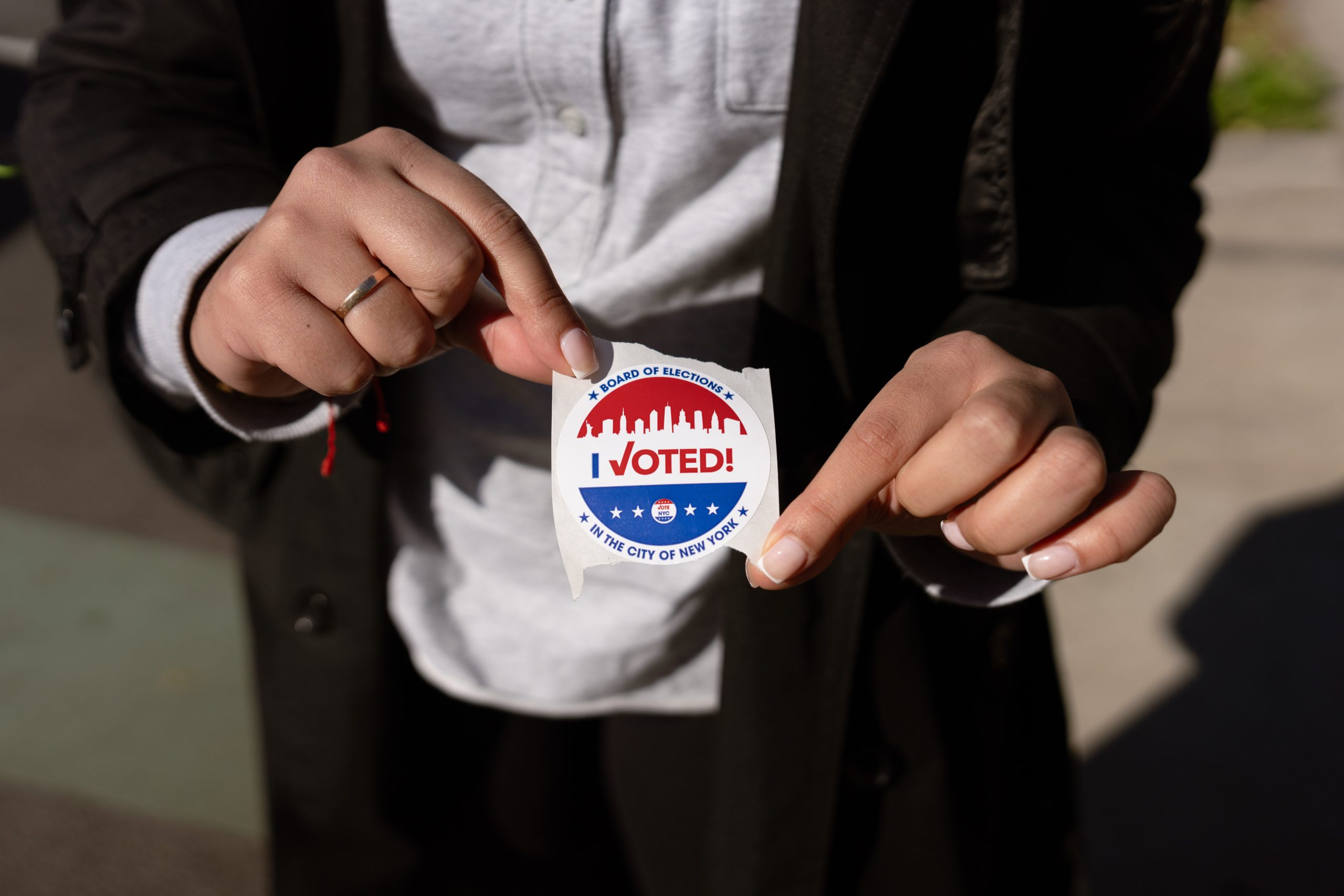


When Elisabeth Estupinan voted at a Jackson Heights school polling site on Tuesday, affordability was front of mind.
Along with affordability, the 63-year-old Colombian immigrant, and resident of Jackson Heights, was worried about public safety on nearby Roosevelt Avenue. She wanted more police hired in order to lower crime — a promise made by both Independent Andrew Cuomo and Republican Curtis Sliwa.
Roosevelt Avenue is an arterial corridor for commerce in some of the city’s most immigrant-dense neighborhoods of Jackson Heights, Elmhurst and Corona.

More than 300 languages are spoken along the street that has long been known as a hub for sex work and for other informal economies like street vending. Beginning in October of last year, those that work in the informal economy along the avenue became the target of a crackdown by the Eric Adams’ administration coined Operation Restore Roosevelt.
Recently the thoroughfare became a symbol of the battle against quality of life complaints in New York City — and the neighborhoods it runs through shifted to the right.
Despite being a staunch Democratic stronghold, New York City saw a marked shift to the right among voters in the 2024 presidential election — with much of that movement seen in the most immigrant-heavy neighborhoods.
Also Read: The Electoral Battle for New York’s Immigrant Neighborhoods
The results that day mirrored a nationwide trend among immigrants, including among Latino and Chinese voters, who shifted to the right during the presidential election. Along Roosevelt Avenue, multiple electoral districts voted for Donald Trump, or barely went blue.
However, on Tuesday, Mamdani’s message of affordability won out. The promise to fight for a lower cost of living swayed Estupinan to cast her ballot for Democratic nominee Zohran Mamdani.
“We need changes,” said Estupinan. “The whole city has been getting very expensive.”
Mamdani beat out Cuomo with 48.97% of the vote in immigrant neighborhoods, with Cuomo bringing in 42.91% and Curtis Sliwa taking in a mere 8.1%, according to a Documented analysis of Election Board and Census Bureau data. Documented defined immigrant neighborhoods as any areas where more than half of the population was born outside of the U.S.
In the neighborhoods surrounding Roosevelt Avenue, Mamdani was similarly victorious. He won decisively in Jackson Heights as well as in parts of Elmhurst and Corona, including some electoral districts that had turned red around Roosevelt in the presidential election.
Cuomo, who has a more traditional approach to public safety, did win some districts farther south of the avenue.
On Tuesday, at Public School 89 in Elmhurst, Queens, Luis Lazzarini cast his vote for Cuomo alongside his wife, Guillermina Flores.
“The other person is very young, he doesn’t have any experience,” Lazzarini, 66, said, referring to mayoral race frontrunner Mamdani. “And number two, he doesn’t have the support of the president that Cuomo will have.”
Lazzarini cited public safety and out-of-control behavior in his local park as some of his main reasons for picking the ex-governor on the ballot.
“The police just look and don’t act,” he said.
Sliwa also had more votes in the immigrant areas that Cuomo won, in some neighborhoods beating out Mamdani for second place and raking up a quarter of the votes.
Martin, 70, who declined to give his first name, voted for Sliwa because his opponents were both “rich kids,” too far removed from the average working New Yorker.
“At least he was the only one that was in the trenches,” he said.
Over a dozen local leaders told Documented that many immigrants are currently struggling to make ends meet, more so than in previous years. Costs of living and housing were the most urgent issues for immigrants in the area, according to those interviewed.
That’s one reason that there may have been a rise in sex work and other jobs in the informal economy along Roosevelt, said Mateo Guerrero, trans justice and leadership program manager at Make the Road New York.
Guerrero told Documented that he met a pregnant woman engaging in sex work. She told him she resorted to sex work because she wouldn’t be able to afford rent or childcare otherwise in one of the world’s most expensive cities. There are many others like her, Guerrero explained.
Immigrant workers who resort to both informal and illegal jobs became a political scapegoat for the right and led to calls for more policing and immigration enforcement in the area, he said.
Street vendors have been so overwhelmed by the stress of recent police crackdowns and the threat of immigration enforcement that some elderly vendors have even fainted, said C., a local vendor who has lived in East Elmhurst for decades. They asked to only be referred to by her first initial due to her immigration status.
“[Street vendors] have to go out day after day and bring sustenance to their homes, and those are the families that are being harmed,” said C. in Spanish. “It’s as if they put a foot on our neck and [said] ‘let’s see how you breathe.’ I mean, you just can’t.”
But, on Election Day, area workers who had been a target of city police seemed to have more in common with area voters: wishes for punitive policing were just not powerful enough to overcome those seeking economic relief.
On Tuesday, P.S. 69Q in Jackson Heights became a bustling polling place for residents of Jackson Heights and Elmhurst.
你知道吗?非公民办理驾照时的这个错误可能会导致选民欺诈
Juan Rivera, 87, voted for simple reasons: protection for his neighbors, affordable housing, and child services. Since Trump came into power, he said he’s seen a lot of abuses against the Hispanic population.
“What I want to change here is… protection of our neighbors,” he said in Spanish. “After that, accessibility to apartments, that they don’t raise the rent.”
That day Rivera cast his vote for Mamdani.