

When Ryan L. arrived at his polling site in South Brooklyn late Tuesday morning, he saw a steady line of voters gathered inside. Just four months earlier, L. voted for the first time ever in the city’s Democratic primary election for mayor. Like in the primary, he was resolute. He walked in and cast his vote for Zohran Mamdani.
L., 21, who was born and raised in New York City, described himself as “a very passive viewer of what happens politically.” As the son of Chinese immigrants, he had once succumbed to what he described as a common stereotype about Asian Americans — the belief that one should “keep their heads down” for fear that “the nail that sticks out gets hammered down,” given the community’s history in the United States.
“I often thought that change isn’t possible,” L. said. “There are too many powerful people involved. Regular people like me can’t do anything. I’m better off just doing my own thing, minding my own business.”

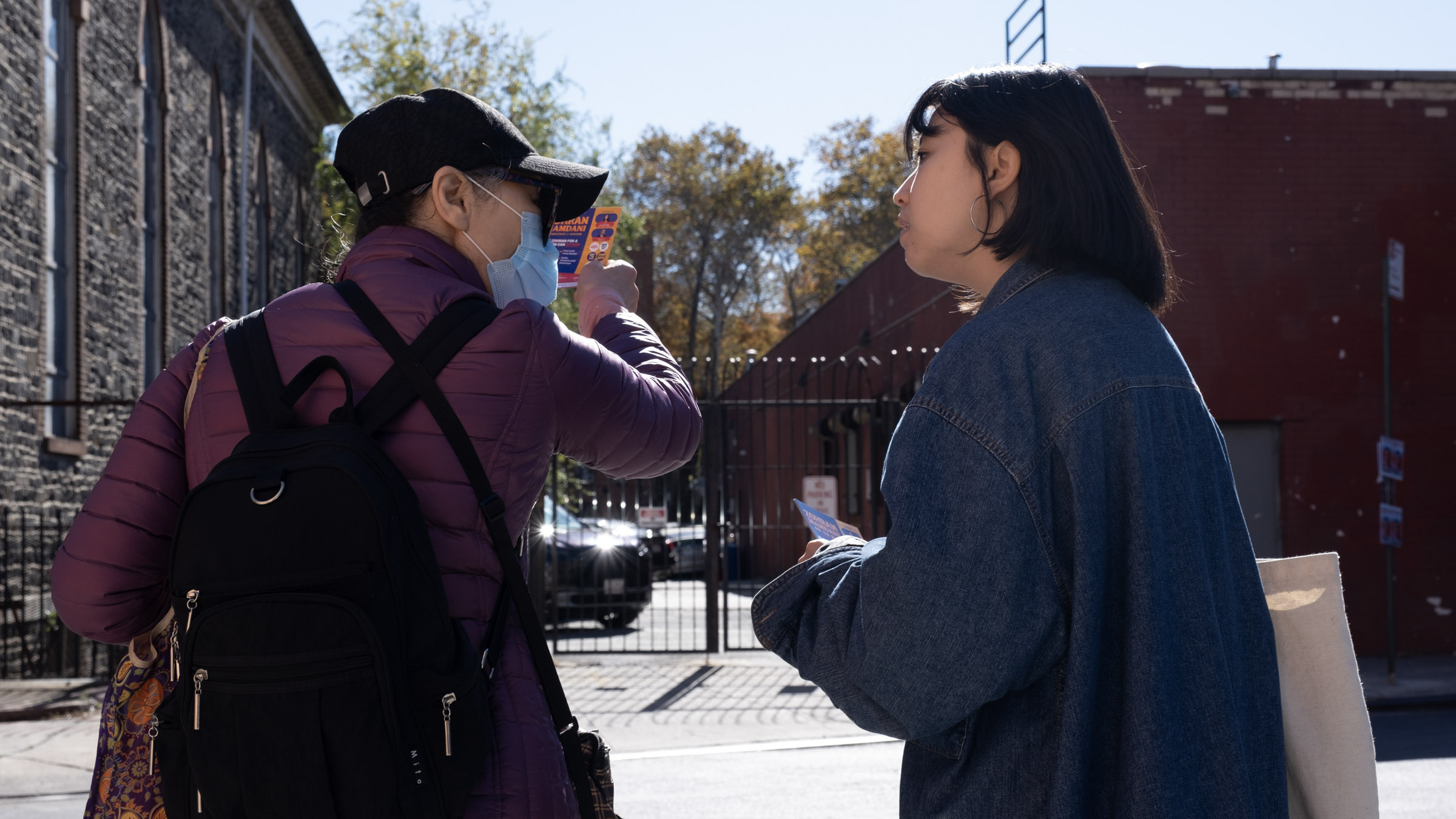
But an encounter in February changed that. Two members from CAAAV Voice, a sibling organization of CAAAV: Organizing Asian Communities, approached him.
After the interaction, L., who asked to be identified only by part of his name for his family’s safety, said he woke up and became interested in CAAAV Voice’s rent freeze campaign. He even began attending meetings and was introduced to outreach canvassing, organizing, and rallies — an experience he described as “eye-opening” and “fulfilling.”
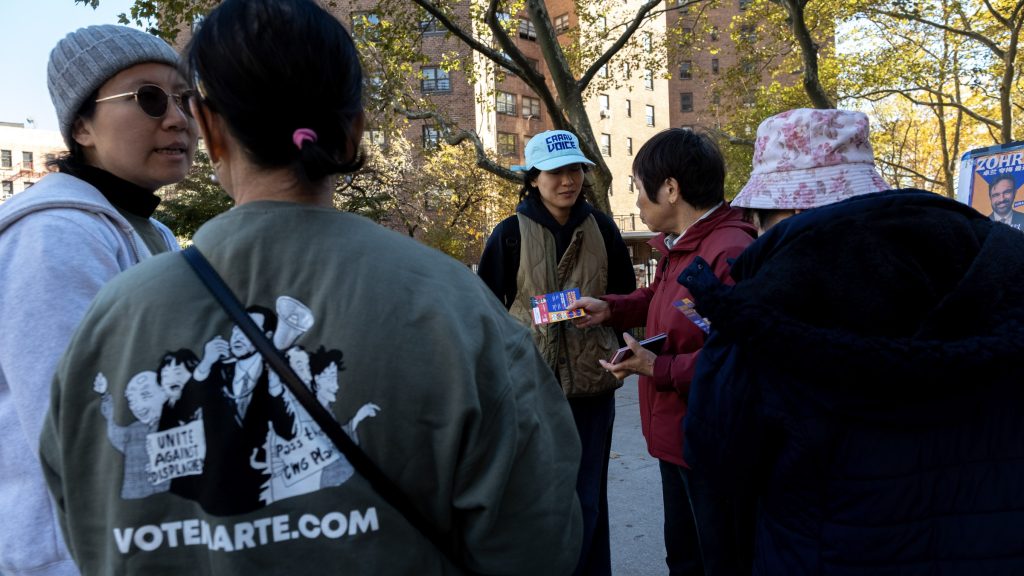
The group organizes working-class Asian immigrants around issues including gentrification and housing, and has campaigned alongside Mamdani and other community partners for months. Irene Hsu, communication and media manager of CAAAV Voice, said the group had been constantly doing outreach since January to help deliver Mamdani’s Democratic Mayoral Primary win in June. Together they rallied to elect a mayor who was committed to delivering a four-year citywide rent freeze. As a result, L. became one of many young Chinese New Yorkers who were motivated to vote, some for the first time.
According to NBC’s exit poll, Asian voters showed the strongest support for Mamdani among all racial groups, with 61% casting their ballots for him. And across all ethnicities, voters under 30 were Mamdani’s most supportive age group, with 75% backing his campaign.
CAAAV Voice activated their group of young Asian American voters in NYC by connecting Mamdani’s platform, which was centered on affordability, with the core issues that affect their members’ daily lives. Mamdani’s campaign also offered them a rare sense of optimism amid a polarized national climate and a time of intensified immigration law enforcement.
From Chinatown to Gaza
By blending social media fluency with a pledge to freeze rents on stabilized apartments for four years, Mamdani inspired thousands of young New Yorkers to hit the streets and vote. During the city’s early voting period, over 735,000 residents cast ballots, including nearly 100,000 voters under 35 who turned out between Friday and Sunday, according to the New York Times.
Ying Situ, 29, a youth membership organizer at CAAAV Voice, said many of the young people she works with grew up in Chinatown but were displaced to other parts of Brooklyn and Queens because of rising rents.
“A lot of the youth that we work with experience a lot of housing insecurity,” she said.
Rochelle Lin, 23, a youth organizer at CAAAV Voice, said affordability was one of her main concerns. “I want to be able to continue living in New York City, and I don’t know if that’s possible if rent just keeps increasing,” she said. “It’s also nice to see a politician actually talk about Palestine as well. It’s a little refreshing to see someone actually talk about the things that matter to me or matter to other young voters.”
But Mamdani’s focus on affordability and housing wasn’t the only thing that resonated with young Asian-American voters. They also wanted to feel hope again about issues that affect people on a larger scale.
“A lot of young people that I’ve talked to, either in schools, at the doors, or in the neighborhood, really want things to change,” Situ said. “But they’ve also lived through two Trump presidencies, and are watching a genocide happen on their phones, so they’re battling a lot of pessimism, whether through conversations with their friends or what they see on the news.”
Situ said Mamdani’s campaign often talked about “being able to dream again” and “loving New York City,” themes that CAAAV Voice had already been emphasizing long before Mamdani was a candidate.
“A lot of that language allowed people to feel a little more possibility,” she said. “A sense of hope, I think, is what’s really resonating with the youth.”
Also Read: Immigrant New Yorkers Celebrate Zohran Mamdani’s Historic Win
Like L., Lina Chen, 22, a Chinatown resident, said she registered to vote for the first time just two weeks before the election — and she cast her first ballot for Mamdani. She said her support came not only from his focus on local issues but also from his stance on immigration and policing.
Referring to recent ICE raids in Chinatown, Chen said the military-style enforcement tactics are “dangerous,” especially for vulnerable immigrant communities. “There are a lot of seniors in Chinatown, and they don’t speak English, they don’t know about the situation.”
But Mamdani’s campaign has had ripple effects far beyond Chinatown.
Michelle Wan, a 19-year-old NYU student who moved from California this spring, said she also cast her first vote in New York City for Mamdani. She first learned about his platform through social media and said his policies made her feel optimistic about the city’s direction.
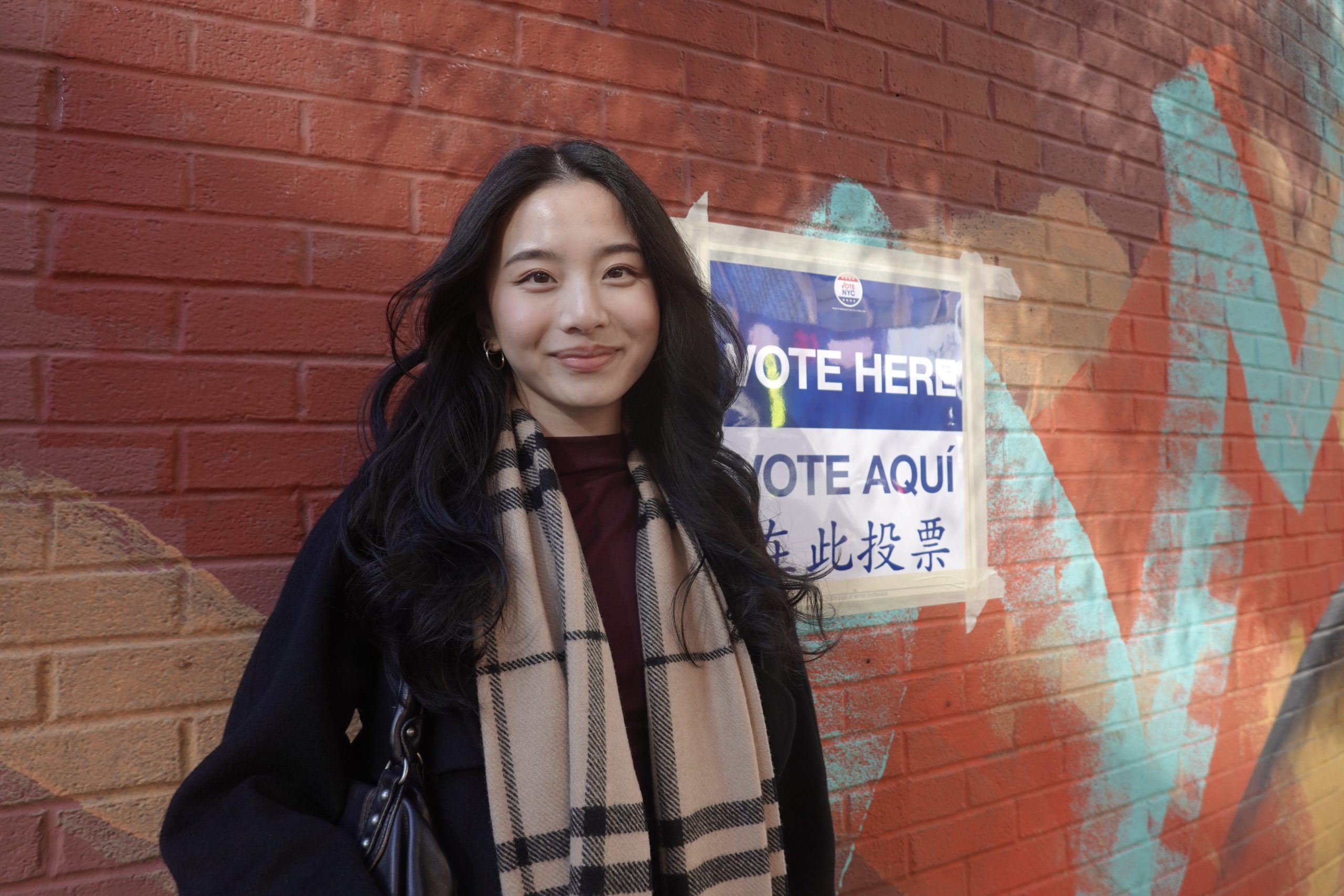
“I was going to vote regardless of the current political atmosphere,” Wan said. “I definitely think this mayoral election is very integral to politics today, because New York City is the biggest financial stake in politics right now.”
A political awakening
Walking out of the polling site after voting for Mamdani, L. said he felt hopeful. “A lot is at stake, and the results set a precedent for the working-class struggle at large,” he said. “All that matters is that we, as a community, continue to advocate for those who call this city home.”
Having been long-time renters in the city, L. said his family depends on the social safety net after his father was forced into early retirement after enduring a work injury.
When CAAAV Voice members initially approached him to talk about rent freezes, the topic immediately struck a chord — echoing the anxiety his family had experienced for a long time about making rent payments and their frustration over repair requests that often went ignored by the landlord.
A month after that first conversation, L. joined CAAAV Voice and is now a youth leader. Mamdani’s campaign, he said, further inspired him to take action.
“I’m personally very concerned about the kind of ethos that’s being developed where people are feeding off this environment of aggression, violence, and this inclination to scapegoat and slap a target on communities that aren’t actually why your living conditions are so rough,” L. said. “It very much is a larger conversation about the gap between the wealthy and the working class.”
你知道吗?非公民办理驾照时的这个错误可能会导致选民欺诈
Also Read: Zohran Mamdani to Street Vendors: I’m Listening
On Nov. 2, two days before the general election and the final day of early voting, L. joined hundreds of volunteers from CAAAV Voice and other grassroots groups, including DRUM Beats and New York Communities for Change, to rally in support of Mamdani and canvass households across several neighborhoods.
“These people in CAAAV Voice are so inviting and open in terms of dialogue and genuine conversation, and wanting to know about people’s different circumstances. That really stood out to me,” L. recalled. “And a little initial seed that was planted that motivated me to dive a little deeper.”