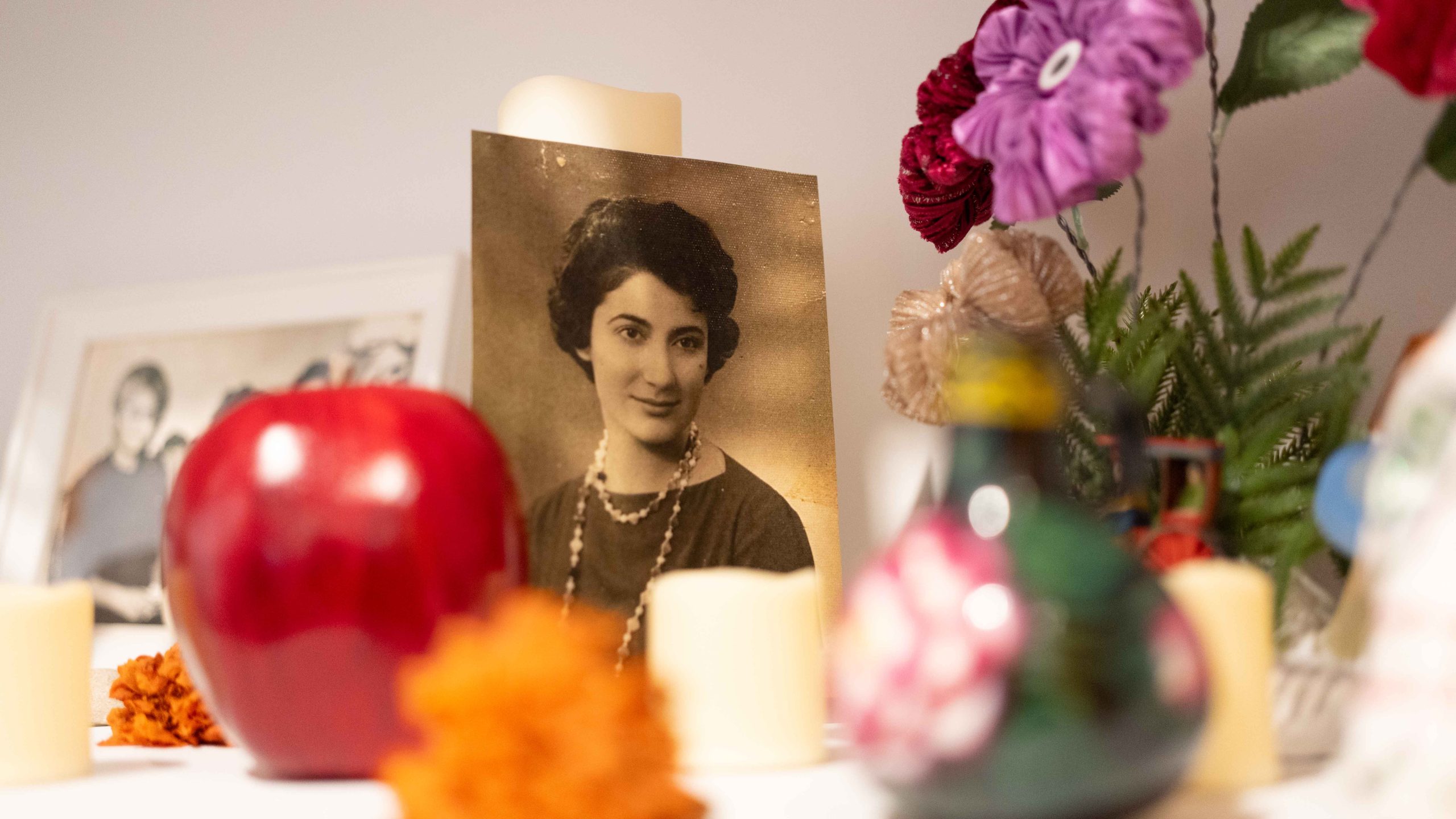


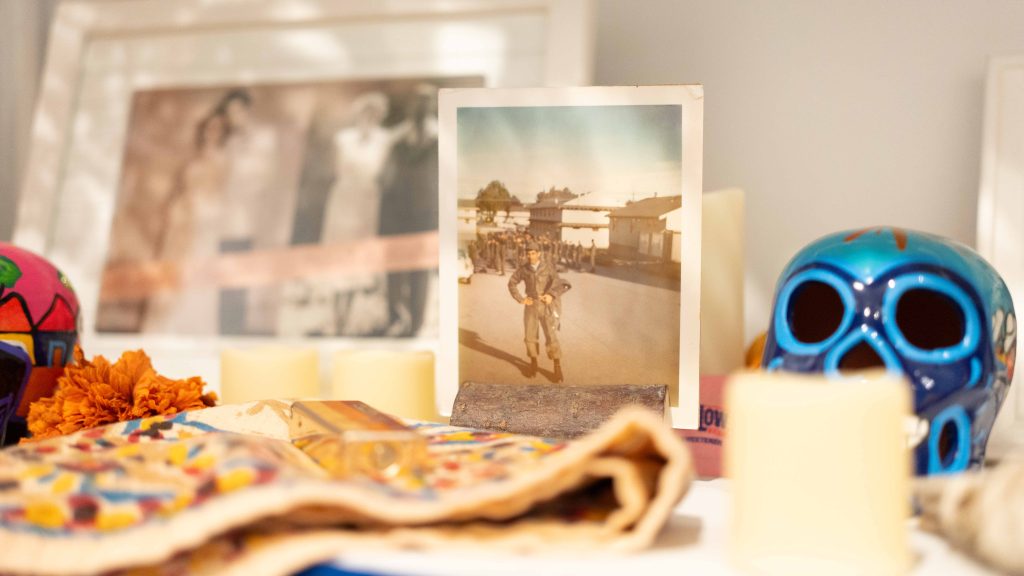
At the MexFest art exhibition in Queens, burnt-orange paper flowers frame a five-tiered altar. Colorful skulls with intricate designs and of various sizes, called calaveritas, sit among candles, pan de muerto and perforated sheets of colored tissue paper known as papel picado. Each element has been placed with intention.
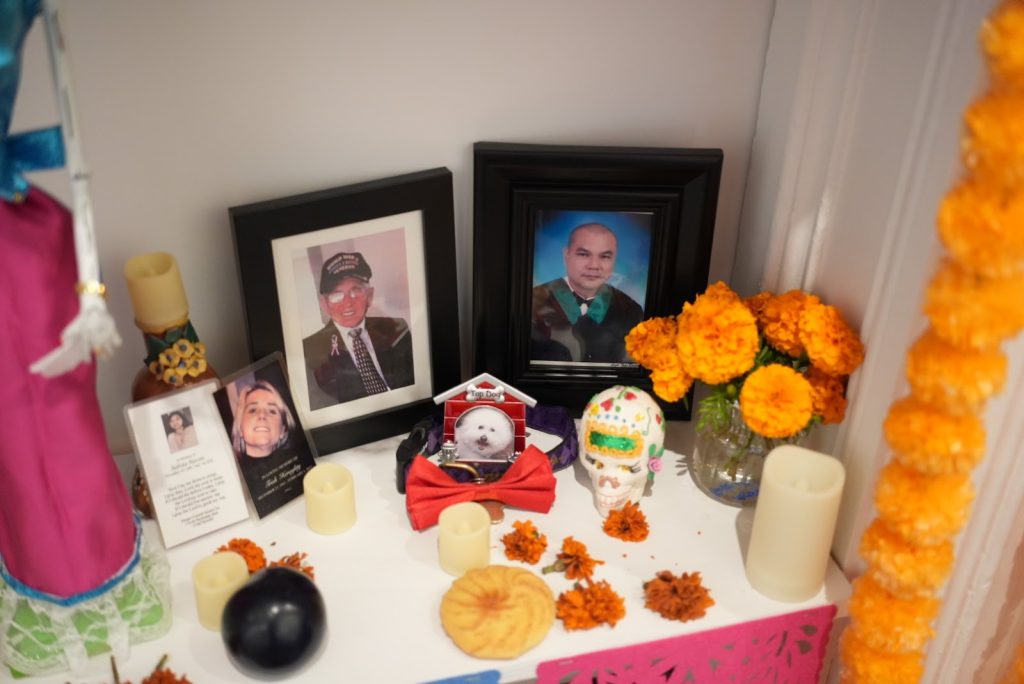
Behind the vivid decorations stand several framed photos: a man holding a shovel and smiling at the camera; a couple on their wedding day; a grandmother cradling her grandchild. The citrusy notes of marigold flowers fill the space.
This display is representative of Día de los Muertos, a Mexican tradition that honors loved ones who have passed. The holiday is celebrated in Mexico and other parts of Latin America at the start of November. But for Xtian Ávila, one of the curators of the exhibition that’s being held at Flushing Town Hall, the altar this year has added significance: “A lot of people are separated from their families right now. How do we celebrate them when they are thousands of miles away?” Ávila said. The families he’s referring to are the families who have been separated amid the rise in deportations under the Trump administration.

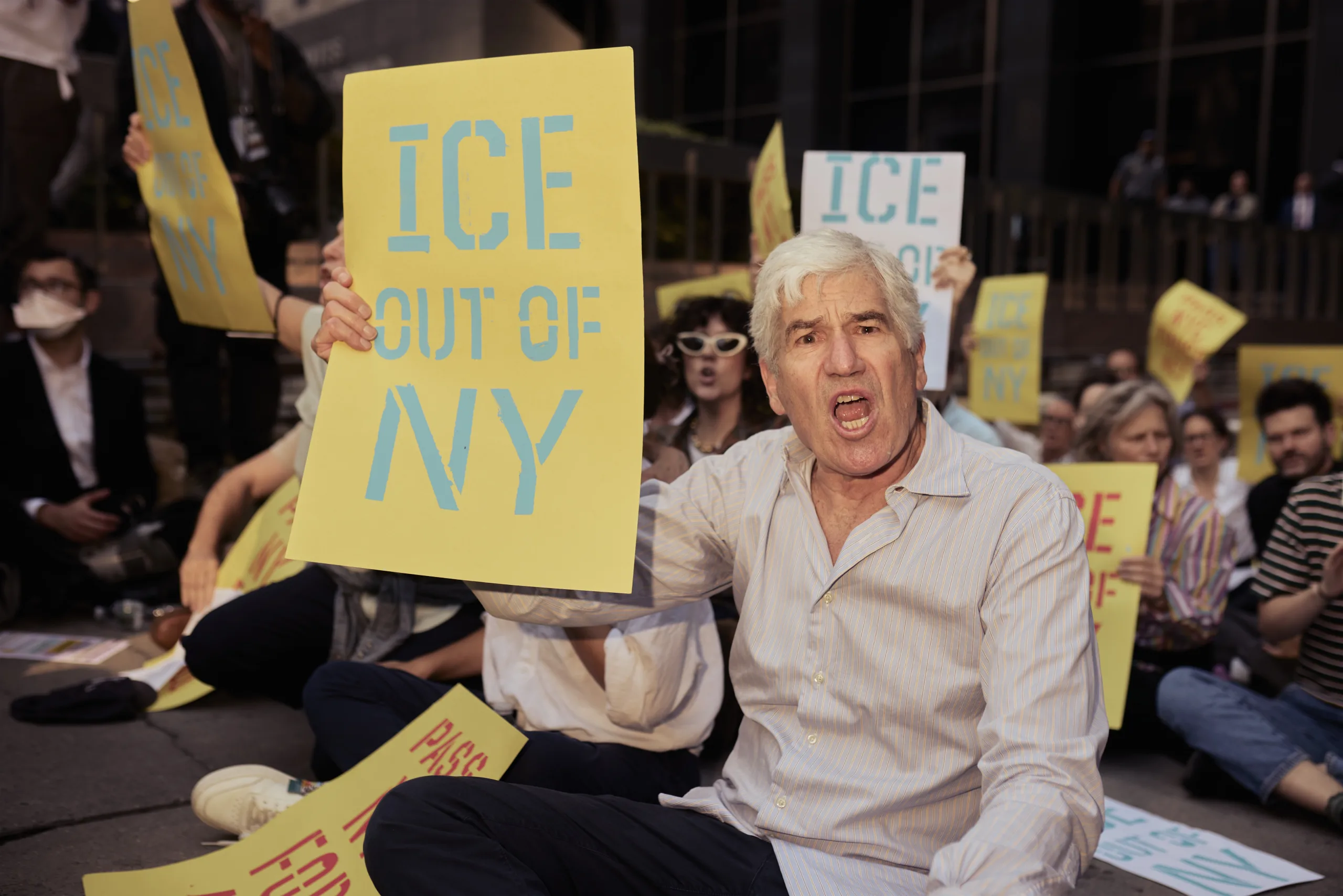
On Nov. 1, immigrants will pay homage to their loved ones in Día de los Muertos celebrations across the city and nationwide. Amid intensified immigration crackdowns, which have increased detentions inside the country, organizers say the celebration will also honor the 20 immigrants who have died this year while in custody of the U.S. Immigration and Customs Enforcement (ICE) as well as the community members who have been separated through deportation.
On this day, families believe the spirits of their loved ones return to visit. To honor them, families place “ofrendas,” offerings such as photos, food, and mementos on altars and graves to keep their memories alive.
Ávila, who was born in Mexico and lived in California most of his life, grew up taking part in Día de los Muertos celebrations, he said. He wanted to bring that tradition to Queens when he began hosting the MexFest Exhibition for the first time last year. The exhibition is an opportunity to showcase Mexican artists in New York who have made the city their home, he said. He added that this year he wanted to welcome more people to participate in the celebration.
“Our community is very close to Corona, Elmhurst and Jackson Heights,” he said, referring to the neighborhoods where more than half of the population identify as Hispanic. “You don’t have to be Mexican to come. It’s just about appreciating the culture.”
Community members have visited Flushing Town Hall since Oct. 16, bringing with them photos, flowers, and non-perishable food to leave at the altar, Ávila said. Attendees will also have the opportunity to share their immigrant experiences and testimonies on the night of the celebration.
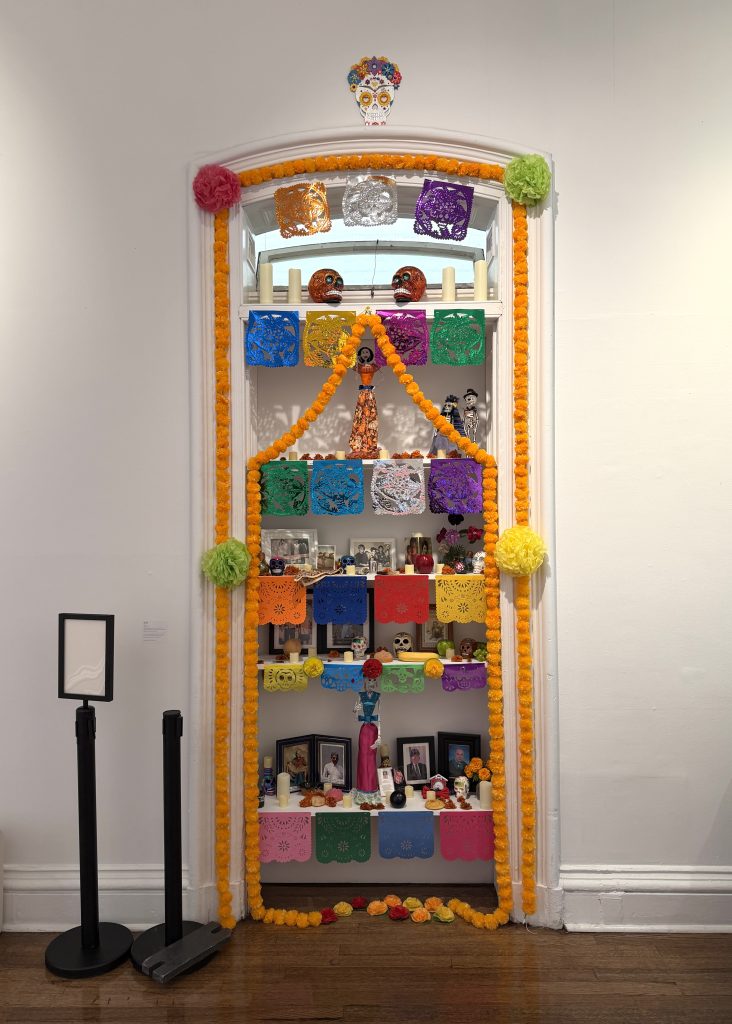
Aurelia Fernández, 76, the artist who set up the community altar, also designed a mask that people can wear as they share those experiences. “When they interview them [attendees], if she is a woman, she will wear the Catrina mask. And if it’s a man, then he will wear the Catrin,” Fernández said in Spanish. The mask serves as a symbol of memento mori, unity and remembrance in the Día de los Muertos celebrations, she explained, but it also serves as a way to keep people’s identities secret during the event.
Across the city other celebrations have also incorporated the theme of immigration enforcement. On Saturday noon, in Foley Square, Solidarity Organizing Initiative, Make The Road New York, and Las Doñas will hold a vigil on Dia de los Muertos to remember those who have passed away in custody of immigration agencies.
“I’ve seen this [type of ICE enforcement], and I’m telling you this because right now it’s been a very hard blow,” Fernández said. Since arriving to the U.S. in 1984, she has lived through the deportation efforts of multiple administrations. “Those who have spoken to me are really a little bit afraid, worried about being deported and leaving their family here.”
Although cancellations of Día de los Muertos have taken place around the country, Fernández said she is very happy to see other communities continue with the celebrations as a form of resilience. She remembers forty years ago when she had to explain Día de los Muertos to every schoolteacher she met at cultural community events where she showcased her decorative art. At the time, she said most people were familiar with Halloween decor and lore but not necessarily Día de los Muertos. “It was not a culture that was known here in New York. So I started to present those decorations, even though they told me to do other types of presentations.”
Also read: Día De Los Muertos in NYC: Family-Friendly and Free Celebrations This Weekend
你知道吗?非公民办理驾照时的这个错误可能会导致选民欺诈
Throughout the years, she became a household name and was often called by City Council members and other political figures, including Mayor Michael Bloomberg, to set up altars during the celebration season.
“I never wanted to lose what I had learned,” Fernández said, adding that she began helping her grandparents in Puebla when she was seven years old. “I wanted to pass it down to my children. And thankfully, all of them welcomed it really well.”
Aside from the community altar, MexFest will also host a writing workshop, an art workshop to make papel picado, a live mariachi performance, and a collection of testimonials from attendees. The event is open to the public and free. The exhibition is open until Nov. 30.