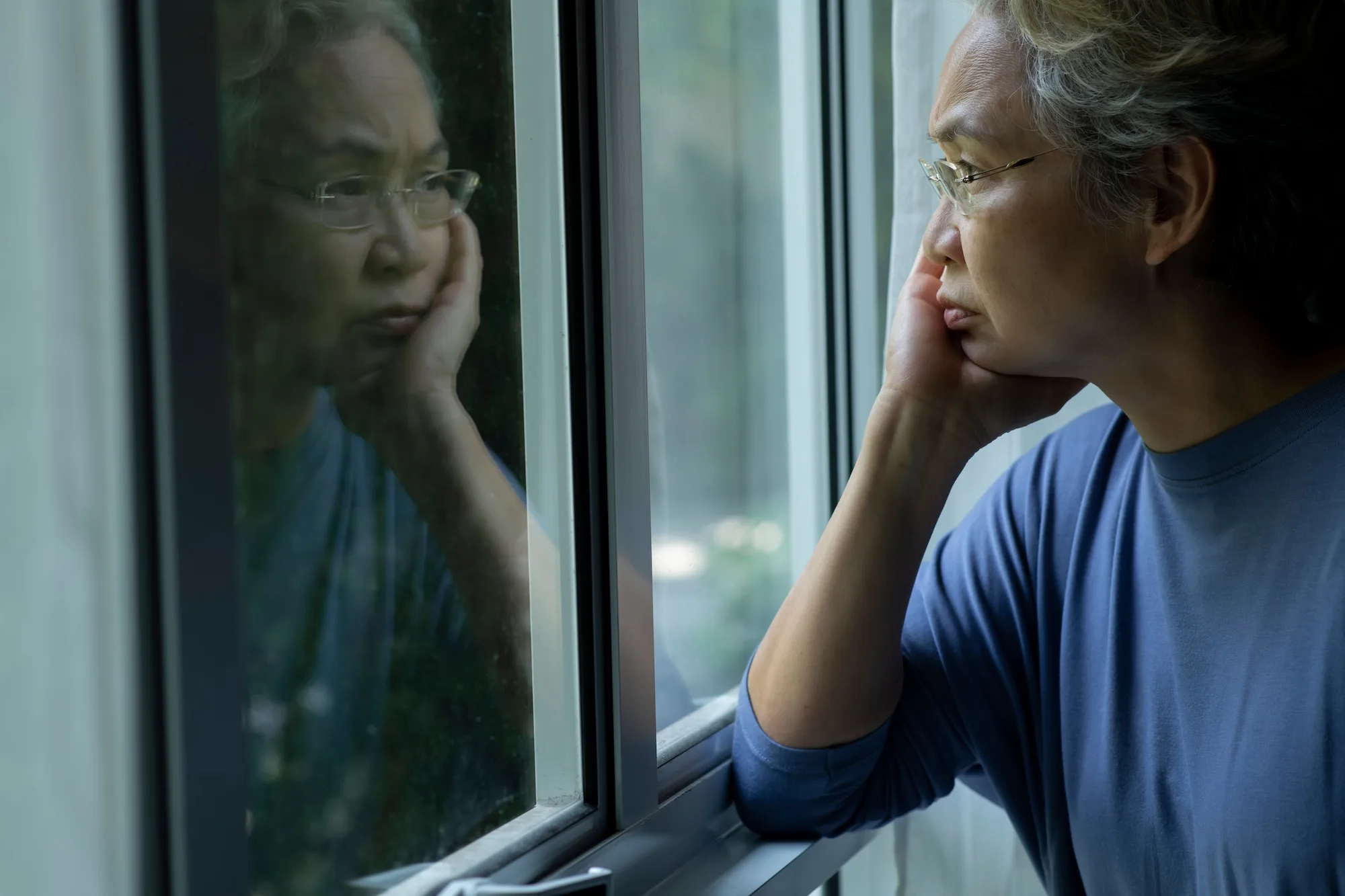


F. Wong, a 75-year-old Chinese resident of Brooklyn, sometimes decides against visiting a doctor for minor health issues that she believes she “can handle by herself.” “It’s too expensive to see a doctor nowadays,” said Wong in Cantonese. “I try to cut down on doctor visits to save money.”
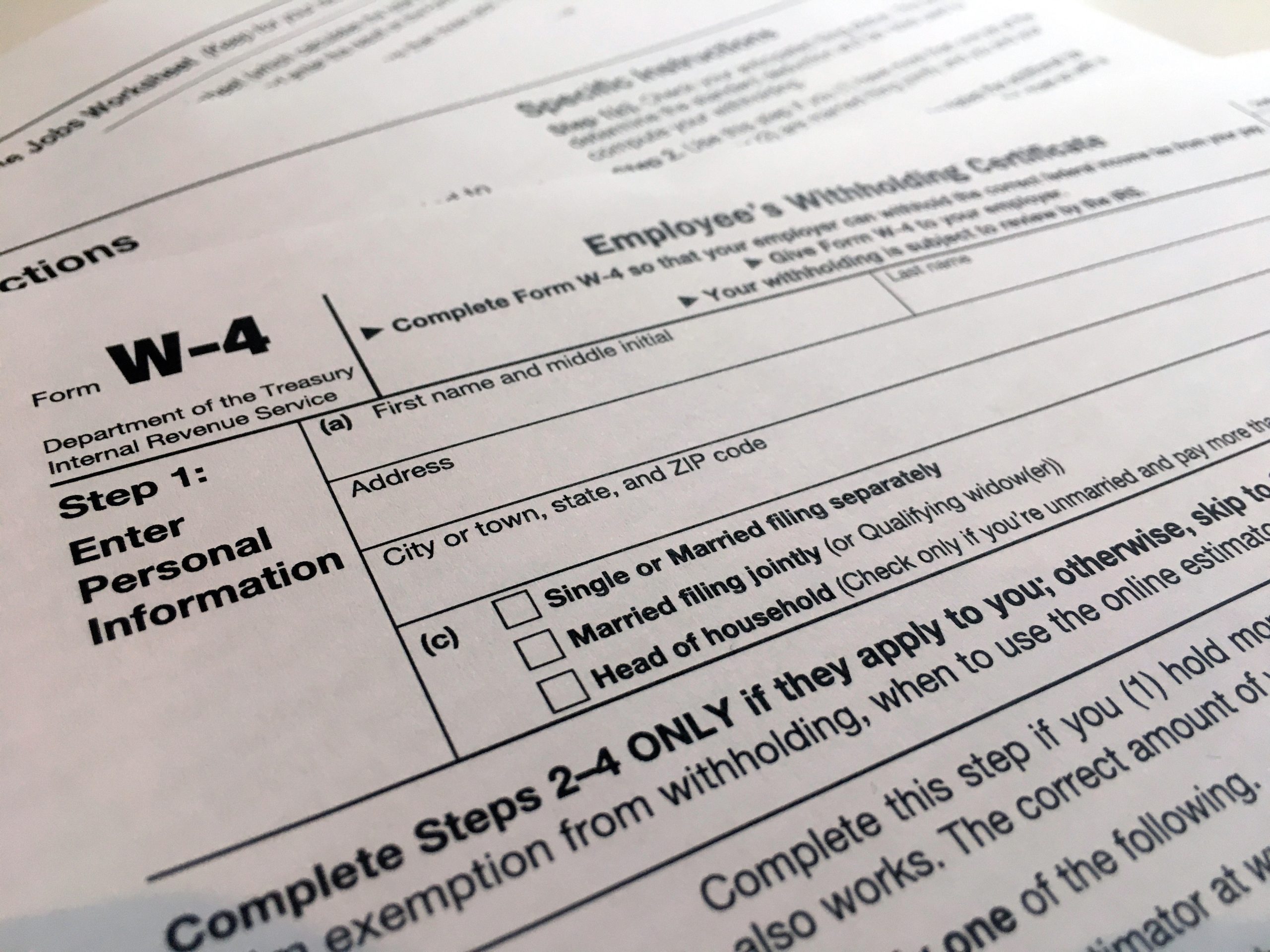
Recent news that the Supplemental Nutrition Assistance Program (SNAP) could be halted during the ongoing federal shutdown have added to her worries. As a SNAP recipient, Wong said she now feels more vulnerable than ever. “Many of the programs that help us are at risk,” she said, “It is very challenging for our lives.”
Like Wong, many Chinese seniors in Southern Brooklyn say they feel increasingly anxious about their future, especially as federal funding for food and healthcare programs faces uncertainty. With New York City’s mayoral election just days away, Wong hopes the next mayor will address the everyday concerns of seniors like her.

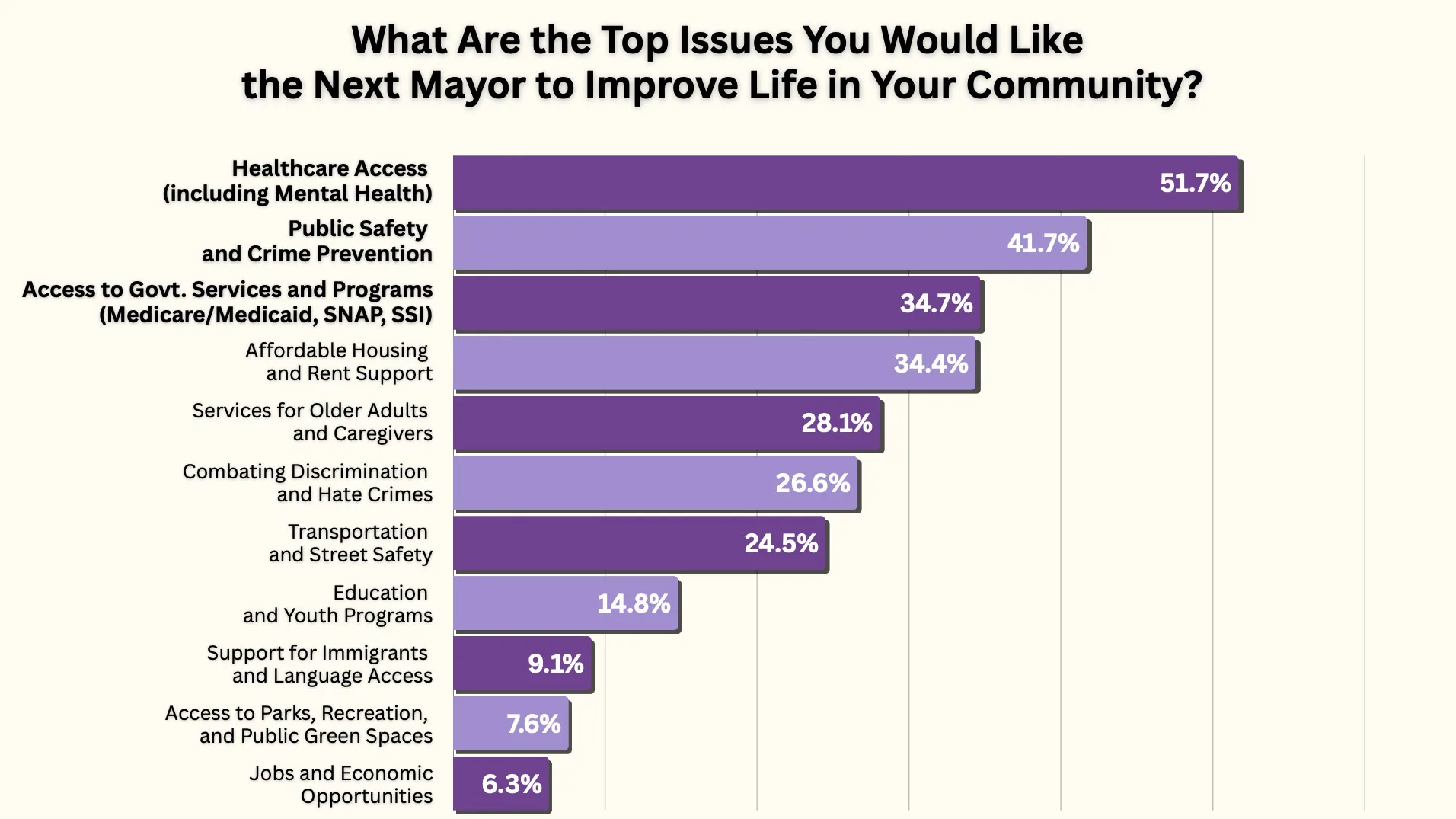
And it turns out, Wong is not alone in her fears. A community priorities survey released on Oct.24 by Homecrest Community Services (HCS), a nonprofit providing multi-social services for older adults, youth, and families, revealed that the top three issues Southern Brooklyn voters want their next mayor to address are access to healthcare, public safety, and access to government services and programs.
The survey gathered more than 300 anonymous responses across Homecrest’s four Brooklyn centers, where about 86% of respondents were over 65. More than half, 51.7%, of the respondents said access to healthcare was their top concern, followed by neighborhood safety and access to government programs.
Gangliang Chen, a 70-year-old Chinese resident in Southern Brooklyn, said the high cost of medical visits and medication has become a major burden for seniors who don’t qualify for Medicaid. “The copay to see a doctor and purchasing medicine costs a lot,” he said in Mandarin. “And if SNAP benefits stop in November, it will only make things worse. The seniors get hit the hardest.” Nearly 3 million New Yorkers could lose their SNAP benefits due to the federal shutdown, including about 1.8 million in New York City. Roughly 30% of SNAP recipients in the city are seniors aged 60 or older.
According to Hao Dian Li, HCS’s director of communications, the survey aims to capture the perspectives of underserved residents in Southern Brooklyn. Li noted that it was surprising to see a shift in community priorities ahead of this General Election – access to healthcare (including mental health) has emerged as the most pressing issue, whereas historically, the community has ranked public safety and safer streets as its top concern.
“There is a concern and confusion among members about potential government budget cuts, which they fear will reduce the quality or availability of services,” Li said. She added that many families are also struggling with rising private insurance premiums, which have become unaffordable for those just above the income cutoff for public benefits.
“The fact that these healthcare and affordability concerns surpassed their long-held priority of public safety is a major indicator of the immediate financial and systemic stress our community is currently experiencing,” Li said.
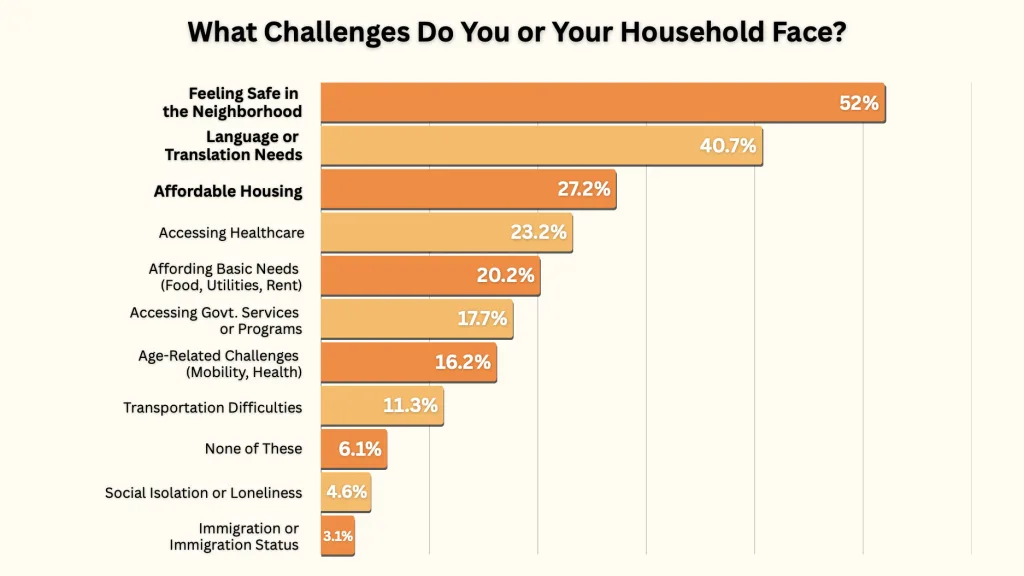
Still, neighborhood safety remains a major issue. When asked about specific challenges facing their households, more than half of respondents, 52%, identified it as a top choice. Language and translation needs followed closely at 40.7%.
Chen said many seniors worry about street and subway safety as well. He recalled that his sister-in-law was randomly attacked last summer at a subway station in Southern Brooklyn. “A guy just punched her face out of blue, her eye was swollen after that,” Chen said.
Concerns about public safety also intersect with frustration over homelessness. In recent years, proposals to build homeless shelters in Southern Brooklyn neighborhoods have faced strong opposition from residents and have become a flashpoint in local elections — often cited as a key factor behind the area’s political shift to the right.
“I hope the government will not build homeless shelters in our community, as the homeless are released onto the streets during the day,” Wong said. “We worry about our safety walking outside.”
Also Read: Ahead of NYC Mayoral Election, Here’s How the Candidates Stack Up on Key Issues
Residents also cited rising housing costs as a major issue. Wong, who currently lives with her son, said she hopes the city will invest in more affordable and senior housing. “The demand is huge, a lot of seniors need senior housing,” she said.
你知道吗?非公民办理驾照时的这个错误可能会导致选民欺诈
“Our community knows exactly what matters most: affordable healthcare, safer neighborhoods, and programs that truly reach those in need,” said Wai Yee Chan, president & CEO of HCS. “These are not just policy ideas; they are everyday needs that determine whether families can live with dignity and hope in our city.”
“What we see in these results are the same concerns our case managers hear from community members every day,” said Alice Mo, Policy and Advocacy Manager at Homecrest Community Services. “Our hope is that leaders take these findings seriously and continue real conversations with the community to create policies that reflect people’s everyday realities.”
“No matter who becomes the next mayor of New York City, I hope they will listen to the voices of voters in Southern Brooklyn,” said Chen, who plans to vote on November 4. “By voting, we can send a message to politicians that we have power.”