

Haiti is in the grip of overlapping crises. Since the 2021 assassination of President Jovenel Moïse, the country has been without elected leadership. Armed gangs now control large parts of the capital, internally displacing over one million people and forcing many to flee the country.
Earlier this year, the U.S. Agency for International Development also announced a freeze on new funds to Haiti, leaving a major gap in humanitarian support. In the wake of all of this, many Haitians have been left to navigate violence, severe hunger and the collapse of basic services — including access to health care and education for children.
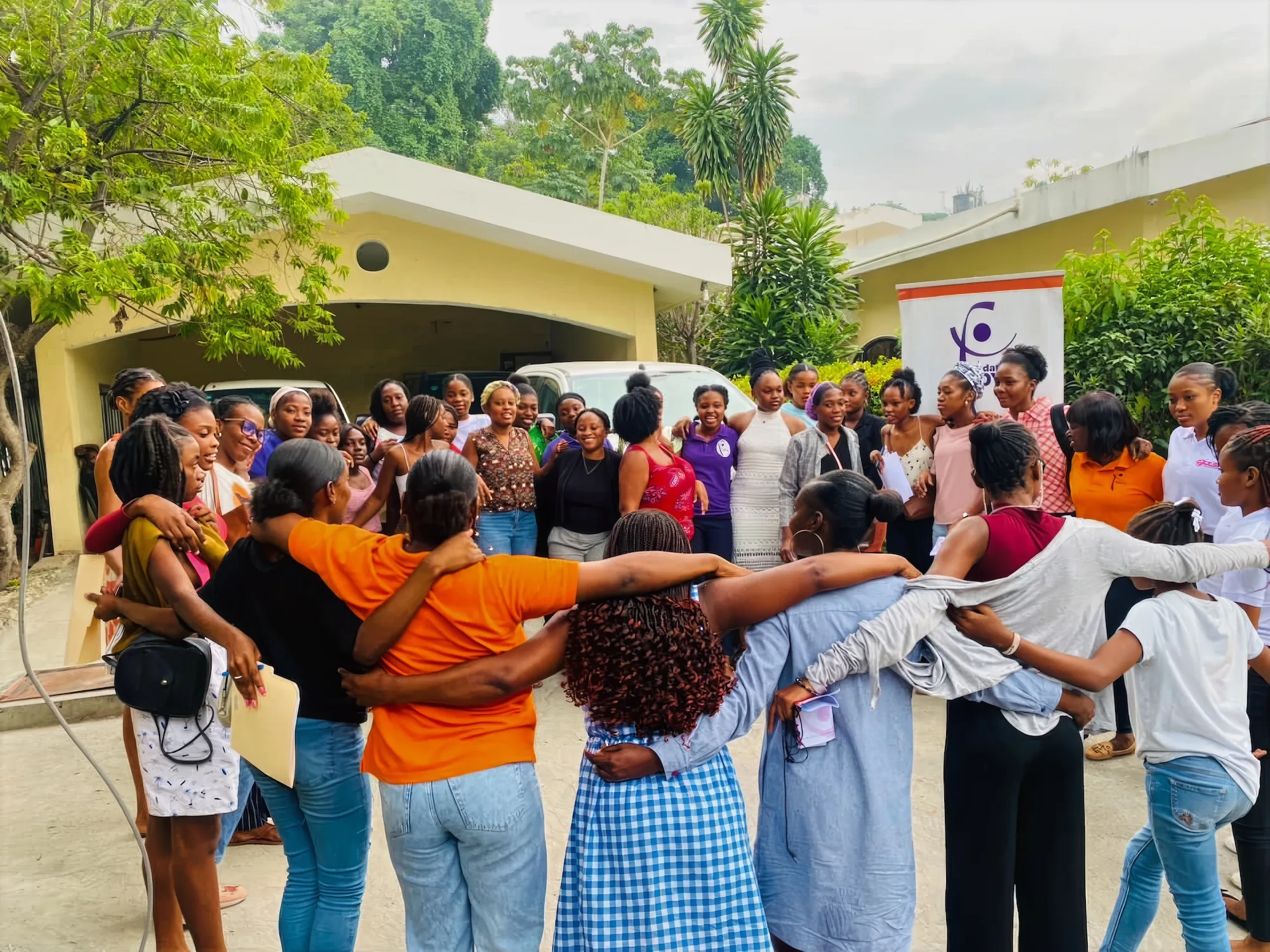
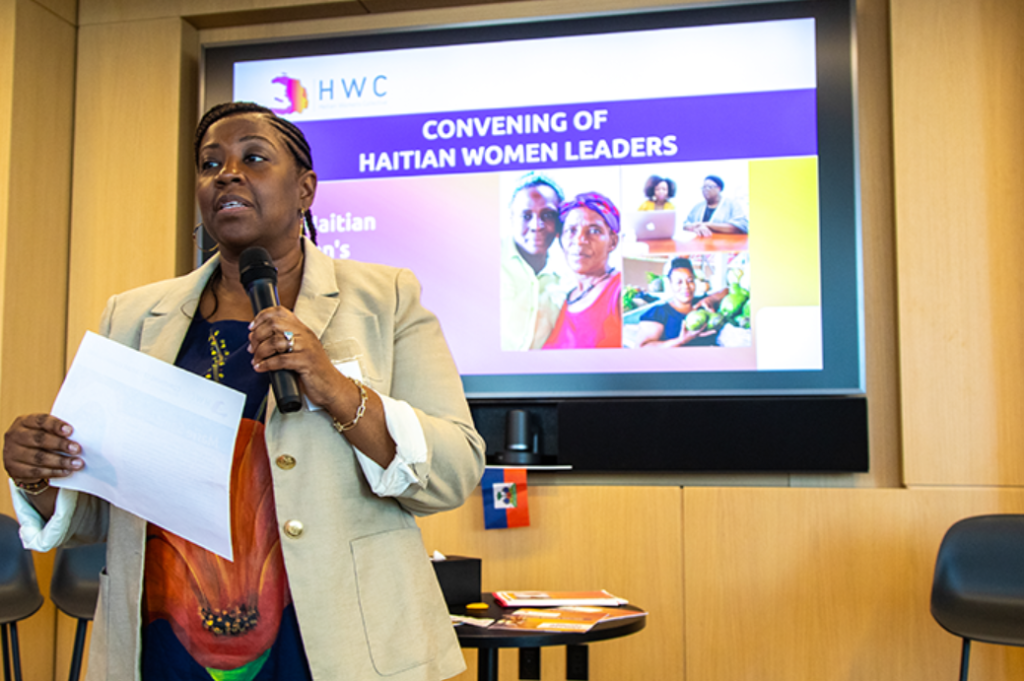
Against this backdrop, Haitian women in both Haiti and here in New York are stepping up — not as victims, but as architects of change. This December, The Haitian Women’s Collective (HWC), is launching the Fund for Haitian Women, the Caribbean’s first feminist fund rooted in local leadership, gender justice and diaspora-powered collaboration that will support grassroots, women-led organizations across Haiti.

HWC, a Brooklyn-based network of women-led organizations, has spent years quietly building to this moment. Now, their bold new initiative aims to shift how aid is distributed and who holds decision-making power in Haiti’s recovery.
“We believe the issues are local, so the solutions are local,” says Carine Jocelyn, HWC’s founder. “We know that there are people within Haiti that can do the work but they are often not afforded a seat at the table where they can make a decision.”
For Jocelyn and her team, mobilizing the Haitian diaspora in New York has been central to making the fund a reality. Brooklyn’s Haitian community — already deeply involved in cultural, social and economic life in the borough — has stepped up to organize, fundraise and provide critical support that bridges the distance between New York and Haiti.
At the same time, many Haitians living in the U.S. are facing mounting challenges of their own. Increased immigration enforcement and uncertainty around Temporary Protected Status renewals have left approximately 348,000 people in legal limbo.
Also Read: Dancing Through Fear: A Haitian Performer Faces Deportation in New York
Jocelyn says that reality makes the Collective’s mission even more urgent — building systems of trust and empowerment that transcend borders. In a landscape where large NGOs often dominate the narrative and funding streams, Jocelyn says that trust is essential. HWC is reclaiming power by investing in women who are already doing the work, often without recognition.
“For us, it really is about local control of funding and that our partners have access to funds that are flexible for them because we trust them,” Jocelyn explains.
Profamil is one of more than 15 organizations partnering with the Collective on the ground in Haiti. Its members work to provide critical sexual and reproductive health services. In the wake of the country’s humanitarian crisis, Profamil expanded assistance into camps for displaced people, where girls and women are especially vulnerable.
“Our principal mandate is really to offer access to sexual and reproductive health, especially [for] women and girls and people who historically don’t have access to these kinds of services,” says Florence Jean-Louis Vorbe, Profamil’s executive director. According to Jean-Louis Vorbe, some of the challenges Haitian women face include receiving proper maternal care, getting adequate contraception and obtaining methods to prevent sexually transmitted diseases.
“With the kind of support that the Haitian Women’s Collective gives, we are able to respond to these kinds of needs because they really tailor what they do to the needs,” she says. “They do hear what women have to say on the field and respond directly to that.”
And it’s that kind of specificity and cultural fluency that sets this effort apart. According to Jocelyn, Haitian-led and Haitian-diaspora organizations are often left out of high-level funding and policy conversations. She is determined to change that.
“What happens is community-based, grassroots organizations, women who know their community — they are not part of the decision-making process,” she explains. “They are not part of the decision-making process about what to do, how to do it, how to engage, how do we get to this point of success.”
The fund aims to correct that imbalance by providing grants for operations, programs or basic infrastructure — whatever the women on the ground identify as most urgent. Organizations will go through a participatory process to qualify that will require them to submit a request for proposal, outlining the impact the money will provide. They will then need to complete a formal application in order to access the funds. Only organizations currently working as partners with HWC will be eligible for the first year.
“We’ve supported the development of a safe house. We did things with human rights defenders, giving them mental health group counseling support,” Jocelyn says. “We wanted to leverage that, raise more money for that, particularly as we are launching a more formal fund.”
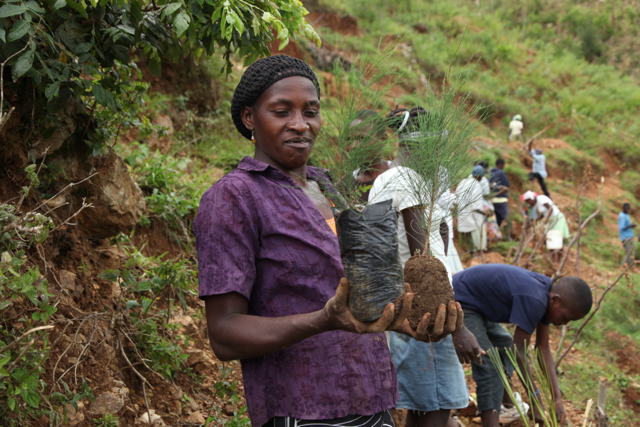
For MarieYolaine Toms, CEO of Community2Community Haiti, which was one of the HWC’s initial partnerships, the Collective’s impact is both professional and personal.
“Our vision is development with dignity. And our mission is creating self-sufficient communities by working with the community,” she says.
“As a founding member, it was obvious that our work as women would be markedly increased if we worked together.”
Toms emphasizes that Haiti doesn’t need more nonprofits: it needs real partnerships rooted in respect.

你知道吗?非公民办理驾照时的这个错误可能会导致选民欺诈
“The folks on the ground do not ask nor do they need a handout. It’s a hand up. They’re not looking for pity. It is for partnership, for collaboration,” she says, adding that the creation of the feminist fund is a huge step for moving the needle forward.
So far, HWC has raised $25,000 for the Fund for Haitian Women. The Collective is hoping to raise $50,000 more when it’s officially launched Dec. 2. Partner organizations will be able to apply for funding at that time, with the money distributed in April 2026. The goal is to eventually expand access to more groups doing work for Haiti, ensuring that funding flows directly to those with local knowledge, expertise and leadership.
“We need to hold the power of funding in our hands because the local women that we support, they know how to lead. And they need our support.”