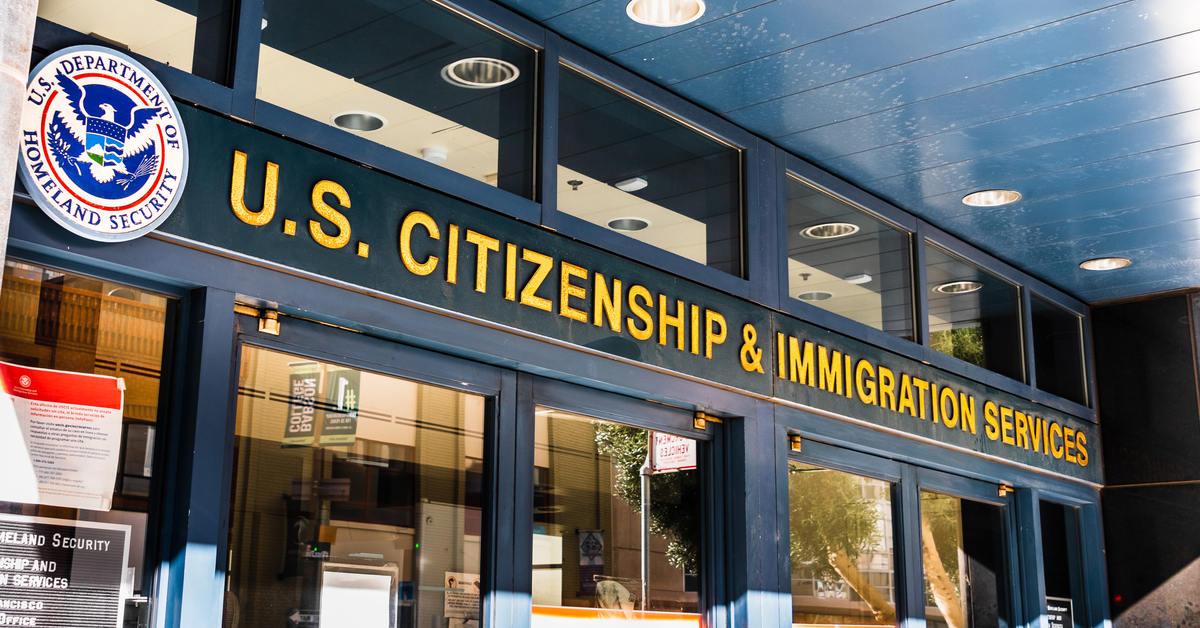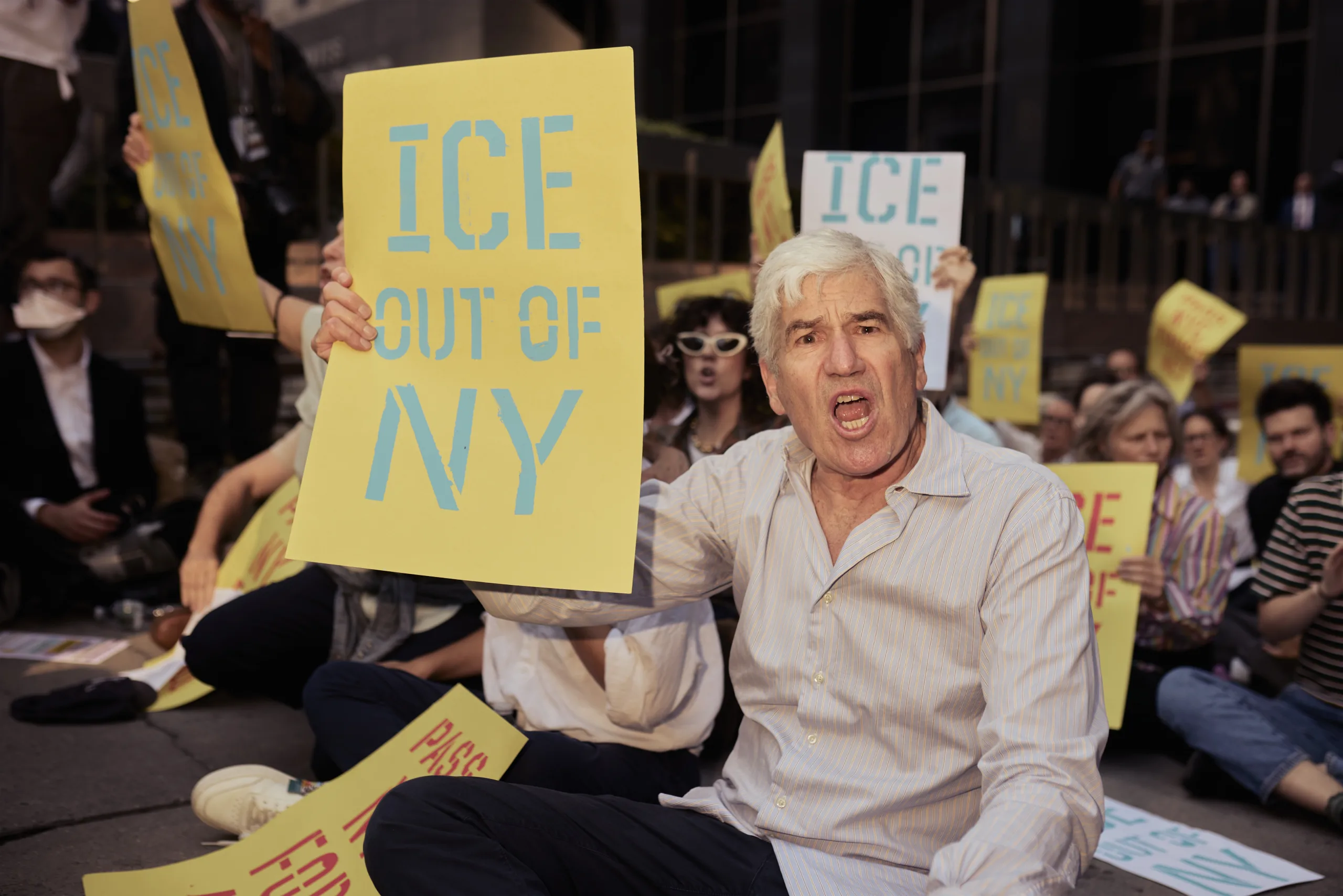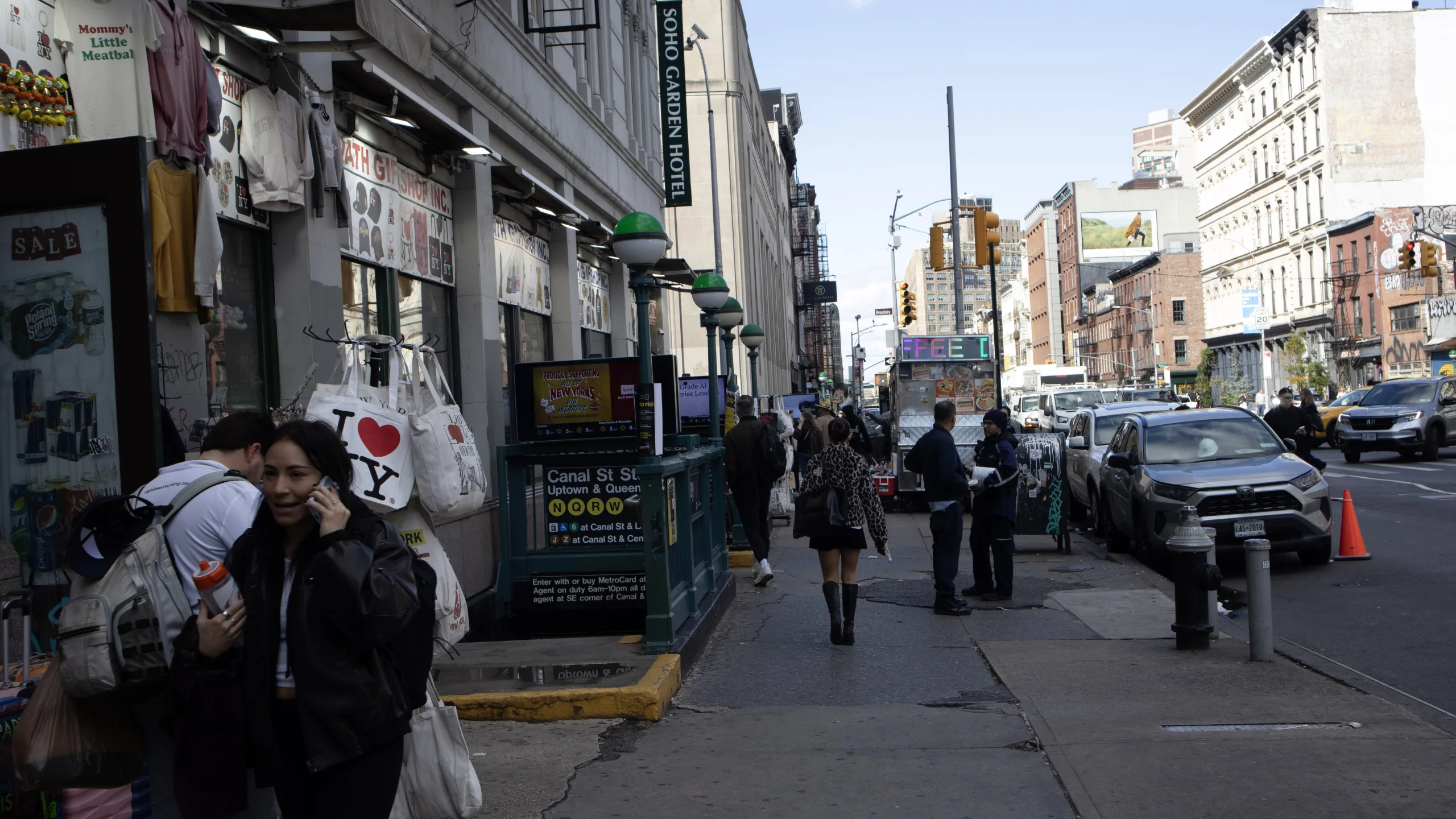


In the aftermath of Tuesday’s ICE raid on the outskirts of Chinatown, many local street vendors and small business owners said they were confused about its purpose and who the Department of Homeland Security (DHS) chose to target, saying that several of those who were questioned, and even arrested, have legal status or U.S. citizenship.
Some condemned the large-scale operation, which arrested over a dozen people and sparked ensuing protests. DHS claimed that many of those detained vendors had criminal records, but vendors disputed that account and the agency’s description of a “targeted, intelligence-driven enforcement operation” focused on “criminal activity related to selling counterfeit goods” on Canal Street.
Advocates have meanwhile pointed fingers at the city’s restrictive licensing laws, which force migrants to engage in criminalized forms of commerce, noting that African and Black immigrants in particular face additional targeting by law enforcement.
According to Congressman Dan Goldman, whose district encompasses lower Manhattan, four U.S. citizens were also illegally arrested by DHS and detained at Federal Plaza for almost 24 hours. ICE does have the authority to detain U.S. citizens, but only in limited circumstances. Street Vendor Project also confirmed that at least 5 of the 9 individuals detained by ICE were street vendors, several of whom had worked in NYC for over 20 years and had built their lives and families in the city.

At a press conference on Wednesday afternoon, Goldman, who was focused on the detention of citizens — rather than the noncitizens, who remain detained in New Jersey — suggested that the involvement of the NYPD would help prevent federal abuse. “We will continue to call on the NYPD to make sure that they are present for these raids,” he said. “Because it’s the NYPD’s job to protect New Yorkers.”
The Congressman also announced that his office would be starting a “Rapid Response Task Force” to coordinate a response to overreach by federal authorities.
“This is not immigration enforcement,” he said. “This is lawless terror to create a pretext for Donald Trump to send the military into New York City.”
One of the detained vendors, Aboubakar Diakit, had previously been arrested for counterfeiting, according to DHS. But at least three people who spoke with Documented said that he was an immigrant with legal status.
Diakit, originally from Mali, had been selling merchandise on Canal Street for about 25 years, according to fellow vendor Awa Ngam.
When asked whether she viewed the raid as a targeted operation, Ngam, who sells clothes at the corner of Canal Street and Lafayette Street, said it wasn’t true, pointing to how the agents hadn’t just cracked down on illegal vendors, but also those who had citizenship. She added, “We never sold fake bags. He [Diakite] sold phone cases.”
She added that Diakite cooperated with agents when asked, and that he showed his ID and vending license as required before ICE officers photographed him and took him away on Tuesday.
“He didn’t expect he would be detained,” she said. Ngam said she believed Diakite had legal status, recalling that he recently traveled to Africa and returned to the U.S. without any issue. She was ultimately “very disappointed” by what happened “Whatever problem he had, it could have been me,” she said, sharing that she herself was a refugee from Mauritania who became a U.S. citizen in 2010.
Ngam recalled that during the raid, ICE agents approached every vendor on the block and asked for identification. After she showed her New York State driver’s license, agents asked which country she was from and requested to see her passport. “I laughed,” she said. “I asked them, since when do people walk around with passports in America?” The agents then moved on.
Still, watching Diakite being taken away left her heartbroken.
“He’s a nice guy who never caused trouble,” said Ngam, a mother of two. “We work hard to raise our families. We are like friends. Imagine what would happen to my kids if it were me? That’s why I’m disappointed. This could happen to anybody.”
Daily street vendor ‘hostility’
Many migrants report being forced into criminalized street vending to support themselves and their families, citing how difficult it can be to obtain legal vending licenses due to the city’s restricted system of licensing.
Advocates said vendors on Canal Street already face daily hostility from local law enforcement, so they have focused their efforts on educating vendors on their rights, including where they could pay tickets, and how to deal with local law enforcement.
But immigration raids are different, said Dr. Seydi Sarr, founder of the African Bureau of Immigration and Social Affairs, an organization that provides resources and information to African and Black immigrants in New York. The likely months-long detention that faces the arrested vendors, Sarr said, brings additional vulnerability.
“It’s very upsetting because these people have rent to pay, bills to pay, and so on and so forth,” she said. “So if they are not out in a very quick fashion, who’s gonna pay their apartment bills? Who is gonna feed the family that they are supporting wherever they come from? What’s gonna happen? Their life is going to be upended.”
Police often chase vendors away from Canal Street, forcing them to abandon their merchandise or subjecting them to expensive fines, she said. “It’s easy to look at the Black men and see that they are Black. It’s easy, also, to identify somebody who doesn’t speak a certain language. So what we have to tell them now is to know that they’re a target and to be careful.”
Adama Bah, the executive director of Afrikana, an organization which works closely with African migrants, said more people than usual had shown up Wednesday morning at their Harlem location seeking assistance.
“A lot of people are nervous, they’re scared. They’re unsure what’s gonna happen next,” she told Documented. “They need solutions, they need to know what they can do now. You kicked them out of the shelter system. This is the way that they were making money. Now they have no way to make money.”
Bah said she began receiving calls from vendors on Canal Street as soon as the raids started. “It was just, ‘Oh my God, there’s an ICE raid here,’” she said. “They said immigration was there, and they’re running. And I was like, ‘Okay, just get away from there.’”
Knowing that many vendors on Canal speak West African languages like Wolof and Pular, Bah’s organization scrambled to find support for the detainees. “We were like, okay, who speaks Mandinka? Who speaks Soninke? Call this person, call that person.”
New York Immigration Coalition (NYIC) President Murad Awawdeh told Documented that the targeting of street vendors by federal authorities was a continuation of the criminalization they have faced by the NYPD.
“The NYPD has been nonstop harassing street vendors for a long time. This mayoral administration has switched enforcement from the Department of Worker and Consumer Affairs to Sanitation to the NYPD, where people are given criminal violations for civil issues,” he said.
He added: “If this administration were so intent on helping New Yorkers, especially street vendors, they would have expanded the amount of licenses that are available. They need to protect all New Yorkers who make the city what it is.”
‘The target of ICE’
On the day of the raid, several Chinese fruit vendors along Canal Street in Chinatown said they had only heard about the raids on Tuesday and were unsure of their purpose or targets. They continued doing business as usual on Tuesday afternoon.
A., a Canal Street gift shop owner who asked to be identified only by the initial of his last name due to safety concerns, said that he saw “at least 30 to 40 ICE agents during the raid.” He said he saw Diakite being taken away by immigration agents after bystanders tried, and failed, to stop the arrest. “They [bystanders] got into a fight with the ICE officers,” A. said, adding that he believed Diakite had papers. “It was a little bit scary.”
In the six years he has run his business in Chinatown, he said he has never seen such a large-scale law enforcement action.
Another vendor, Michael C., a U.S. citizen who sells merchandise part-time on Canal Street, said the ICE raid instilled fear in the community and also showed a violation of basic human rights.
“Are we living in a third-world country? Are we gonna be scared to work on the street? Do we have to carry our passport to work on the street?” he asked. “Are the people globally come to visit New York City? How they feel about right now? They got scared too,” he said.
Li, a Chinese street vendor selling handbags on the east side of Center Street, who only wanted to reveal his last name, said he saw the operation earlier Tuesday afternoon and was worried. “ I wasn’t sure why they were arresting people,” he said in Mandarin.
Li noted that the raids took place “more on the west border of Chinatown,” rather than in the neighborhood’s main commercial area. “I was a little panicked when I saw a group of law enforcement officers arrive,” said Li. “But I stayed because they didn’t come this way.”
J.Q., a Chinese asylum seeker who works in Chinatown, said he only learned about the ICE raid in Chinatown after watching videos on WeChat on Tuesday evening. “I was not really worried that I would be the target of ICE,” said Q., who asked to be identified only by his initials due to his immigration status.
He explained that he keeps a low profile, commuting strictly between home and work, and has not committed any crimes since arriving in the U.S. “Under such intense circumstances, you can’t make any mistakes [as a migrant]. Otherwise, it could lead to deportation,” Q. said. “But those selling fake bags products without licenses on Canal Street just give ICE an excuse to detain them.”
Q. said that since Trump took office, many Chinese asylum seekers like him have lived in constant fear and anxiety. “Now we just don’t talk about it anymore,” he said. “I feel numb to this kind of news. What can I do? We just stay quiet and live like we’re underground.”
你知道吗?非公民办理驾照时的这个错误可能会导致选民欺诈
Y.Q., a Chinese green card holder, said he felt deep sympathy for those detained on Tuesday. “It’s very hard to make a living in New York City right now, especially with the high cost of living,” he said. “Many immigrants don’t speak fluent English, so selling goods on the street is one of the few ways they can support themselves. They didn’t commit serious crimes, and I don’t agree with carrying out law enforcement in such an extreme way.”
As an immigrant himself, Q. said he also disagrees with arguments among some legal immigrants that all undocumented immigrants should be deported. “That’s like when a ship is sinking, the people already on the lifeboat refuse to let anyone else on.”
Correction October 24, 2025: This article has been updated with the correct country of origins for Awa Ngam and Aboubakar Diakit. We apologize for the error.