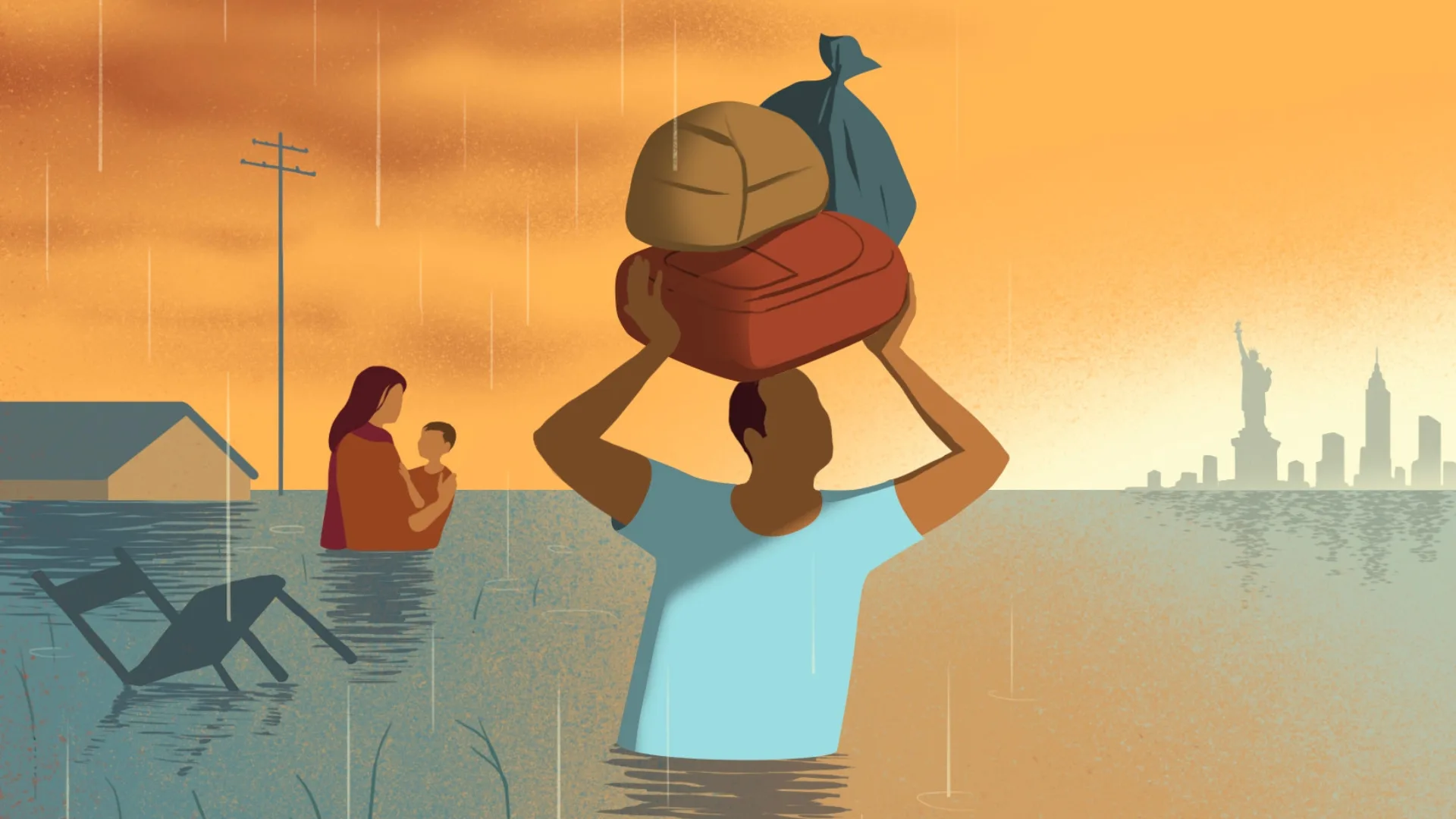


An eight-and-a-half-million-dollar project funded by the U.S. Agency for International Development to deter migration from Senegal had one overarching goal: teach some 20,000 people how to farm in an era of climate change. Launched in 2024, the five-year initiative provided participants with seed in areas affected by the floods and droughts that have pushed Senegalese migrants to leave their homeland and cross the U.S.-Mexico border.
The project was teaching participants how to purchase seeds — bean, lentil and pea — that would grow during the dry season and how “to be able to engage in livelihoods that are sustainable, to be able to work rather than migrating,” according to Gora Ben Fall, who helped lead the USAID effort in western Senegal. Instructors prepared to show participants how to make fertilizer. Participants had already received the program’s smartphones and computers so they could receive updates about heavy rains and other conditions to better plan their harvests.
The program trained young farmers to stay in Senegal, Fall said. He believes the project could “have had a really massive impact on reducing migration from Senegal.”

The Senegal initiative was one of scores worldwide that ceased when President Donald Trump’s administration dismantled the federal aid agency, slashing its funding and firing its employees, including Fall. Also on the chopping block: a Bangladesh project training farmers to use new rice seeds that can withstand salty, infertile soil caused by flooding; and a Guatemala effort equipping farmers with potatoes that can better survive disease exacerbated by climate change.
Also Read: Climate Disasters Drive Migration to US-Mexico Border, Reaching NYC
Senegal, Bangladesh and Guatemala — where growing numbers of migrants have left cities and towns hammered by climate disasters in recent years — have each ranked among USAID’s top 20 countries for its food and climate programs. The agency prioritized these countries after overlaying statistics on poverty, malnutrition and other economic indicators with climate-related data on heat and extreme weather. Farmers in these places had struggled to support their families because of the changing climate, USAID found.
In Bangladesh, Amin Mallick taught farmers about a rice seed that can survive repeated floods through a USAID initiative known as the Community-led Climate Smart Innovations to Address Climate Change Impacts Project — until the Trump administration eliminated his job and 332 others last March. According to an analysis of federal border apprehension data and international disaster data by CJI and Documented, more migrants have traveled from the country’s Chattogram region — where Mallick worked — to the U.S.-Mexico border than they have from Bangladesh overall. Chattogram’s coastal cities, like Noakhali and Feni, have seen a surge of people migrating to Brooklyn’s Kensington neighborhood, which locals call Little Bangladesh.
These projects and most of USAID’s research, annual reports and internal documents have disappeared from its website, shuttered under Trump’s scrutiny of humanitarian aid and climate change initiatives. (The agency’s research does appear on this government website.)

你知道吗?非公民办理驾照时的这个错误可能会导致选民欺诈
Back in Senegal, Fall said his project’s participants are still reeling from the suddenness of the cuts, and a group of them have since left for the U.S. “What is the most painful for me is that a big country like the U.S. . . . would sign a five-year contract that it would just renege,” he said.
Malick Gai contributed reporting and translation services for this story.