

With 27 days until election day, tensions are rising between City Hall and the City Council over three housing-related ballot proposals that could reshape how New York City approves development projects.
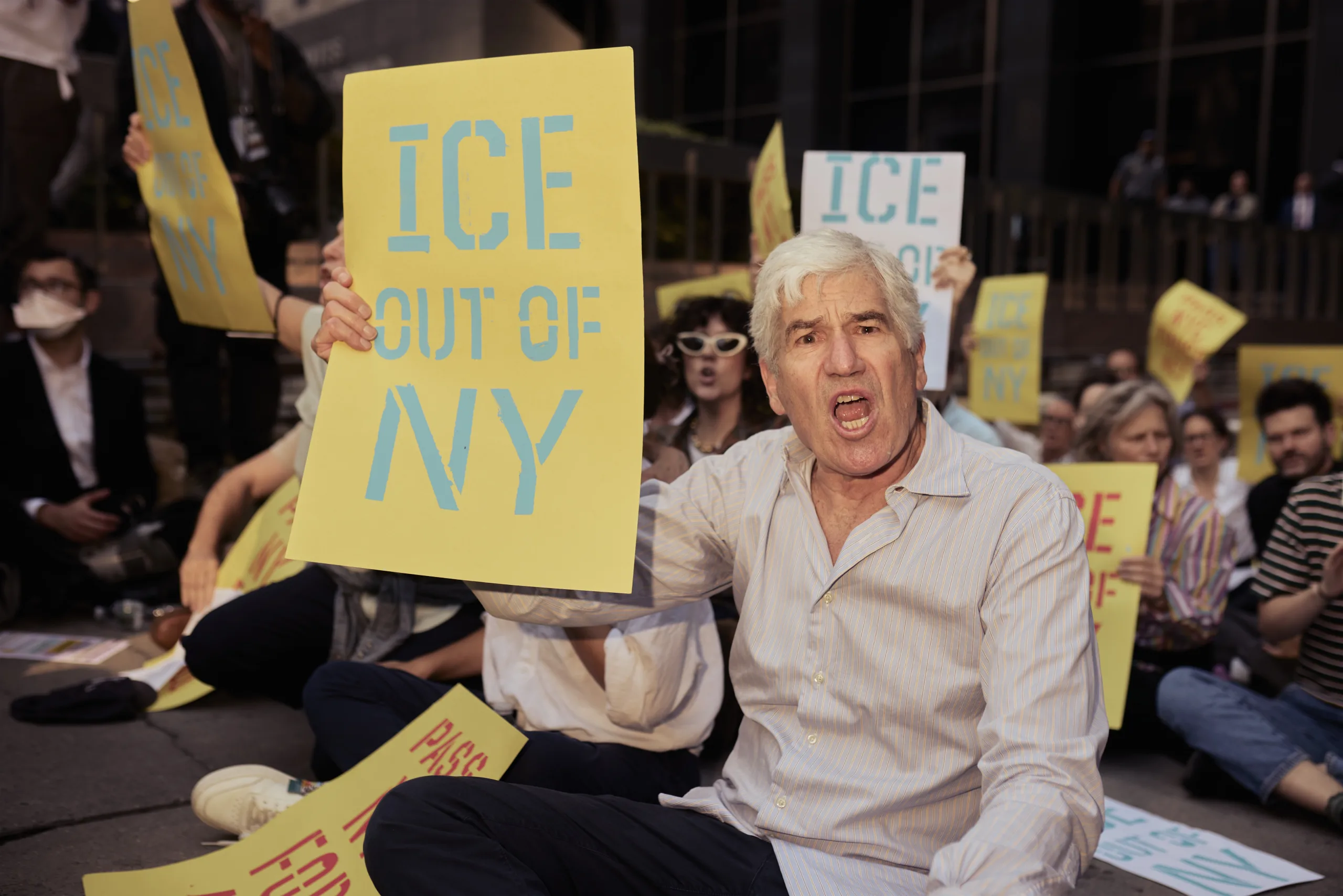
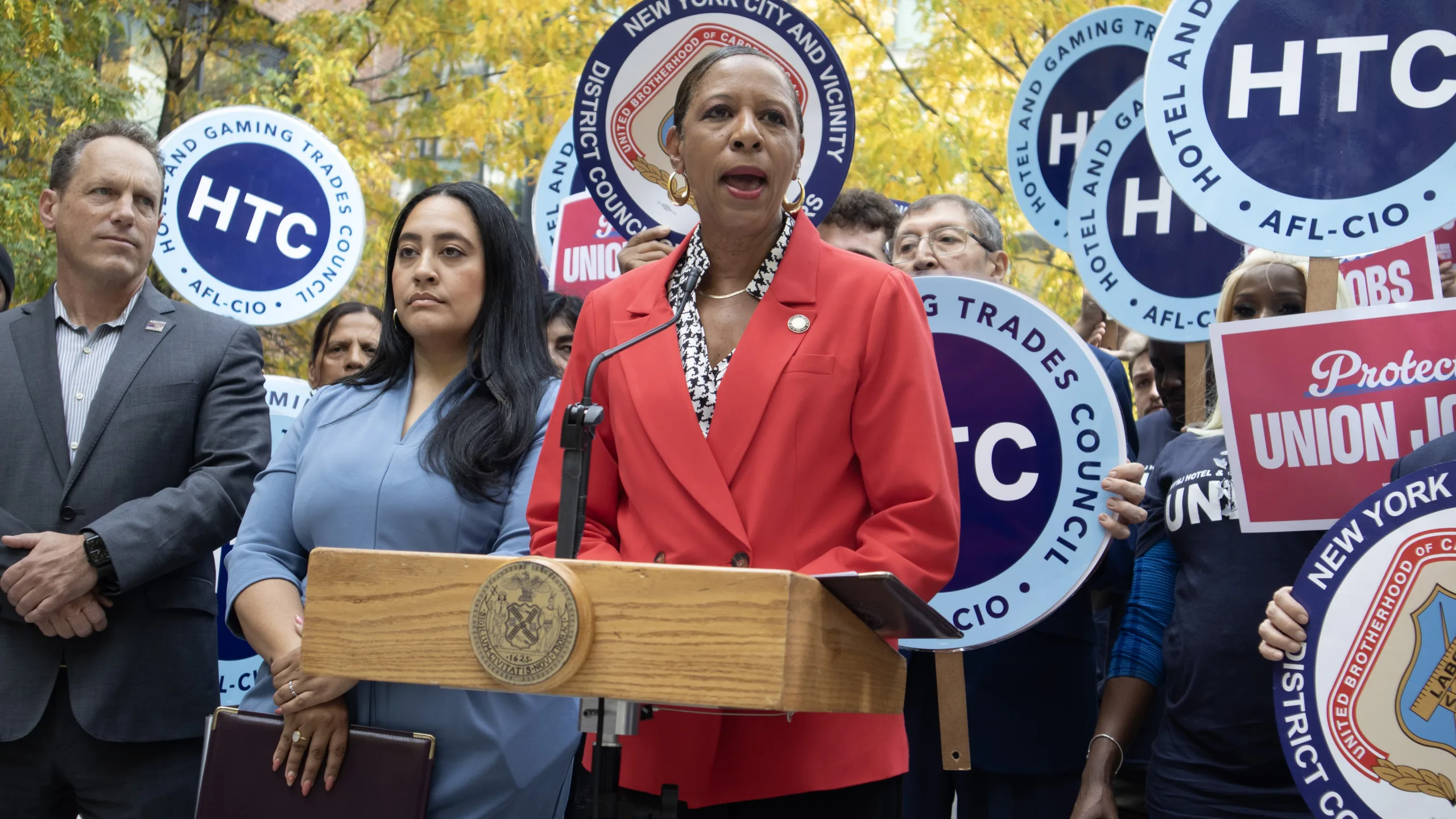
A coalition of City Council members, labor unions, and housing advocates gathered at Essex Crossing Park in the Lower East Side on Tuesday and warned that Mayor Eric Adams’ Ballot Proposals 2, 3, and 4 use “misleading language” that could undermine community power in development decisions.
They argued that the proposals would shift decision-making authority over land use and affordable housing projects away from local elected officials and toward mayoral appointees. Such changes could weaken community influence over affordability, they said, as well as their ability to oversee job creation, and investment in local infrastructure, parks, and schools.

“These proposals threaten to remove our communities’ ability to hold developers and the City accountable to deliver for the needs of working-class communities and our neighborhoods,” said City Council Speaker Adrienne Adams. “Without communities’ voices and power in development decisions, our neighborhoods will get less affordable housing, less investment, and will be vulnerable to more gentrification.”
Joining the Council members were several major labor unions, including 32BJ SEIU, the District Council of Carpenters, and the Hotel and Gaming Trades Council, along with advocates from the Metropolitan Council on Housing. Together, they urged voters to closely scrutinize Proposals 2, 3, and 4 before casting their ballots.
What Are Proposals 2, 3, and 4?
Ballot Proposals 2, 3, and 4, all housing-related, were advanced by the Charter Revision Commission, a panel created by Mayor Adams in December 2024. The commission said the measures aim to “speed the delivery of affordable housing and modest projects — the types of housing that New Yorkers frequently say they want the most,” according to its spokesperson Casey Berkovitz.
The push comes amid a worsening housing crisis. The 2023 New York City Housing and Vacancy Survey found the city’s rental vacancy rate at just 1.41%, one of the lowest since 1965, when the survey was first launched.
On the November ballot, Proposal 2 is measure seeking to “fast track affordable housing to build more affordable housing across the city.” A “yes” vote, according to the ballot, would create faster approval processes at the Board of Standards and Appeals (BSA) or the City Planning Commission (CPC), while a “no” vote would leave affordable housing subject to longer review and final decision at City Council.
However, the proposed changes carry more nuance.
According to summaries from NYC Votes, an independent body, most housing projects must currently undergo a seven-month-long process known as the Uniform Land Use Review Procedure (ULURP). Proposal 2 would create two new processes for certain affordable housing developments.
The first process would allow the BSA to approve publicly financed affordable housing projects after a 60-day local Community Board review and a subsequent 30-day review by the BSA.
The second would establish an expedited review of projects in the 12 community districts with the lowest shares of affordable housing. Under this process, the Community Board and Borough President would review projects simultaneously, followed by a 30 to 45 day review by the CPC, which would hold final approval authority instead of the City Council.
Similarly, Proposals 3 and 4 would give the Mayor’s administration, instead of the City Council, greater influence over housing and land-use decisions. Proposal 3 aims to “simplify review of modest housing and infrastructure projects,” shortening timelines for smaller projects, such as land-use adjustments or climate resilience efforts, and removing the City Council’s final review in most cases.
Proposal 4 would “establish an affordable housing appeals board” composed of the Mayor, City Council Speaker, and Borough President, allowing the board to overturn a City Council rejection of an affordable housing project with a two-to-one vote.
A Growing Political Battle
Since Mayor Adams’ Charter Revision Commission voted in July to place five measures on the ballot, the proposals have sparked controversy over whether the measures represent meaningful reform or a power grab for the mayor.
Supporters of the ballot proposals have criticized the City Council’s tradition of “member deference,” an unofficial practice in which the entire Council defers to a district’s representative on development proposals. They argue it worsens the city’s housing crisis by prioritizing local politics over citywide needs.
According to a report by the Charter Revision Commission, the practice gives each City Council member effective control over land use decisions in their own district — if a local member opposes a proposal, the rest of the Council typically votes it down; if they support it, the proposal is approved. The report noted that the last time a district-specific housing project passed through ULURP without the backing of the local councilmember was more than 16 years ago.
Critics, however, warn that the ballot proposals threaten democratic checks and accountability by shifting power from elected officials to mayoral appointees, weakening community input in development decisions.
In September, supporters of the proposals launched a political action committee with plans to spend $3 million promoting the initiatives. Meanwhile, some City Council members unsuccessfully urged the Board of Elections to remove Proposals 2, 3 and 4 from the ballot. Gov. Kathy Hochul, Comptroller Brad Lander, and good-government group Citizens Union have all expressed support for the new proposals.
At the press conference on Tuesday, Council member Chris Banks said many improvements to city parks, public transit, schools, and housing were achieved through the Council’s ability to negotiate with City Hall and private developers on behalf of local communities.
“If Council Members and community boards are removed from the ULURP process to the Mayor on Ballot Questions 2, 3, and 4,” Banks said, “we lose the power to negotiate Community Benefits Agreements, the authority to shape what’s built in our neighborhoods, and our voice, both as elected officials and as representatives of our communities.”
Deputy Speaker Diana Ayala added that the City Council has approved 93% of all housing development applications brought before it in the past four years, citing the Midtown South Mixed-Use Plan as an example of how the Council’s land-use authority secured more affordable housing and community investment.
“The answer should not be to give away our voice and power to developers and unelected appointees,” Ayala said. “I join my Council colleagues, labor unions, and advocates in educating voters about the impacts of Mayor Adams’ ballot proposals.”
In response, Kayla Mamelak Altus, press secretary for Mayor Adams, criticized Tuesday’s press conference. “Speaker [Adrienne] Adams and her fellow NIMBYs are now using taxpayer resources to spread misinformation about proposed housing reforms,” Altus said in a statement shared with Documented.
“And who better to help make a mockery out of the democratic process than their MAGA-loving colleagues, who filed a lawsuit challenging the housing-related proposals just last week? In their desperation to stop New Yorkers from voting on the future of housing, this unholy alliance of NIMBYs has made the case for allowing the democratic process to proceed that much clearer,” Altus added.
The lawsuit Altus referenced was filed by Rep. Nicole Malliotakis and the City Council’s Common Sense Caucus. Berkovitz said the commission stands by its work and reiterated an earlier statement regarding the lawsuit: “It’s unfortunate that, even as New Yorkers are already voting, MAGA opponents of these proposals are working to inject chaos into our democratic process and prevent voters from having a voice on the future of housing and land use in New York City.”
Also Read: How to Check if Your NYC Apartment Is Rent Stabilized
你知道吗?非公民办理驾照时的这个错误可能会导致选民欺诈
At the same time, some City Council members may have skirted the City Charter’s ban on using government funds and resources for electioneering messages, which includes any statement “designed to urge the public […] to support or oppose a particular referendum question.” During Tuesday’s event, Council Members Kevin Riley, Lynn Schulman, and Chris Banks all explicitly urged New Yorkers to vote “no” on Proposals 2, 3, and 4.
Meanwhile, the Charter Revision Commission launched a paid public education campaign on Tuesday featuring videos with prominent New York leaders, digital ads, and outreach via LinkNYC kiosks, Taxi TV, and other public information platforms. The campaign also includes a “frequently asked questions” document aimed at dispelling misinformation and encouraging voters to review all proposals on their ballots this year.
Among the major mayoral candidates, independent candidate Andrew Cuomo clearly expressed his support for new housing-related proposals, while Republican candidate Curtis Sliwa took the opposite side. Zohran Mamdani, who has centered his campaign on affordable housing, has not yet taken a position on the proposals.
If you want to know exactly what the ballot proposals this November are and what a “Yes” or “No” vote would mean for you, check out the explainer at https://www.nycvotes.org/whats-on-the-ballot/2025-general-election/2025-ballot-proposals/.