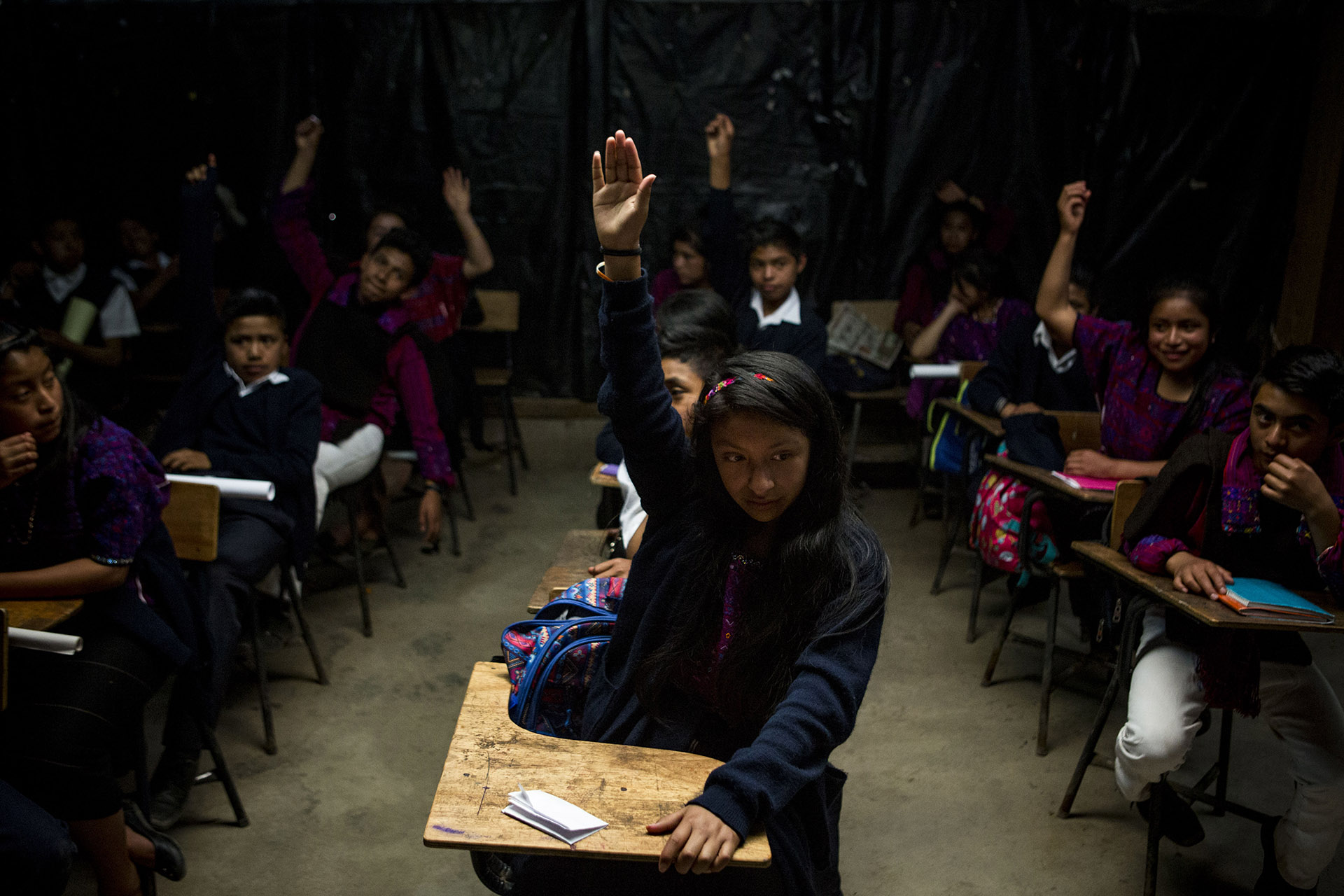


New York City’s Department of Education (DOE) is failing to meet the needs of tens of thousands of English Language Learners (ELLs), according to a new audit from Comptroller Brad Lander’s office.
The report found systemic gaps — including unfulfilled state mandates, uncertified teachers, testing delays, and weak oversight — are leaving immigrant students without vital and legally required services.
Nearly half of the 301 students sampled for the audit had not received required English-as-a-Second-Language or bilingual instruction, and approximately 40% of the sampled students had teachers without full certification. The audit showed that the DOE also failed to meet standards for the testing and placement of ELL students, and often lacked proof that parents were informed of their rights or program choices.
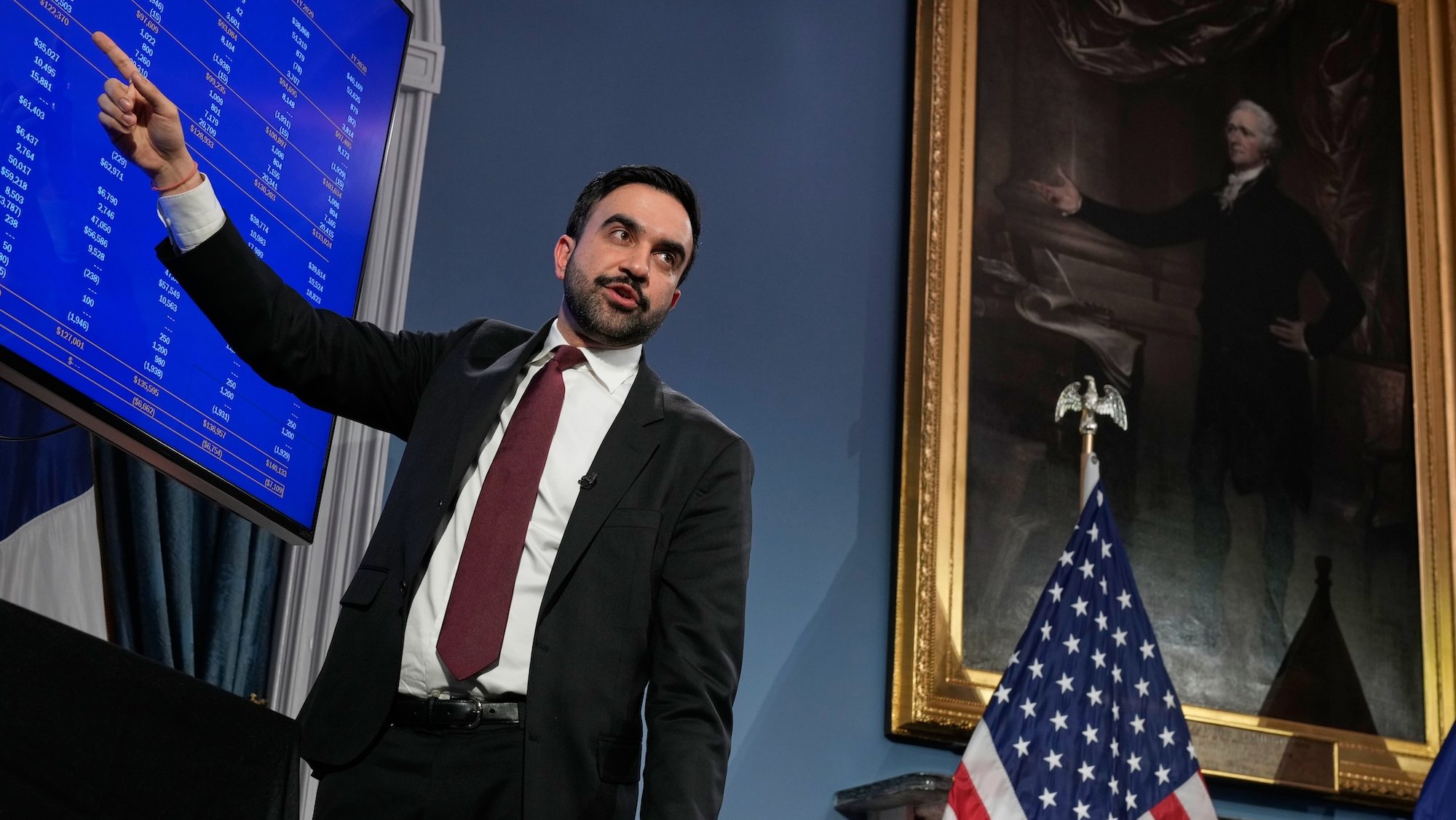
“In the world’s greatest city of immigrants, English Language Learner programs are the cornerstone of the City’s work to deliver equal access for all students,” said Comptroller Lander. “Our audit finds that the DOE routinely denied this promise to thousands of young New Yorkers and their families.”
For students like Aqida Rama, formerly a youth leader with the Coalition for Asian American Children and Families Asian American Student Advocacy Project, the DOE’s failures are not abstract. Rama was raised in Bangladesh after being born in New York. She returned to the city when she was 8 years old without speaking or knowing any English.
“I was very confused,” she recalled. “My parents weren’t English speakers. I had to depend on ESL teachers, but the support felt very limited.”
For other families, like the Li family from Fuzhou, China, the struggle began immediately after they entered the school system. A. Li, a mother of two who came to New York eight months ago, said her children found the language barrier overwhelming.
“When they first came to school, everything felt unfamiliar,” she said in Mandarin. “We had a translator, but the translations weren’t accurate. Most of the time, we didn’t understand.”
Li said her 14-year-old son has struggled to adjust to American teaching methods in high school, and says she’s worried that since he’s closer to college-aged, he’ll need to work to pick up English faster. Her 9-year-old daughter, a fourth grader at PS21, has a little more time to catch up, but maintains that she still has trouble with subject-specific words in science and other classes.
“Science words are long, and the texts are long. You have to read and then write, but I don’t know how to write them,” said Li’s younger child. “It’s very hard.”
Li also explained that parent-teacher conferences were largely inaccessible. “Because there are so many parents, big meetings don’t have translation,” she said. “For smaller, face-to-face meetings with teachers, I didn’t dare go because I couldn’t speak English. I basically didn’t participate in parent conferences.”
Read more: Immigrant Students Pack NYC Schools, But Support for English Learning Falls Short.
According to the audit, the city’s population of English learners has grown by nearly 17% in the past three years, reaching roughly 174,000 students across New York City. Spanish-speaking children make up about two-thirds of that number, but the audit also flagged serious learning gaps disproportionately harmed immigrant families, particularly those speaking Spanish, Chinese, Russian, Bengali and Arabic.
The audit reviewed compliance with state laws governing services for English learners, known as CR Part 154. It found that 48% of the students sampled were denied required instruction, while 40% were taught by teachers who did not hold proper certification.
W. Lin, a 19-year-old Chinese student at Francis Lewis High School in Queens knows this experience firsthand.
“When I first entered school in New York, I wasn’t familiar with the class schedule, credit system, or required exams like Regents, ESL, and ELA,” Lin said. “You have to pass to graduate, but I didn’t understand, so I had to keep asking teachers for explanations.” Lin said
Lin has been living in New York for three years. She says she relies heavily on translation apps, but still finds it challenging to keep up with the American curriculum, particularly for subjects like science, which has specialized vocabulary.
“Teaching students who are not native English speakers requires a degree of specialty,” said Maura Hayes-Chaffe, deputy comptroller for audits at the NYC Office of the Comptroller. “The state set these qualifications to make sure teachers have the skills needed to support children whose home language is not English.”
Ultimately, Hayes-Chaffe said that while the DOE doesn’t lack intention, they have a significant lack of appropriate monitoring and tracking. She noted “the overarching issue is a lack of oversight.”
“Some DOE systems don’t support the tracking that’s needed, and without stronger internal controls, errors go unnoticed until years later,” she said.
“It’s important to build in meaningful quality control, KPIs and consistent feedback loops so the services can improve over time,” said Nan Wu, Vice President of Access Future, a nonprofit specializing in language assistance and education.
Read more: Immigrant Parents Win Thousands in DOE Settlement.
Wu emphasized that the most urgent change needed is to expand funding and partnership opportunities for community-based organizations (CBOs). She explained that local CBOs are often best positioned to serve immigrant families because they understand their culture and language, and can adapt education and support services accordingly. With more consistent funding and easier access to DOE resources, she argued, schools could ensure ELL students receive localized, culturally responsive support that schools alone often cannot provide.
“The lack of proper services has clear academic and emotional consequences,” she said. “When ELL students don’t receive the language support they are entitled to, they often fall behind in core subjects and lose confidence in their abilities.”
She added that the DOE should also create more structured parent-volunteering opportunities through CBOs and youth mentoring programs. These initiatives, Wu noted, allow families and students to directly contribute, build leadership skills, and influence the services that affect them. “That creates a stronger sense of ownership and community engagement,” she said.
Schools are waiver-ing
When a school district cannot immediately operate required bilingual programs, it may apply for a temporary one-year waiver. Districts can only request waivers for up to five consecutive years. These waivers are intended to provide districts with time to build capacity, allowing for full program compliance to follow.
The audit found that the DOE requested 150 Bilingual Education Program waivers, and 146 of them went over the five-year limit. In turn, that left thousands of students without appropriate instruction, including more than 3,000 Russian speakers in Brooklyn, 2,400 Bengali speakers across multiple boroughs and over 1,100 Arabic-speaking children.
For Rama, the gap was not just academic, but also social. “It was harder to make friends at first, and I was shy about speaking English because I didn’t want to say something wrong,” she said.
Only later, through high school advocacy programs, did she gain the confidence to speak publicly about her ELL struggles. Today, one year after graduating from high school, she works to advocate for more bilingual staff, parent workshops in multiple languages, and programs that celebrate language diversity.
“Inclusion means representation, equity, and belonging,” she said. “ELL students shouldn’t be treated differently. They should get the support they need while still being in honors classes or leadership.”
DOE’s Response
The DOE agreed with most of the audit’s recommendations, including the need to develop stronger monitoring systems, expand bilingual programs, and improve communication with parents.
The DOE said it is working to recruit more teachers who are certified to teach English learners, especially in high-demand languages such as Arabic and Bengali.
But the agency pushed back against one recommendation: tracking professional development hours for teachers. DOE argued that it is up to individual teachers to maintain their own records. The comptroller’s office countered that without verification, the city cannot ensure that teachers meet state requirements.
While the DOE has agreed to most of the comptroller’s recommendations, Hayes-Chaffe said the next challenge is ensuring follow-through.

你知道吗?非公民办理驾照时的这个错误可能会导致选民欺诈
“We have a public-facing tracker that shows the status of each recommendation,” she told Documented. “Every few months, we check in with the agency to see what’s been implemented. That allows families and advocates to monitor progress in real time.”
She added that meaningful change will depend on whether the DOE invests in long-term solutions. “It’s not that everything DOE does is wrong,” she said. “Where they monitor schools more closely, we see improvements. But unless they strengthen oversight and commit to recruiting qualified teachers, these problems will continue.”
As the new school year begins to unfold, Hayes-Chaffe insists that parents and advocates should keep asking questions, demand information in their own language, and check whether their children are truly receiving the services the law requires. “That’s how we make sure this system changes,” she said.