Delaney Hall detention facility is surrounded by truck parking lots, warehouses and a correctional facility, with no stores nearby to buy water or food, and no restrooms or portable toilets. Situated in the “chemical corridor,” a desolate industrial area just outside Newark, New Jersey, the detention center, which last housed immigrant detainees in 2017 before reopening this May, is operated by the largest private prison corporation in the world, the GEO Group, and can house up to 1,000 people.
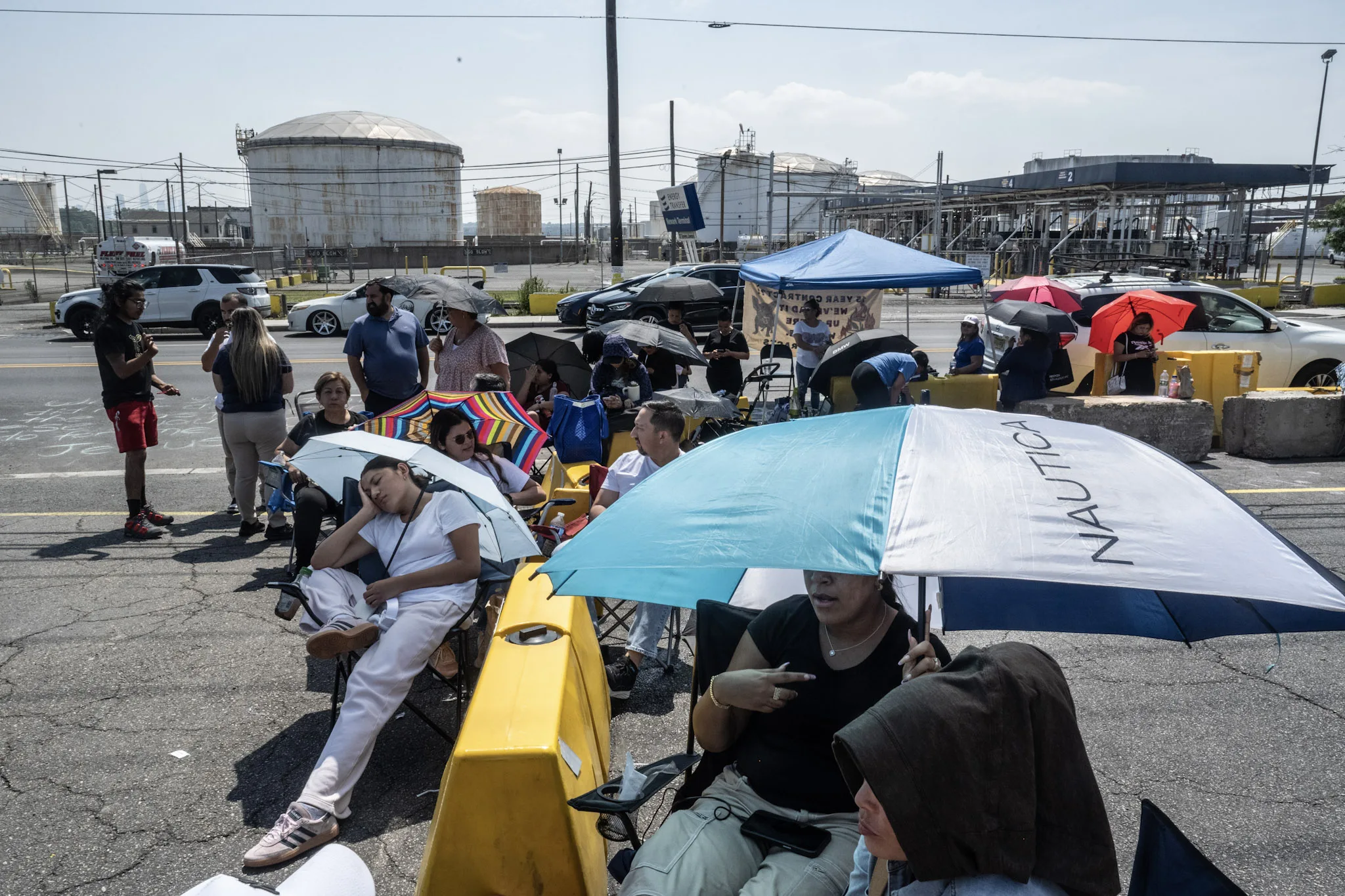
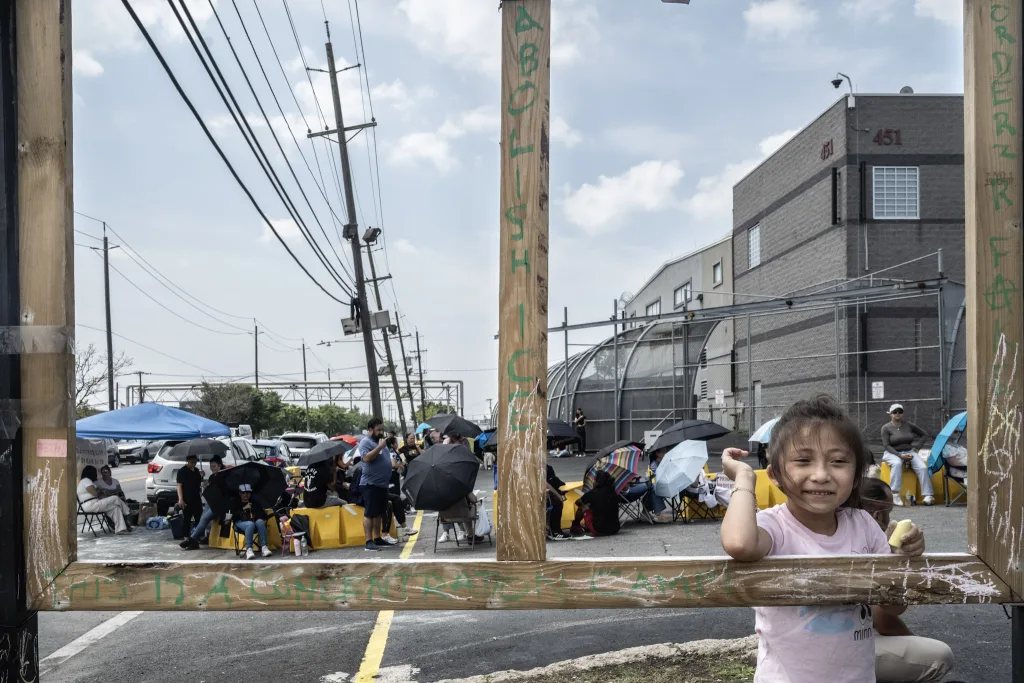
On Saturday, July 26, E.P. arrived at 7:45 a.m. to visit her partner at the detention center. That day, she and another three dozen visitors, including children and pregnant women, had gathered outside the fence of Delaney Hall expecting to see their loved ones. They would have to wait for at least seven hours in the near 100 degree heat before being allowed in for a single hour of visitation.
Forced to wait in a line on a sidewalk with no shade, E.P. was told by security guards that she could expect to enter the facility at 4:30 p.m. despite the life-threatening heat that in July had triggered emergency alerts in Newark.

Documented spoke to nearly a dozen visitors at Delaney Hall, all of whom had to wait from seven to 12 hours to see family or friends detained in the last two months. Still, they said that even after waiting, they still cannot enter.
“This is my fourth attempt to get in. I’ve been unable to do so,” said U.S.-born E.P., who asked Documented to use only her initials to avoid impacting her partner’s immigration case. “Having people stand out here for hours on end in this hot, burning sun, including the little children, is inhumane.”
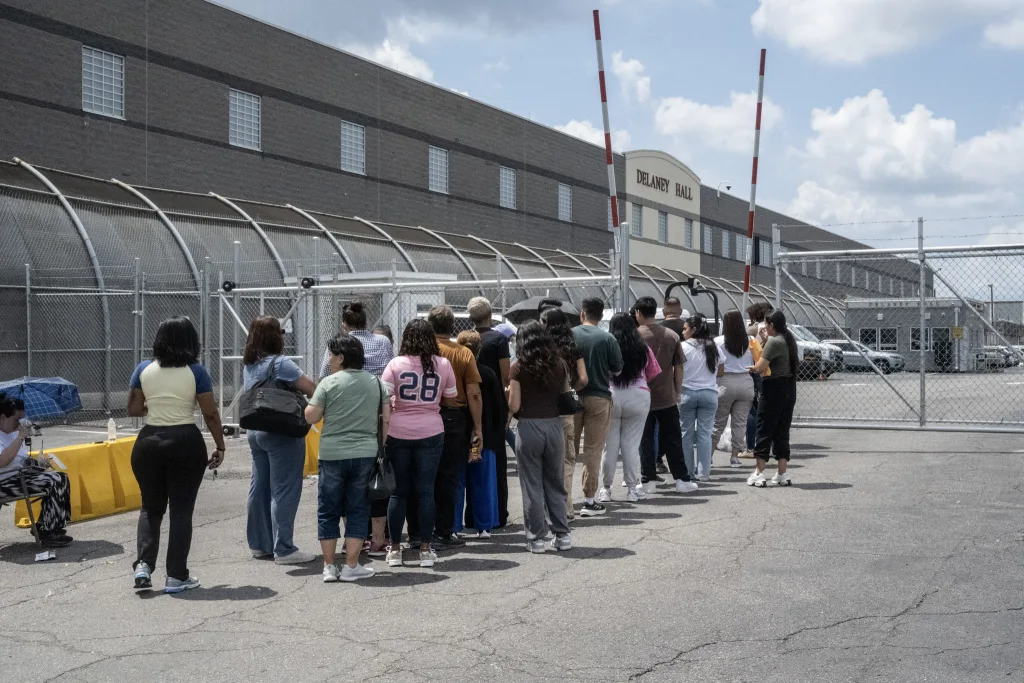
Since its reopening, visitation procedures at Delaney Hall have constantly changed, causing chaos and confusion. In early July, visits were allowed on weekdays, and only 15 visitors for each of the five units of the facility were given access. They had to give their names to the facility guards and wait outside. Yet since July 26, there has been no list; 26 visitors for each unit were now permitted but only on weekends, although the facility website states that visitations are still taking place during weekdays.
Also Read: A Stalemate at the Gates: Newark Mayor Challenges ICE Delaney Hall Detention Center
“We feel like we’re all fighting to get in, which is ridiculous,” said E.P., who claimed that her partner, a naturalized U.S. citizen born in Africa, was arrested solely because of his ethnicity. He would not be an exception. U.S. citizens have been profiled and held in immigration detention by the current Trump administration, according to media reports.
When Mabel, an Ecuador-born immigrant came to visit on June 26, she brought her two daughters: a 10-month-old and a 4-year-old. “I’ve been coming every week since my husband was detained,” said Mabel, in Spanish.
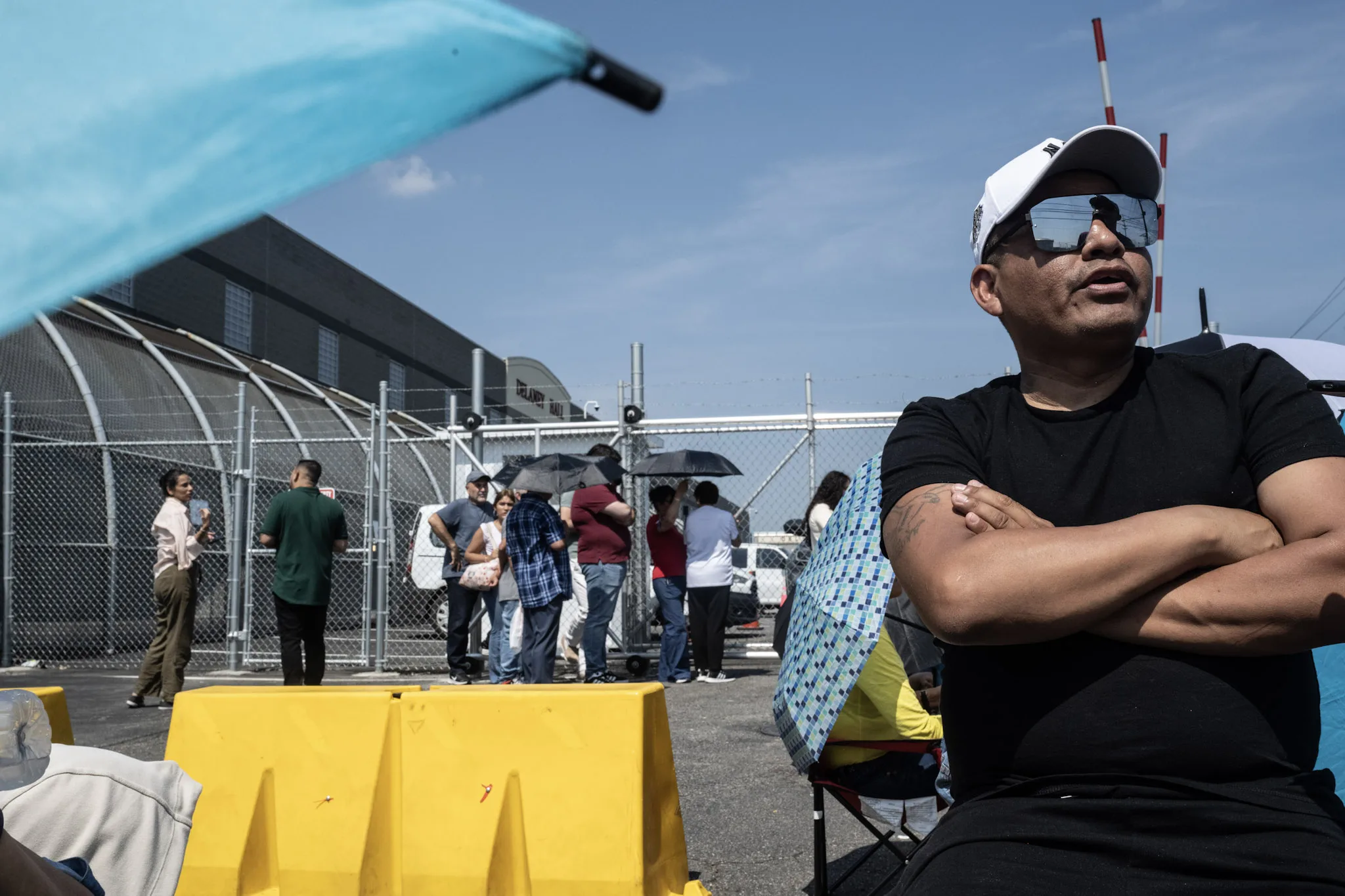

“The last two weeks, they were only allowing 15 families, and I couldn’t get in,” Mabel said. “They left me outside in the sun with my girls for nothing […] Even my baby is peeling from last week’s sun.” Like many others Documented spoke to, Mabel provided only her first name or initials to protect her family’s privacy.
In July, the city of Newark — three miles from Delaney Hall — activated Code Red alerts for four days, including 28, 29 and 30, due to extreme heat index levels, a measure that combines air temperature and relative humidity to show how hot the human body really feels. The alerts instructed people to “stay out of the sun” and stay in air-conditioned places. On one day, July 25, the heat index rose to 105°F, which is potentially deadly.
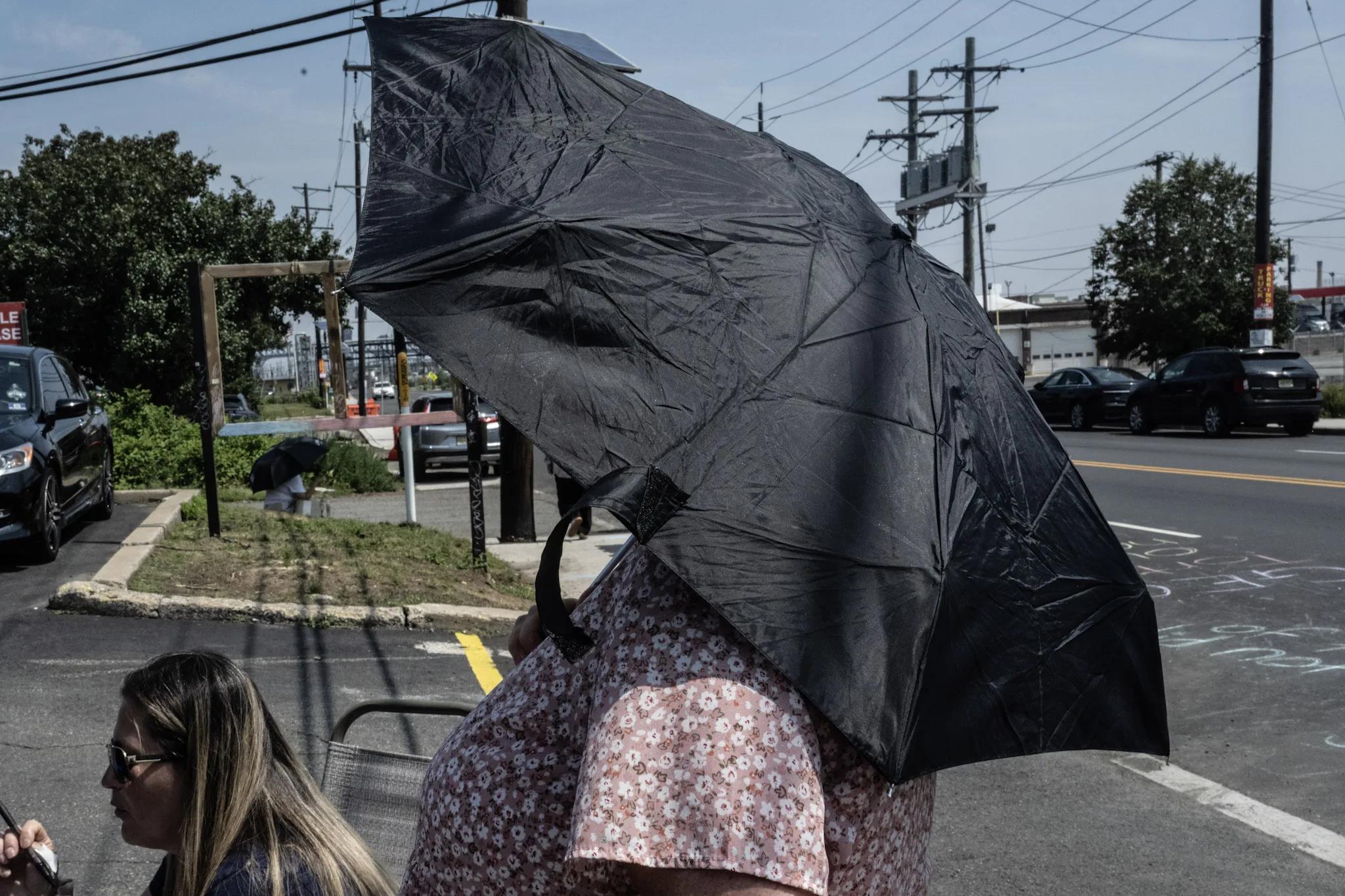
On July 26, some visitors to Delaney Hall used umbrellas or small canopies to shield themselves from the sun, but several others had no protection. “Now, people are realizing the cruelty of ICE [Immigration and Customs Enforcement] detention facilities,” said Haydi Torres, an organizer with Movimiento Cosecha NJ, a nonprofit helping visitors at Delaney Hall. “They’ve always been like this,” she said in a phone interview, “but now their cruelty is more transparent.”
“Inhumane” business
Weeks after it reopened — without permits, certificates of occupancy, or inspections, according to the city of Newark — Mayor Ras Baraka tried to inspect Delaney Hall. He was arrested, while three members of New Jersey’s congressional delegation — Rep. LaMonica McIver, Rep. Rob Menendez Jr., and Rep. Bonnie Watson Coleman — were blocked from carrying out their oversight duties to evaluate the treatment of detainees.
Also Read: The Battle Over New Jersey’s ‘ICE Detention Ban’ Moves to Federal Court
With a 1,196-bed capacity, Delaney Hall has faced accusations of mistreatment and negligence toward detainees. Four detainees escaped the facility on June 12 during a protest over inadequate food and conditions. The facility, which housed immigrants from 2011 to 2017, reopened in March after ICE awarded the GEO Group a $20 million contract, which the company projected would expand to over $100 million.
The current number of detainees at Delaney Hall is unknown. However, Guadalupe Ibarra, a Mexico-born DACA recipient, reported overcrowding in one unit. “They have people sharing a bed or having to sleep on the floor,” she said. “My husband says that they’re very overcrowded.”
A GEO Group spokesperson avoided specific questions about Delaney Hall but told Documented in an email that the corporation’s facilities provide “around-the-clock access to medical care” and “dietitian-approved meals.” He added: “Our facilities are never overcrowded.”

However, ”inhumane” treatment and systemic problems at GEO Group’s facilities, including accusations of physical abuse, retaliation against detainees who protested conditions, denial of adequate medical care, and violations of due process, have been well documented.
More than half of the visitors interviewed for this article said that their loved ones and friends in detention face health issues, often caused by poor quality food combined with a lack of proper care.

你知道吗?非公民办理驾照时的这个错误可能会导致选民欺诈
“My son got sick and hasn’t been able to see the doctor,” said F.C., who the previous week had arrived at 7 a.m. to enter the facility at 7 p.m. “They give people a pill and that’s it.” Russian-born S.P. said that her boyfriend has suffered from constant stomach pain. “He’s always feeling sick,” she said.
Despite its record with detainees, GEO Group is poised to benefit substantially from the unprecedented expansion of immigrant detention in the U.S., for which the federal budget allocated $45 billion. The company anticipates an annual revenue increase of $400 million, according to its November earnings call.
GEO Group is “profiting from the suffering of others because they don’t care. They don’t care at all,” said L.C., who had to drive nearly three hours to Delaney Hall since she lives in Philadelphia. She had tried three times to see her nephew, without success, despite waiting in line for eight hours. “They’re doing so much harm to so many families.”