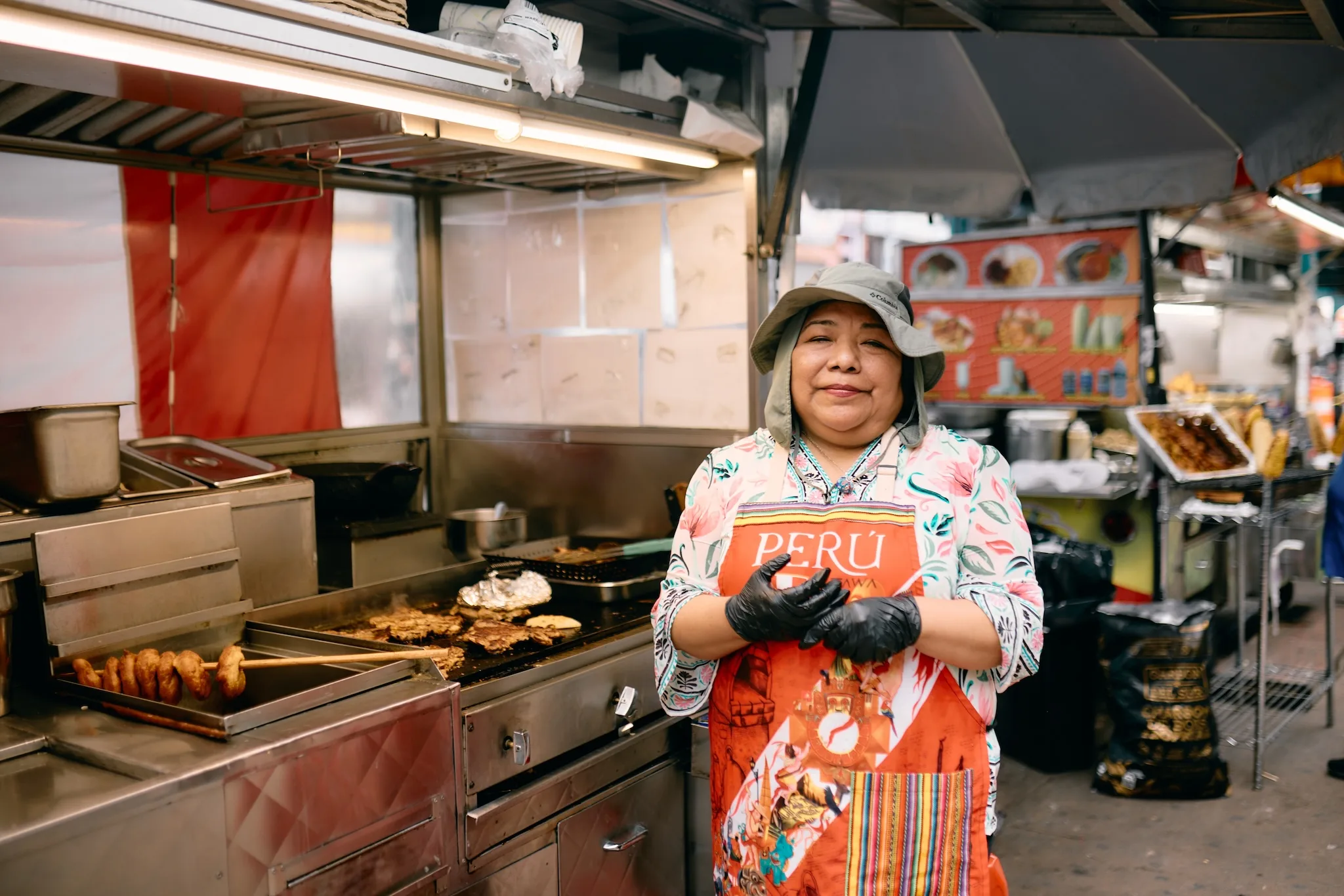


On a Saturday morning at the corner of Roosevelt Ave. and 90th St., the voice of Elvira Sucasaca can be heard above cacophonous foot traffic and the metallic rumbling of the 7 train pulling into the 90th St. Elmhurst Ave. station.
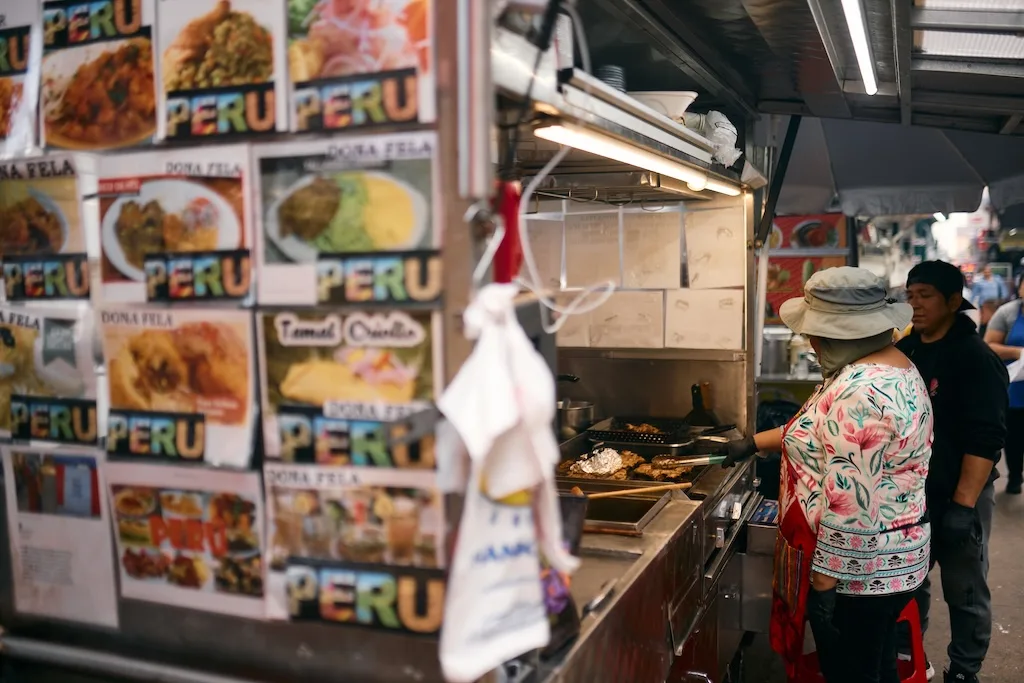
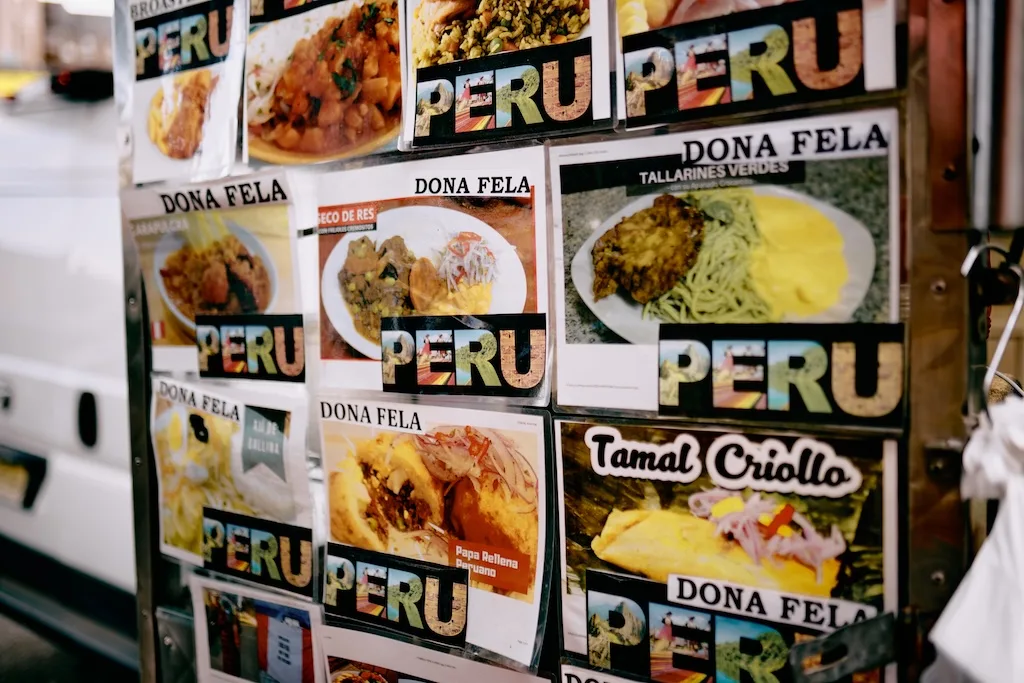
Wearing a black apron, embroidered with bright red, purple, green and orange stripes woven in a traditional Andean pattern and rocking black cat-eye sunglasses with sparkles, she holds a wireless Bluetooth karaoke microphone up to her mouth and warmly invites those passing by to visit her food cart: “We have tamales, chicharrón, relleno de chancho — and in the afternoon, we have arroz con pollo, chanfainita, seco de gallina, and cau cau.”
Chanfainita is a stew made with diced beef lung, potatoes and cooked in beef stock and herbs like panca chili. Cau cau is also a stew but it is made with a mix of diced tripe and potatoes, and cooked in a bright yellow sauce flavored with turmeric. Both stews, often served with rice and other offerings, are staples of Peruvian cuisine.

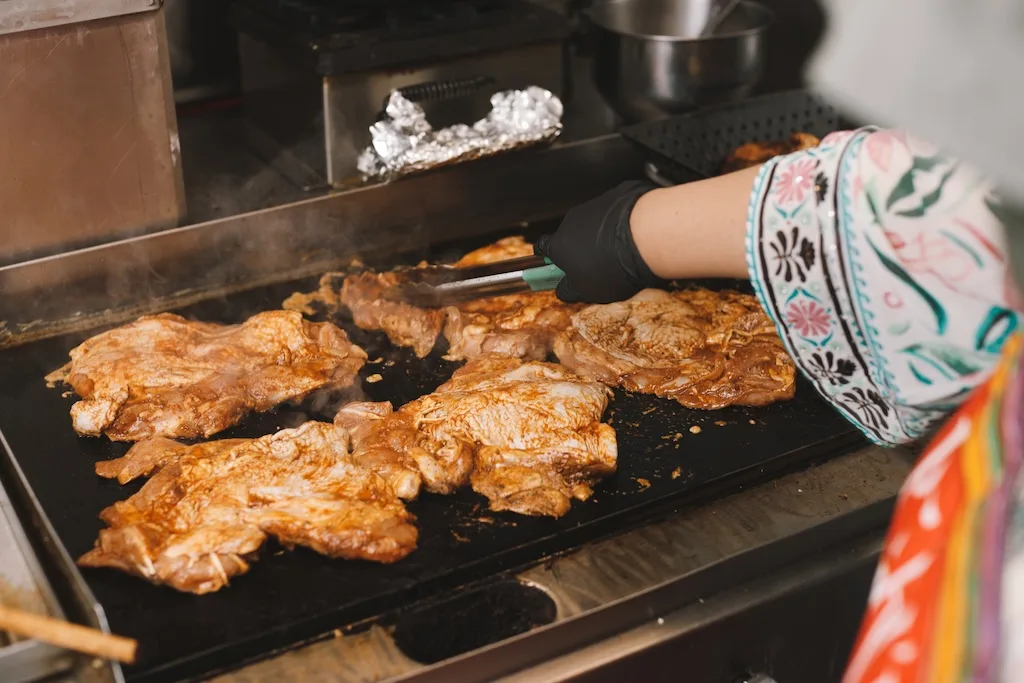
The savory smoke from grilled chicken, and the steam of tamales fill the cart as Sucasaca prepares the foods that have made her food cart, Antojitos Doña Fela, named after her mother, a popular destination for residents of Elmhurst since opening in 2005.
“It’s about giving the public fresh, daily products from our country, making the best with the same ingredients from our countries,” Sucasaca tells Documented in Spanish. “To give them the best we have, just as we do for ourselves.”
Sucasaca says she is half Japanese and half Peruvian. “We are known as Sansei,” she explains, adding that it’s a Japanese term used to describe the grandchildren of one Japanese parent and a parent of another nationality. The term also means third generation and falls below “Nikkei,” which describes the children of two Japanese parents living outside Japan.
She traced her grandfather’s history to the voyage of the Sakura Maru ship on April 3, 1899, when the first wave of Japanese men arrived in Peru to work on plantations. “I think my grandfather was ahead of his century. He believed in diversity before the word was known,” Sucasaca said, adding that her father and mother were born in Arequipa, 17 hours away by car from Lima, the capital of Peru.
In Arequipa, Sucasaca’s parents ran a grocery store selling poultry and baked goods until she immigrated to the United States in the 1990s. At the time, she said, terrorist groups like Sendero Luminoso were attacking businesses and assassinating civilians in an effort to destabilize the Peruvian government, making life in the Andean highlands — where Arequipa is located — nearly unlivable.
Along with the increased violence, inflation prevented her from affording everyday items. “Everything was getting too expensive, there wasn’t enough money. My mom was alone with us, she had to work, and no, she couldn’t make it. So, we had to look for another future.”
In 1993, at 28 years old, Sucasaca migrated to the U.S. and took a job working as a salesperson at Gracious Home and Cosmetic Plus Wholesale in Manhattan, which sold home goods and beauty products. She worked there for nearly a decade, and it was while working retail that Sucasaca said she learned English.
In 2005, Sucasaca transitioned from retail sales to working at a public school, a job which she still holds today. That same year, Sucasaca’s mother, Felicita Vargas, migrated from Peru and joined her in New York.
Sucasaca recalls Vargas noticing that Peruvian food was missing in the Corona, Queens neighborhood. She told Sucasaca that the other Peruvian restaurants only sold food that were a fusion of different cuisines but not authentic Peruvian food.
Vargas also saw an opportunity to bring authentic Peruvian food to Elmhurst, Queens — a neighborhood comprised primarily of people from Ecuador, Mexico and Colombia but that didn’t have much of a Peruvian population to speak of. “My mom saw the vision that something Peruvian was missing here, so she came up with the idea of creating the food truck,” Sucasaca said.
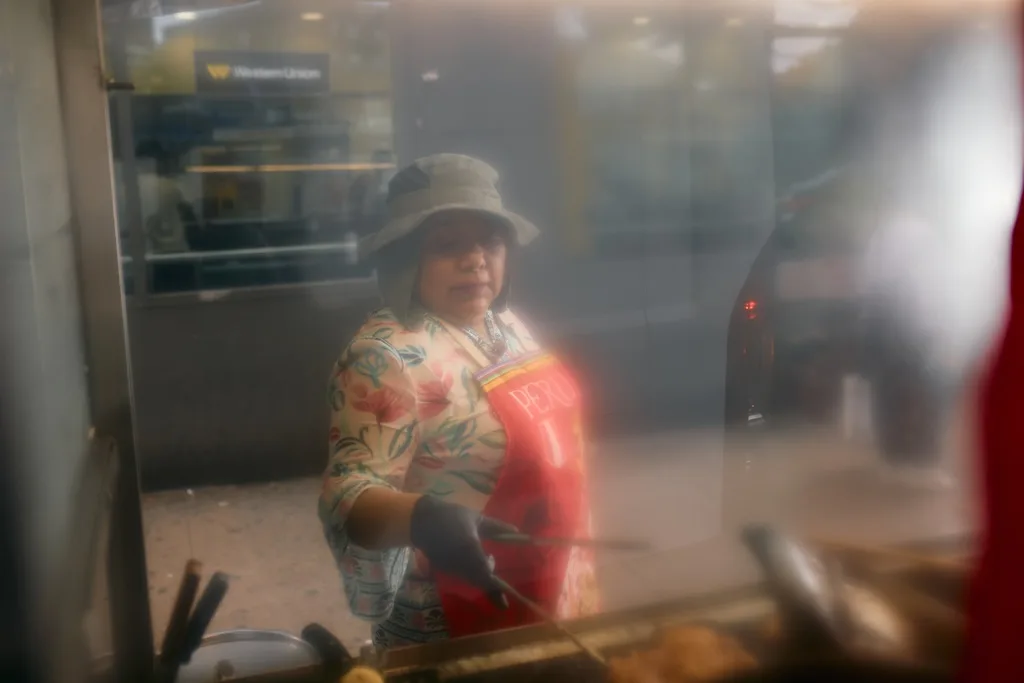
At first, they sold pork tamales — a dish made from ground corn dough and succulent strings of pork meat all wrapped in a corn husk and steamed. Like many traditional family recipes, these tamales are somehow greater than the sum of their parts. Sucasaca attributes that to her mom having traveled to the city of Chincha, in Peru, to learn and perfect the secret recipe for making authentic Peruvian tamales.
Today, along with her sister Elizabeth and brother Carlos, Sucasaca gets up around three in the morning to begin cooking. Carlos starts to prepare the hominy — a special type of white dried corn known as Maíz Mote — by soaking it in water for about two hours to soften it. Once softened, the corn is ground into a dough.
At the same time, the siblings prepare the meat, often chicken and pork, which they generously season, tenderize and remove from the bone.
“We have a unique way to assemble the tamales in line, like a factory. We weigh everything, one by one, the olives, the onion, and the yellow spice,” Sucasaca said, adding that one of her siblings wraps them with the corn husk and then ties them.
Also Read: Malatang Vendors Bring Sichuan Heat to the Streets
Over time, Vargas expanded her menu to include rice with chicken, sausages, chicken stew and other Peruvian dishes.
“At first, it was difficult because this area is mostly Mexican and Ecuadorian, but we made our way and brought our own food, our own culture, and then, little by little, people started coming,” Sucasaca said. She added that her mom traveled twice a year to source ingredients from Peru, like aji amarillo peppers, which bring the authenticity of the Peruvian cuisine to the community in Queens.
Their business grew over time, as they obtained permits and licenses to operate. “The fines were difficult to deal with,” Sucasaca said. “We always keep everything clean, because the Health Department wants us to follow cleaning protocols, not to be too far outside, not to have too much trash, to sweep, and so on.”
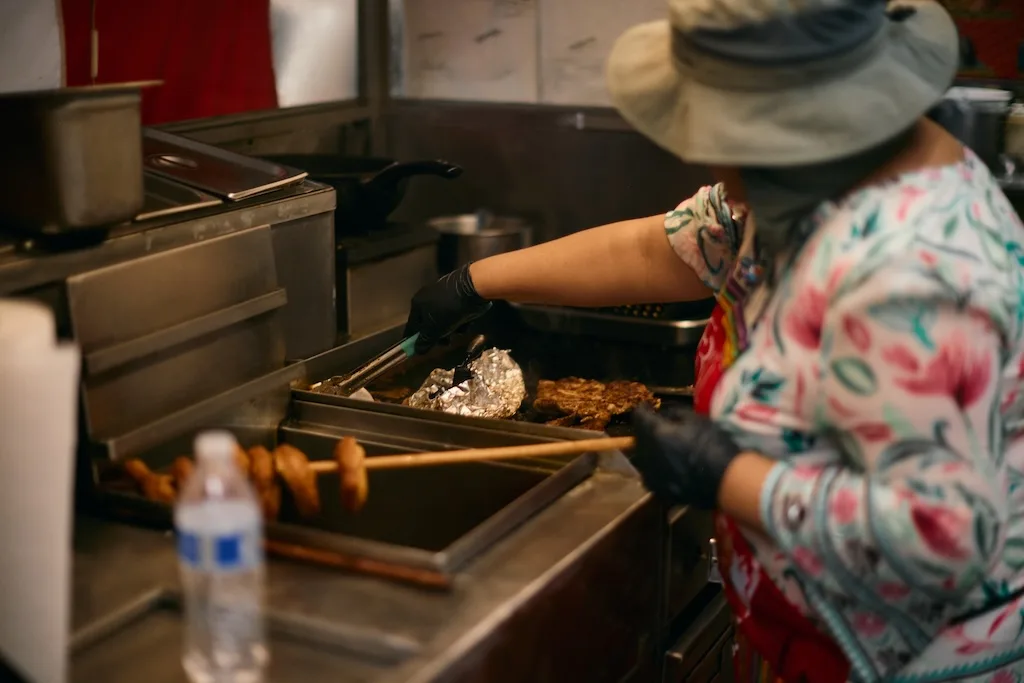
Now, as her mother has gotten older, Sucasaca and her siblings have started to take over the business and the functions.
“Some ingredients are sourced here, but sometimes I bring them [from Peru] every six months,” she said. “If I’m not traveling, for example, my mom is traveling; if my mom isn’t traveling, my brother is traveling too.”
Beyond sharing the flavors she grew up with in Arequipe with her adopted community in New York, Sucasaca believes that preserving her heritage is necessary in the U.S. It is for that reason, she said, that her daughter — Stephanie — also joins her at the food cart to help grow the business.
“My daughter was born here, but I always wanted us to speak Spanish at home,” Sucasaca reiterated. “The Chinese teach their children both languages, Chinese and English. But Hispanics for some reason don’t want their kids to speak Spanish.”
Sucasaca said her daughter goes to Peru at least once a year to visit Arequipa and the city of Cusco, which is known for the archeological remains of what was once the capital of the Incan Empire.
But while preserving her heritage is important to her, Sucasaca says that learning about and enjoying the multitude of cultures that New York has to offer is also just as vital. Aside from Peruvian food, Sucasaca says she is a fan of Puerto Rican food, specifically Pernil, a slow roasted-pork shoulder, which is often served up with yellow rice and pigeon peas.
你知道吗?非公民办理驾照时的这个错误可能会导致选民欺诈
Looking to the future, Sucasaca says that she hopes to expand their food cart operations into a brick-and-mortar restaurant so that it can be more established in the community.
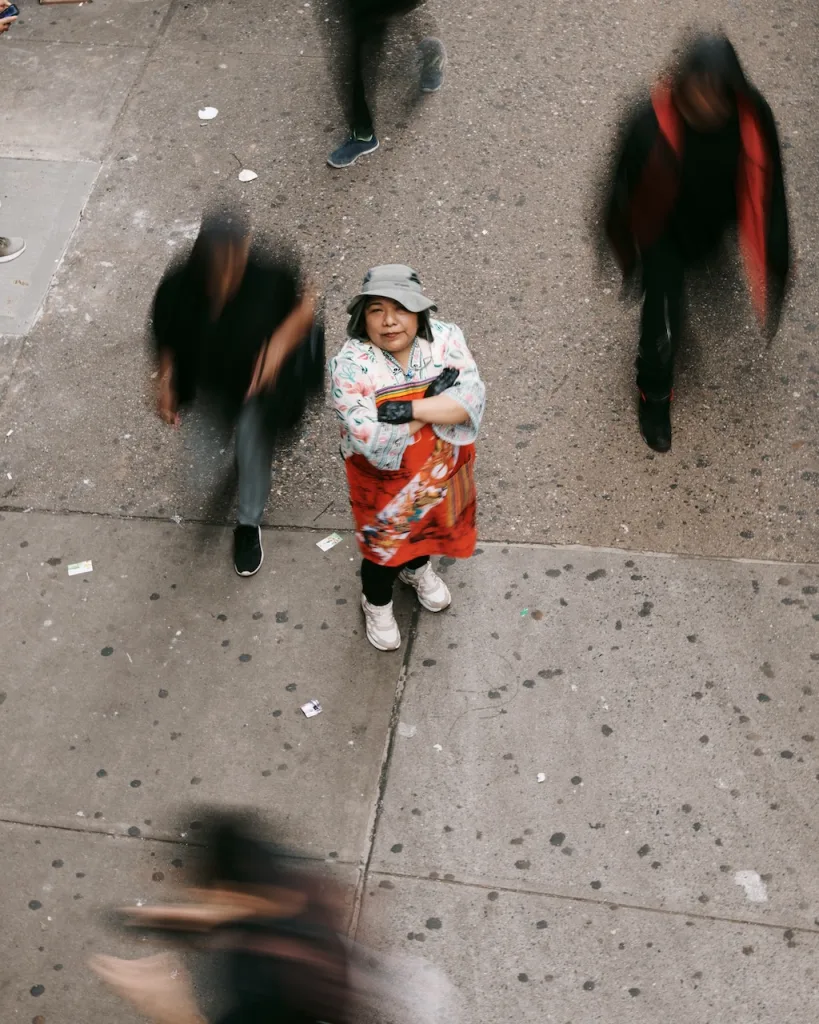
A restaurant would give her clients space to sit and enjoy their meals, while also enhancing the workflow by providing extra storage space for oil, potatoes and meats. “Since we do the whole operation here, we need to have everything in stock so we do not have to be calling [family members] if something is missing.”
For now, Sucasaca says that she is proud that she and her family stand at the corner 90th St. and Roosevelt Ave., offering New Yorkers the best of their Peruvian culture. “I know earning money is important,” Sucasaca said. “But sometimes it’s also about providing the best ingredients, giving people a good product, and making them happy.”