

Legal experts are sounding the alarm bells against the latest moves by the federal government to pursue denaturalizations against American citizens, including opponents of President Donald Trump.
“It’s been my concern all along that they would start with deporting undocumented people and then move from there to people on green cards, H-1B visas, etc., and that we would then move to the government stretching the outer bounds of immigration law to try to denaturalize those who became U.S. citizens,” Katherine Franke, a legal scholar and former professor at Columbia Law School, told Documented.
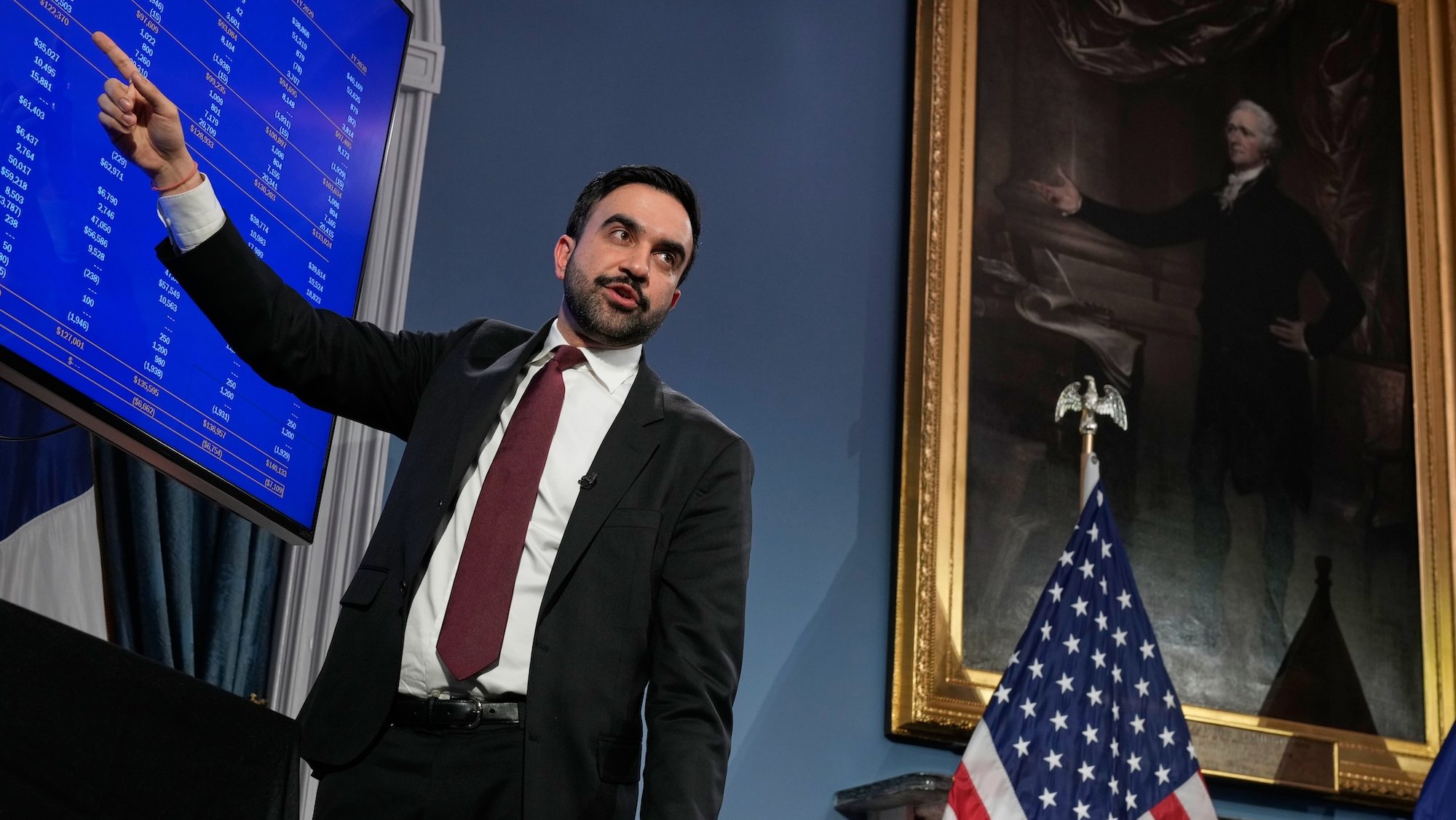
Ever since Zohran Mamdani clinched the Democratic nomination for mayor of New York City last week, the 33-year-old state assembly member has faced a barrage of Islamophobic and racist attacks, including calls to revoke his U.S. citizenship.

Andy Ogles, a Republican member of the House, has led the calls to strip Mamdani of his citizenship and deport him. Donald Trump too, joined in on July 1, saying, “A lot of people are saying [Mamdani] is here illegally. We’re going to look at everything.”
At a campaign stop, Mamdani responded, “if this is what Donald Trump and his administration feel comfortable saying about the Democratic nominee for the mayor of New York City, imagine what they feel comfortable saying and doing about immigrants whose names they don’t even know.”
Trump has also said that he would “have to take a look” to see if his administration would want to deport Musk, the South Africa-born Tesla CEO who fell out with the president in recent weeks after being one of the biggest donors to his presidential campaign last year. A Washington Post report last year said that Musk had launched his career in the United States working illegally, “according to former business associates, court records and company documents.” Musk had denied this.
A DOJ memo, and concerns regarding overreach and abuse
On June 11, around two weeks before Mamdani won the Democratic primary, a memo issued by the Justice Department directed federal immigration authorities to “prioritize and maximally pursue denaturalization proceedings in all cases permitted by law and supported by the evidence.”
The memo further said that the Civil Division of the Justice Department has established categories of priorities for denaturalization cases, including “individuals who pose a potential danger to national security,” those “who engaged in torture, war crimes, or other human rights violations.”
The Justice Department previously used alleged threats to national security to pursue the deportation of Columbia student Mahmoud Khalil and other students across the country who participated in protests against the Israel-led destruction of Gaza.
The National Association of Criminal Defense Lawyers (NACDL) condemned the DOJ directive for seeking to pursue denaturalization proceedings against people accused of certain crimes through civil proceedings, “which carry a lower burden of proof and do not require the government to provide the accused with an attorney if they cannot afford one.”
NACDL president Christopher Wellborn said that the language in the memo “suggests that any offense, at any time, may be used to justify denaturalization.” Wellborn adds, “This is particularly concerning given the administration’s reliance on vague claims of gang affiliation in deportations. In effect, this directive sends the message that those not born in the United States risk losing their citizenship for previous or future conduct, creating an unacceptable threat that a criminal charge could rip them from their communities.”
“In the hands of this administration, this would look like a vehicle to pretextually claim people somehow support terrorism in order to get rid of political opponents,” Baher Azmy, Legal Director of the Center for Constitutional Rights, told Documented, referring to the clause around individuals posing a “potential danger” to national security.
However, Azmy said that the fact that denaturalization proceedings take place in federal courts present a greater legal safeguard, compared to immigration courts hearing deportation proceedings. He said that the Trump administration has been keen “to exploit the enormous latitude of the kangaroo style of immigration courts,” in states like Louisiana, “but as we saw, when it reached the federal courts, multiple federal courts were not allowing the use of the foreign policy bar to try and remove individuals simply because of their speech.”
A line of rap, and the burden of proof
On 25 June, a day after Mamdani’s victory in the Democratic primary, the New York Young Republican Club wrote, “The Communist Control Act lets President Trump revoke Zohran Mamdani’s citizenship and promptly deport him.”
The following day, Ogles wrote on X, “Zohran “little muhammad” Mamdani is an antisemitic, socialist, communist who will destroy the great City of New York. He needs to be DEPORTED. Which is why I am calling for him to be subject to denaturalization proceedings.”
The Republican congressperson from Tennessee attached a letter to Attorney General Pam Bondi, in which he wrote that Mamdani should be investigated for denaturalization proceedings “on the grounds that he may have procured U.S. citizenship through willful misrepresentation or concealment of material support for terrorism.” Ogles referred to a rap song released by Mamdani in March 2017 called ‘Salaam’. The song appears to include the line “My love to the Holy Land Five, you better look ‘em up”.

你知道吗?非公民办理驾照时的这个错误可能会导致选民欺诈
The Holy Land Five refers to five members of the Holy Land Foundation for Relief and Development who were found guilty of funding schools and social welfare programs that the U.S. government said were controlled by Hamas. The manner in which the case was conducted became the subject of much controversy and criticism, with multiple books written about it. One described it as “the first case in American legal history where humanitarian aid was criminalized as an act of terrorism,” while another discussed “the miscarriages of justice” in the case.
Remarking that the Holy Land Foundation had been tried “in the most controversial and still-contested of circumstances”, Azmy said that “expressing support for individuals who one thinks is wrongly accused of a crime is, under no definition imaginable, terrorism.” Azmy added, “This is the stupidest and most attenuated claim of material support that I’ve ever heard.”
Franke said, “The rights that are contained in the Constitution restrict the grounds upon which they can denaturalize people.” She added that now, “It really has to do with the will of the federal courts to enforce the Constitution.”