



Navigating the U.S. immigration system can be stressful — especially if you’re missing important information like your A-Number (Alien Registration Number). This guide helps you understand what your A-Number is, where to look for it, and what to do if you can’t find it.
This information is not a substitute for legal advice from a qualified attorney or accredited representative. The content was last updated October 2025.
What is an A-Number?
Your A-Number is a personal identification number given by U.S. Citizenship and Immigration Services (USCIS) or the Department of Homeland Security (DHS). It begins with an “A” and is followed by nine digits (for example: A012345678). If your A-Number has eight or seven numbers, then add 0 to the front until you have nine digits to get the officially recognized number.

An A-Number helps the government track your immigration history and consolidate all your immigration forms, visas, and cases into a single record.
Who receives an A-Number?
Many noncitizens who apply for immigration benefits or who are placed into certain immigration proceedings will be assigned an A-Number.
You may receive an A-Number if you have:
- Applied for a green card
- Requested asylum or refugee status
- Received certain work authorization
- Been in immigration court proceedings
Not everyone has an A-Number right away. You won’t have an A-Number if you:
- Entered the U.S. on a short-term visa (like a visitor or student visa) and haven’t filed for any immigration benefit.
- Never applied for asylum, a green card, work authorization, or any status change.
Once you file an application with USCIS — like a work permit, green card, or asylum claim — you’ll be assigned your A-Number.
If you overstayed your visa and now are in removal proceedings, then you will have an A-Number. If you entered on an F-1 student visa and worked in the U.S. for your Optional Practice Training, then you likely have an A-Number.
Where to find your A-Number
Even if you lost one document, your A-Number often appears in more than one place. Try checking the following:
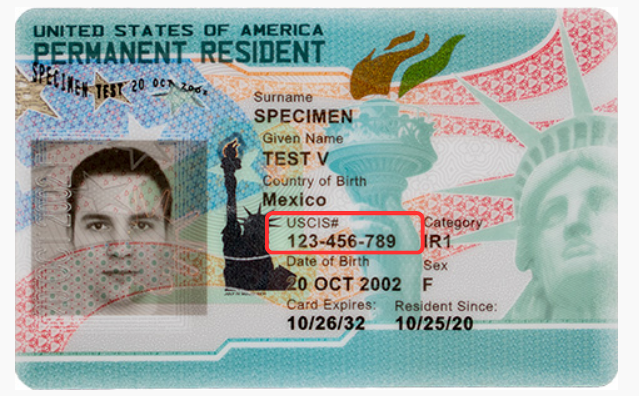
- Green card (permanent resident card)
Look for “USCIS#” or “A#” on the front of your card.
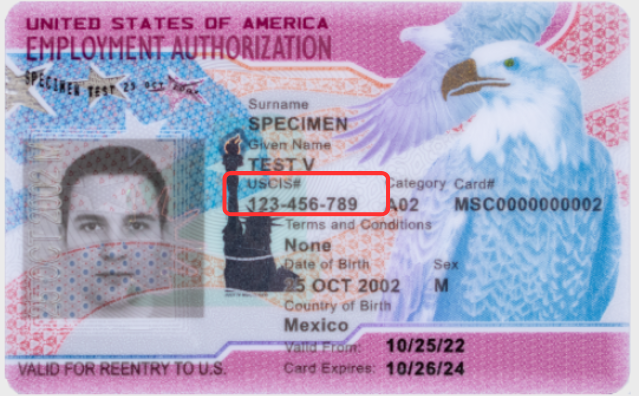
- Employment Authorization Document (EAD card or work permit)
Your A-Number appears next to “USCIS#” on the front of your card.
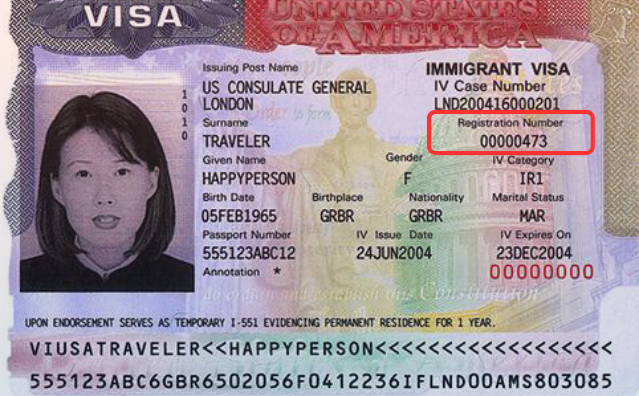
- Immigrant visa in your passport
Printed as “Registration Number” or “A#” on your visa stamp.
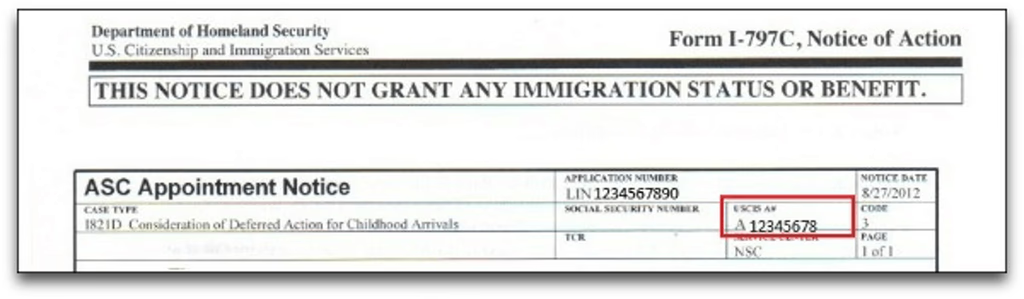
- Form I-797 Notice of Action
If USCIS sent you a notice about your case, your A-Number is listed near the top.
- Immigration court papers (EOIR documents)
If you have a case in immigration court, your documents will come from the Executive Office for Immigration Review (EOIR), part of the U.S. Department of Justice. These papers — such as a Notice to Appear, hearing notices, or court decisions — almost always include your A-Number. You’ll usually see it printed in the top-right corner, under a header that says “Executive Office for Immigration Review” or “U.S. Department of Justice.”
- USCIS online account
If you’ve created an online USCIS account at my.uscis.gov, log in and open your case profile. Your A-Number should appear under your case details or notices.
If you can’t find or have never received your A-Number
If you can’t find your A-Number, don’t worry — there are several ways to recover it.
You can start by calling the USCIS Contact Center at 1-800-375-5283. Explain that you need help finding your A-Number. A representative may ask for personal information (like your name, date of birth, and case type) to verify your identity before guiding you through recovery steps.
If that doesn’t work, you can file a Freedom of Information Act request (Form G-639) to gain a copy of your immigration file.
If you’ve worked with an immigration lawyer or nonprofit organization, they may also have your number on file.
Also Read: Lost Your Passport or Green Card in NYC? How to Replace It and Prevent Identity Theft


