

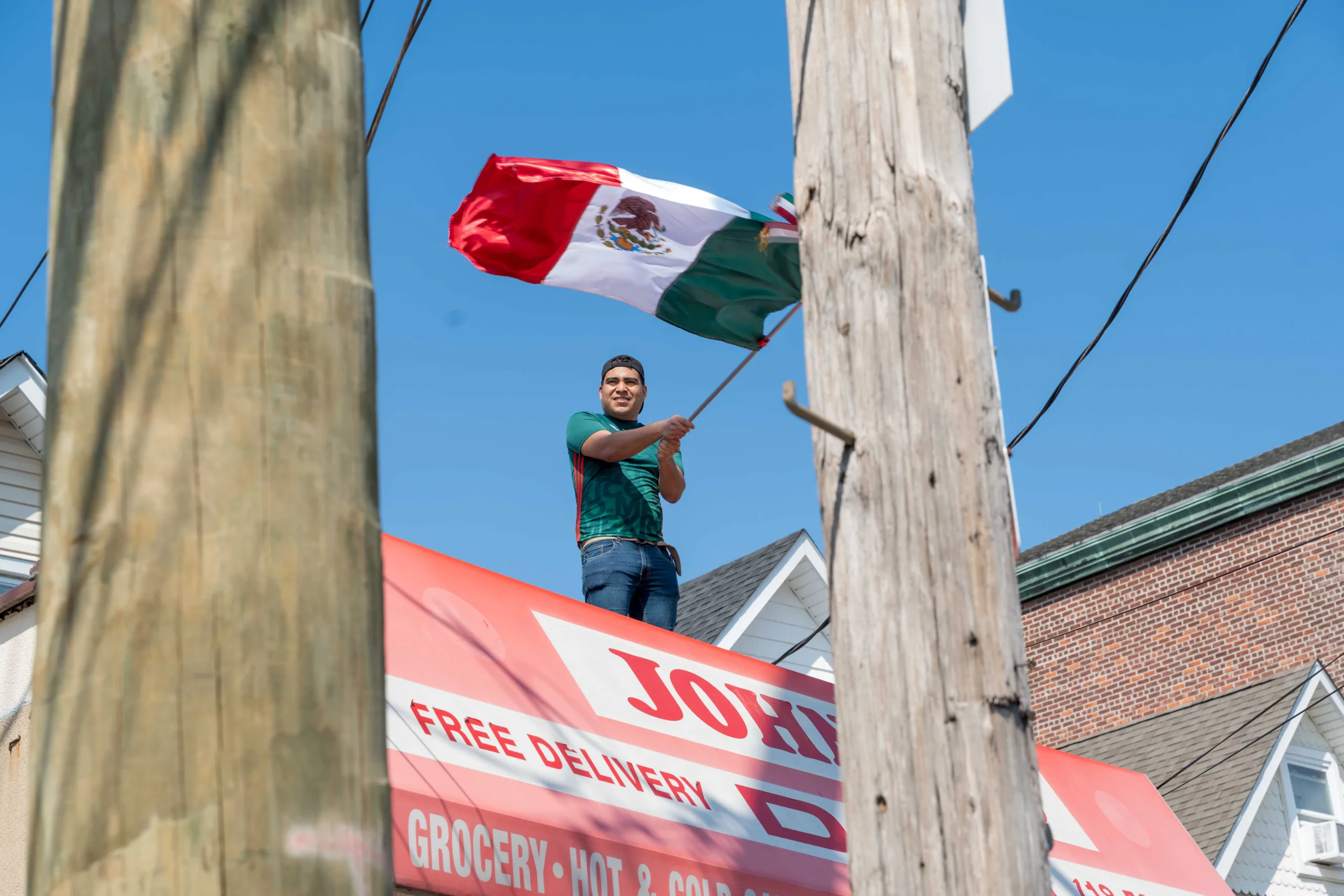


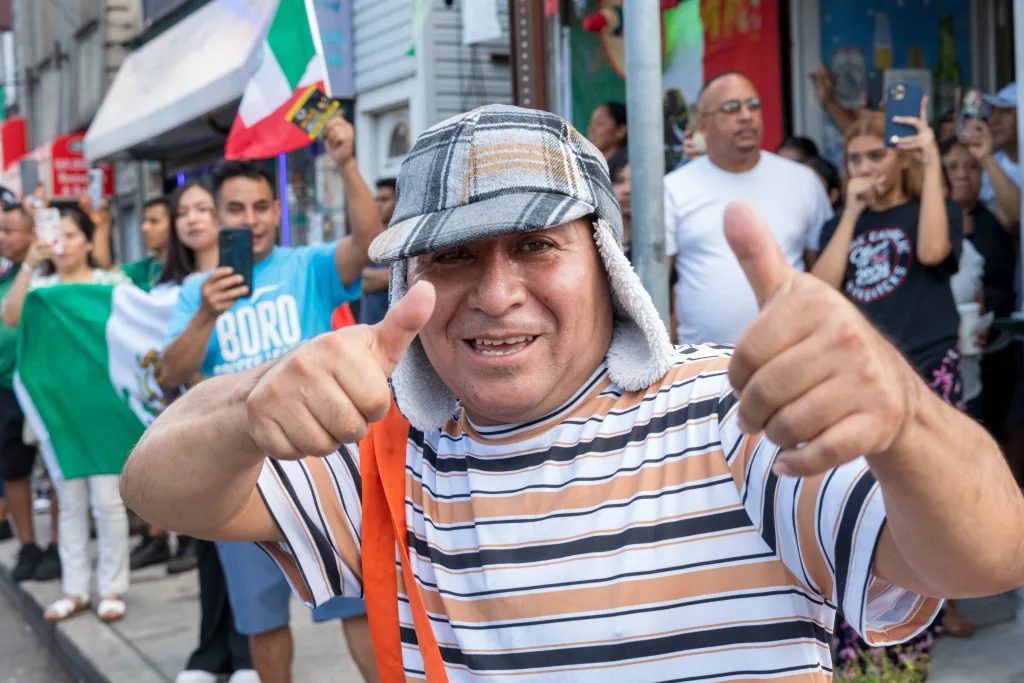
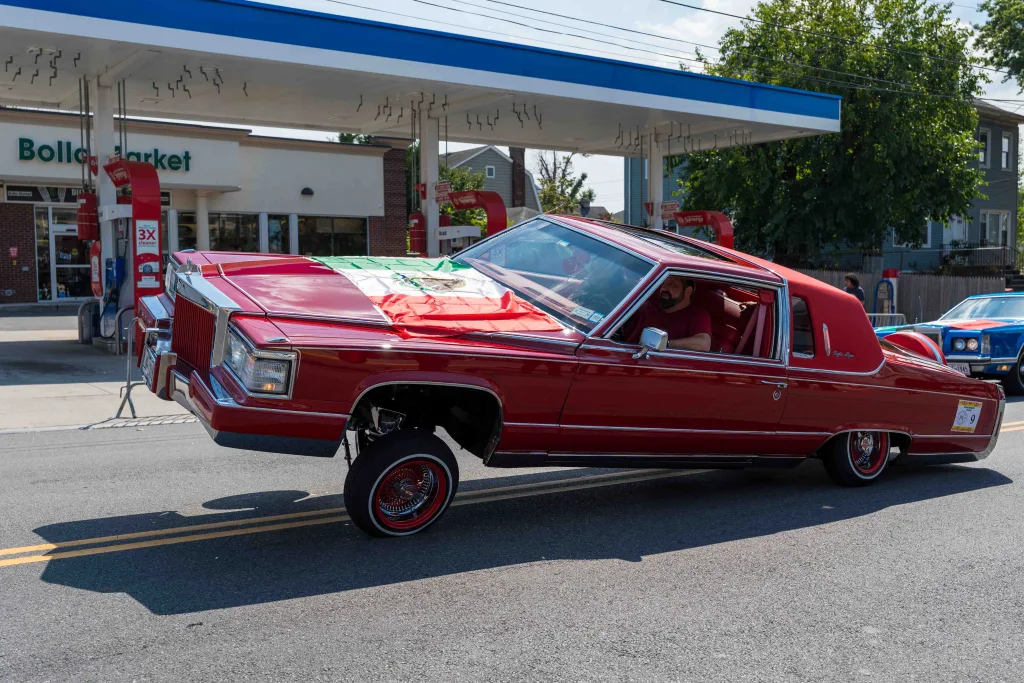
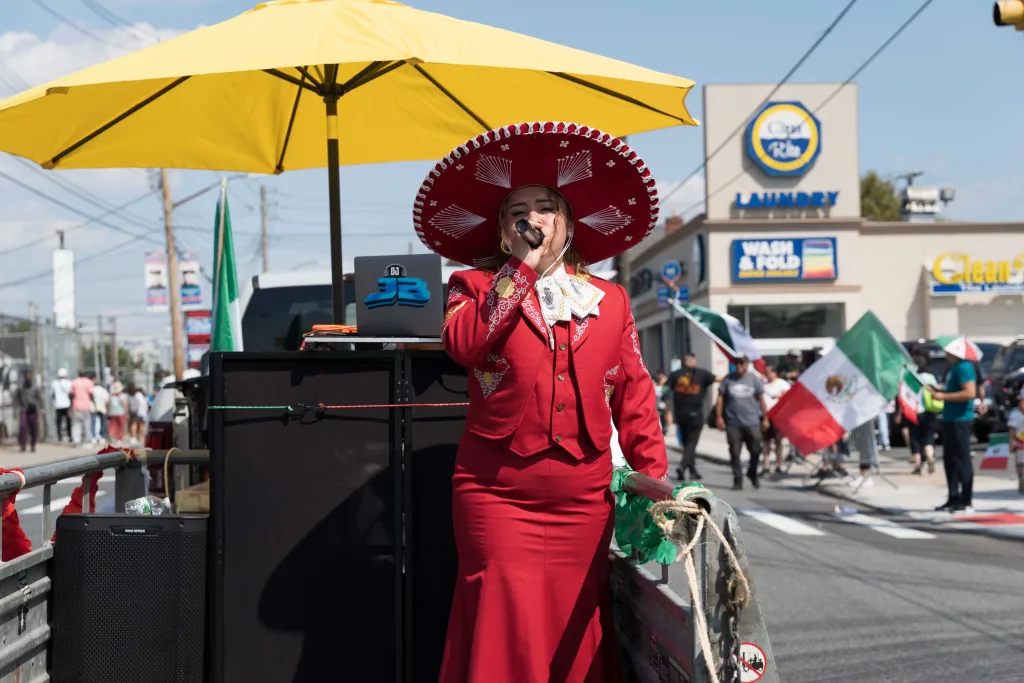
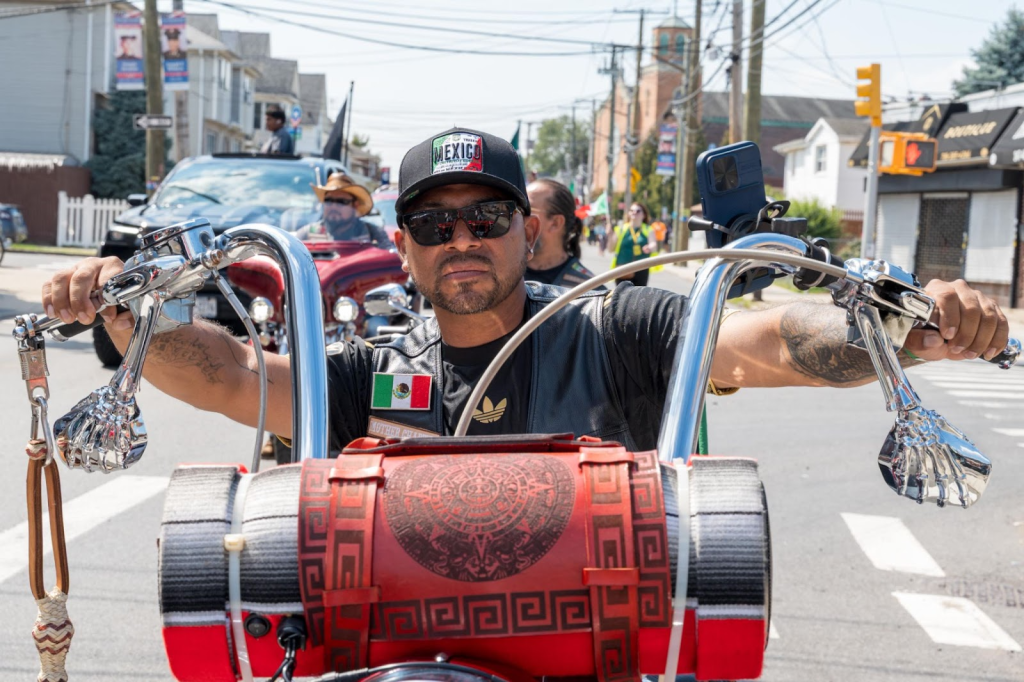
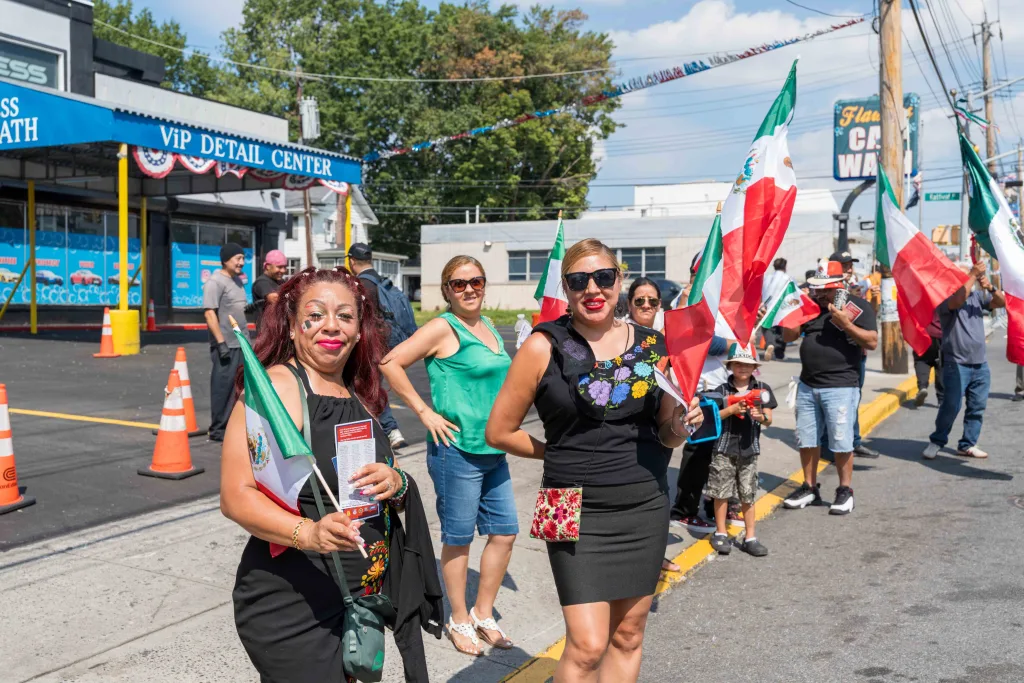
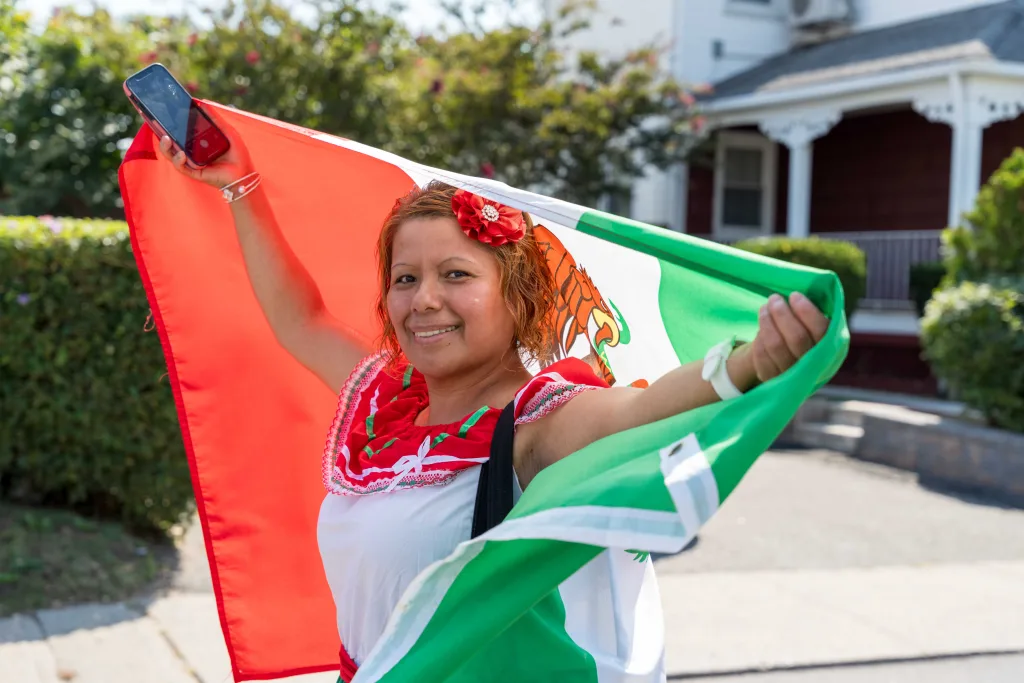
María de Lourdes Acevedo could see the blue and red lowriders cruising through Port Richmond’s commercial corridor. Each had a Mexican flag on the hood. The New Dorp High School folkloric dance group stomped underneath their colorful, flowing skirts; members of the Aztec Rebels, a Mexican-American motorcycle club, revved their bike engines; and live mariachi music filled the air as thousands of Mexican flags waved in the breeze.
Acevedo was filled with pride, she told Documented in Spanish.
Just three days earlier, friends warned her to stay home. Immigration and Customs Enforcement (ICE) had been in the news again, with reports of stepped-up ICE arrests making headlines. Just the week before, a Supreme Court ruling had allowed for the racial profiling of Latinos, heighting the fear of many immigrants who believe they are being discriminated against by the Trump administration. But Acevedo, who has lived in the neighborhood for 28 years, decided to go anyway. “Mexicans are happy people. I know there is fear, but we also like to celebrate the culture,” she said in Spanish. “We are here representing the colors, the music and our culture.”

Along with thousands of others, Acevedo said she attended Sunday’s parade, for the first time, to support the community where she lives. Amid intensified ICE detentions nationwide, Staten Island’s sixth annual Mexican Independence Day parade, which celebrates the start of Mexico’s war of Independence from Spain, drew more attendees than any previous years. Organizers said the event carried added significance this year following the cancellation of other Mexican celebrations across the country, like the El Grito Festival in Sacramento and The Independence Day party and parade in Chicago.
Both first and longtime attendees told Documented they came to stand in community, represent Mexican pride and support one another.
Acevedo, 53, migrated from Estado de Mexico 28 years ago and has lived in Port Richmond ever since. She said she was happy to see that more people turned out than she expected.
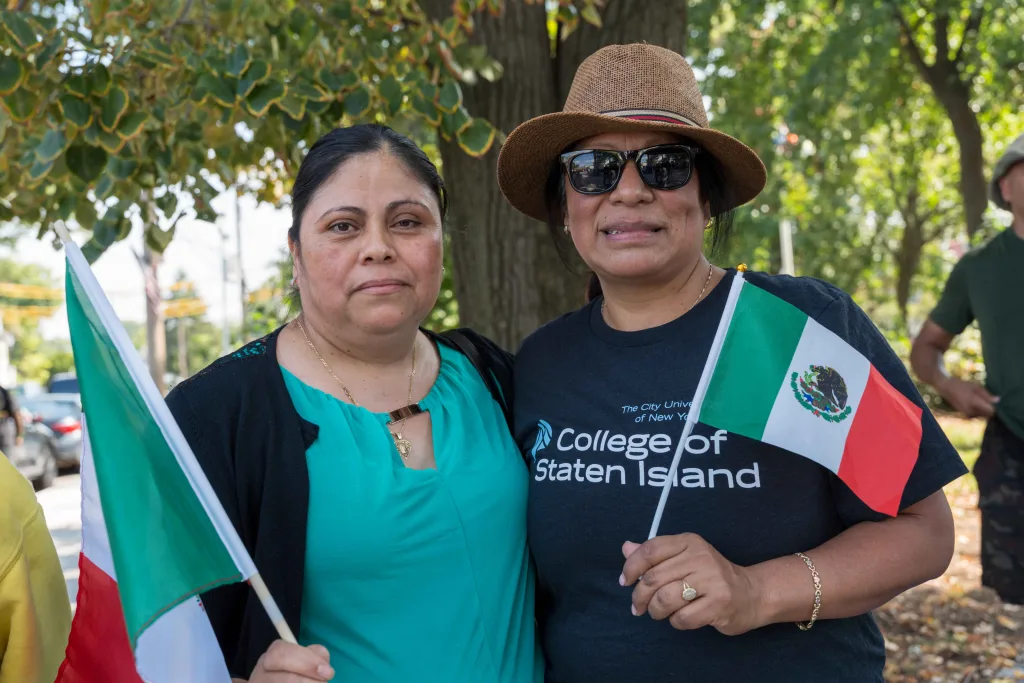
She said she understood why community members might be afraid to come out because of possible ICE presence, but she hopes her neighbors and fellow Mexican immigrants know their rights and how to access resources if they encounter ICE. “It’s important to be informed, to go out and educate ourselves,” she said.
“Even if we are undocumented, there are resources. You have to seek them out because it takes perseverance, but they are there.”
The prevailing message of staying informed was also emphasized by Yesenia Mata, executive director of La Colmena — the nonprofit that organized the parade. La Colmena provides job readiness training, legal assistance and other services to the immigrant community in Staten Island. In recent months, they have formed the Welcoming Staten Island initiative, which brings together nonprofits and businesses across Staten Island to support the immigrant community.
Also Read: Mexican Independence Day Parade Returns to Staten Island
Through training sessions, workshops, legal support, they have equipped residents with useful information about their rights when encountering ICE, which they continued to do during the parade: “We are going to be passing Know Your Rights material, the red cards, and information that tells people what happens if they get detained by ICE.”
Mata emphasized that the safety of the community was paramount in organizing this year’s event. When La Colmena announced the parade, the community asked: “‘What if ICE comes? What precautions do you have?’ It’s heartbreaking because usually people would say ‘We are excited. We are going to be participating,’” she said.
La Colmena was in constant communication with the local police precinct, marshals, and other allied NGOs throughout the planning process, she explained. To address community concerns about safety from ICE, they cancelled the post-event celebration at Veterans Park, where street vendors and local business owners typically gather after the parade.
The day before the organization said in a press release that they encouraged people to join at “their own discretion and comfort level.”
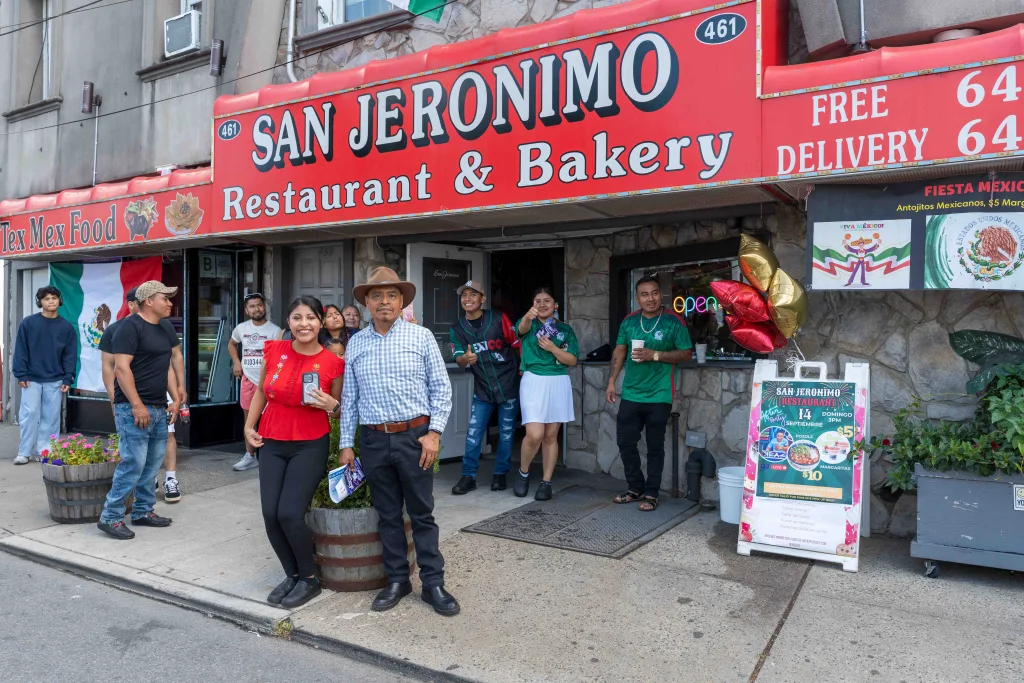
“We are going to keep showing up each year — and the reason for that is because the moment we are canceling the parade, it will show fear,” Mata said. “Our members said that ‘We are not going back to the shadows.’”
Guadalupe, 47, brought her 7-year-old son to the parade to teach him about feeling proud of his heritage. “We feel very happy being here, celebrating our country,” she said, adding that she would like other counties around the U.S. to support the immigrant communities the way she feels supported in Staten Island.
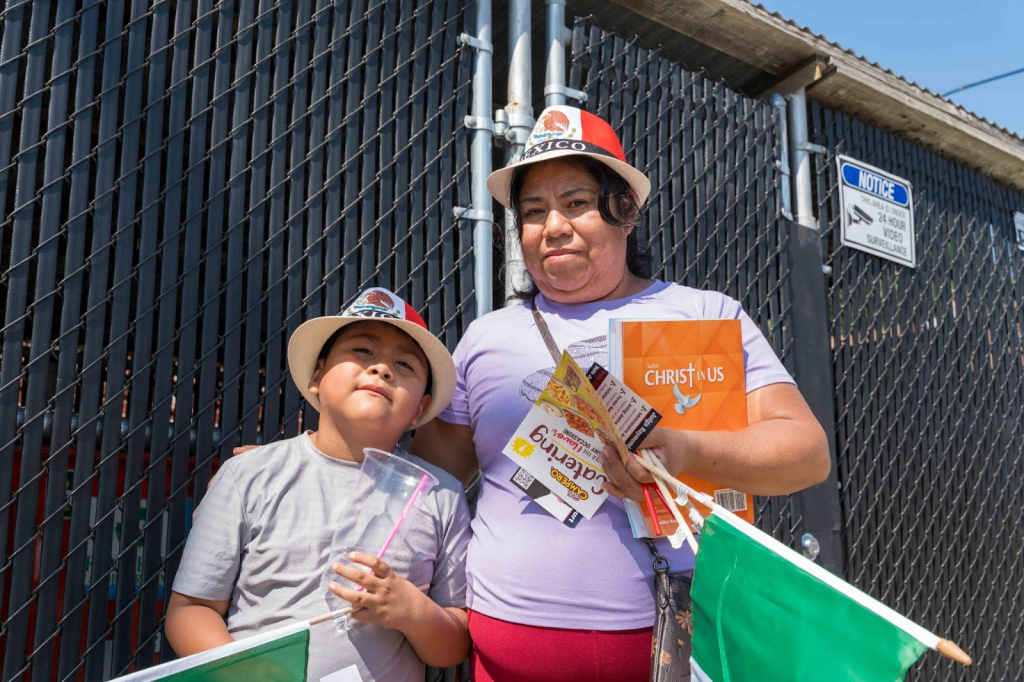
“It’s good that they’re supporting us the way they are now, since it’s a sanctuary here. There are other communities that don’t have that support like we do,” said Guadalupe, who migrated from Oaxaca two decades ago, and chose to only share her first name. “We are very grateful to everyone that is helping us.”
Regarding the cancellation of the post-parade fair, Guadalupe said she understands why more precautions needed to be taken, but was happy the parade continued as scheduled. “More than anything for [the children], so that they can grow up with the culture that we brought with us.”
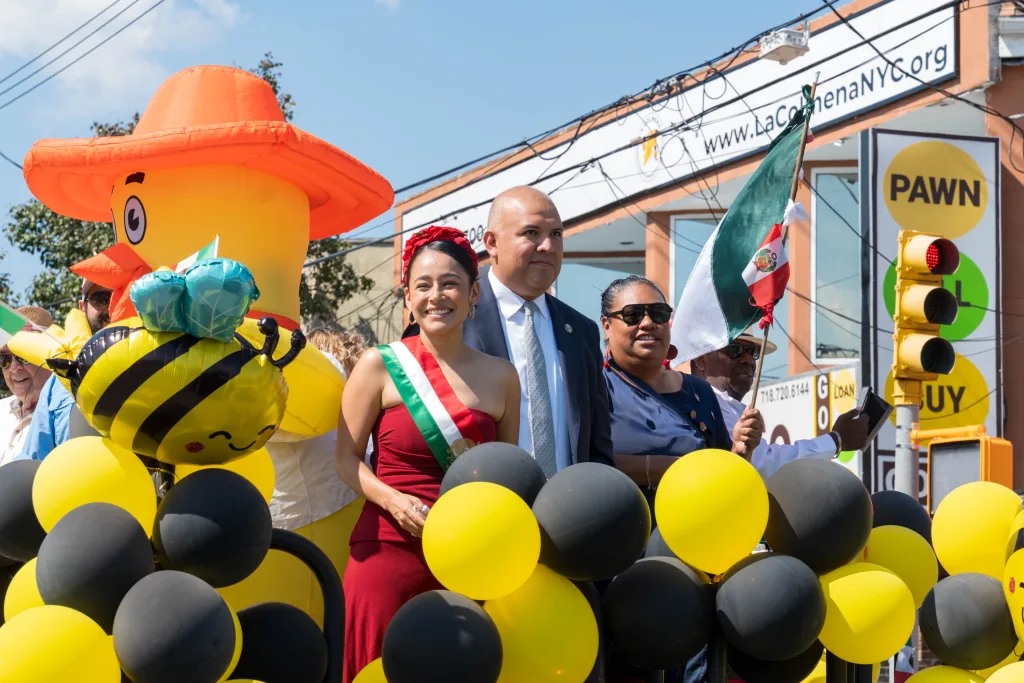
Other attendees included Manuel Castro, commissioner of the Mayor’s Office of Immigrant Affairs (MOIA), Assemblyman Charles D. Fall (D-61), and representatives from the Mexican Consulate. Local organizations Make the Road, the New York Immigration Coalition, Mixteca, and others were also present.
“It’s very important to clarify to the community that nothing has changed in respect to our sanctuary laws and policies,” Castro told Documented, adding that he hopes immigrants continue to see the city as a resource and as an ally. “[Our laws and policies] allows people to go to public school, public hospitals, police districts, and all kinds of resources in New York City without the fear that the federal immigration people are going to arrest them.”
He mentioned that this year the mayor added more than $120 million in legal services for the immigrant community. “If you come to my office, we will connect you with lawyers before your immigration appointment because that is the most important thing.”
Mata said that she would like the Mexican parade to continue growing in the next ten years so that every nationality in Staten Island— where 20% of the population is Hispanic — could have their own parade to celebrate and relish their ancestry.
Reliving her own experience growing up in Little Village, Chicago, where she celebrated the Mexican Parade every year, Mata said she would like children in Staten Island to have the same opportunity she had to celebrate their culture with pride. Quoting Mexican American civil rights activist Cesar Chavez, she said, “You cannot humiliate the person who feels pride.”