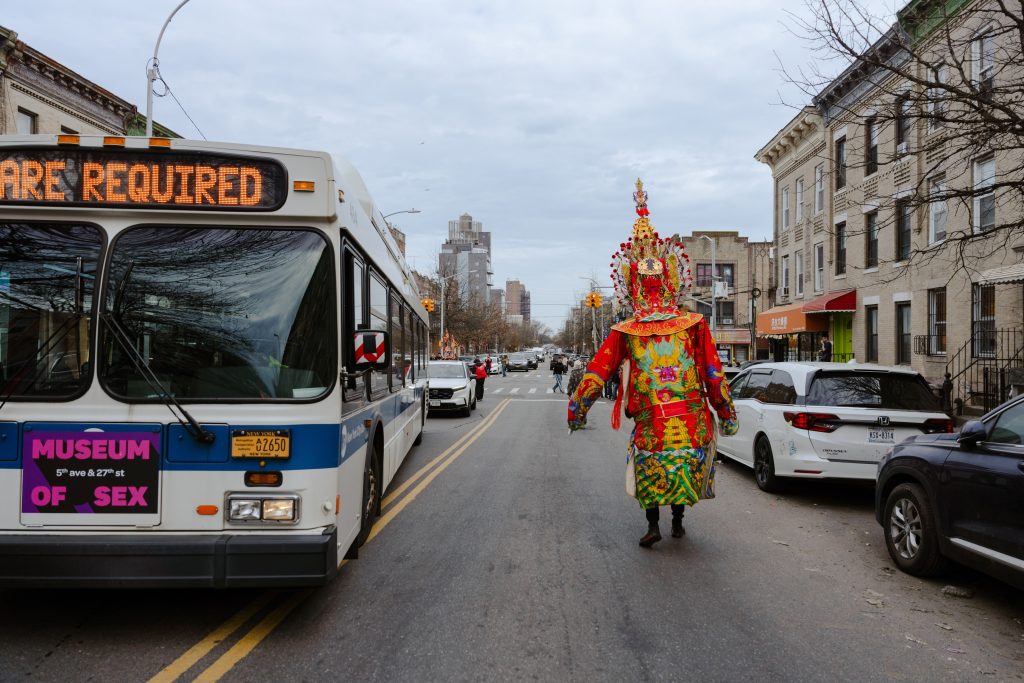


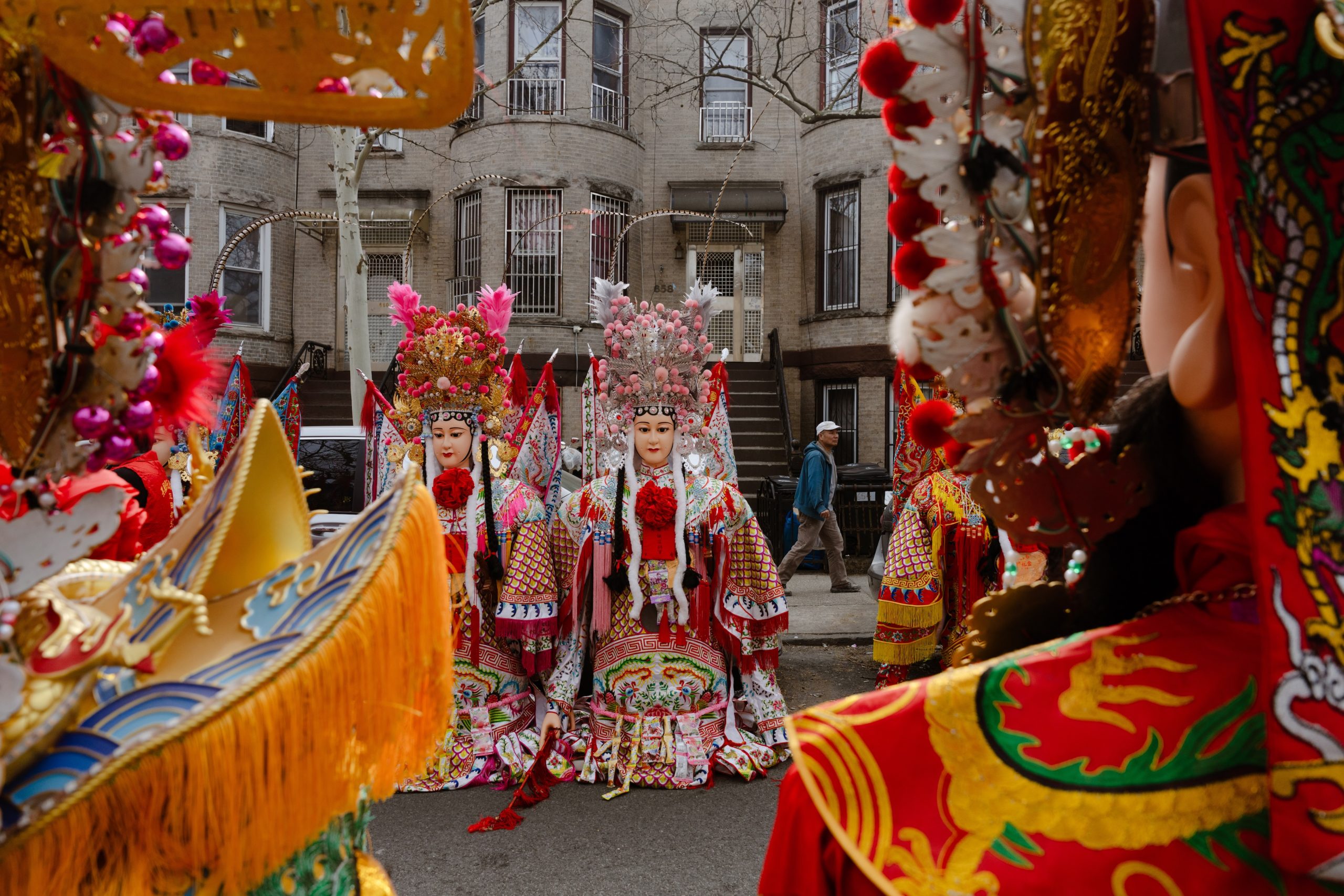


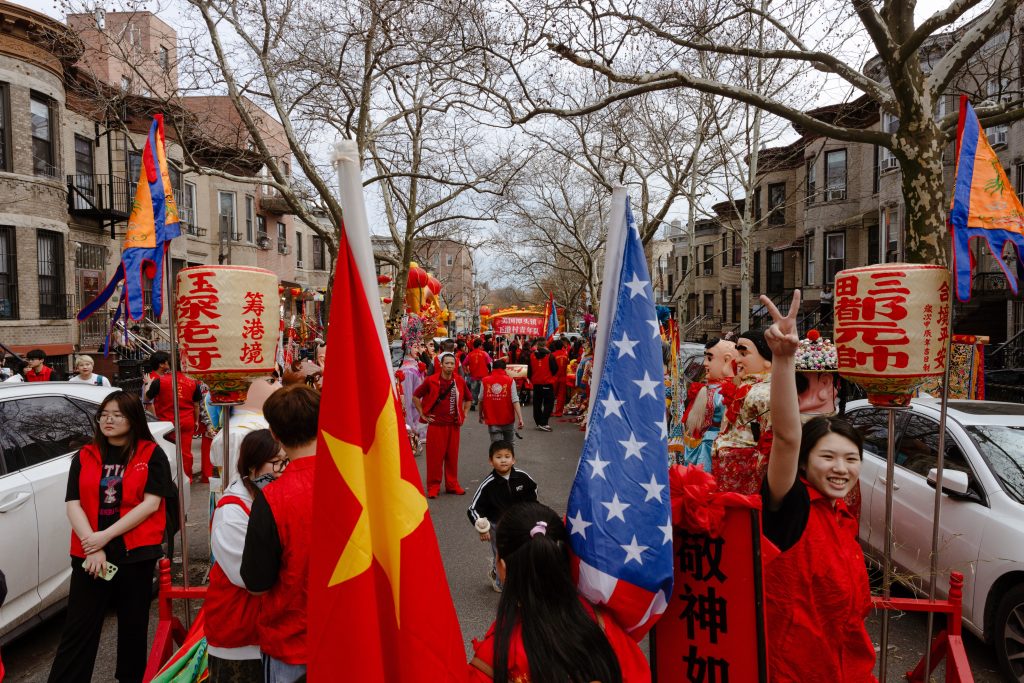
Businesses paused work, traffic came to a standstill, and orchestral music blared on repeat as residents peeked through the windows of their brownstone townhouses to find more than a dozen deities, each more than 10 feet tall, marching triumphantly through the blocks of Brooklyn.
In the afternoon on Wednesday, March 11, hundreds of Fuzhounese immigrants filled the streets of Sunset Park to celebrate the annual Parade of Gods, Youshen (游神), a centuries-old religious procession believed to bring blessings and protection to the community.
The parade began in 2022 and is now in its fourth year. Organizers say a surge of youth interest, stronger community networks, and the growing popularity of the ritual on social media helped create the conditions for the gods to walk the streets in America.

“When we saw how lively the celebrations had become in China, the followers came together and each contributed a little money to make it happen,” said Zengmin Liu, the 43-year-old leader of the parade.
Immigrants from Fujian, a southern coastal province in China, are part of a relatively young wave of Chinese immigrants, with most immigration from the region beginning in the 1980s. Because of rising costs and language barriers, many Fujianese immigrants struggled to find space in the already established Manhattan Chinatown, which is predominantly Cantonese. They were instead pushed to find homes down the N and R train lines.
Eventually, they built new lives in South Brooklyn. Today, Sunset Park is one of the largest Chinese communities in the New York metropolitan area. Most of the organizers of the March 11 parade can claim further familiarity as many hail from the same origin: Xiagang Village within Fuzhou, Fujian.
Nearly 8,000 miles from home, they are still bound together by shared origins and spiritual beliefs. One of the organizers, Yang Chen, 30, proudly points to a real gold plate on the chest of one of the statues bearing the name of Marshal San Taindu, the preferred god of Xiagang Village who is known for driving away evil spirits and disease with drumming music.
The village name, a representation of their clan, appeared everywhere: stamped on ritual items, printed on balloons and clothing, and stitched onto flags.
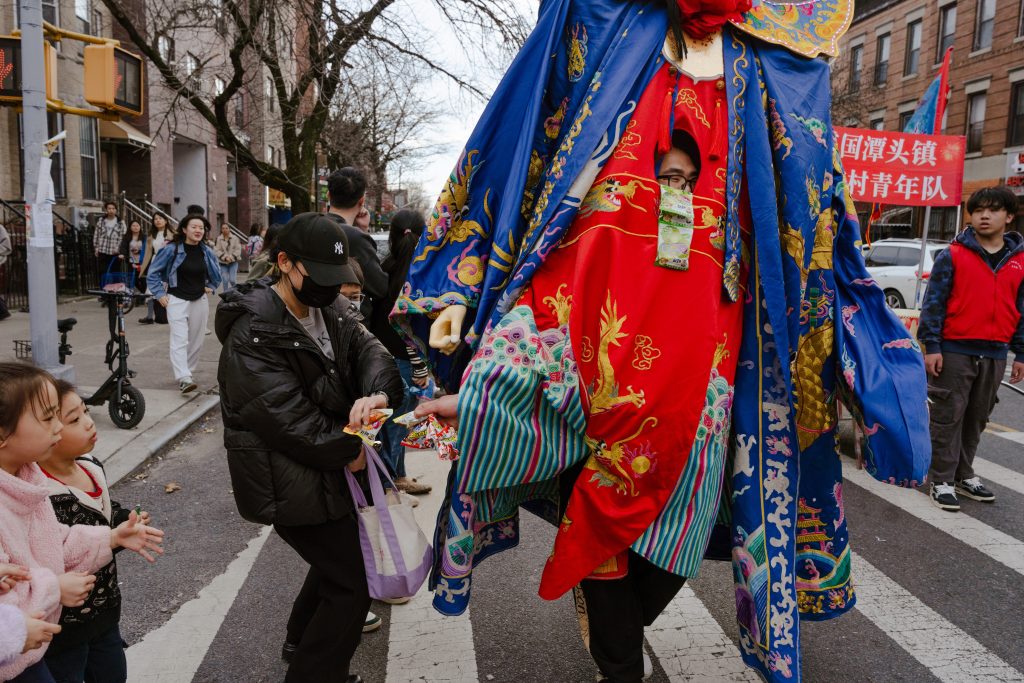
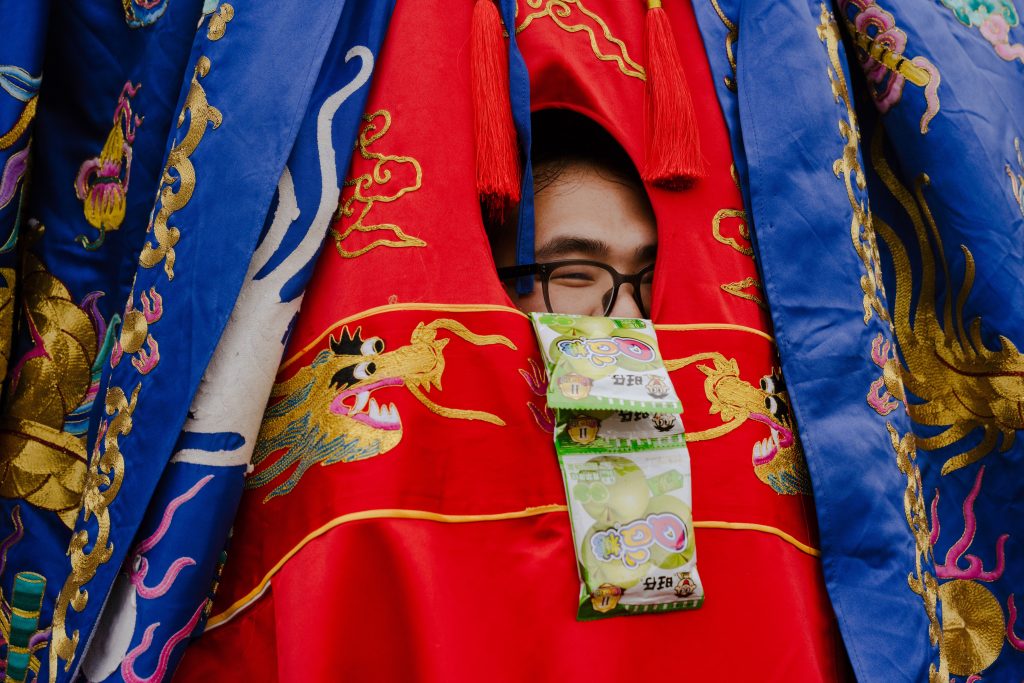
The parade organizers imported 18 deity figures, which were all handmade in China, consecrated by the village spirits and ancestors, and carefully packaged before being shipped to New York.
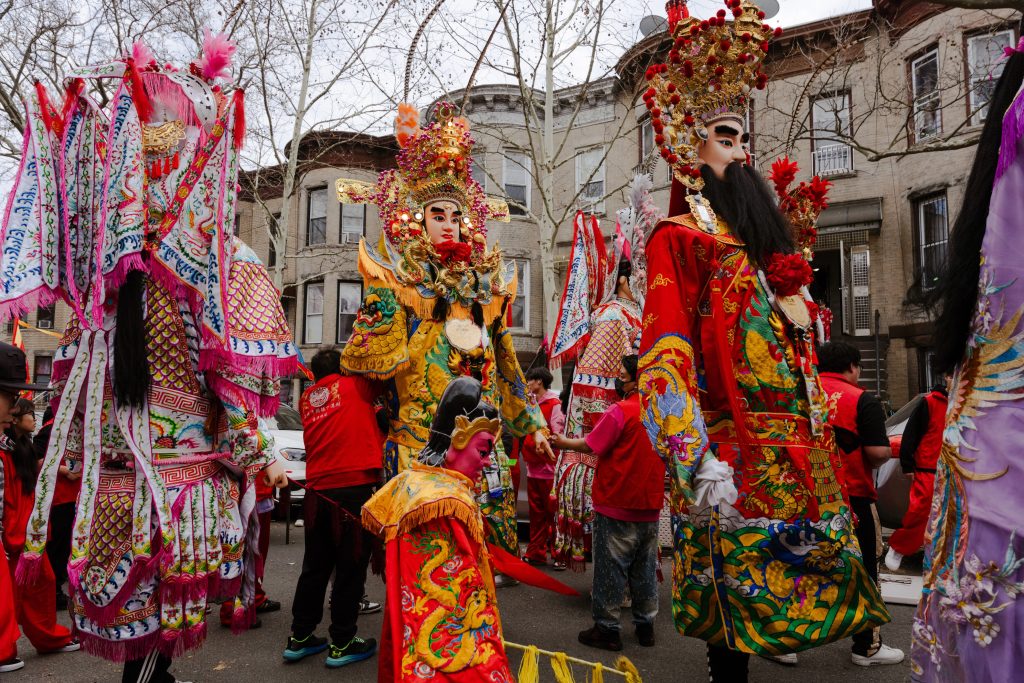
Each figure stands over six and a half feet tall, three shoulders wide, and can weigh up to 88 pounds. Dozens of young men from the clan lift them onto their shoulders, swaying side to side as they walk, as if the figures have come alive to patrol through the human world.
Zijun Lin, 18, who helped bring some of the deities over from Fuzhou, detailed the process of building and consecrating the deity figures, which are made of bamboo and camphor wood in their village.
Once the deities are built, and amid the misty scent of burning incense, a local Taoist shaman dances while murmuring spells, Lin said. The shaman then places two red talismans across the back of the neck and dots chicken blood on the forehead — one in the center, two on each eye, and two beside the ears. At that moment, the deities are believed to awaken from their bamboo-made bodies.
Only then can they march in the parade.
This elaborate procession brings little material return beyond a sense of homecoming for the community. The full cost, chipped in by neighbors, including the figures, ritual items, decorations, shipping, and food for the ceremony, can add up to more than $60,000.
“Your status in the community is not necessarily by how much money you have, but by how much money you can give away,” explained Kenneth Guest, a professor at Baruch College who studies New York’s Chinatowns. The idea of taking care of each other knits the immigrant community together.
Guest, who is an expert on Fuzhounese culture, believes the parades and religious processions help immigrant communities establish their place in the broader culture — an answer to the question of who belongs in America.
Two Generations, One Tradition
Some of the deity figures used in the parade have been in the United States for more than two decades, though previous generations never had the resources to organize a procession on this scale, according to Chen. Most of the year, the deities await their celebration in a basement unit in Sunset Park, which serves as a small village altar. Followers come daily to pray and replace incense.
As social media revives this tradition, more donations are collected and younger generations have stepped forward. The ritual itself has evolved. Colorful lights line the crowns and candy bags hang from the belts. The figures themselves have also taken on a more youthful look, some even resemble TV stars, helping the parade gain new popularity online. In recent years, millions have traveled across China to celebrate the procession with villagers in Fuzhou.
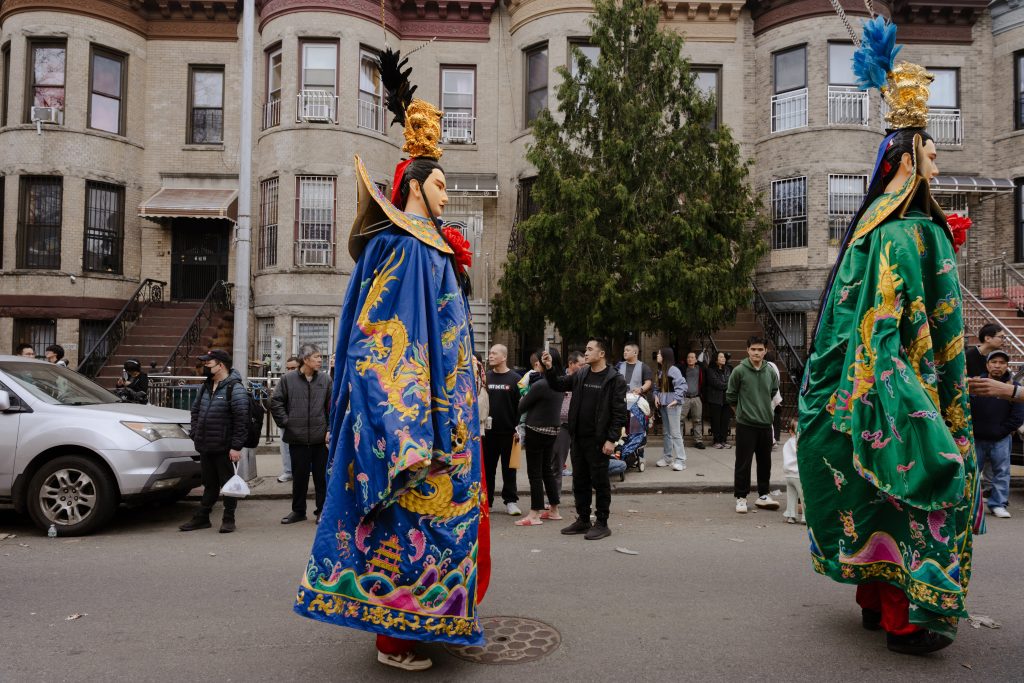
That same “youthification” can also be seen in the United States today. The gods carried through the streets of Brooklyn are no longer exact replicas of the centuries-old designs; rather, they reflect the tastes and creativity of a younger generation. Here, the sons of the Five Blessings Emperors have defined jawlines and fringe hairstyles, their personalities imagined as lively, playful, and close to youth culture, even said to really love gummy candies. Along the parade route, groups of teenagers handing out sweets to the crowd while taking turns carrying the figures.
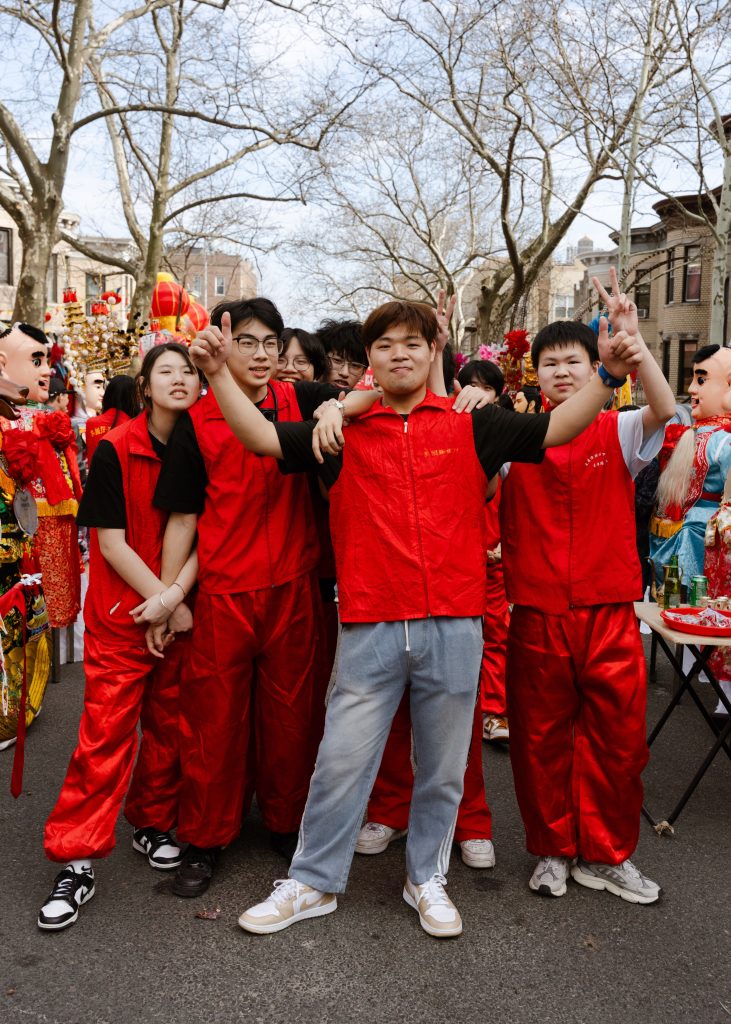
The neighborhood’s Fuzhou immigrant youth group, the main organizers of the parade, include nearly 200 members, some as young as 13. They commit to community volunteer work and dedicate themselves to upholding the traditions surrounding these deities. Lucas Xie, 14, was born in the U.S. and has never experienced a parade up close. He said getting familiar with the ritual makes him feel closer to his family roots.
Lin, the 18-year-old who helped bring some of the deities to Brooklyn, had left his Sunset Park community to work in Arizona, but, returned home a day before the parade. “I’m honored to take on this role, even if it means enduring a four-hour flight,” he said. A regular participant in the ritual, he is ready to shoulder the weight of the deities once again.
As the parade winds through South Brooklyn, the figures sway above the crowd, carried on the shoulders of the second generation who grew up far from the villages that first worshiped them. For a few hours, the wandering gods return to the streets, not in Fuzhou, but this time in Brooklyn.