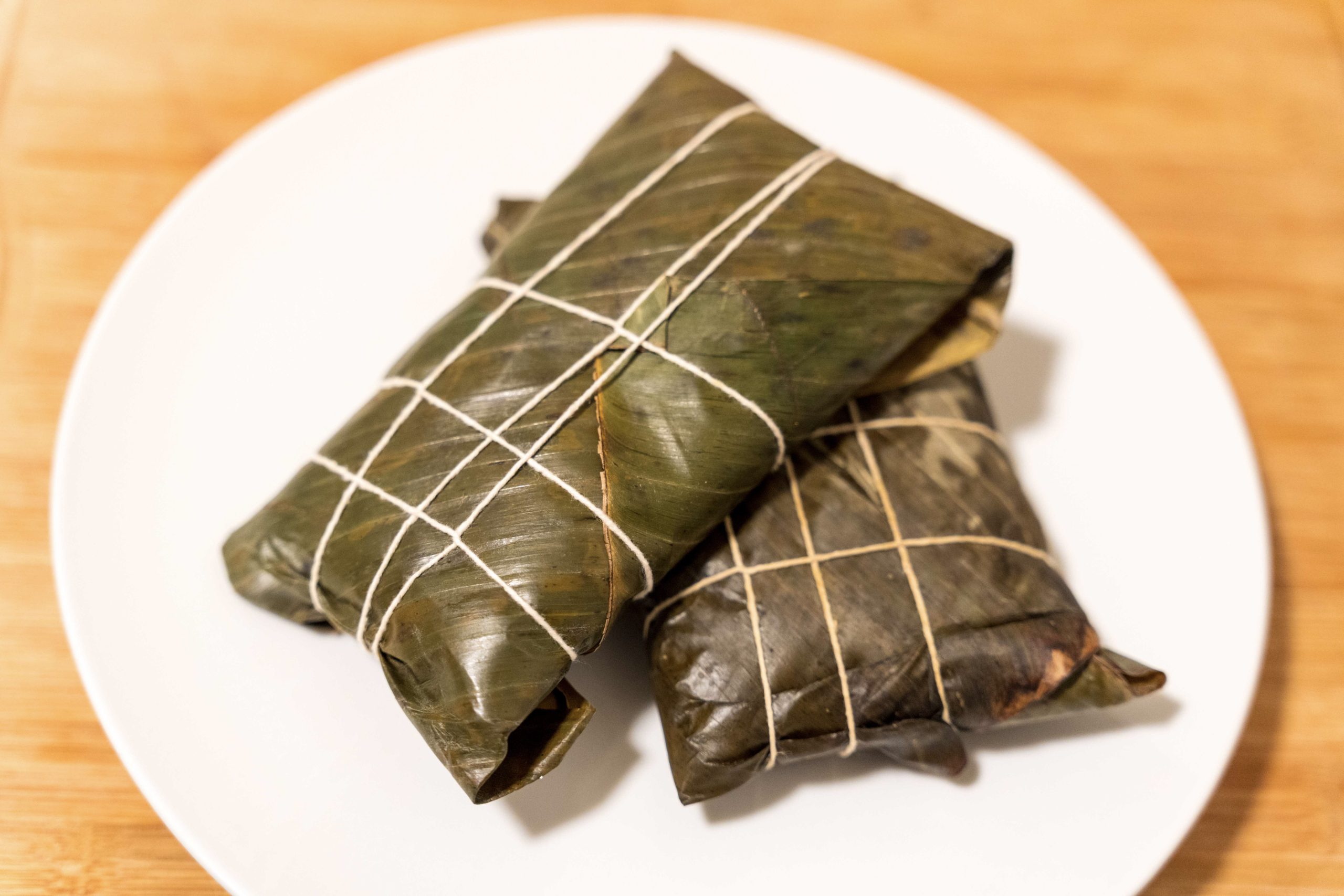


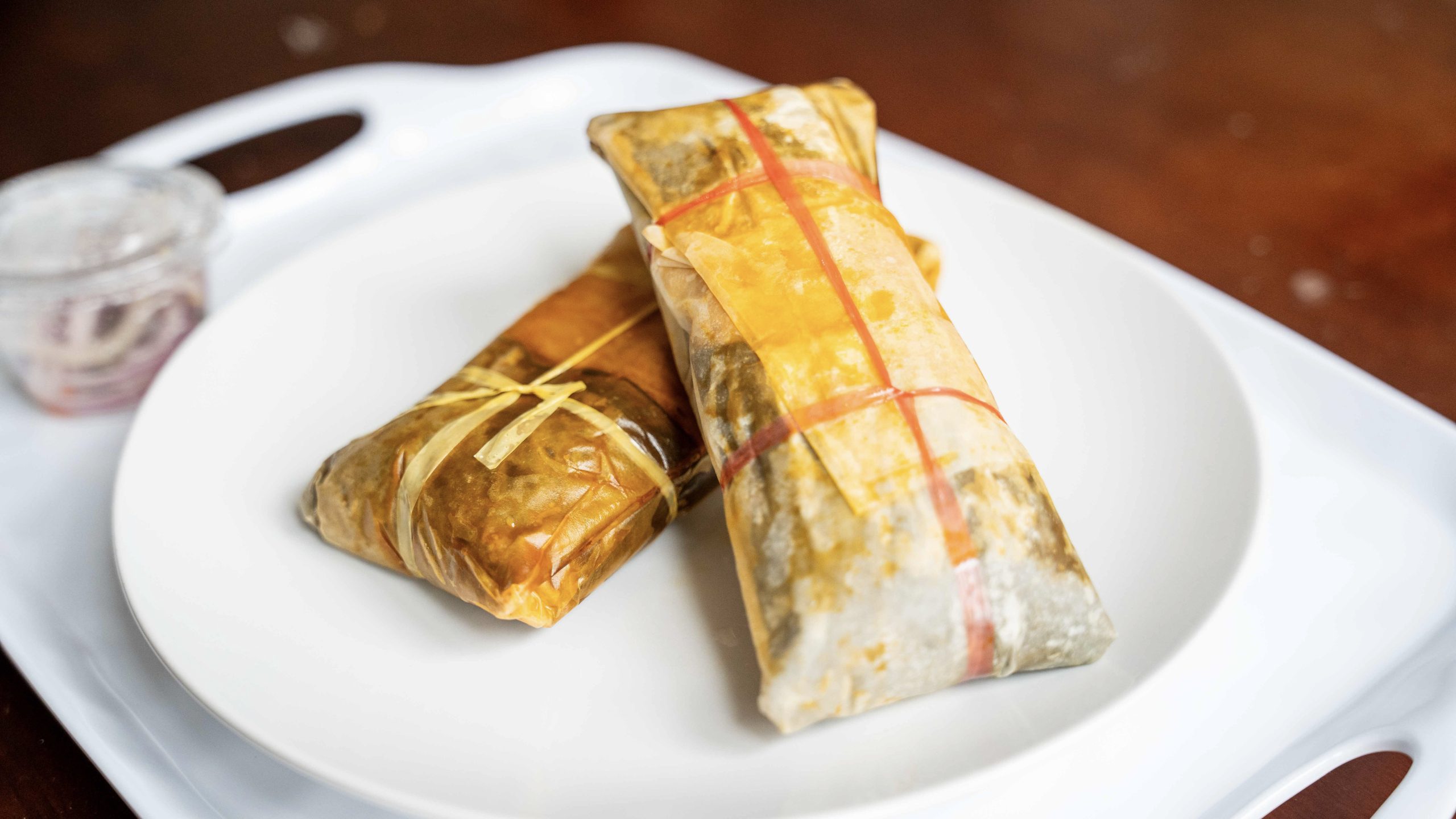


For Fernando Lopez, 43, tamales take him back to his childhood in Puebla, Mexico. With just one bite, he is immediately transported, remembering the more than a hundred family members and neighbors who gathered on Nochebuena (Christmas Eve) to feast late into the night. By 2 a.m., he said, the children would set a tire ablaze like a makeshift fire pit and play by jumping over it.
For Marly Quiroga, 50, hallacas — a Venezuelan Christmas dish and a distant cousin of the tamale — carries memories of her family in Caracas, gathered together to dance and cook for Nochebuena. She said each family member had a role in preparing the ingredients, with the finished hallacas being shared with neighbors and even strangers, a tradition meant to foster unity.
For Elvira Sucasaca, tamales evoke memories of a journey, the one her mother once took along the roads of Chincha, Peru, in search of the best recipe. That recipe, she said, became a staple of every Nochebuena celebration, happily anchoring family gatherings around the dinner table.

Now living in New York City, all three say they continue to make the tamales they grew up eating as a way to preserve memories of home during Nochebuena, a holiday time when families and communities gather to celebrate the anticipation of the birth of Jesus. Across Latin America, variations of tamales, wrapped, filled and steamed, have become emblematic of the holiday, highlighting seasonings unique to each country as well as regional similarities.
New York City is home to approximately 2.5 million Hispanic residents, many of whom proudly bring their own culinary traditions to holiday celebrations. Documented spoke with three cooks from Mexico, Venezuela and Peru who have adapted their traditional tamale recipes in the U.S., as a way to build and maintain community, culture and their memories while living far from home.
All tamales share certain characteristics, most notably the dough made from dried corn, but the process in which they are prepared, and how they are wrapped, can differ depending on the cuisine.
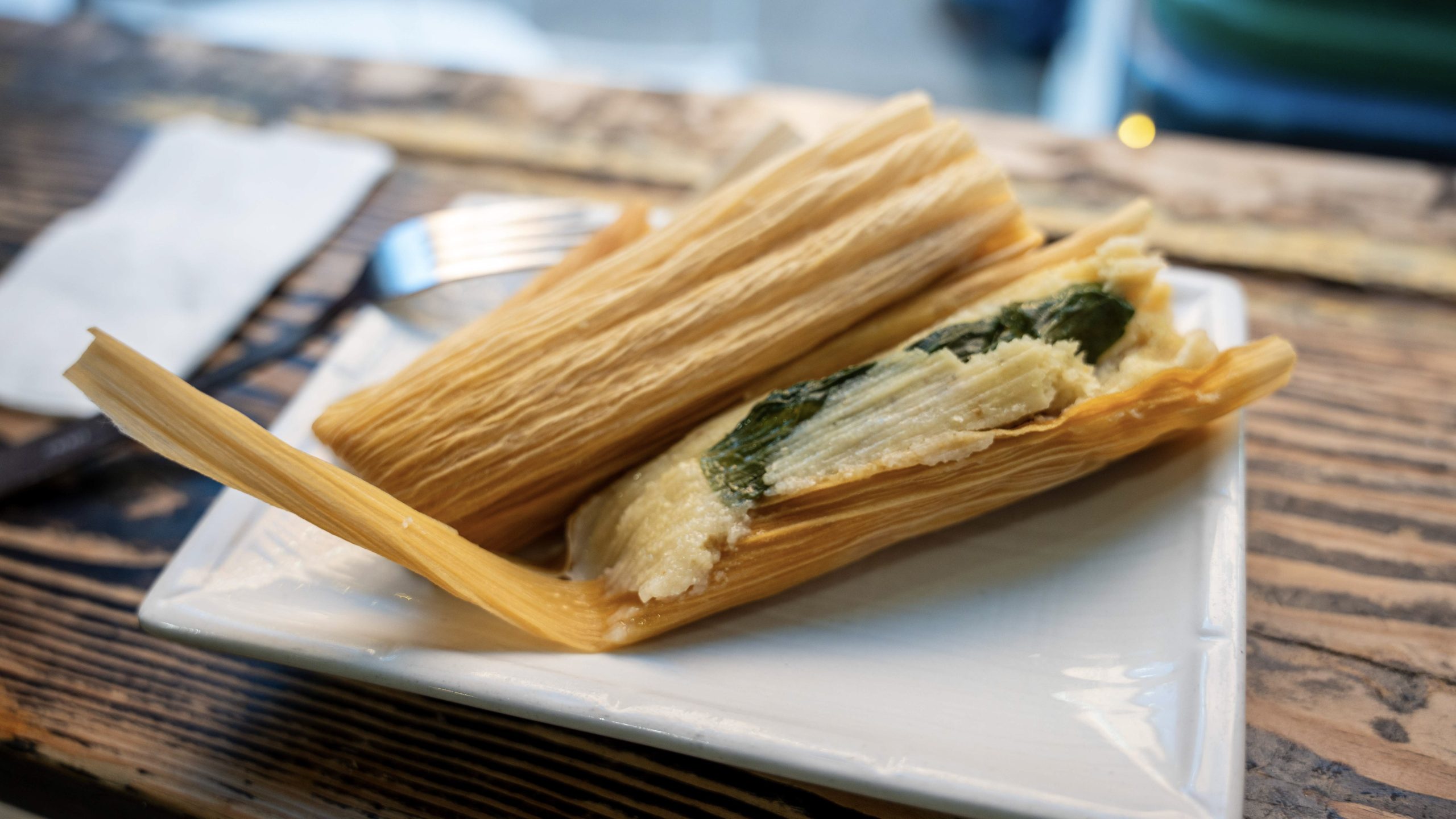
“I started gathering information about how to make traditional tamales and began experimenting with the help from my aunts, my mother and my in-laws,” said Lopez, who migrated from Puebla to New York 27 years ago. He said his uncle sold him a granite mill grinder (molinito) because it was too difficult for him to use. Once armed with the grinder, Lopez said he spent nearly a year playing around with ingredients to create what he described as the essence of his childhood.
“I had to do a lot of experimenting until I found the aroma and flavor that I was looking for,” Lopez said. He explained that everyone in his family knew how to make his grandparents’ special recipe, but that most of the ingredient measurements were eye-balled. “They would say add a pinch of this and fistful of that,” he said laughing. He added that every batch he made was measured and recorded so that he knew exactly what amounts to add to make the tamale he grew up eating back home.
He said he had the most difficulty creating his recipe for his tamale of mole poblano, which is filled with chicken and a dark, velvety sauce made from chiles, spices, and other ingredients. After nearly a year of experimenting, he said he was finally able to create the recipe — the one he now sells by the thousands at his two Factory Tamal shops, that he and his family opened in 2017 in Manhattan. The mole poblano tamal is also the one he makes for his family during the holidays in December, he said. It’s become a dish that is not only passed around the table, but passed down to younger generations as well.
“It [tamale] brings back memories, and you are reminded of Christmas Eve,” Lopez said. “We are so far away and it’s not as easy as just going back and forth. So, I think that by bringing a little piece of that place of Mexico, it gives you the feeling that you haven’t given up hope of one day returning to your homeland.”
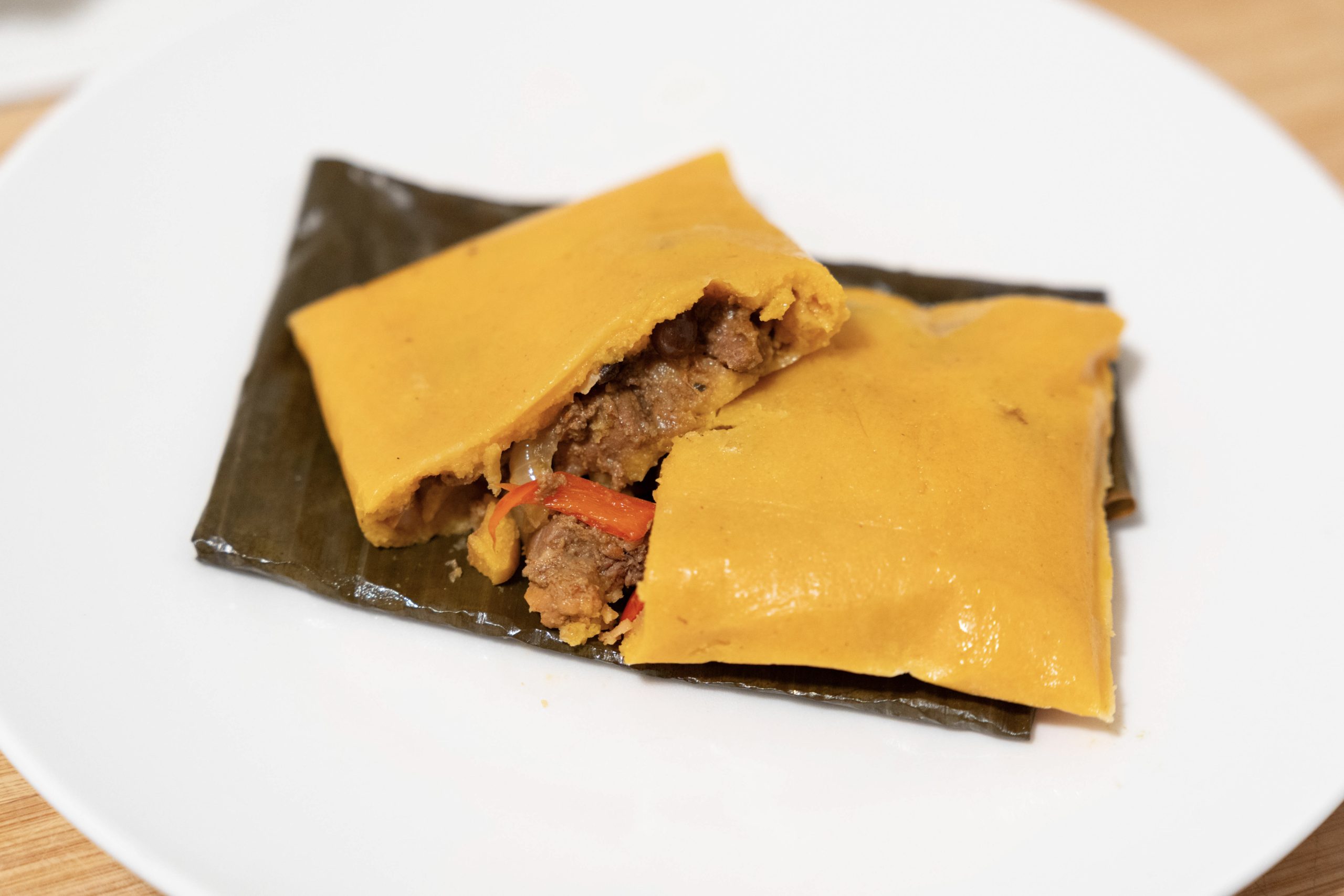
Similarly, the hallacas Quiroga makes each holiday season are like a delicious time capsule, filled with the flavors and memories of Nochebuena back in Caracas.“Hallacas for Christmas for Venezuelans represent an identity, a memory, family unity, joy, and festivity,” she told Documented. “For us, it doesn’t just mean food, but also nostalgia, memory, remembering our home, feeling close to our house, to our loved ones.”
Quiroga, who has been in New York for eight years, said that hallacas in Venezuela often signaled the arrival of Christmas celebrations. Family members would prepare at least three days in advance, with each person getting a task to put together the ingredients for hallacas and other dishes.
Unlike Mexican tamales, which are wrapped in corn husk, hallacas are wrapped in green plantain leaf that has been cut to a rectangular shape. The dough is made with a special broth, made of chicken, vegetables and other seasonings to add more flavor, she said. It is filled with three types of protein, like chicken, prime beef and pork.
Quiroga says that hallacas also represent a cultural blend of indigenous people, African people, and European influence. “The corn from the indigenous people, the seasoning from the Africans and from the European part the olives, raisins and capers.”
Back in Caracas, Quiroga, who studied law and was in academia, said she would often be in charge of putting the music to the celebrations as she, in her own words, did not know how to even fry an egg. In New York City, however, she reinvented herself — she became a chef and founded Arepa La Newyorkina with the intention of bringing memories from her home to the Venezuelan diaspora in the City.
Each year, Quiroga invites around 50 people to her home to eat hallacas and celebrate Nochebuena. “Venezuelans who approach me describe that I am the embassy of Venezuela here, and that they feel close to home,” she said, referring to the fact that there is no Venezuelan embassy in New York. “We even do a hallaca-tying contest to feel close to our traditions.”
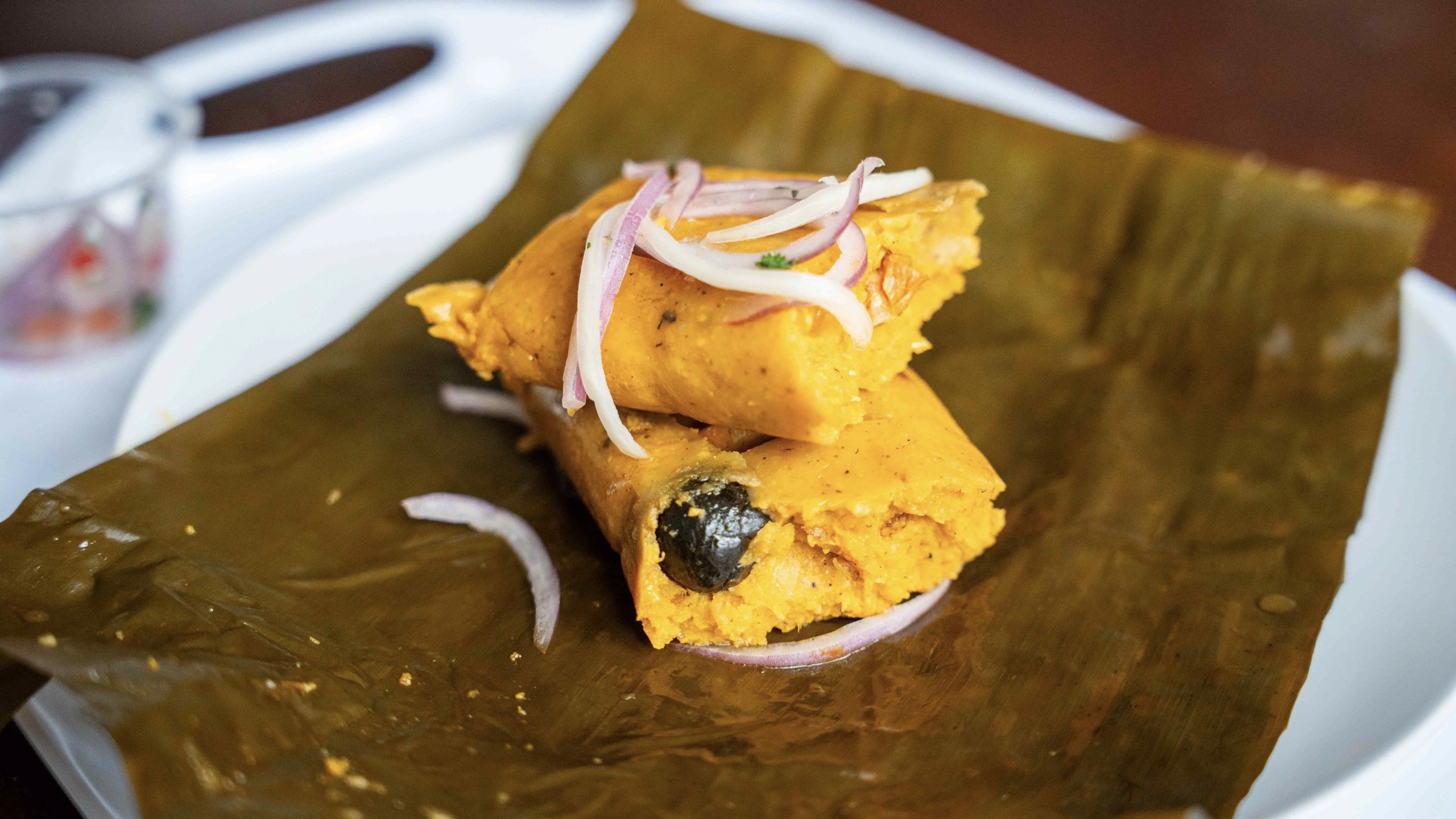
Sucasaca, who has been selling Peruvian tamales from her food truck in Queens for more than a decade, says tamales are essential on the dining tables during Christmas.
Back in Peru, Sucasaca’s mom set out on a mission to look for the best tamale recipe in the country. The search took her 200 kilometers south from Lima, where they lived, to the city of Chincha. “My mom said we are going to look in Chincha because the tamales originated there,” Sucasaca said, explaining that the two took a trip to visit a woman who could share with them the ingredients and teach them how to make authentic chinchano tamales. “The adults know that the tamales from Chincha are the best,” Sucasca said.
Chinchano tamales are distinguished by their color and shape, Sucasaca explained, emphasizing the use of annatto (achiote) to give it its distinctive marigold color. “For the tamale, we use peeled hominy,” she said, referring to a special type of white dried corn known as Maíz Mote, which is soaked in water for about two hours. Once softened, the corn is ground into a dough. “We use a little pepper, red chili pepper, and annatto, which is from Peru.”
Sucasaca remembered that whenever her family travels to Peru, they always make an effort to bring back annatto to give their tamales more color and vibrancy. “We would ask them to bring annatto so that we had enough to make it for the festivities, the procession, Mother’s Day, Christmas, Thanksgiving, and all,” Sucasaca said, adding that during the holidays her customers along Roosevelt Avenue in Corona, Queens, also tend to buy more tamales.
But sharing tamales with her daughter and niece, both of whom were born in the U.S., is also special for her because it helps her hold on to her Peruvian culture. She said her family often requests tamales for Nochebuena —they eat them with onions, salsa criolla and spicy sauce. “People always come and are always asking for tamales to eat at night or for the next day, sometimes I say: ‘I’m going to take it easy for the family, I’ll take my tamale today and tomorrow I’ll have it for breakfast.’”
“It can be eaten in different ways. In the morning with bread, in the afternoon as an appetizer followed by the main course. It goes with everything.”