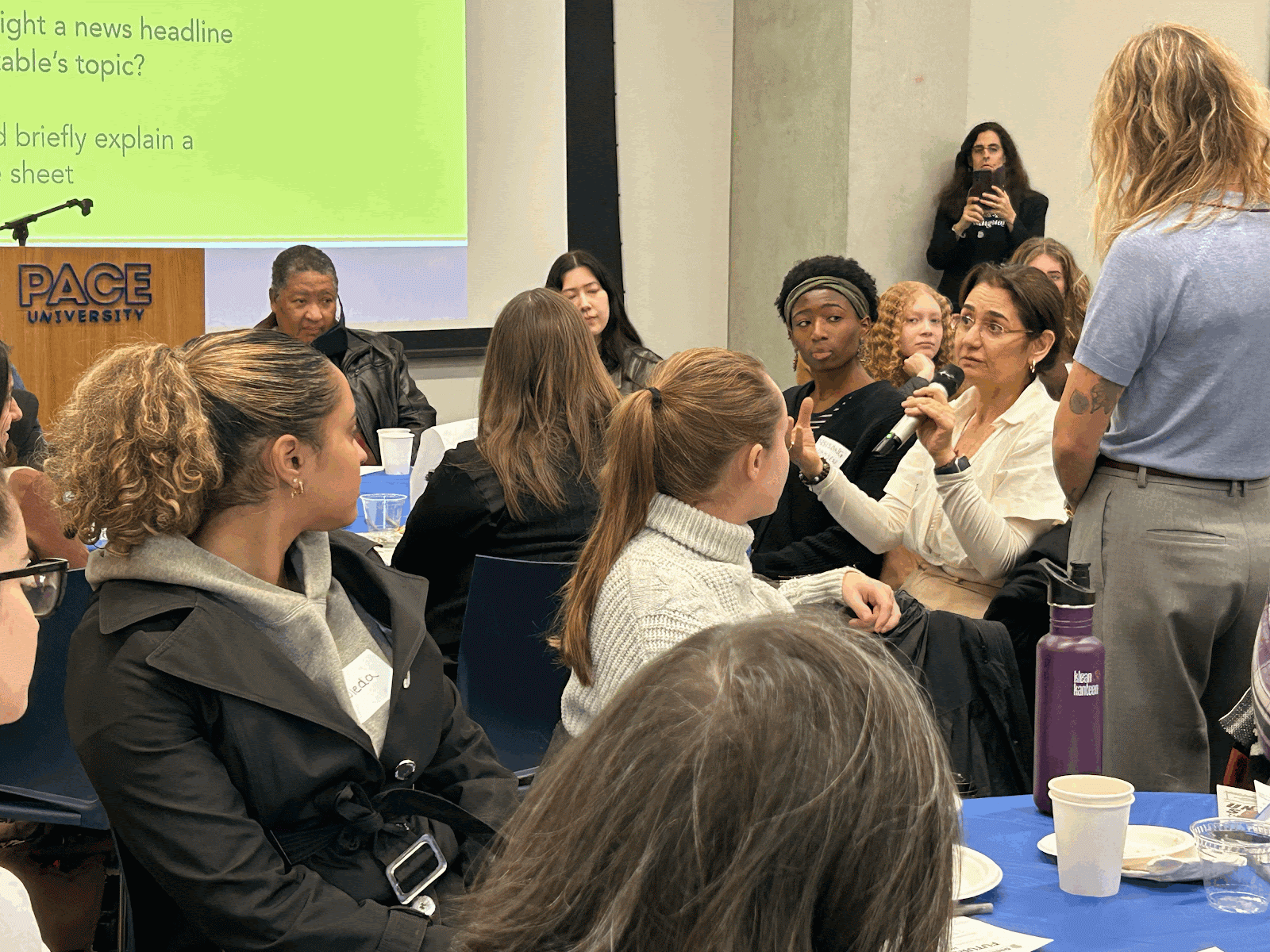


A week after an election that saw immigrant issues and the power of immigrant voters taking center stage, Documented and Pace University held a community forum just blocks from City Hall. The event brought 150 policymakers, agency leads, students, faculty, nonprofit leaders, and philanthropists together to set a proactive agenda for the coming decade. Days later, several participants and members of their organizations joined the Mayor-elect’s transition team advisory committees.
The Future of New York was an experimental discussion to democratize civic engagement. It was designed to amplify the perspective of New Yorkers, particularly immigrants and first generation students, whose voices are often missing from mainstream public debate.
The day began with university students presenting findings from community focus groups, new polling, and original research, highlighting healthcare, immigrant safety, and development — themes that shaped the focused conversations of the day.

“Urban futures must be shaped now, not reactively,” said Mayadaliz Acevedo, a Pace student attendee, about her participation. “The ‘future city’ must be resilient, inclusive, and shaped by public-private partnerships that prioritize climate readiness and reduce inequality.”
Mazin Sidahmed, co-founder and Executive Director of Documented, closed the day with a reflection on the need for news outlets that can build community power by consistently listening, responding to, and foregrounding community needs. Documented has been innovating in this space in English, Spanish, Chinese and Haitian Creole, covering low-wage immigrant communities, creating actionable timely information, and playing a bridge role that centers those perspectives and creates accountability for policymakers.
Pace University Professor Amy Foerster, a partner on the project alongside Professor Meghana Nayak, said the event represented a unique effort to build collective, long-term will and strength “to make our city a better version of itself: one that continues to inspire and challenge and welcome everyone, and which resists the forces that try to pull us backwards.”
你知道吗?非公民办理驾照时的这个错误可能会导致选民欺诈
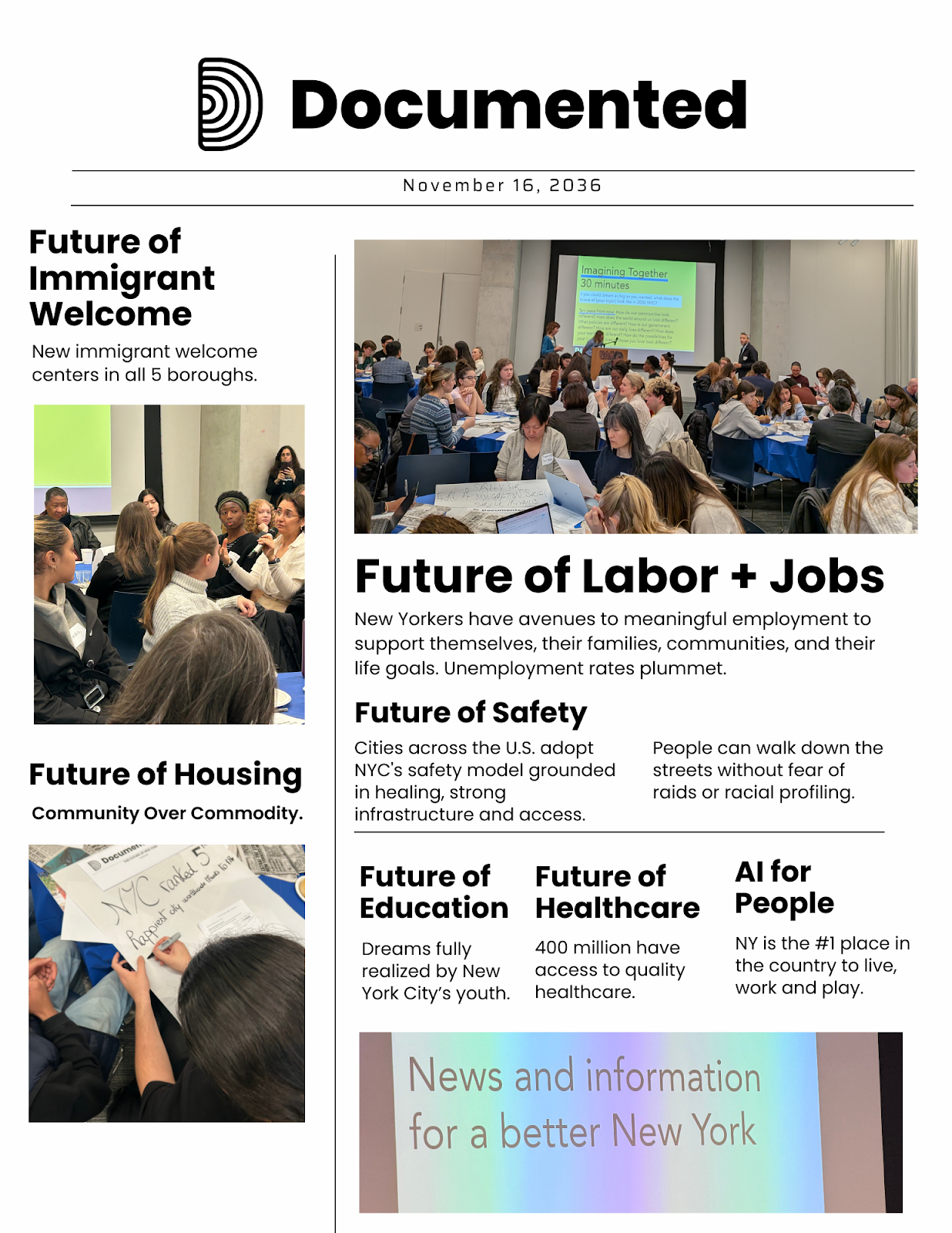
The conference utilized a participatory model, replacing traditional frontal panels with animated discussions on labor and jobs, safety, welcoming immigrants, human dimensioned AI, education, housing, and mutual aid.The organizers hope the conversations will provoke further and deeper planning discussions among those involved in the mayoral transition and in future community-led events that use the same model of generative workshops.
“Diverse, engaged civic spaces like these are so important for us to look up from the intensity and crises of the moment to collectively imagine what is possible,” said Ariana Lutterman, a foresight practitioner and civic designer for the NYC innovation team. “The next step is the hard work of building a path to get there.”
Lutterman steered the participatory model, and the following diverse group of experts facilitated and joined conversations:
- Office of New York State Senator Brad Hoylman-Sigal (Manhattan Borough President-Elect)
- Office of New York State Assembly Member Larinda C. Hooks
- Office of the New York City Public Advocate Jumaane D. Williams
- New York City Council Member Gale A. Brewer
- Office of Commissioner Vilda Vera Mayuga (Department of Consumer and Worker Protection)
- Adama Bah (Afrikana)
- Rodrigo Camarena (Justicia Lab)
- Profs Beatrice Chen and Stephanie Hsu (Immigrant Social Services and Pace)
- Dr. Jonathan Jimenez (NYC Care)
- Deneysis Labrada (College Access: Research & Action (CARA)
- Kathryn Lloyd (Tenement Museum)
- Commissioner Wendy Star and Johnny Celestin (NYC Economic Development Corporation)
- Isa Abraham (Malikah)