




I grew up in the new immigrant spaces of New York City. As an intrinsically food-obsessed kid, that meant growing vegetables and making kimchi with my grandma in Flushing. It also meant freshly puffed-up poori at my friend’s home in Bellerose and garlic-laced pernil as payment for working at my parents’ gold jewelry store in Harlem. It’s what crystallized a passion for telling the stories of the craft and grind of immigrant cooks and chefs — which I now do as a food journalist.
I’ve lived here long enough to see the introduction of dishes in New York — either towed straight from their motherland or reinvented in the city’s fertile foodscape. Immigrants, both old and new, thread their cultural flavors and techniques into home-spun dishes.
Since arriving in New York centuries ago, some dishes have broken out from the communities they initially served and reached mainstream success; some even achieved iconic status. Chinese immigrants gifted us fried rice and Peking duck; Jewish Eastern Europeans blessed us with bagels and knishes; the Nepalese made us fall in love with momos; and Indians warmed us with chai. Hotdogs, hamburgers, and black-and-white cookies? We have the Germans to thank for those. Cheesy, melty arepas? Kudos go to Colombians and Venezuelans.

Dig deeper into the hot, crackly layers of history, and you’ll see a collision of forces behind each dish: the throes of immigrant survival, the formation of communities for refuge, the brilliance of business ingenuity, the push-and-pull of racist federal policy. The result, when it comes to food, has been exquisite. Through these five iconic New York foods, I’ll take you through that complex story.
Halal cart
I used to get knishes and hot dogs from food carts. Now it’s halal chicken over rice.
The humble food cart has had a long history in NYC, serving as an entrepreneurial entrypoint for new immigrants: from the Italian peanut sellers and Eastern European Jewish pickle vendors who dotted the streets of the Lower East Side in the 1800s to Greek souvlaki skewer servers in 1970s Astoria and the Egyptian halal cart handlers in the 1980s.
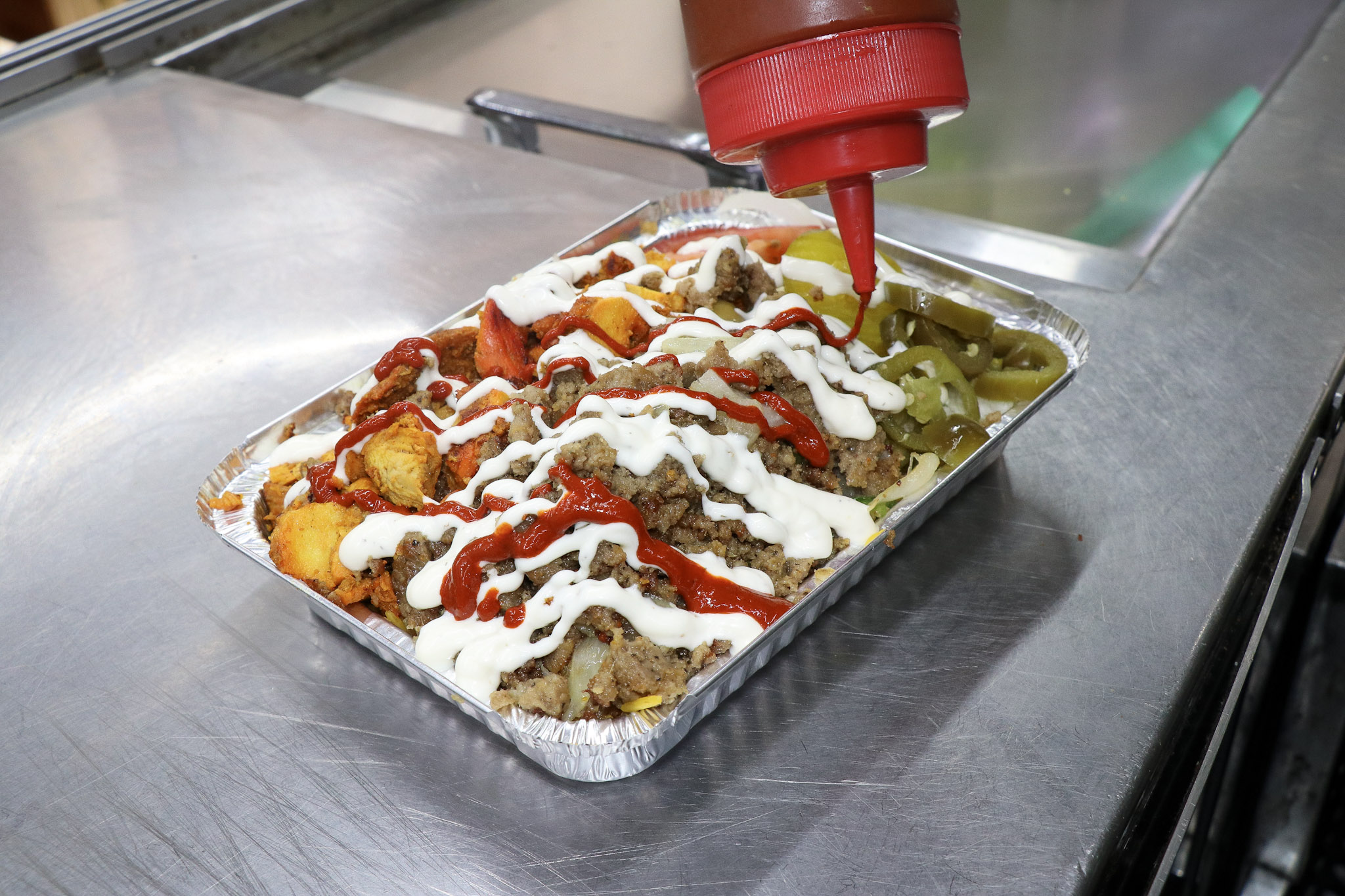
New York halal cart food is its own thing, launched by Egyptian immigrants but distinct from the popular street foods in Egypt, like koshary (mixed rice, lentils, noodles), mashed fava beans, and hawawshi (meat pastry). The first halal cart vendors popped up to fill a demand from the surge of Muslim cab drivers who needed to eat on the go. With ease and efficiency top of mind, they began dishing out a combo of meat, rice, and salad drizzled with tangy, garlicky white sauce — a meal that neither skimped on size nor flavor. The dish has gotten so mainstream, that it’s become synonymous with “halal food,” which really just means any food that follows Islamic custom.
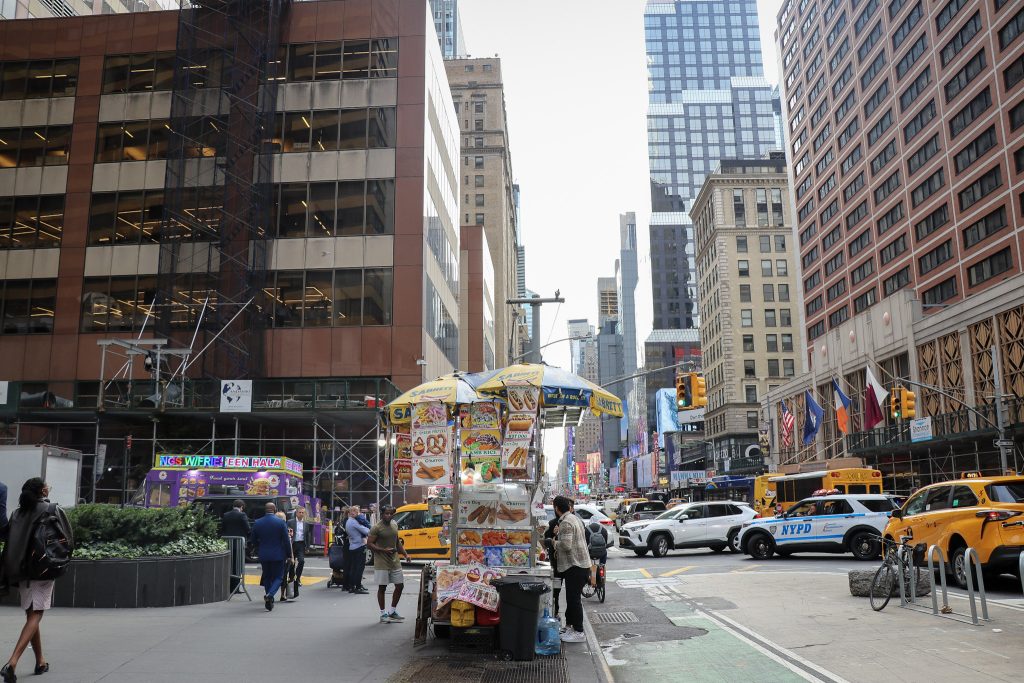
Mahmoud Hussen has been in the game for 17 years, first learning the ropes as a worker at The Halal Guys, and eventually partnering up and opening Tajeen, a food truck on 11th and First. Now, the partners own eight trucks, with one serving 800 customers daily. Another on 52nd and Seventh is open 9 a.m. to 6 a.m. to serve all walks of life: office employees, tourists, and night-shift workers — taxi drivers, delivery workers, doormen — looking for a tasty fix. Hussen says the combo platter of chicken and beef is the star. But what really sets Tajeen’s offerings apart is its assortment of veggies like chickpeas, jalapeños, olives, green bell pepper, and pickles.
Tacos
Tacos have come a long way since their early days in New York.
In 1938, Juvencio Maldonado, an electrician from Oaxaca opened what some claim to be the first Mexican restaurant in New York. And in 1950, he received the patent for a tortilla frying machine to produce hard-shell tacos. These are actually rooted in northern Mexican cooking although Glen Bell, a white, European-descended American in California took credit for creating the concept at his nation-wide Taco Bell enterprise in the 1950s.
After Mexican immigration to the United States surged in the 1980s — many fleeing a debt crisis, a deadly earthquake, and major political and economic shifts — Mexican communities began to form throughout New York City. Today, many of those early Mexican neighborhoods in all five boroughs — Sunset Park, Bushwick, East Harlem, Mott Haven, Port Richmond, Corona — remain cultural and gastronomical cornerstones of the Mexican community.
While luxury, chef-driven tacos are having their moment in Manhattan, in Queens, the main story is still about traditional-leaning tacos cooked by and for the local Mexican American community. From brick-and-mortar restaurants to taqueria stations inside bodegas and the ubiquitous street vendors (you can easily see four taco trucks in one block), it’s not hard to find birria from Jalisco, mesquite from Tijuana — all in Queens.
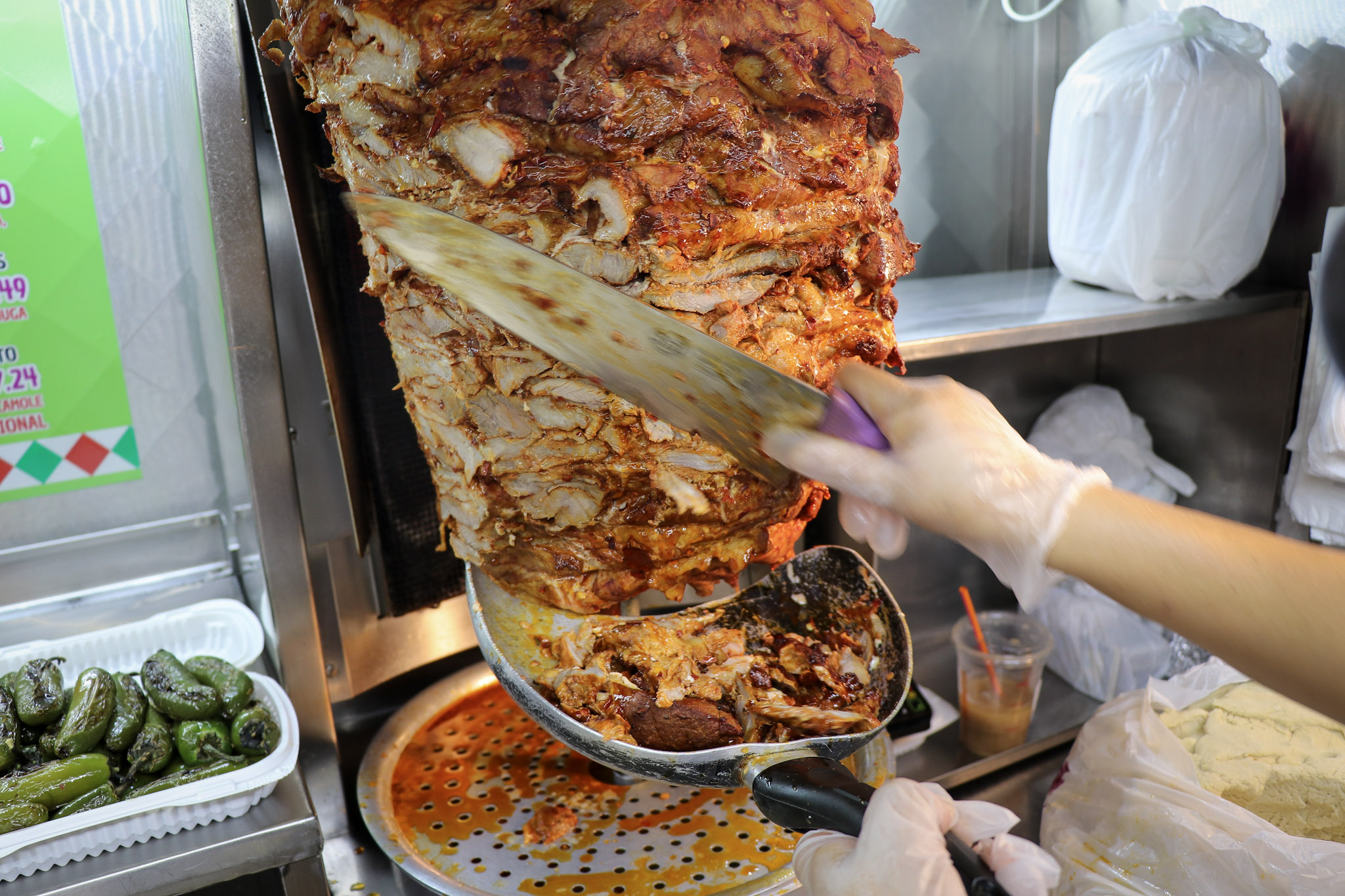
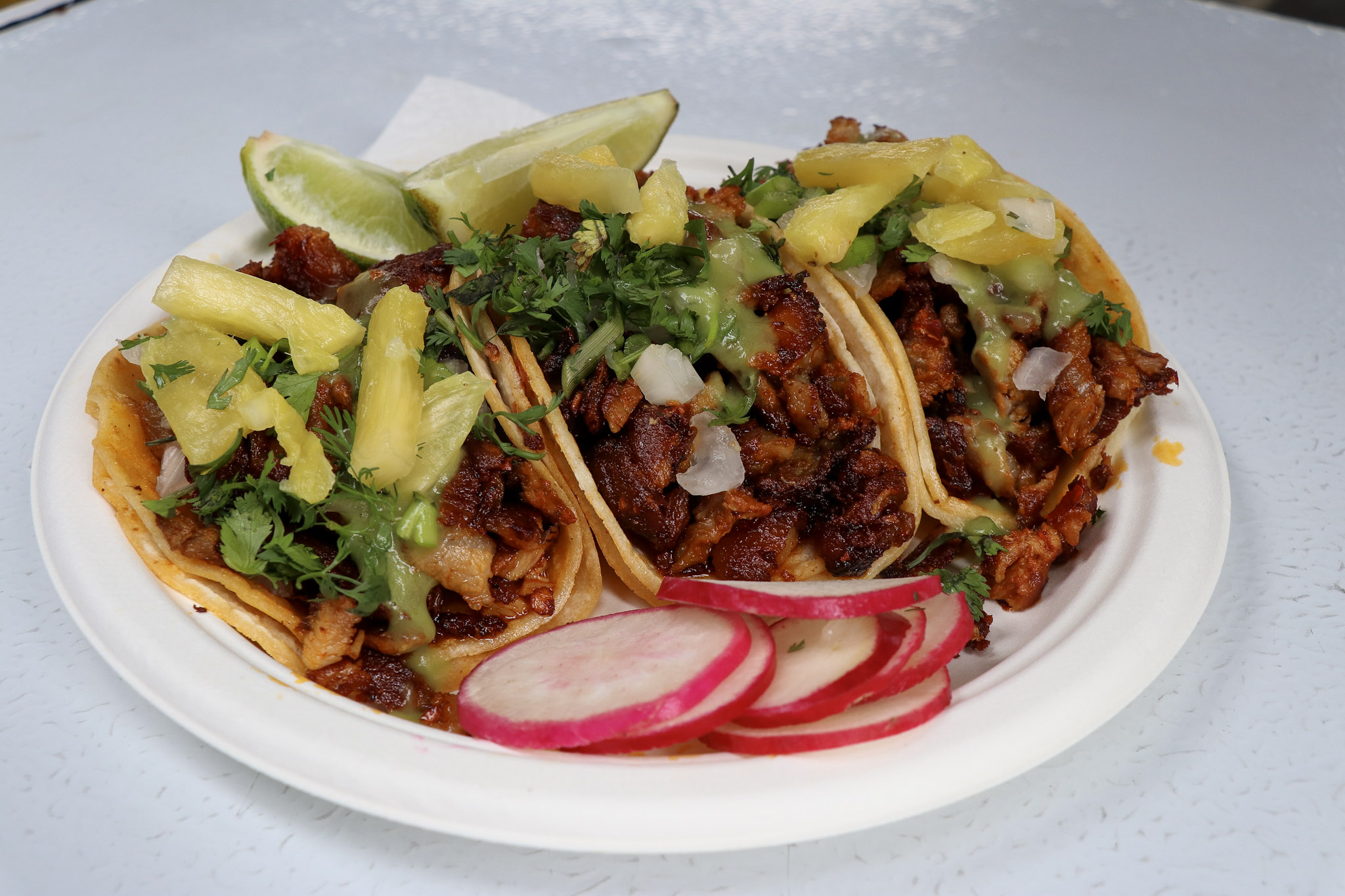
And CDMX-born chef Carlos Morales is part of that mix. Since 2017, Morales has been running his “Antojitos by Charly” food cart in Jackson Heights. His specialty is al pastor: a glowing red beehive of juicy pork hangs suspended on a vertical spit or “trompo.” After leaving Mexico City, he worked at various Mediterranean restaurants and a catering company. That’s why his al pastor hits different from what you might find in Mexico City. It’s the embodiment of Mexican entrepreneurial immigrant history: seasoned with global ingredients that he’s picked up from past restaurant jobs: peanuts, bay leaves, paprika, and guajillo.
Over the years, he’s expanded his business and employed workers who assemble some of the fattest tacos in the city, brimming with soft, juicy meat that boasts crispy, salty, charred edges, prisms of pineapple, and house-made green and red sauces. The juices drip down your arm as you eat one — and you won’t be mad about it. His local working-class community is still his main market: three for $10.
Pizza
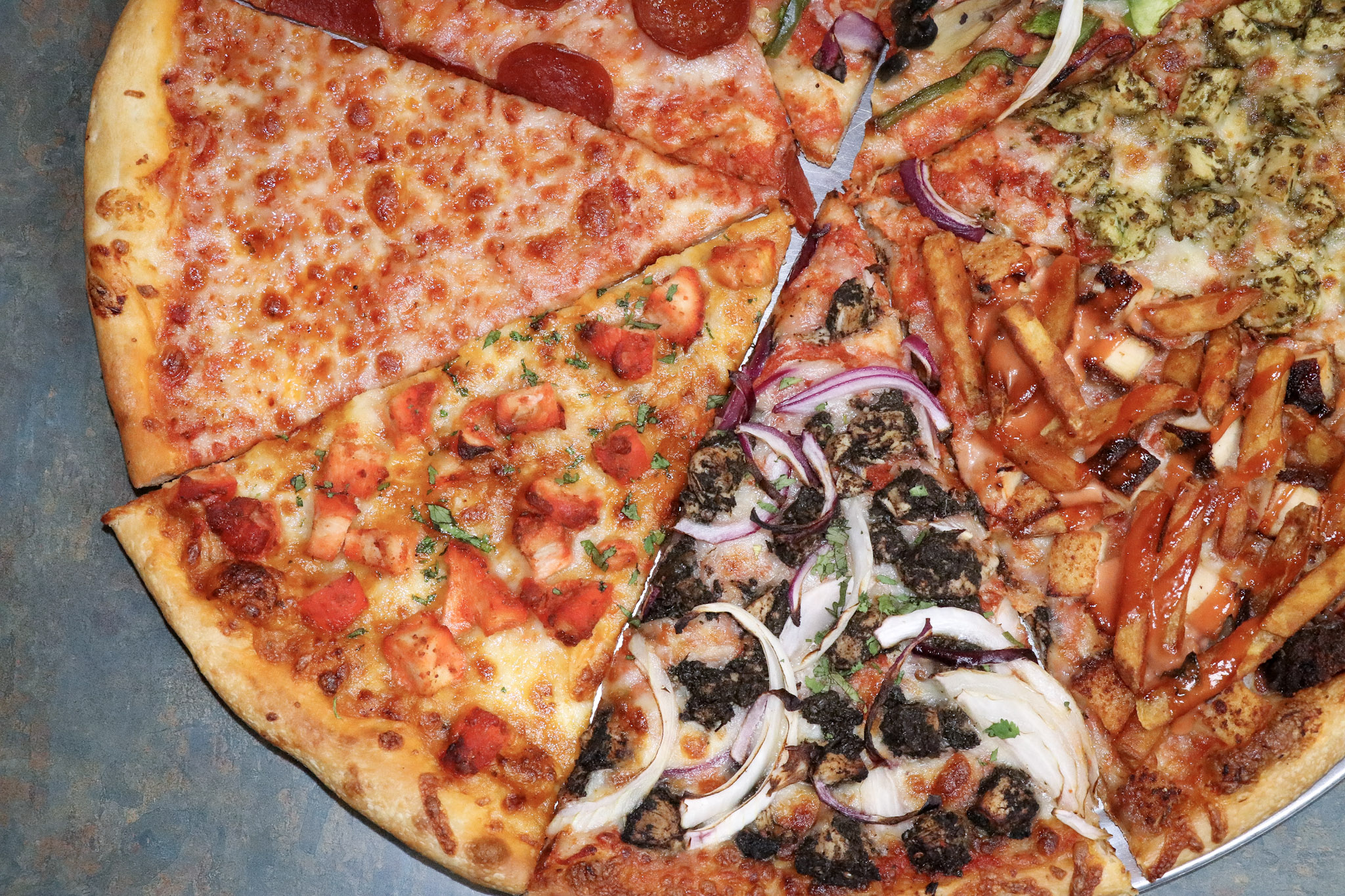
New York City and pizza are almost synonymous with one another, and there’s a reason for that. It’s been part of the city’s cultural fabric for a long time — but it has evolved along the way. The earliest documented presence of pizza in New York was in 1894 at a small pizzeria located at 59 1/2 Mulberry Street in Little Italy. For many Italians, pizza was a taste of home — and it was one of many longstanding traditions that the new Italian immigrants brought with them as they escaped the poverty, disease and social disorder that characterized their recently unified nation of Italy for Ellis Island.
What started as a whole coal-oven pie with a smoky flavor and dry, charred crust eventually became New York-ified. It got sliced up, and gained thicker crusts, varied toppings, larger sizes.
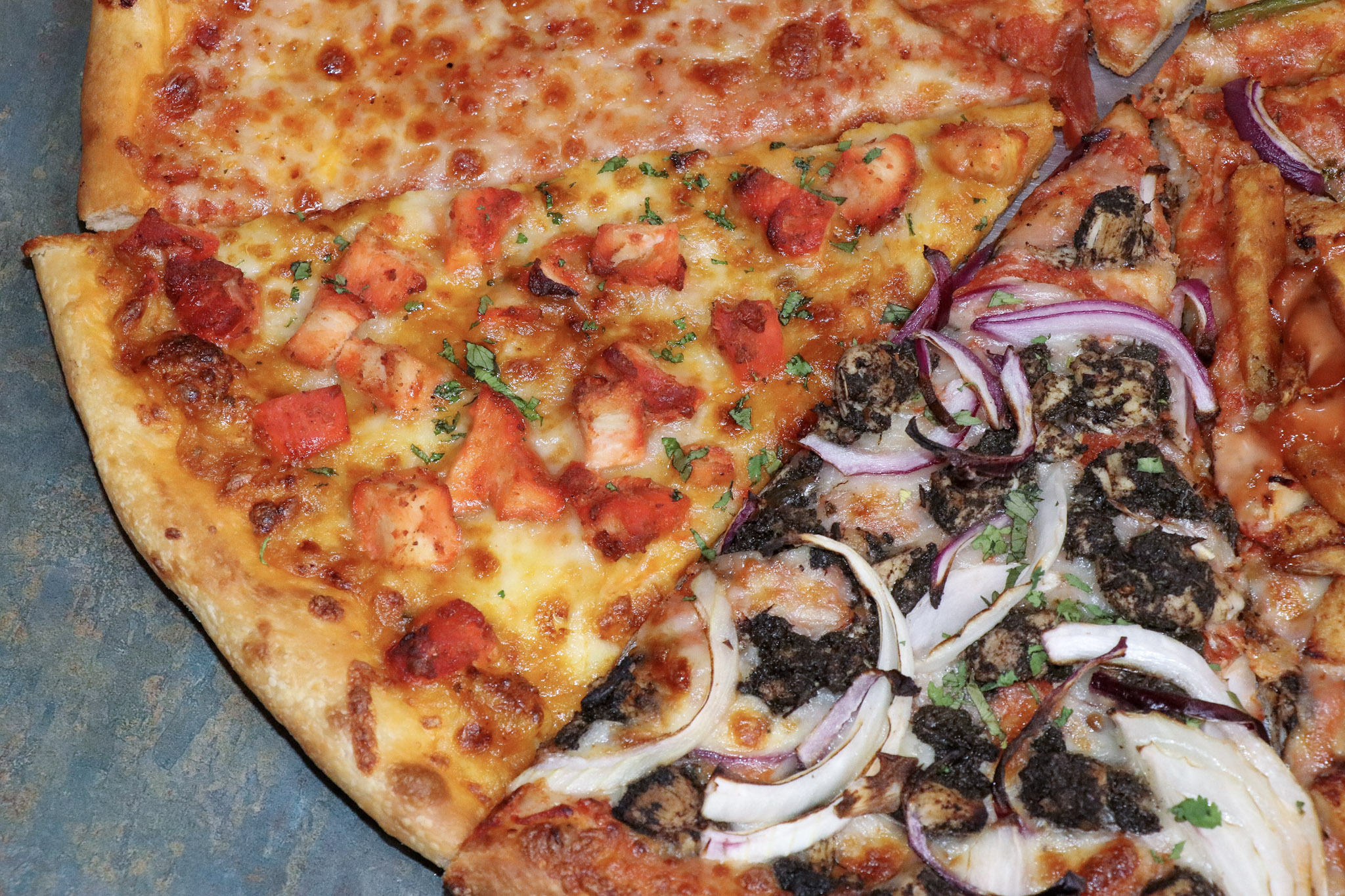
Pizza has also become somewhat of a blank canvas for newer immigrant restaurateurs to interpret — with Brazilian, Mexican, and Caribbean pizzerias popping up throughout NYC. In Queens Village, co-owner Navi Basra runs Spice on a Slice, the ultimate fusion pizza joint. Basra’s father came up making pizza in Germany, cooking on a Greek ship, before eventually immigrating to the United States. Once stateside, he worked at gas stations and saved up to start his own Indian restaurant in Manhattan. During the COVID lockdown, Basra and his brother were goofing off with the restaurant’s leftovers. They topped off naan with chicken tikka masala and cheese. “It came out great, and that’s it,” he said. They built a restaurant off the concept, featuring flavors they crave.
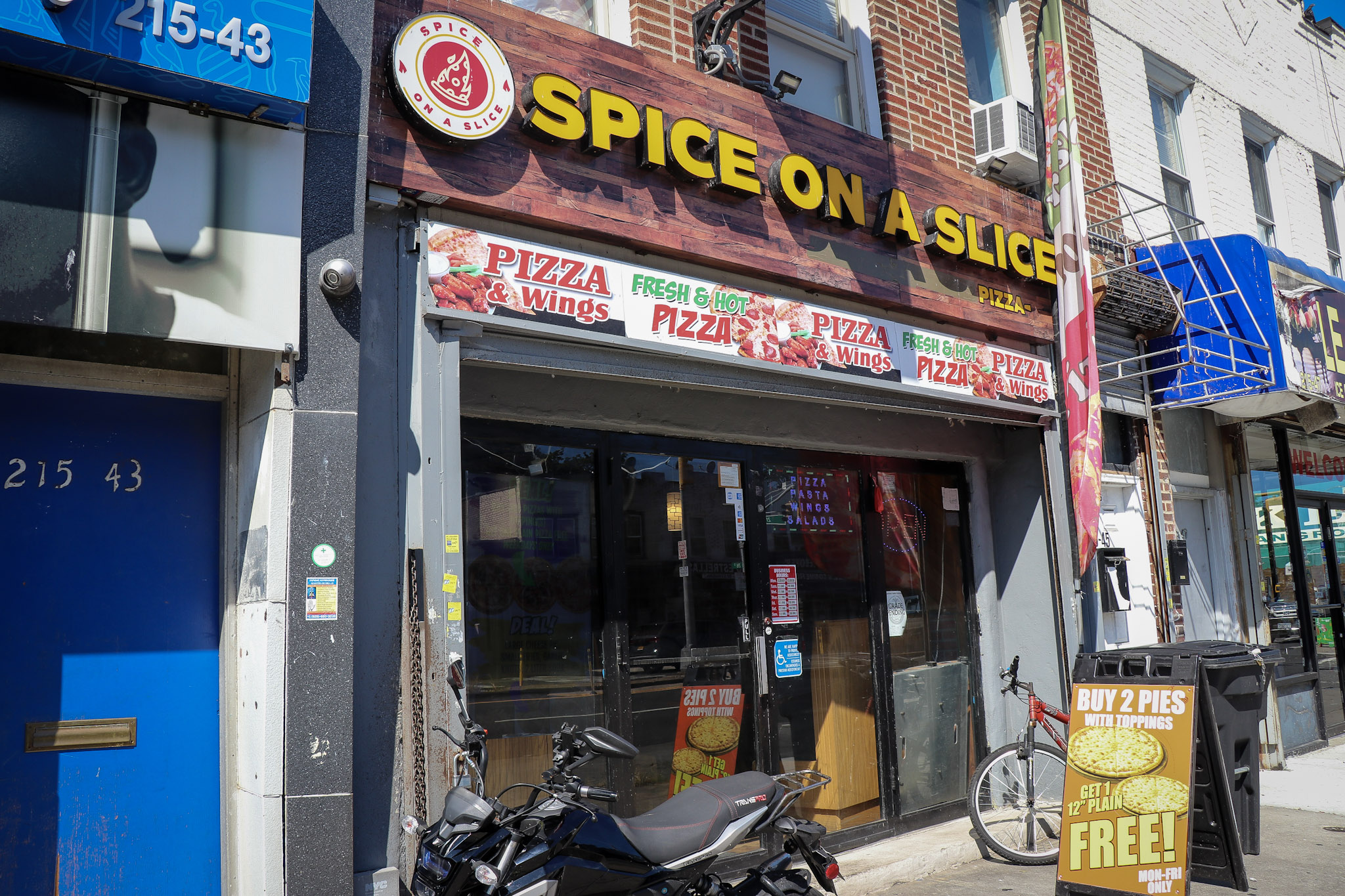
Now, his restaurant features 10 Indian pies — including the Desi with creamy tikka sauce and paneer — alongside Italian American classics like pepperoni and cheese. For the Chicken on Fire pizza that’s topped with ghost pepper-infused marinara sauce, the spice level is on point and unadulterated for a culture where it’s common to pop whole raw spicy green chiles during a meal.
Beef patty
I never questioned the unequivocally “NYC” pairing of beef patties and pizza until I became a food journalist. The story behind this delightful pairing is just as “NYC:” The combo stems from the juxtaposition of Jamaican and Italian immigrants in Brooklyn.
Jamaican immigration to the U.S. began in the early 1900s, and really began ramping up after WWII when English-speaking immigrants from Bahamas, Jamaica, and Barbados were recruited to fill national labor shortages. Immigration peaked during the four decades that followed the Immigration and Nationality Act of 1965, which repealed immigration quotas favoring Europeans and ultimately led to significant demographic shifts making the U.S. a more multicultural nation.
As part of this wave, husband and wife Earl and Beryl Joy Levi, came to Brooklyn. In 1968, they opened Tower Isles, a small Jamaican bakery within the Caribbean community in Crown Heights. A popular item was their beef patty, itself a handheld-sized culmination of Jamaica’s colonial and migrant history. It’s based on the Cornish pastry brought over by British colonists during the transatlantic slave trade; enslaved West Africans, along with Indian and Chinese indentured servants, added their own flavors: combining spices like cumin, paprika, and turmeric. Eventually, native Jamaicans made it their own, adding local ingredients like the Scott Bonnet pepper.
The Brooklyn couple later expanded Tower Isles to become the first commercial Jamaican beef patty producer in the U.S. A local Italian distributor fell in love with patties, and sold them to pizzerias, ultimately catapulting their bright yellow presence next to red-sauce pizza.
“The pizzerias were a big, big expansion point,” said Jim Jobson, vice president of sales and development of Tower Isles. “And [their owners] would Italianize them.”
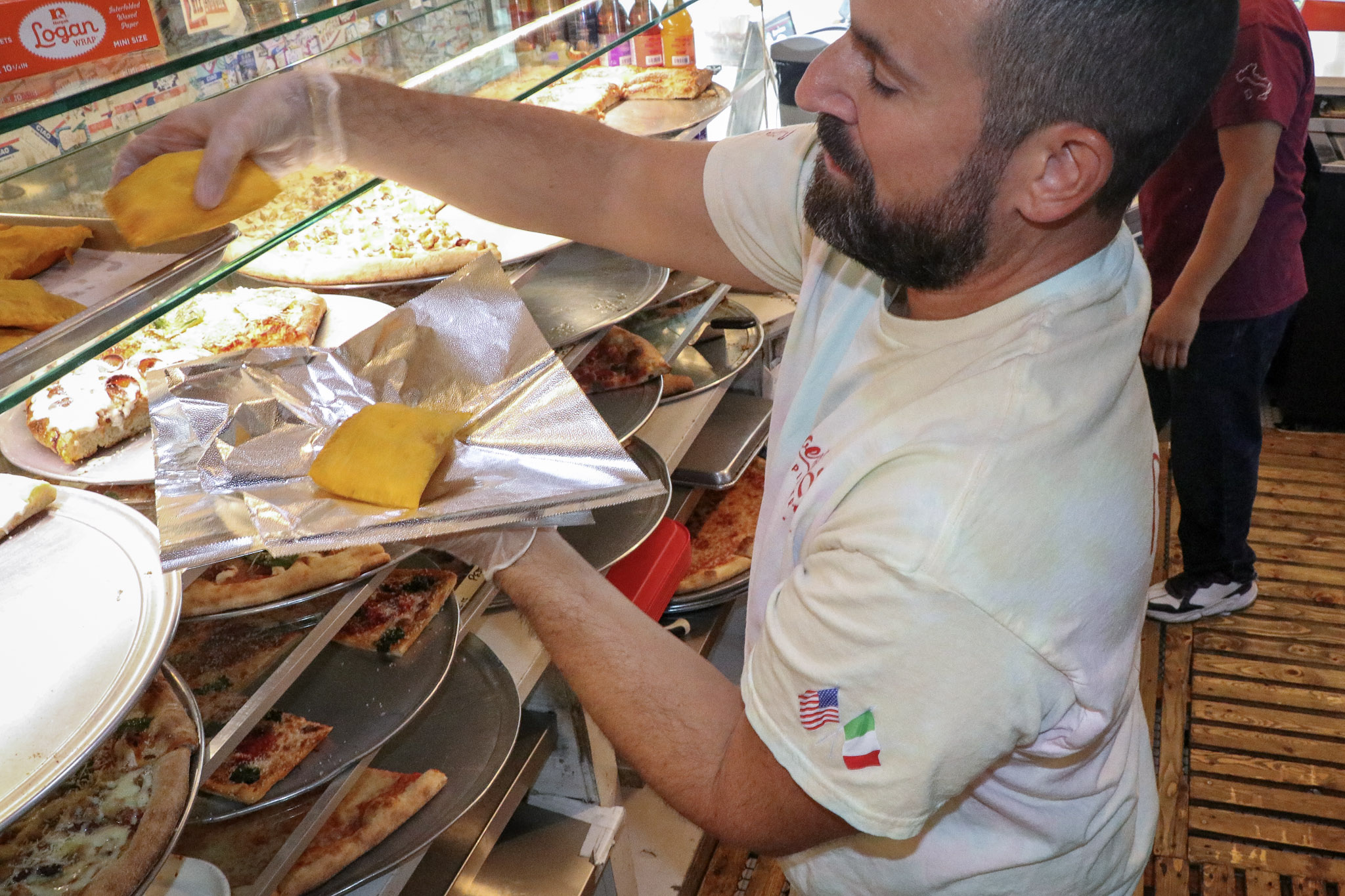
That’s the case at Joe and Sal’s in Fort Greene.
“We’ve been offering them since the day we opened in 2017, but I can tell you, as a native New Yorker, these patties have been in pizzerias since I was a kid. And I’m born in ‘79,” said co-owner Joe Anapoli.
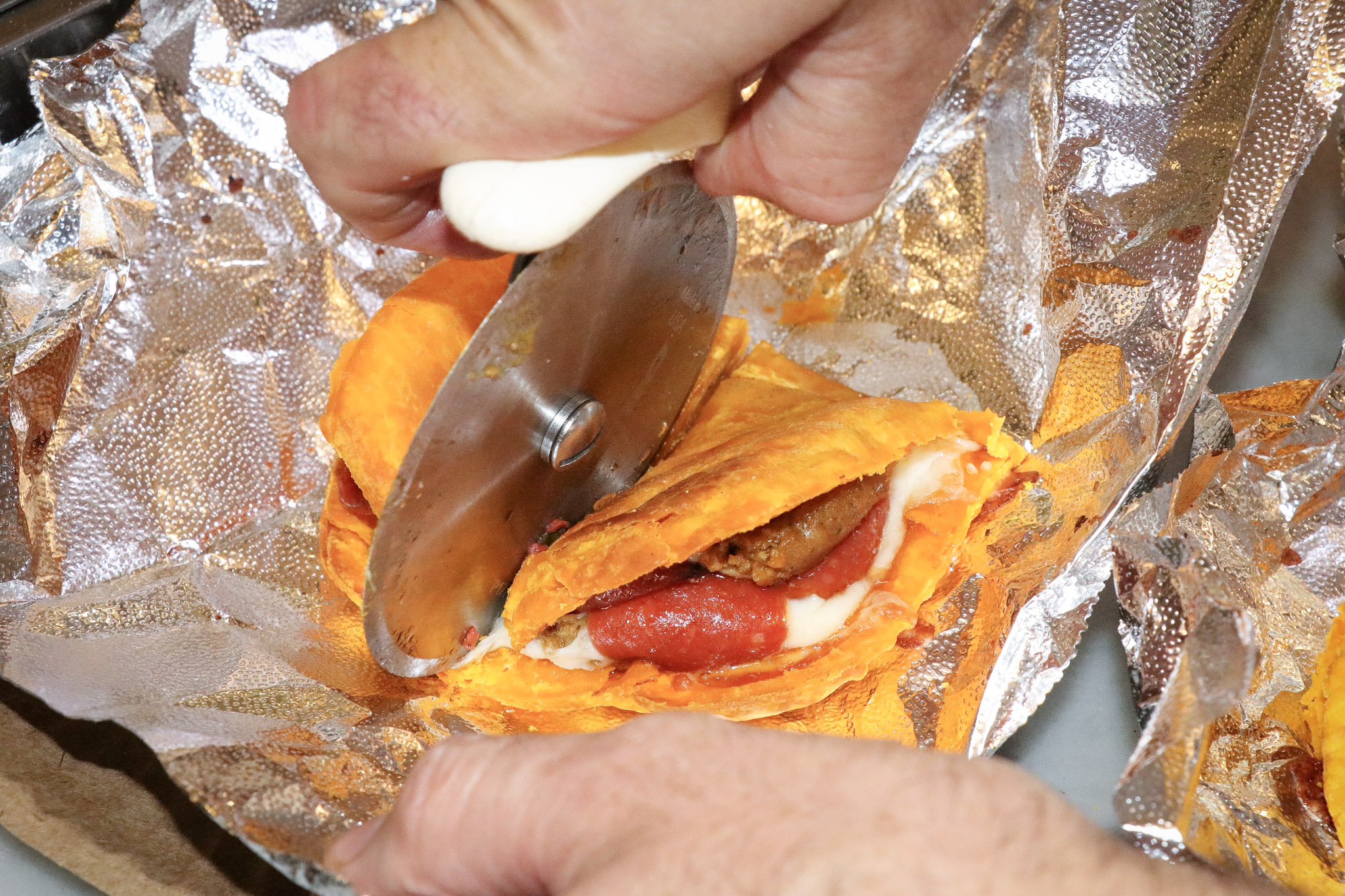
He sources patties from Tower Isles, slices them open, and tops them with a choice of mozzarella, pepperoni or sliced red onions, and bakes them hot and melty in the pizza oven. “I like mine with hot honey,” he said. It certainly added sweet heat to the beefy savoriness.
Soup dumplings
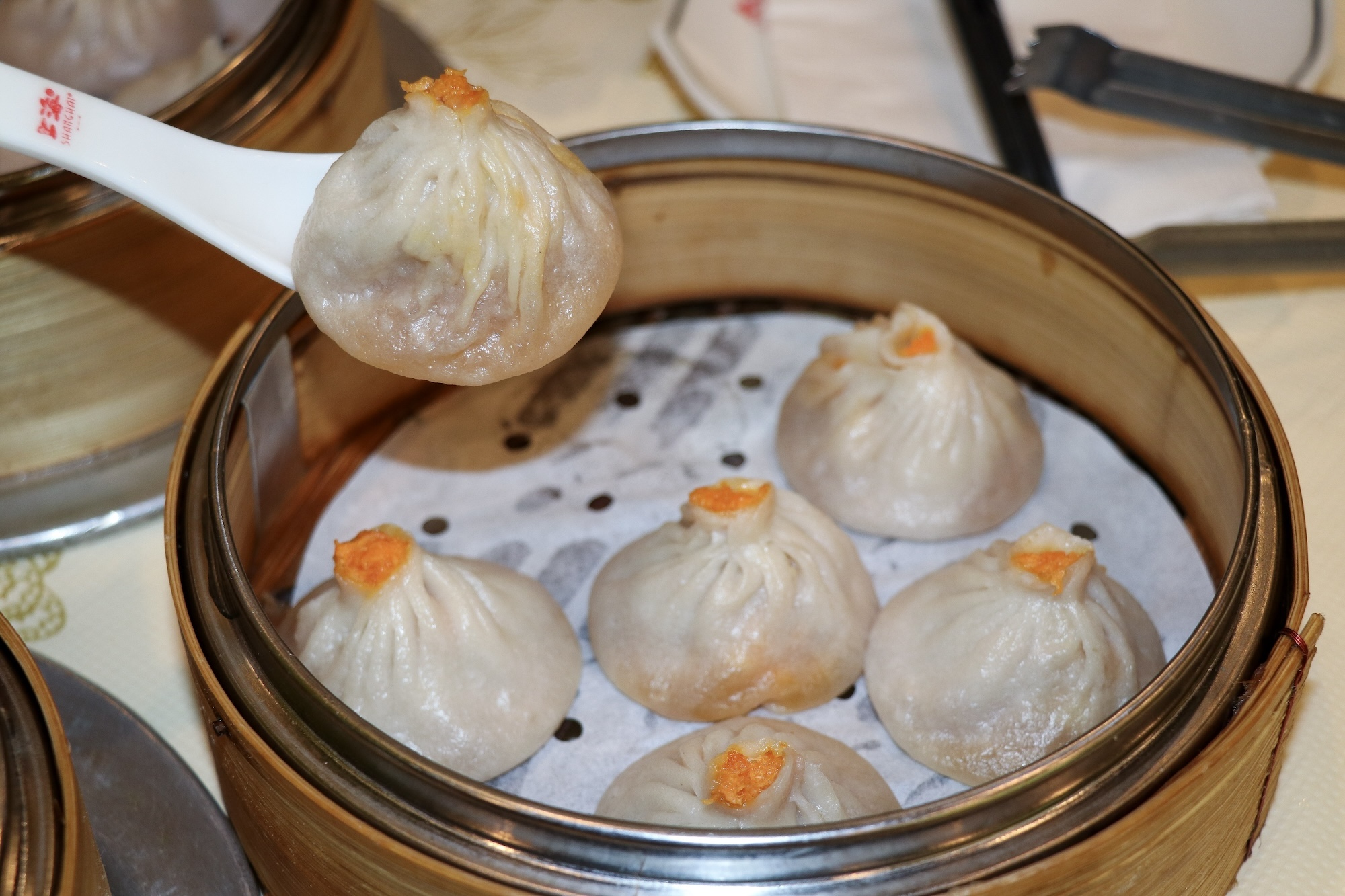
Soup dumplings are culinary and architectural masterpieces. Precariously thin and translucent, the skin always feels as if it is just moments away from rupturing. And that broth — that you can see sloshing around through the dough — is burn-your-mouth hot and so deeply savory.
New York’s soup dumpling craze started in Flushing in 1994 with the opening of Joe Shanghai. That was the first time Wellington Chen, longtime Flushing resident and executive director of the (Manhattan) Chinatown Partnership, tasted them in the U.S.
“So many people flocked to that store on 37th Avenue, waiting for 45 minutes to get them,” Chen recalled. “They shocked the world.”
Soup dumplings are the product of a long and tense history of Chinese immigration. Poverty from the Opium Wars and natural disasters in China in the mid-1800s led to an exodus of Chinese immigrants who were drawn to the West Coast of the U.S. by the Gold Rush and the transcontinental railroad. But in the U.S. they encountered economic exploitation and discrimination (which later influenced the passage of the 1882 Chinese Exclusion Act). As a result, by the 1870s, Chinese immigrants started arriving in New York in large numbers, eventually building what would become Manhattan’s Chinatown.
The landmark 1965 Immigration and Nationality Act removed barriers for non-European immigrants and began the modern Chinese immigration period. And these newer Chinese immigrants balked at what was being called Chinese food in New York, explained Chen. “Like chop suey.” Coming from different Chinese regions, they diversified New York menus further: light Cantonese, spicy Sichuan, herbal Taiwanese.
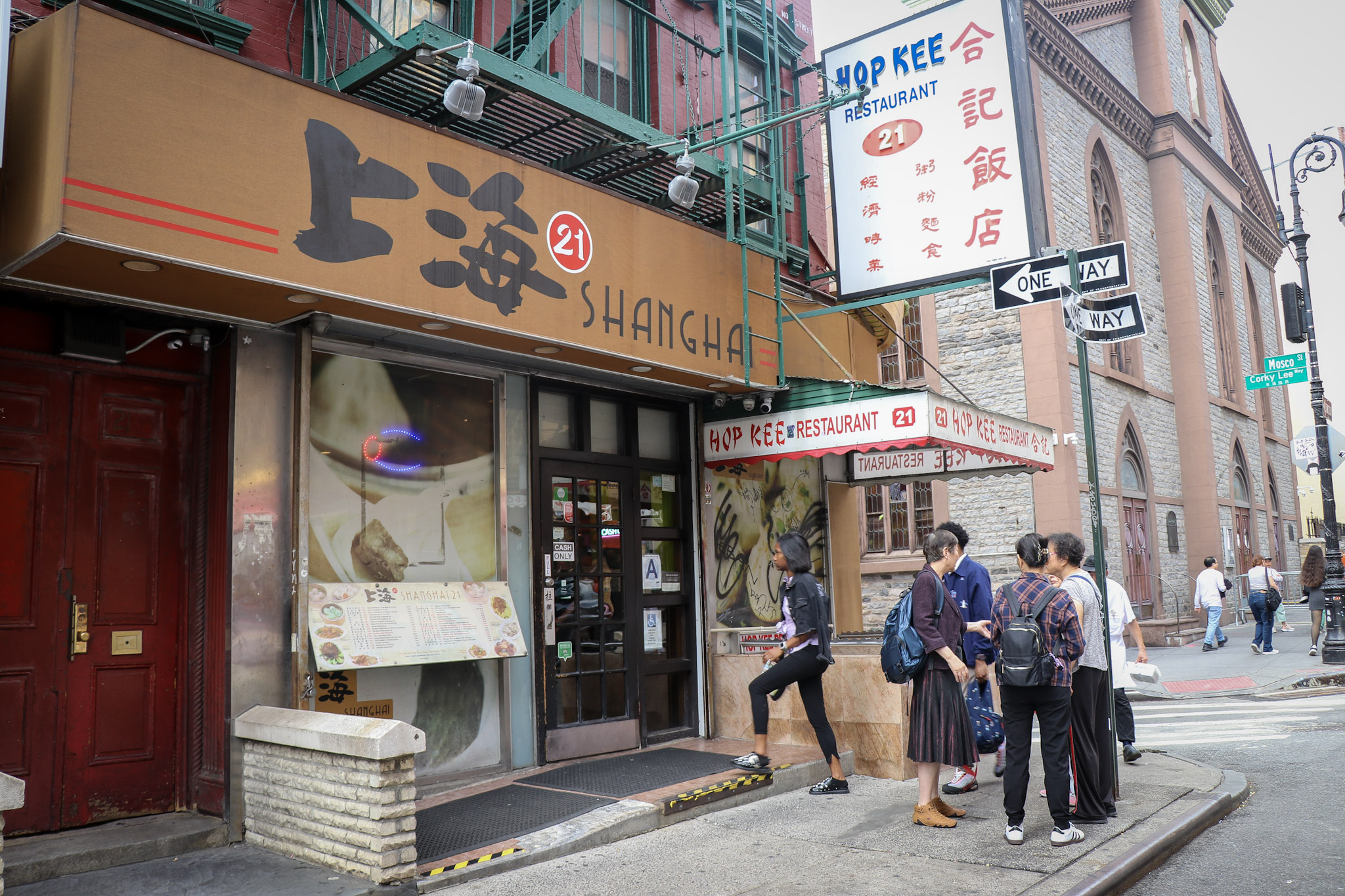
Joe Si, Joe’s Shanghai founder, had trained at a Shanghainese restaurant in Hong Kong, and when he saw that soup dumplings hadn’t made it to New York, he made it happen. Their success inspired more soup dumpling destinations and innovations. The perennially busy Shanghai 21 in Chinatown has delectable black truffle soup dumplings. Flushing-based Nanxiang Xiao Long Bao is going national with sets of jewel-toned soup dumplings dyed with carrot, pumpkin, and spinach.
What are you eating today? I’ll bet that the dish is an immigrant contribution, because the story of food in New York is inextricably linked to the history of immigration. Fueled by the fire to survive and keep cultural traditions alive, immigrants have always sought opportunities in the food industry. That entrepreneurial spirit has, through generations, spurred on culinary innovations, that have endowed us, New Yorkers, with a literal world of deliciousness.