


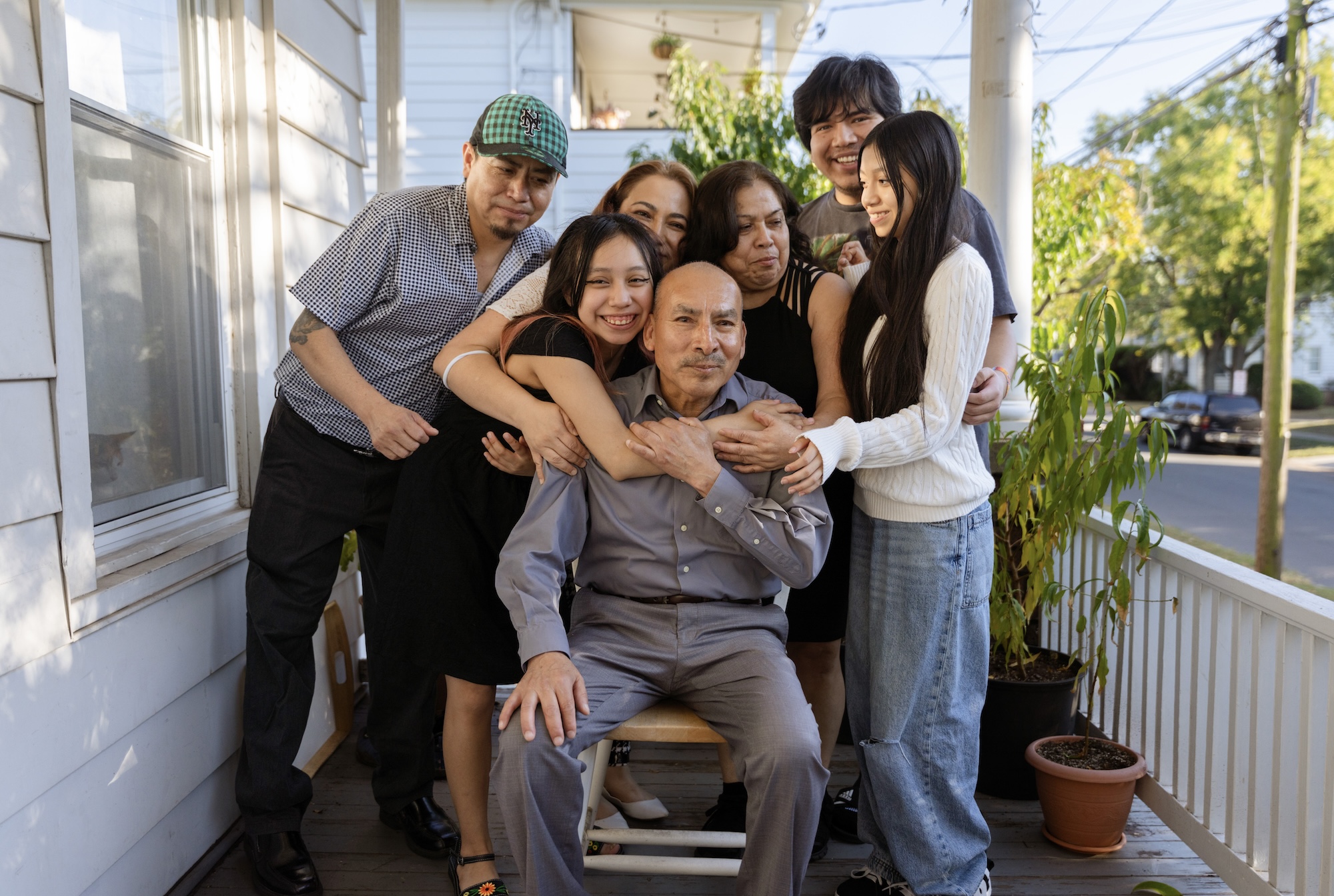


Don Lupe’s mornings always began the same way: wake up at 5:30 a.m., brew coffee, and then turn on either Telemundo or Univision. He perfected his routine over the past 11 years as a warehouse associate at Alba Wines and Spirits Warehousing and Distribution in Edison, New Jersey. The morning of July 8, his routine was no different.
Coffee in hand, he turned on the news. That summer, headlines about immigrants being detained during worksite raids in New Jersey had become more frequent — a fact he avoided discussing with his wife. She suffered from high blood pressure and he didn’t want her to worry for him. “But in my mind,” he said, “I knew that one day, perhaps, that could happen to me.”
By 6:30 a.m., after finishing his coffee, he was ready to leave. He walked to the entrance of his home and paused in front of his family’s framed Lord of Mercy picture. He took a moment to pray as he had done hundreds of times before. “I asked God to protect me, to protect my children, and everyone who went out to work,” he recalled. “More than anything, I asked God to protect us from immigration and let us come back home.”

Then he left for work and rode the same bus he had taken countless times.
Don Lupe was on his break when he saw CBP officers enter his building, 31 Saw Mill Pond Road. They had come to his work in the past but this time he noticed the customs agents were followed by a group of immigration officers. “They did not pay attention to us,” Don Lupe said. “They walked to another area [360 Mill Road], five minutes from where I was, directly to another building.”
Moments later a supervisor returned from 360 Mill Road with a paper in her hand. She asked all pickers and machine operators in the area where Don Lupe was to gather around, he said. ICE agents began manning the entrances and exits.
Don Lupe, who was sitting down, overheard the agents speak in English. “One of them said ‘No, but we are in the wrong place,’ and then another said, ‘But they say that this is the same company. It’s the same place.’”
Don Lupe recalled that the agents sat the workers in the middle of the facility and formed a circle around them. As they did this, thoughts began rushing through Don Lupe’s mind: the thought of abandoning his wife; the thought of abandoning five of his children; the thought that his life in the U.S., after 27 years since migrating from Puebla, Mexico, was suddenly over.
“There’s a raid at your dad’s work”
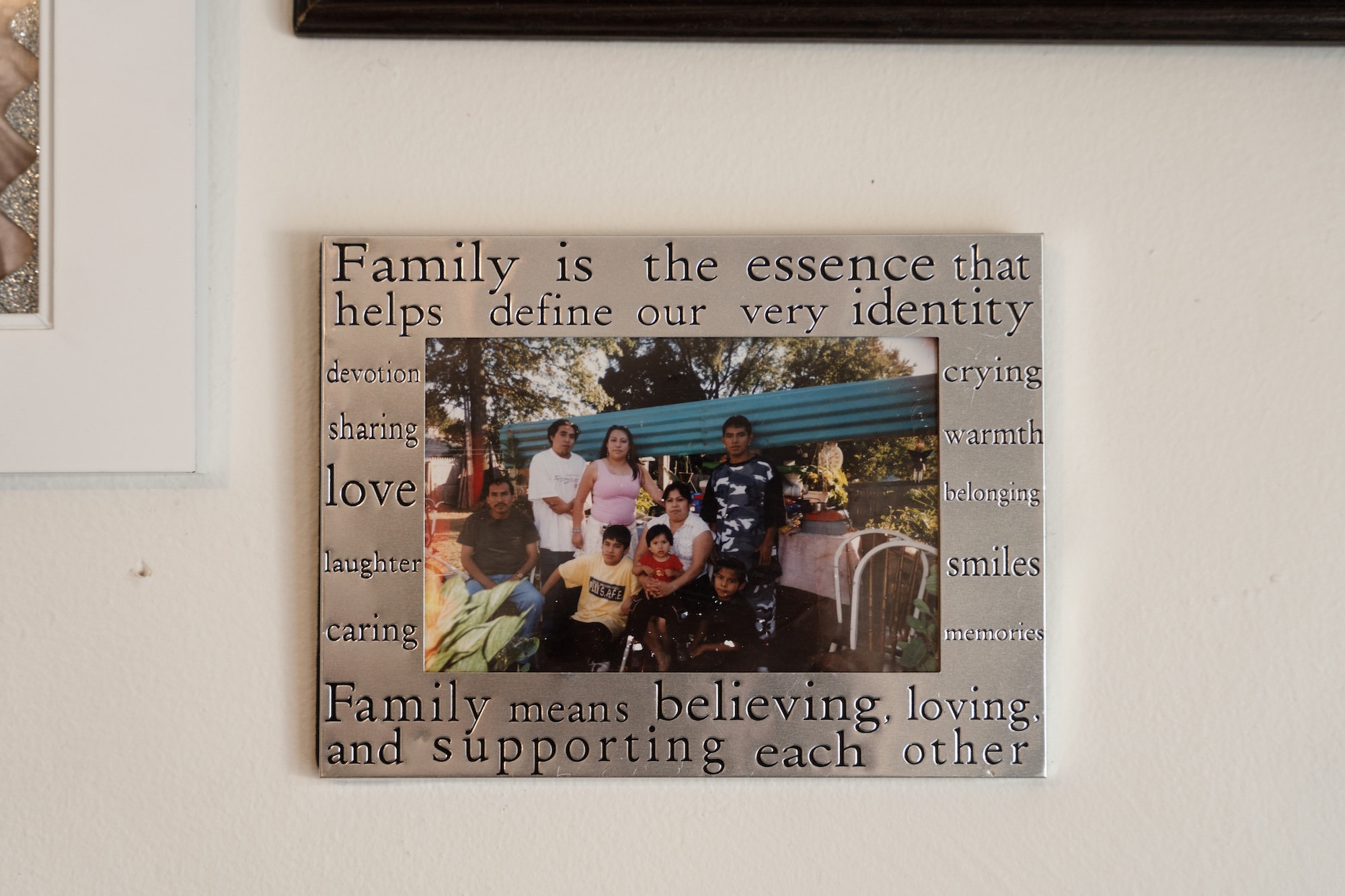
Don Lupe’s daughter, A.L., was preparing materials to teach her pre-school class. Around 9:30 a.m. she noticed she was feeling unusually nervous, though she did not know why. That day, she said, she decided to keep her phone in her pocket as opposed to stowing it in her purse like she normally would. Despite receiving notifications on Facebook, she said she ignored it until her mom called. “Daughter, don’t be scared,” her mother said on the phone, crying. “Nothing’s going to happen. But there’s a raid at your dad’s work.”
A.L. told her assistant she was excusing herself for five minutes and went to the restroom. There, she began looking at the Facebook posts and notifications regarding immigration raids happening in Edison. In one of the posts, she said, she saw the buildings she had become accustomed to when she drove her dad to work during rainy days.
“When I saw that parking lot and I saw that immigration agents were coming in and out through the door where my dad used to enter, I felt like my world was falling apart,” A.L. said. Unable to concentrate, she asked her principal to excuse her because of a family emergency.
By 10:30 a.m., A.L. arrived at her mom’s house, and saw that four of her brothers were already there, surrounding her mom. They had all been worried about their mom as she suffers from asthma, depression, and high blood pressure. Her other brother, who lives in Mexico, had also been made aware of the situation by then and had started searching for Don Lupe with the ICE locator tool, which gives the location of immigrants detained by ICE.
“My dad is an old man, we were worried how they were going to treat him,” A.L said.
Her father, however, wasn’t appearing on the locator tool, so the family of six brainstormed solutions. Given that they had a bad experience in the past with the lawyer who handled A.L.’s brother’s case, the family decided to go to their church to speak with their pastor. There, she said, the pastor recommended a lawyer who had quoted her $3,500 just to get familiar with Don Lupe’s situation.
A.L. quickly called her husband. “I told him, ‘I need your support, I need to get the money out of the girls’ [her daughters’] savings,’” she remembers. Her husband told her to do whatever she needed to do and encouraged her to keep calm, and to ensure the lawyers they were looking for were good and could take on Don Lupe’s case. For nearly four hours, she said, all family members hurriedly called every immigration lawyer and organization they knew, but they ultimately decided to choose a lawyer the next day, when they were more calm.
Don Lupe worked handling goods and preparing them for Alba Wines and Spirits Warehousing and Distribution, which specializes in the logistics and warehousing of liquor and wines. The company is a Customs Bonded Warehouse facility, where imported goods can be stored or processed before import taxes are paid. Companies use these warehouses to delay paying taxes until the products are either sold in the U.S. or exported elsewhere.
In the 11 years that he has worked there, Don Lupe said it was not unusual for CBP to conduct authorized, unannounced inspections to ensure the facility is adhering to protocols. But he said that CBP visits had become more frequent since Trump took office, often going to areas where product was stored and packaged for distribution. “It was rare that they would go where the pickers gathered [to collect the products for the marketplace].”
After being told by their supervisor to gather around, Don Lupe stopped his lunch break and joined the other pickers and machine operators. The group of workers then walked to 360 Mill Road. The agents stationed themselves inside one of the cafeterias where they pulled out laptops to verify the identity of the workers. Then, he said, an officer asked all U.S. citizens to stand on the right, and those who were not citizens to stand on the left.
“For good or bad luck, I was the first one who went to the left side,” Don Lupe said.
An agent inside the cafeteria asked Don Lupe for his ID, to which he did not reply. Then he was asked for his driver’s license. “He checked and he said, ‘You are not in the system,’ ” Don Lupe recalled. “Then he told one of the three guards standing behind me to arrest me. I was the first one [to be arrested].”
The agents were quick. They handcuffed him with plastic zip ties, and then walked him out of the facility. He said he remembers seeing that a crowd of people had arrived at the location — TV reporters, activists, priests, and also more immigration agents. The ICE agents held him there for 20 minutes, he said, and took all his documentation that he carried with him. After 12 other workers had gone through the same process, they were put in a van and taken to a center in Elizabeth, where they were processed.
“Tell our children not to worry about me”

Two days had passed since A.L. last saw the familiar green notification light up her phone. Every morning, without fail, her father’s message would appear in the family WhatsApp group chat: “Good morning, God bless you, take care of yourselves.”
Instead, the group chat had become full texts from family members trying to locate the whereabouts of their father. Every time they called the Delaney Hall detention center in Newark, NJ, A.L. said that they received the same message: “The person is not in the system.”
It was not until two days after his arrest that Don Lupe was able to make a call to his wife, asking if the family would be able to seek legal assistance. A.L. said her mom confirmed that they were already looking for a lawyer and asked him to have faith that everything would be alright.
“From the recording that my mom sent us, he was more worried about us rather than himself,” A.L. explained. She said it showed his selfless character that had become his trademark in the community. “He told my mom: ‘Tell our children not to worry about me, that everything will be okay.’”
In the afternoon, Haidy Torres, an organizer with Movimento Cosecha, which A.L. had reached out to for help, arrived at Don Lupe’s house with others, including one of the pastors from their local parish, and gave them a list of lawyers they recommended the family to speak with. A.L. said that Torres told them Movimento Cosecha could cover parts of the legal costs.
One of the lawyers who A.L. spoke to left her feeling hopeless, she remembers. “He told me that there were no pathways for my dad.”
Torres told A.L. not to worry, that she would check with another lawyer — Jeremy Jong — right away to see if he would take Don Lupe’s case. ”I prayed to God that He would let my dad stay here with us for a bit longer,” A.L. said, adding that the money her dad earned was always to help the family or others around him. “So, at that point, we were in the hands of God.”
Around an hour later, Torres called A.L. and told her that Jong had agreed to take the case.
“The smell of it penetrated my mind”
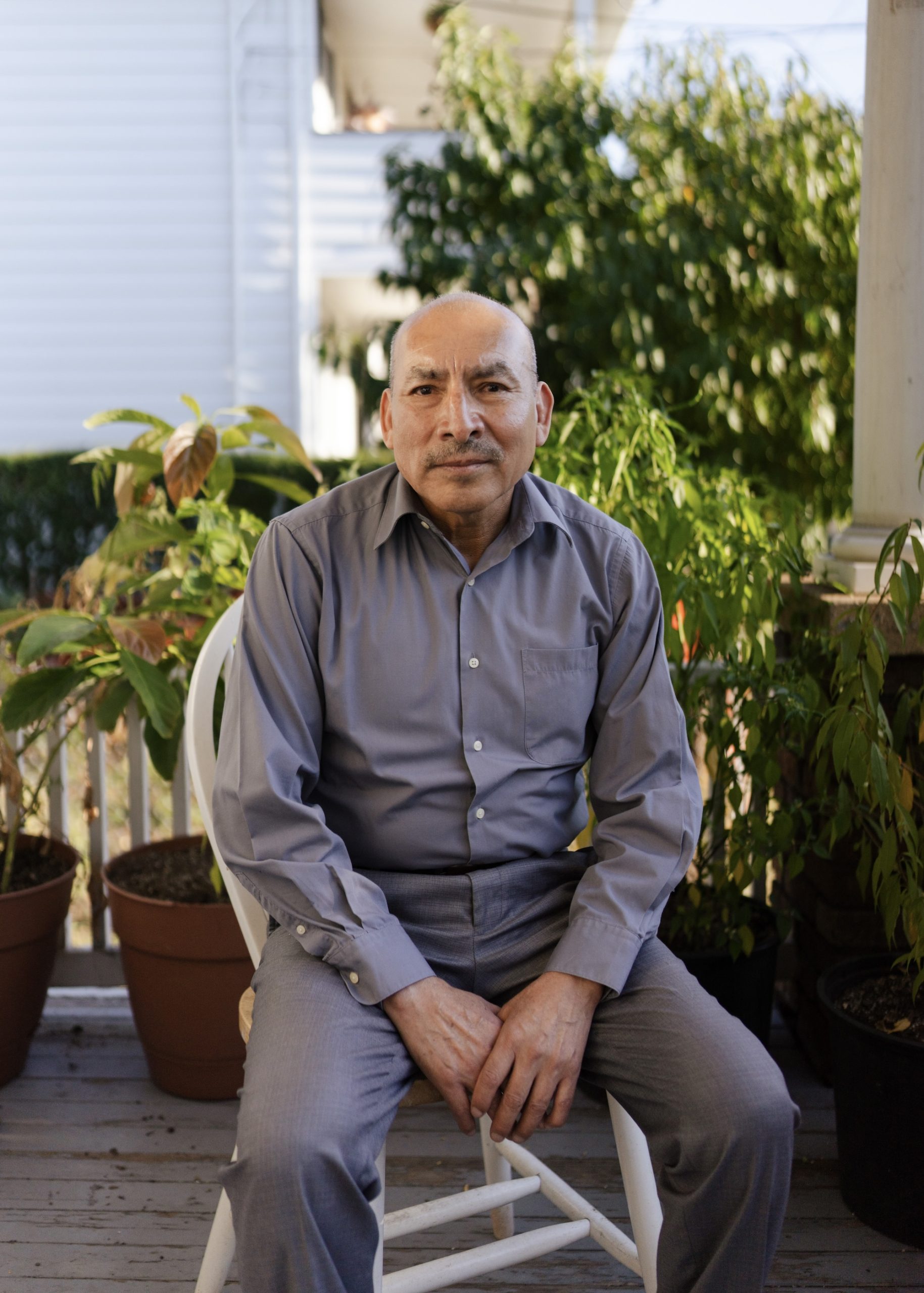
The lights inside Delaney Hall detention facility were brighter than the sun. Inside the detention center, Don Lupe described the conditions as isolating and abusive. “It is meant to depress people so that they self-deport,” he said.
Without a calendar to tell what day it was, Don Lupe relied heavily on the daily phone calls he made to his wife and daughter to keep track of time. He explained that detainees were only allowed to see the sunlight for only 30 minutes every day, when they were walked out into a fenced-in, outdoor area. The strong, acrid smell of the synthetic grass kept Don Lupe inside by choice. He only went outside once during his two months in detention. “I didn’t want to go out because it stayed with me, the smell of it penetrated my mind.”
For two weeks Don Lupe suffered a throat infection, but rather than being treated with antibiotics he was given pills to put him to sleep. He said items for basic hygiene — like toothbrushes or soaps — were so small that people were forced to buy their own products from the commissary to keep themselves clean. All of these factors, he said, took a psychological toll on the detainees — primarily the younger ones who had no money to buy things or family members in the U.S. to call them.
Some of the people detained had left their country when they were very young and they told Don Lupe they didn’t even know what to do if they were deported. Don Lupe told a young Mexican man that he could show him around Mexico City, even though he himself had not been in his country for more than two decades.
A Honduran man in his 20s told him that he signed a voluntary departure agreement, citing the unbearable conditions. He thought that he would be released from the detention center within days. However, Don Lupe said that the young man had to wait for two months before he was even given the date to be released.
“This is a business and it is all about money,” Don Lupe said. “There are a lot of things that are inhumane. It is more beneficial for [the business] for him to be in prison.”
“Like they were criminals”
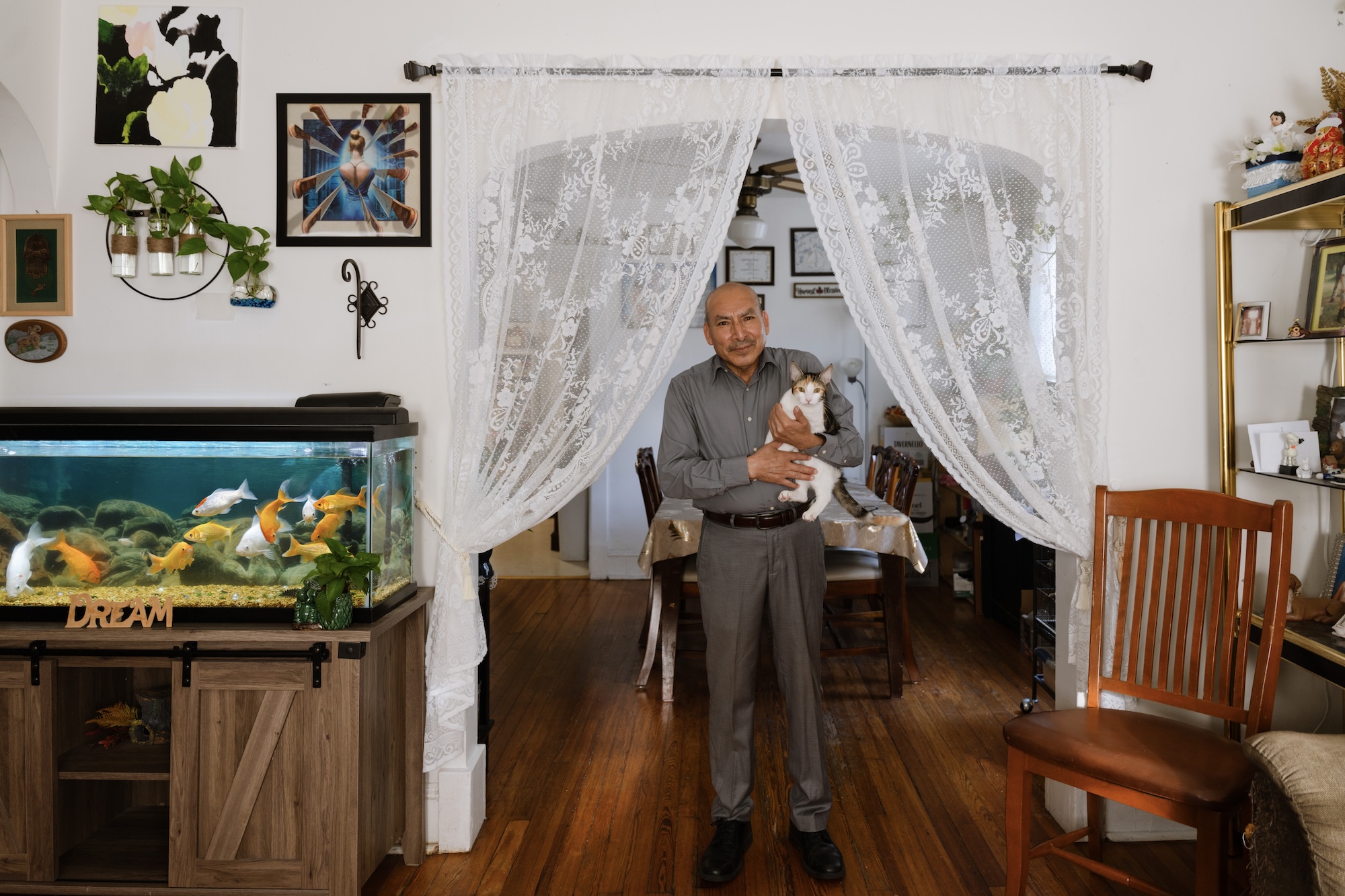
A.L. remembers a strong, foul smell outside the Delaney Hall detention center in New Jersey. The summer heat was so oppressive that many families brought umbrellas to provide shade as they waited for hours to see their loved ones.
While waiting, people were constantly told by guards to move, or to stand somewhere else. “It’s like we were criminals, like we have killed someone to be treated like this,” A.L. explained. She said her brother would look at her and ask her: “Can you imagine if they treat us like this out here, when they don’t have us locked up, how they’re treating Dad inside?”
A.L. reminded her brother not to worry, that they wouldn’t hurt her dad.
Finally, after four hours standing in line, it was their turn. What she soon saw would never escape her memory. The room was white and big. Only chairs dotted the otherwise empty space. Many men — including Don Lupe — were lined up, their backs against the wall. “Like they were criminals,” A.L. said. The organizers at Movimiento Cosecha had told A.L. that only one person would be allowed to hug Don Lupe at a time. Her brother had agreed to hug Don Lupe at the start, and A.L. would give the hug at the end.
“You have to have a very hard heart not to cry, because you cry for your family and you cry for the people that you find at that moment,” A.L. said. “I saw little children with their parents, I saw pregnant women, I saw mothers who went to see their children, and I saw wives who went to see their husbands.”
When she saw her father, she said he looked like a different person, much older than he did four days ago and that he looked exhausted. When Don Lupe approached them, her brother walked to hug him. A.L. watched as the two embraced. Then, to her surprise, she said the security guard told her that she could hug her father too. “I don’t know if he felt sad for us, but he told me to hug him and to give him support. He said: ‘He needs you.’ ”
For the first time since her father’s detainment, A.L. said that she felt protected, wrapped in her father’s arms. As expected, during their conversation, Don Lupe was mostly concerned for her children, her siblings, his wife and his church rather than for himself, she remembered with a knowing smile. She assured him that everything was fine outside, and that many members of the community were rooting for him; many had knocked on their door and given donations to help pay for any legal fees.
Although she had been afraid of going to the detention center, as she had seen many green card holders and citizens being detained by ICE around the country, she said that her love for her father was stronger than her fear and she wanted him to know that he was not alone.
For the next two months, she would speak with her father every afternoon via telephone and visit him every Saturday to keep him updated on the developments of his case.
In the first month of his detention, A.L. said Don Lupe’s hope was fading with every phone call and visit. She tried her best to keep his spirits high and often reminded him that he was a good person and that he deserved to be free.
Outside the detention center, however, she was also in touch with Jong, the staff attorney at Al Otro Lado who had taken over Don Lupe’s case. “He told me: ‘I’ll be honest with you, the situation is very difficult, but I’m going to do whatever I can to try to get your dad out. If they don’t let him stay here, I’m going to get him out so he goes to Mexico on his own.’ ”
During the first court hearing, on Aug. 7, Jong told A.L. that they were going to ask the immigration judge for bail. A.L. called her dad and told him that she was praying for him that everything would go well, and her dad responded that she should pray for everyone who is going to court that day.
In Jong, she said, she saw a passionate man. One dedicated to his work and someone who would go above and beyond to find pathways for her dad to be released. “Never, never in my life have I seen a lawyer who fights a case with such fervor, with such excitement that he wants to win.”
During the first hearing, the judge granted Don Lupe bail, and set his bond at $7,500. A.L. was ecstatic when she received Jong’s message. But her excitement quickly turned to panic because she had never posted bond before. She remembers asking how to make the payment — Jong recommended that she wait because the government might appeal the bail.
In later conversations with Documented, Jong said an immigration judge granted Don Lupe bond but that DHS did not allow him to pay the bond under the regulation colloquially known as “automatic stay.” Under this regulation, DHS can stop a judge’s release order and keep people detained for at least 90 days while the agency appeals the order.
“ICE refuses to let him pay it, so I had to file a federal lawsuit to put pressure on them to release him,” Jong explained, adding that getting bond is already very difficult on its own, even if you have an attorney willing to fight for you. Jong, who has been practicing immigration law for more than a decade, said that procedures that used to take four hours are now taking 100 hours of work due to the obstacles attorneys have to maneuver around with this administration.
But beyond individual legal battles, Jong told Documented that the detentions happening in Edison — and across the country — should worry everyone in the country and not just immigrants. “They did not care that the 80 other people had a status, they didn’t care that many of them were U.S. citizens,” he said. “All that they cared about was that they were Brown and that they could do whatever they want.”
With the bond appealed, her dad would continue to be detained for another month.
“They’re letting him out”
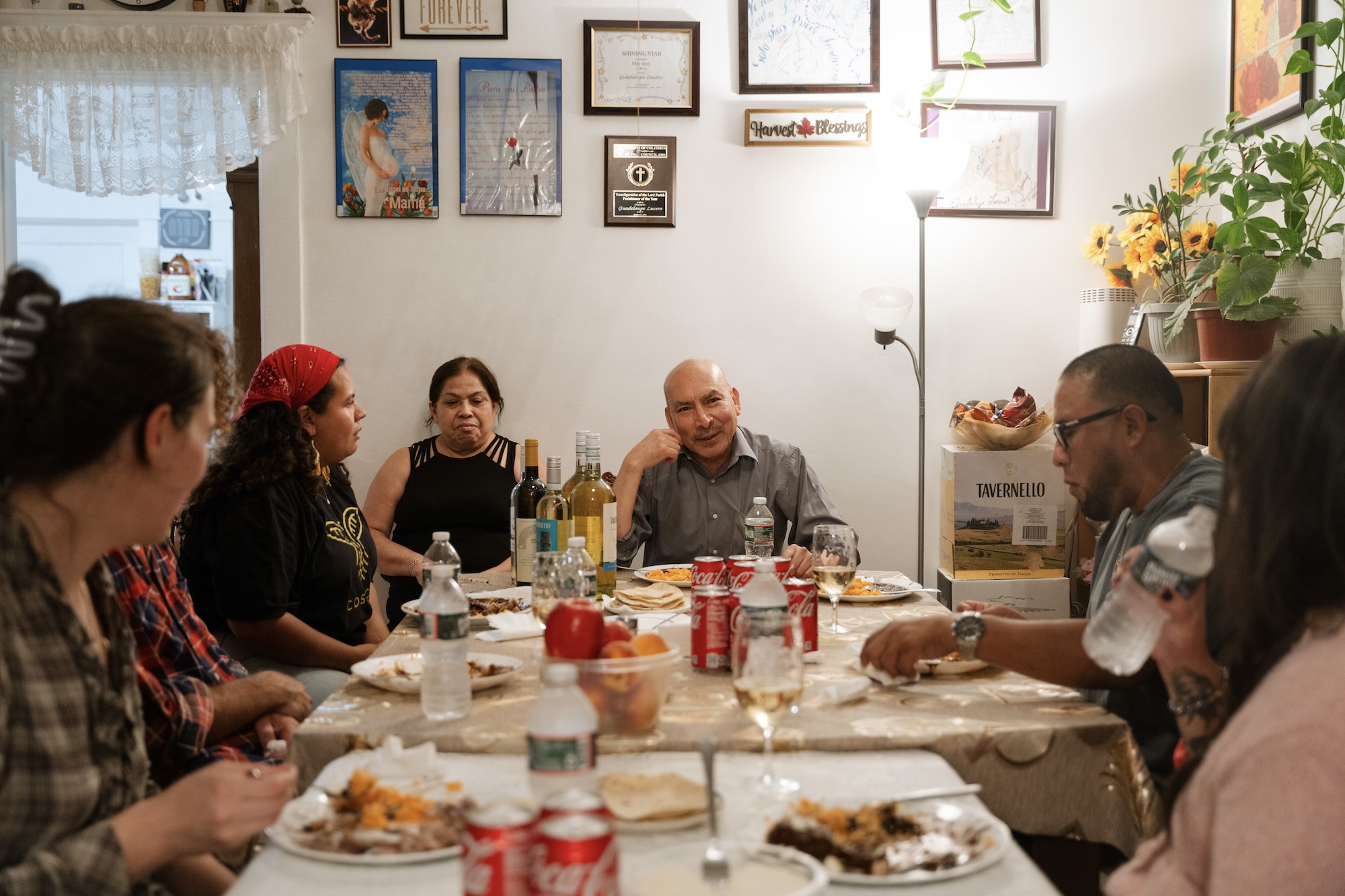
A month after Don Lupe’s bond was appealed, keeping him in detention, he had a hearing scheduled for Thursday, September 11 at 9:30 a.m. A.L., her mom, and her siblings were all very nervous that morning, she remembers. But they had prayed and had wished Jong good luck through text before she made her way to work at the school.
At 9:33 a.m., she received a text from Jong. According to screenshots shared with Documented, it said: “They are letting him out.”
A.L. was in her classroom when she received the text. She said she copied the text and translated it to Spanish just to make sure she wasn’t getting her hopes up. After she confirmed that her dad was being released, she rushed to the same bathroom stall she had once escaped to when her father was first detained, and cried uncontrollably. She said it took her a few minutes to calm herself down and call the WhatsApp family group.
The whole family picked up the phone right away, they had been expecting a call to happen after the hearing that morning. “They are freeing dad. They are letting dad free.”
A.L. left the bathroom and ran into the principal, who asked her if she was okay. She could not hold back her tears — the principal responded with a hug. A.L. told the principal that her dad had been detained for two months but that he was being freed that day. The principal hugged her again and said: “‘Go get your dad, and tell him that we are not all bad in America. There are Americans that love you.’”
When A.L. got home, she said she cried with her mom. Her brothers joined her at the house afterwards and together they all waited for Jong to let them know if Don Lupe would be freed the same day.
As they were about to have lunch, Don Lupe called his wife and told her: “They are letting me go now. They are releasing me. I don’t have much time, can you ask if my daughter can pick me up?”
A.L. left their half-eaten lunch on the table, and immediately left the house with her brother and embarked on the same hour drive that they had taken every Saturday for the past two months.
When they reached Delaney Hall, A.L. and her brother arrived at the same scene they had seen so many times before: lines of people waiting for hours to see their loved ones.
A.L. asked the security guard if anyone who had been released from detention had left the center that day. The guard, she said, told her that no one had come out yet and asked the two siblings to stand to the side and that he would let them know if he saw someone coming out.
Three hours later the security guard signaled to the two siblings again and asked: “Is that him?” Through a gap in a fenced door, he pointed at a man who was coming from inside the detention center.
From afar, A.L. recognized the same clothes her dad had worn to work multiple times: a black cap, a pair of washed denim, a black tee, and a long-sleeve-white-shirt underneath. In his hand, she saw he had the same manila folder she had seen other people carry in the past.
The guard turned to them and, wide-eyed, asked again: “Don Lupe is your dad?” A.L. confirmed again, and the guard told her that Don Lupe is one of the best people he had encountered. He told a story about how Don Lupe bought instant soups and shared it with other inmates, and that he offered consolation to people who did not have any family to visit them. “‘You have one of the best dads. Take care of your dad, protect him,’” the guard told her.
When Don Lupe arrived at the gate, he greeted the guard with a quick dap, leaning his shoulder to give him a half hug. “Thank you, take care of yourself, okay?” Don Lupe told the guard on a video shared with Documented.
And then he turned to A.L., who reached for a hug and began to cry in his arms. “Don’t cry,” Don Lupe said. “I am here.”
A.L. remembers that day as if it was a dream that came true. “That day, I cried so much… I had so much pain inside that I couldn’t share with anyone,” she said. “I knew that if I cried [before], my whole family would fall apart. So, I bottled up a lot of pain.”
They drove back to their home where the whole family — daughters, mother and siblings — were waiting for him.
In a video shared with Documented, Don Lupe is embraced by his wife, who cries and hugs him for more than one minute. “It’s okay, I am here,” Don Lupe says, before turning to his granddaughter, who lifts a cat toward him — he presses his forehead gently onto the cat’s head. “Your tito is back,” A.L. said.
Moments later, A.L. called Haidy and Jong to let them know that Don Lupe made it home.
“The fear will always be there, it will never fade”
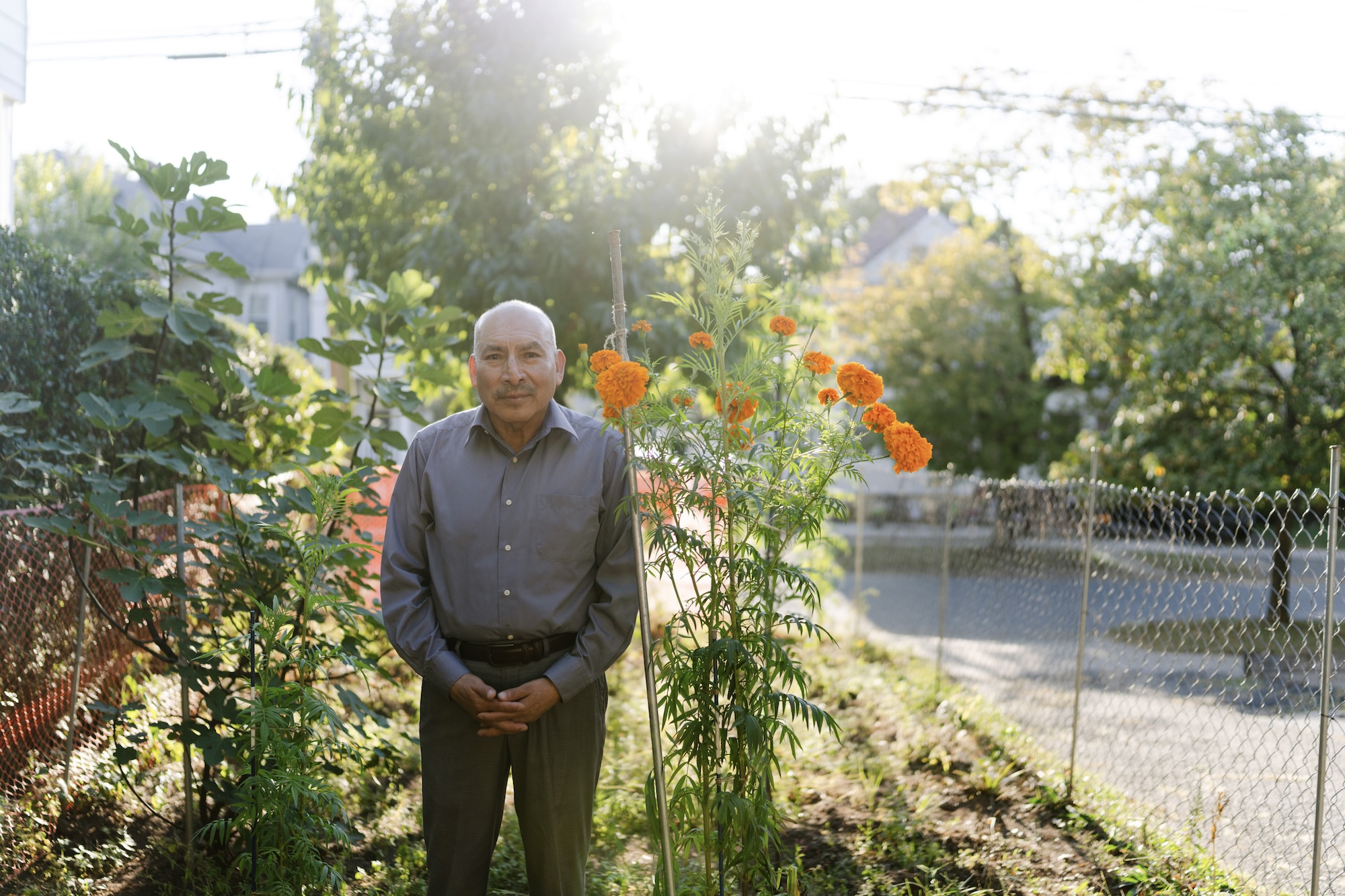
On Sunday, Sept. 14, Don Lupe made his way to a church in Highland Park, where he has served as a sacristan for nearly 17 years. His tasks include opening the doors, setting up for liturgical celebrations, preparing the hosts, the wine, the readings and ensuring everything is ready for the parish priest to conduct the Mass. He did this for both the Spanish Mass in the morning, and the English Mass in the afternoon.
He said the only periods of time he has missed church was in 2021 when he was interned for two weeks at Robert Wood Johnson Hospital in New Brunswick, NJ, due to COVID. The other time, he said, were the two months he was detained at Delaney Hall.
“I am very devoted to my church,” he said, adding that he is always looking out for the members of his community — even if it means putting himself at risk of detention. “God forbid something happens, I have to be the first one to take charge.”
The day he returned, he asked his daughter to write the name of all the organizations and people that had helped him while he was in detention, including the name of the attorney, the pastors and the bishops who had sent him letters.
During mass, Don Lupe said that the pastor compared him to Lazarus who was resurrected in the Bible, and serves as a metaphor of Jesus’ power and authority in the promise of life after death.
“It was so beautiful that even the reading that was read was like what had happened to me,” Don Lupe said, tearing up on a video call with Documented. The priest read a passage about God telling his followers to carry their cross and follow Him, which he felt connected with: “Sometimes we all have difficulties at home, illnesses, and all that but we still have to continue forward.”
Without a work permit, Don Lupe spends most of his days at home taking care of his wife and accompanying her to medical appointments. During his free time he likes to spend time with his three cats, parakeets, and taking care of his aquarium which houses a variety of Gold and Koi-like fish. He also tends to his garden where he has grown green tomatoes, zucchini, squash and other vegetables.
He has also grown marigolds, which are known as the Mexican death flower. “In my country we call them the flower of the dead, a yellow flower that is placed in cemeteries,” he explained, referring to the Día de los Muertos celebration which pays homage to the loved ones who have passed.
Although he has returned to most of the activities he used to do before he was arrested, he said he is afraid to leave his house and walk outside of his neighborhood. Every time he has to go to the store, to the church or to the doctor, he prays to God to be able to return home. He said the thoughts of abandoning his wife, his children, and his community — again — bring him a lot of stress. “The fear will always be there, it will never fade, unless the government gives us an opportunity to stay.”
“I can tell you that all of us, who are undocumented here, feel the same. We all walk around in fear,” Don Lupe reiterated. “We are praying to God to help us when we leave the house, so that we may have the opportunity to return.”
☩ ☩ ☩ ☩ ☩ ☩ ☩
On July 8, federal agents detained 100 workers and arrested 20 immigrants without authorization, including Don Lupe, during a worksite raid at Alba Wines and Spirits Warehousing and Distribution, a bonded warehouse facility in Edison, New Jersey. While Customs and Border Protection (CBP) has long had authority to conduct unannounced inspections at bonded warehouses, advocates say the recent involvement of Homeland Security Investigations (HSI) and Immigration and Customs Enforcement (ICE) marks a new tactic to maximize arrests rather than ensure compliance. Since the summer, at least two other facilities have faced similar enforcement actions in Edison, detaining 49 immigrants. In October, 46 workers were arrested at a bonded warehouse in Middlesex County.
Advocates warn that more operations are likely on the horizon, saying these worksite raids at bonded warehouses mark a troubling shift in immigration enforcement — one that targets hardworking people like Don Lupe, whose absence leaves behind a void in their community. Beyond the emotional toll of family separation, their detainment also causes their families financial stress as they are often the breadwinners.
“Workers know that raids are happening at bonded warehouses, but the need to work to be able to afford rent and food for their families is greater than the fear of getting kidnapped by ICE. It’s heartbreaking. Our community was already struggling to make ends meet, now we have to face the stress, anxiety, and fear of witnessing and experiencing ICE violence,” said Haydi Torres, an organizer with Movimiento Cosecha.
Torres, who has been assisting immigrants since the first Trump administration, has been tracking workplace raids since January and said she often speaks with people in detention centers who shared they were detained at their workplace. “A few of them have not been reported by community rapid response networks or any media outlet,” she said.
Don Lupe was released on Sept. 11, after DHS dismissed his case. He has a pending petition filed through one of his sons who is over the age of 21 and a U.S. citizen.
DHS did not respond to Documented’s repeated requests for comments about the detentions at Alba Wines and Spirits, if the company faced penalties or how often similar operations have taken place in New Jersey.